An October decision carries hopes for a young nation
Timor-Leste is approaching a decision that could make it the 11th member of the Association of Southeast Asian Nations (ASEAN) at the bloc's October 2025 summit. As of June 19, the country has reportedly completed more than 80% of its accession requirements, yet a substantial body of legal and economic work remains.
Contents
- An October decision carries hopes for a young nation
- From independence to a membership roadmap
- What Timor-Leste must put in place
- Oil wealth sits beside widespread poverty
- Why economic integration brings difficult choices
- Officials need training as well as new rules
- Consensus gives every ASEAN member a say
- Regional influence adds urgency to the decision
- What membership could mean for families
- October could open a longer period of adjustment
- Key Points
Malaysian Foreign Minister Mohamad Hasan has described the outstanding legal workload in precise terms:
Timor-Leste still needs to institute 66 out of the 84 required legal instruments, most of them related to ASEAN's economic pillar.
Those two measures, progress across the broader membership requirements and completion of individual legal instruments, show the scale and complexity of the preparations. Political support for admission is strong, but joining ASEAN requires much more than an agreement to welcome another flag at regional meetings.
For Southeast Asia's youngest nation, which regained independence from Indonesia in 2002 after decades of occupation and violence, membership would mark another step from conflict toward stability. It would also bring practical obligations for a government with limited staff and resources.
President José Ramos-Horta and Prime Minister Xanana Gusmão have made accession a leading national priority. Their ambition connects a search for development and international legitimacy with the hopes of young Timorese seeking jobs, education and closer ties with their neighbours.
ASEAN offers access to a regional market of more than 680 million people, participation in security frameworks, and opportunities to learn from other governments. Turning those possibilities into everyday improvements will depend on changes inside Timor-Leste as well as support from the bloc.
From independence to a membership roadmap
Timor-Leste formally applied to join ASEAN in 2011. Its application has since moved through years of assessment, political discussion and preparation, reflecting both its determination to join and concerns about its ability to carry out the work membership requires.
ASEAN granted the country observer status in 2022, allowing it to participate in meetings while preparing for full membership. At the 2023 ASEAN Summit, the bloc adopted a detailed accession roadmap covering legal, institutional and economic requirements.
The main stages of the process are:
- 2002: Timor-Leste regained independence from Indonesia.
- 2011: The government formally applied for ASEAN membership.
- 2022: ASEAN granted Timor-Leste observer status.
- 2023: ASEAN adopted a roadmap setting out the preparations for accession.
- Mid-2025: Timor-Leste reportedly completed more than 80% of the requirements, with outstanding work concentrated largely in economic and legal matters.
- October 2025: The ASEAN Summit is expected to consider Timor-Leste's admission as the bloc's 11th member.
Full admission has not yet been decided. ASEAN makes decisions by consensus, meaning every existing member must agree to the entry of a new country. Malaysia, Indonesia and the Philippines are among the strongest supporters, while some members have expressed caution about readiness and the effect on the organisation's work.
What Timor-Leste must put in place
The accession roadmap reaches across government. Timor-Leste must be able to sign regional agreements, put them into practice and send officials capable of taking part in the meetings that keep ASEAN functioning.
The requirements include:
- Signing and implementing ASEAN's core treaties, conventions and agreements.
- Establishing a dedicated diplomatic mission to ASEAN in Jakarta.
- Bringing national laws and regulations into line with ASEAN standards.
- Building the capacity to participate in ASEAN's political and security, economic, and social and cultural work.
- Ensuring government agencies have enough personnel who can work in English.
- Preparing the infrastructure needed to host ASEAN meetings.
ASEAN describes its main areas of cooperation as three pillars. In practical terms, they cover relations and security between countries, economic integration, and issues affecting people's social and cultural lives. Participation requires different ministries to coordinate their work, rather than leaving membership entirely to diplomats.
The 66 legal instruments identified by Mohamad Hasan amount to nearly four fifths of the 84 required instruments. Most concern the economic pillar, placing particular pressure on the institutions responsible for economic rules and their implementation.
For a country with about 1.5 million people and gross domestic product, the value of its annual economic output, of just over US$2 billion, that is a considerable administrative task. Ramos-Horta has nevertheless made his priority explicit:
joining ASEAN, nothing else,
Oil wealth sits beside widespread poverty
Timor-Leste's economic position explains much of the caution surrounding accession. Despite substantial offshore oil and gas reserves, it remains one of Asia's poorest countries, with 42% of the population living below the poverty line.
The Petroleum Fund holds more than US$18 billion and provides a crucial financial buffer. Oil revenues are dwindling, however, and the fund may last only another decade if spending continues at current rates.
The fund is more than nine times the scale of an economy producing just over US$2 billion a year. The comparison helps explain why a large stock of savings can coexist with a small economy and widespread hardship: the money held in the fund and the activity generated by businesses and workers are different measures.
Timor-Leste remains heavily dependent on oil, with limited diversification into agriculture, manufacturing and services. Its private sector is small, infrastructure is underdeveloped, and unemployment is high, especially among young people. Education and health services also lag behind those of regional peers.
Many young Timorese seek employment abroad. At home, public sector jobs remain the safest option for many people, while a new generation is looking toward entrepreneurship and technology for other ways to earn a living.
ASEAN membership therefore comes at a moment when the country needs a broader economic base. Regional opportunities will meet an economy whose businesses, workforce and infrastructure still need substantial development.
Why economic integration brings difficult choices
Some ASEAN members worry that admitting Timor-Leste could widen the development gap within the bloc and place more demands on its economic integration efforts. Countries with very different resources must still find ways to apply shared agreements and participate in common programmes.
One assessment of Timor-Leste's economy describes a negligible private sector, underdeveloped infrastructure, scarce skilled labour and an unfavourable business environment as serious structural problems. These are weaknesses in the way the economy functions, extending beyond any single business or project.
For Timor-Leste, access to a market of more than 680 million people is a major attraction. Businesses would be joining a much larger regional framework, while government agencies could benefit from exchanges of experience and programmes that develop staff skills.
The practical challenge is to prepare local institutions and workers to use those opportunities. A regional agreement still needs officials who understand it, national rules that put it into effect and businesses able to operate within those rules.
Ana Hula Muda, a law graduate and advocate for youth empowerment in Dili, connects regional competition with the need for improvements at home:
If we want to compete with others in the region, we have to improve ourselves. That gives us strength,
Her words reflect the aspirations of a generation that grew up amid conflict and now seeks skills, networks and opportunities beyond the country's borders.
Officials need training as well as new rules
Timor-Leste must prepare its legal, financial and parliamentary systems for ASEAN participation. It also needs officials who can negotiate, write reports, work in English and follow the technical discussions taking place across the organisation.
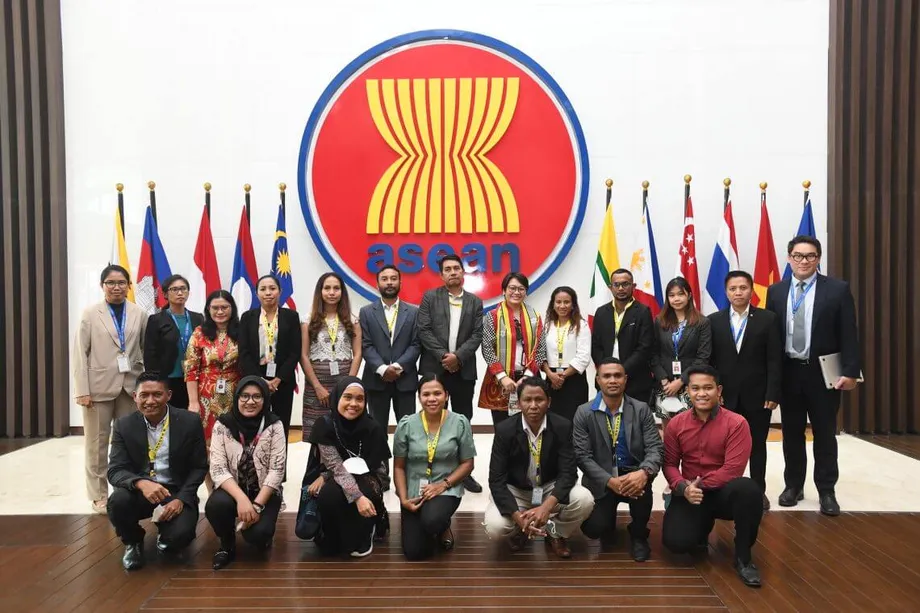
Singapore has trained more than 800 Timorese officials through the Singapore-Timor-Leste ASEAN Readiness Support (STARS) programme. Courses cover negotiation, report writing, and technical and vocational education.
Malaysia and Indonesia have provided diplomatic training and technical assistance. The ASEAN Secretariat has also mobilised teams to help Timor-Leste prepare, making the accession process a shared regional undertaking as well as a national responsibility.
Singapore's Prime Minister Lee Hsien Loong described both the assistance and the time needed to build a sufficiently skilled public administration:
We have also gone and conducted courses in Timor-Leste for the officials to help them to understand what is the issue, but I think that it is not easy because it is a small country... and to generate this bureaucracy, the officials who can master all of this and participate – I think it will take them awhile. But we will help them to do it as soon as possible,
Timor-Leste's government has appointed a Vice Minister for ASEAN Affairs and developed a national compliance framework to organise its preparations. It is also investing in infrastructure upgrades, including the expansion of Dili's international airport.
Those measures address different parts of the same task. Officials need systems for tracking obligations, ministries need enough trained personnel, and the country needs the facilities to receive regional delegations and host meetings.
Consensus gives every ASEAN member a say
ASEAN's requirement for consensus makes admission a collective political decision. Broad support from Malaysia, Indonesia and the Philippines must be matched by agreement across the existing membership.
Some governments remain concerned about institutional readiness and whether another member with considerable development needs could make the bloc less effective. Its experience with the rapid admission of Cambodia, Laos and Myanmar has contributed to a more cautious approach.
Myanmar's continuing political crisis has sharpened concerns about the difficulties ASEAN can face after admitting members. The bloc's principle of non-interference, which limits involvement in another member's internal affairs, and its reliance on consensus can make collective action slow.
These arrangements have been both strengths and weaknesses for ASEAN. They allow governments to protect their independence while cooperating, but they also require agreement among countries with different priorities and capacities.
Timor-Leste's application consequently tests two kinds of readiness: its own ability to meet regional obligations and ASEAN's willingness to help a member with substantial needs participate effectively.
Regional influence adds urgency to the decision
China's growing engagement with Timor-Leste has become part of the political setting for accession. Infrastructure projects and diplomatic ties have prompted some ASEAN members to see membership as a way to anchor the country more firmly within the regional organisation.
Malaysia, which chairs ASEAN in 2025, has been an active supporter of admission. Prime Minister Anwar Ibrahim has linked Timor-Leste's place in the bloc to its economic prospects:
ASEAN's future must include Timor-Leste to enhance the regional bloc's economic potential.
For ASEAN, admission would fulfil its longstanding ambition to bring all Southeast Asian nations into the organisation. It would also express solidarity with a young democracy that has emerged from occupation, violence and the difficult work of rebuilding.
Membership carries costs and responsibilities for the bloc as well. Another member could complicate decision making, widen economic disparities and require considerable resources for training and institutional support.
Some analysts warn that Timor-Leste could struggle to meet its obligations without assistance suited to its circumstances, placing pressure on ASEAN's cohesion. The concern is practical: accepting a country into the organisation is only the beginning of helping it participate fully.
What membership could mean for families
Young people in Dili connect ASEAN membership with work, education and a country better equipped to stand alongside its neighbours. In the capital's parks and markets, aspirations include opportunities abroad and improvements to infrastructure at home.
Octavio Belo, a university student, describes what he hopes to see:
Decent jobs, better infrastructure and more opportunities,
David Chan, who runs a private school focused on practical skills and readiness for employment, represents another part of that effort. Parents such as Augusto Soares see education as the foundation for a peaceful and prosperous future.
Schools face outdated textbooks, teachers with insufficient training and limited resources. These constraints connect the national accession effort to the daily experience of families: young people need preparation for work whether their opportunities come at home or abroad.
Regional cooperation can provide exchanges and training, while membership offers a stronger sense of belonging in Southeast Asia. Timorese hopes extend beyond formal participation in meetings to a more stable country with better services and a wider range of livelihoods.
October could open a longer period of adjustment
Malaysia has championed a flexible approach that combines admission with continuing support. Proposals include grace periods for certain obligations, continued technical assistance, and special and differential treatment similar to arrangements granted to Cambodia and Laos.
Special and differential treatment means allowing a country different conditions or more time to carry out some commitments because its circumstances differ from those of other members. Such arrangements would give Timor-Leste space to continue preparing while participating in the organisation.
Three possible outcomes frame the approach to the October summit:
- Full admission: Timor-Leste joins as the 11th member, with obligations introduced in stages and continued support from ASEAN partners.
- Conditional or delayed entry: Membership is accepted in principle, but full participation is deferred until further requirements are met, risking frustration in Dili and changes in its international relationships.
- Continued exclusion: Further delays or a failure to reach consensus damage ASEAN's credibility and risk alienating Timor-Leste, potentially encouraging it to seek alternative alignments.
Most observers expect full admission because of the political momentum and Malaysia's active support. The work of building institutions, diversifying the economy and preparing officials would continue for years after entry.
The debate also reaches beyond Timor-Leste's checklist. Some commentators argue that ASEAN must decide whether it is prepared to adapt its support and invest in its most vulnerable members, rather than judging membership chiefly by existing capacity.
October's decision will bring that debate into focus. For Timor-Leste, the immediate goal is a seat at the regional table. For its people, the longer task is to turn closer regional ties into better jobs, stronger public institutions and more dependable opportunities.
Key Points
- Timor-Leste is expected to join ASEAN as its 11th member at the October 2025 summit, subject to agreement among existing members.
- The country applied in 2011, received observer status in 2022 and began working under an accession roadmap adopted in 2023.
- More than 80% of the broader requirements have reportedly been completed, while Malaysia's foreign minister says 66 of 84 required legal instruments still need to be instituted.
- Timor-Leste has about 1.5 million people, annual economic output of just over US$2 billion and a poverty rate of 42%.
- The Petroleum Fund holds more than US$18 billion but may last only another decade at current spending rates as oil revenues decline.
- Singapore, Malaysia, Indonesia and the ASEAN Secretariat are helping prepare officials and institutions for membership.
- Proposals for grace periods and continued assistance aim to support participation while Timor-Leste completes further reforms.
- Membership would advance ASEAN's ambition to unite Southeast Asia, while creating continuing responsibilities for both the bloc and its newest member.