Shanghai Takes a Central Role in China's Digital Currency Plans
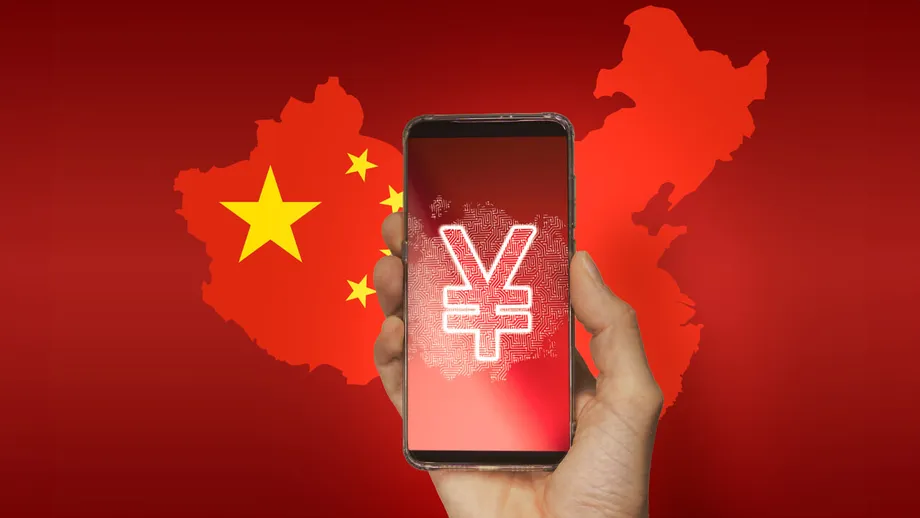
China plans to establish an international operations center for the digital yuan in Shanghai, giving its official digital currency a dedicated base for expanding into global finance. People's Bank of China (PBoC) Governor Pan Gongsheng announced the initiative at the 2025 Lujiazui Forum as part of a package of eight financial policies.
Contents
- Shanghai Takes a Central Role in China's Digital Currency Plans
- What Makes the Digital Yuan Different?
- What the International Operations Center Is Intended to Do
- Why Beijing Wants Less Dependence on the Dollar
- Eight Policies Extend Beyond Digital Payments
- How Shanghai's Wider Financial Plans Fit Together
- A Digital Currency Effort Built Over More Than a Decade
- Faster Payments Bring Regulatory Demands
- What Businesses and Foreign Institutions Could Gain
- Trust and Practical Benefits Will Shape Adoption
- The Essentials
As of June 19, 2025, the announcement sets out a plan to support international use of the digital yuan, also called e-CNY. The center is intended to help businesses make payments across borders, develop financial services using digital currency technology and strengthen Shanghai's position as an international financial hub. No opening date was given.
Beijing's ambitions reach beyond making payments faster. China wants the renminbi (RMB), its currency, to play a larger role in international trade and finance, reducing dependence on dominant foreign currencies, especially the US dollar. Pan linked that effort to geopolitical tensions, including tensions with the United States, and concerns about the use of financial infrastructure to impose sanctions.
The proposal brings together several goals: payment innovation, financial stability, greater international use of the yuan and a more open Chinese financial market. Its success will depend on whether companies and financial institutions find the digital yuan useful, secure and dependable enough to adopt.
What Makes the Digital Yuan Different?
The digital yuan is a central bank digital currency, or CBDC. In simple terms, it is money issued in digital form by a country's central bank. The PBoC issues and regulates e-CNY, giving it a different foundation from cryptocurrencies such as Bitcoin, which are decentralized and are not controlled by a government.
China began researching its digital currency in 2014 and launched pilots in 2019. Trials have taken place in numerous Chinese cities and regions, with domestic goals that include modernizing payments, expanding access to financial services and giving the government greater oversight of money flows.
China's project is widely regarded as one of the most advanced CBDC initiatives. Its international expansion builds on those domestic trials, while adding the challenge of making a Chinese payment instrument useful to businesses and institutions operating in other countries.
The distinction between a digital yuan and a privately issued digital asset matters for users. With e-CNY, the issuing authority is the central bank. With a cryptocurrency such as Bitcoin, there is no government issuer responsible for the currency. Both involve digital technology, but their governance and place in the financial system are different.
What the International Operations Center Is Intended to Do
The Shanghai center is designed to serve as a hub for the digital yuan's international business. Its main functions include supporting payments and settlements across borders, helping Chinese companies operating overseas and developing financial market services and products based on digital currency technology.
Settlement means completing a payment so that money reaches the receiving party and the obligation is fulfilled. For a company trading internationally, the practical question is how quickly and reliably a payment can move from a buyer in one country to a seller in another.
Chinese businesses involved in the Belt and Road Initiative are among the companies the center is intended to support. The plan also includes innovation in trade finance using blockchain and systems that allow settlement in real time. Trade finance refers to financial services that help businesses pay for and manage the movement of goods.
The center's proposed activities connect a domestic digital currency project with international commerce. A business could gain a reason to use the yuan if the payment process becomes simpler or less expensive. Wider adoption, however, will depend on the currency and payment system meeting the needs of businesses beyond China.
Why Beijing Wants Less Dependence on the Dollar
The US dollar dominates international trade, finance and currency reserves, giving the United States substantial influence over the global economy. Geopolitical tensions, trade disputes and the use of financial sanctions have strengthened China's interest in developing alternatives.
Pan, the PBoC governor, described traditional infrastructure for payments across borders as increasingly subject to political pressure. His concern was that sanctions and disruptions could affect access to systems used to move money internationally. He described that infrastructure as:
politicized and weaponized
China's proposed answer is a more diversified international monetary system, with several major currencies playing important roles. Pan and other Chinese officials have advocated a multipolar system in which the yuan, the euro and other currencies coexist and compete.
Pan explained his argument at the Lujiazui Forum by linking that change to financial stability and constraints on countries whose currencies are used internationally:
Developing a multipolar international monetary system will help strengthen policy constraints on sovereign currency countries, enhance the resilience of the system, and better safeguard global financial stability.
In everyday terms, the proposal is for international finance to rely on several major currencies instead of depending so heavily on one. Beijing argues that a wider choice would make the system less vulnerable to unilateral action by any single country.
Pan also criticized the governance of the International Monetary Fund (IMF) and the World Bank. He argued that their structures have not kept pace with the growing importance of emerging markets and developing countries. That criticism places the digital yuan initiative within a broader Chinese push for changes in global financial governance.
Eight Policies Extend Beyond Digital Payments
The international operations center was one element of eight new financial policies announced by Pan. Other measures include creating a personal credit reporting agency, launching a pilot program to reform offshore trade finance and establishing a transaction reporting repository for the interbank market.
A credit reporting agency gathers information used to assess borrowers. A transaction reporting repository provides a place to record financial transactions. The interbank market is where banks conduct business with one another. These measures address different parts of the financial system, alongside the effort to expand digital payments.
The package is intended to make China's financial system more open, efficient and attractive to participants from China and abroad. It combines new financial infrastructure with reforms aimed at supporting innovation and financial stability.
For international businesses, payment technology is only one part of deciding where to operate or invest. Access to financial services, market rules and confidence in the operating environment also matter. China's efforts to create a transparent, stable and predictable environment for foreign institutions are therefore closely connected to its ambition to attract participation in the digital yuan ecosystem.
How Shanghai's Wider Financial Plans Fit Together
Shanghai is already China's leading financial center and is being positioned as a global hub for digital finance. Locating the digital yuan's international operations center there brings the project into a city also preparing to test other financial tools.
The planned initiatives include trade finance solutions using blockchain, innovation bonds and mechanisms for sharing the risks of financing technology companies. Shanghai will also expand green finance programs, including support for carbon reduction and transition finance. Transition finance supports changes toward activities that produce less carbon.
These initiatives are intended to attract international investors, support strong Chinese enterprises and help trade and investment move across borders. They connect the city's digital finance ambitions with funding for businesses, technology and environmental changes.
Shanghai's free trade zones are also expected to see the development of offshore bonds and improvements to free trade accounts. Those changes are intended to make it easier for companies to access global capital markets. Together, the measures position the digital yuan center as part of a wider financial program, rather than an isolated payment project.
A Digital Currency Effort Built Over More Than a Decade
China's latest announcement follows years of research and domestic testing. The sequence shows how the project has moved from studying a digital currency to preparing a dedicated center for its international use:
- 2014: China began research into a central bank digital currency.
- 2019: The digital yuan pilot began, followed by testing in numerous Chinese cities and regions.
- 2025: At the Lujiazui Forum, Pan Gongsheng announced plans for an international operations center in Shanghai as part of eight financial policies.
Other major economies are also exploring official digital currencies. The European Union is working on a digital euro. The United States is studying a digital dollar, although progress has been slow. The United Arab Emirates, Israel and Hong Kong are piloting CBDCs or stablecoins.
Stablecoins are digital assets designed to keep their value tied to a traditional currency, such as the US dollar. They have become popular tools for international payments, but they are typically issued by private companies and are not considered legal tender.
China's approach centers on strict government control over its digital currency. Beijing sees that control as a way to support stability and avoid regulatory problems associated with the cryptocurrency sector. The digital yuan therefore represents a different model from privately issued stablecoins, even where both are being considered for moving money across borders.
Faster Payments Bring Regulatory Demands
Pan highlighted blockchain and distributed ledger technology (DLT) as tools that could transform international payments. A distributed ledger is a record of transactions shared across participating systems. Blockchain is one way of organizing such a record.
These technologies can support settlement in real time, reduce transaction costs and shorten the payment chain. A shorter chain means fewer stages between the sender and recipient, potentially making international trade payments more efficient. The Shanghai center is intended to provide a platform for developing services around such capabilities.
Pan also acknowledged gaps in regulatory oversight, particularly in the rapidly growing market for crypto assets and in financial frameworks dealing with climate risks. He called for stronger global coordination so that financial innovation develops alongside effective regulation.
The PBoC governor warned that regulatory approaches can be:
overly driven by politics
His concern was that politically driven approaches can swing sharply, complicating the task of creating consistent rules. International digital finance involves institutions and users in different jurisdictions, making coordination part of the practical work of building usable payment systems.
China continues to ban cryptocurrency trading and mining on the mainland while promoting the digital yuan and embracing blockchain technology. Its policy combines interest in digital innovation with strict control over the financial system. Government support for e-CNY sits alongside restrictions on privately traded cryptocurrencies.
What Businesses and Foreign Institutions Could Gain
Chinese companies trading internationally could benefit if the digital yuan center helps make payments faster, cheaper or more reliable. Wider use of the currency could also increase the yuan's role in transactions with China's trading partners, including countries participating in the Belt and Road Initiative.
The project could provide an alternative to payment systems built around the dollar, reducing exposure to some financial disruptions and sanctions. It could also encourage more use of digital currencies and blockchain in global finance, while prompting other countries to explore their own CBDCs and ways for different systems to work together.
Foreign financial institutions are part of China's broader effort to attract investment and participation. Li Yunze, director of the National Financial Regulatory Administration, described their role in China's financial development:
Foreign institutions are important bridges and links for attracting investment, talent, and are important participants and active contributors to the construction of China's modern financial system.
Li's statement connects international participation with investment, talent and the construction of China's financial system. For the digital yuan initiative, attracting institutions from abroad will require a market environment in which participants can plan their activities with confidence.
The potential gains depend on actual adoption. Businesses need useful services, financial institutions need workable arrangements and international users need confidence in the system. Faster settlement would be a concrete benefit, but it is one part of the wider decision to use the yuan.
Trust and Practical Benefits Will Shape Adoption
The yuan's share of global payments and reserves remains small compared with the dollar and the euro. Expanding that role will require more than establishing an operations center. Companies and countries must choose to use the currency for their own transactions and financial needs.
Many countries remain cautious about adopting a currency tightly controlled by the Chinese government. Concerns about data privacy and financial transparency are part of that caution. International expansion therefore places trust alongside speed, cost and security as a central issue.
The initiative offers an ambitious route toward a more balanced and resilient financial system, while widespread adoption will take time and require confidence among users. Shanghai's proposed center gives China a place to organize that effort, supported by reforms in trade finance, market infrastructure and access to capital.
For businesses and financial institutions, the most immediate test will be practical: whether digital yuan services offer real advantages over existing payment systems. Beijing's wider ambition is to give the yuan a larger global role. Turning that ambition into routine use will depend on the services developed and the willingness of international participants to use them.
The Essentials
- China plans an international operations center for the digital yuan in Shanghai, announced by PBoC Governor Pan Gongsheng at the 2025 Lujiazui Forum.
- The center is intended to support international payments, Chinese companies overseas and financial services using digital currency technology.
- The announcement forms part of eight financial policies, including measures covering credit reporting, offshore trade finance and interbank transaction reporting.
- China wants greater international use of the yuan and a monetary system less dependent on the US dollar.
- Shanghai will also pursue initiatives in trade finance, technology funding, green finance, offshore bonds and free trade accounts.
- International adoption will depend on practical benefits, security, privacy, transparency and trust.