A growing variant with a quieter arrival
NB.1.8.1, the COVID-19 variant unofficially nicknamed "Nimbus," has been detected in at least 22 countries and accounts for an estimated 37% of new infections in the United States. As of June 13, 2025, its spread is drawing renewed attention from health authorities, particularly in Asia, even though it has not shown signs of causing more severe illness than previous Omicron variants.
Contents
- A growing variant with a quieter arrival
- What is NB.1.8.1?
- From January detections to June concern
- Where infections are increasing
- What symptoms are being reported?
- Why spread can be hard to see
- Low assessed risk, with continuing health concerns
- Vaccines and changing eligibility
- How authorities are responding
- What people can do now
- Keeping track as the virus changes
- Key Points
China and Hong Kong have seen Nimbus become the dominant strain. Bangladesh has issued a nationwide alert, while infections involving the variant have also been identified in the United Kingdom, India, Singapore, Thailand, Australia and several European countries. In the United States, it is rivaling LP.8.1, the previously dominant variant.
The World Health Organization (WHO) has classified NB.1.8.1 as a "variant under monitoring." That means its spread warrants close observation. The WHO, the US Centers for Disease Control and Prevention (CDC) and other health agencies assess the global risk as low at this time, with current vaccines still expected to protect against severe illness and hospitalization.
Nimbus is arriving as the world enters its fifth year of living with COVID-19. Unlike the dramatic waves of earlier years, its spread has often attracted little public attention. Many infections involve mild symptoms, unusual symptoms or no symptoms at all, while routine testing and public vigilance have declined.
For older people, those with underlying health conditions and the healthcare workers who care for them, that quieter circulation still matters. A virus that reaches many people can produce substantial illness even when most individual infections are mild.
What is NB.1.8.1?
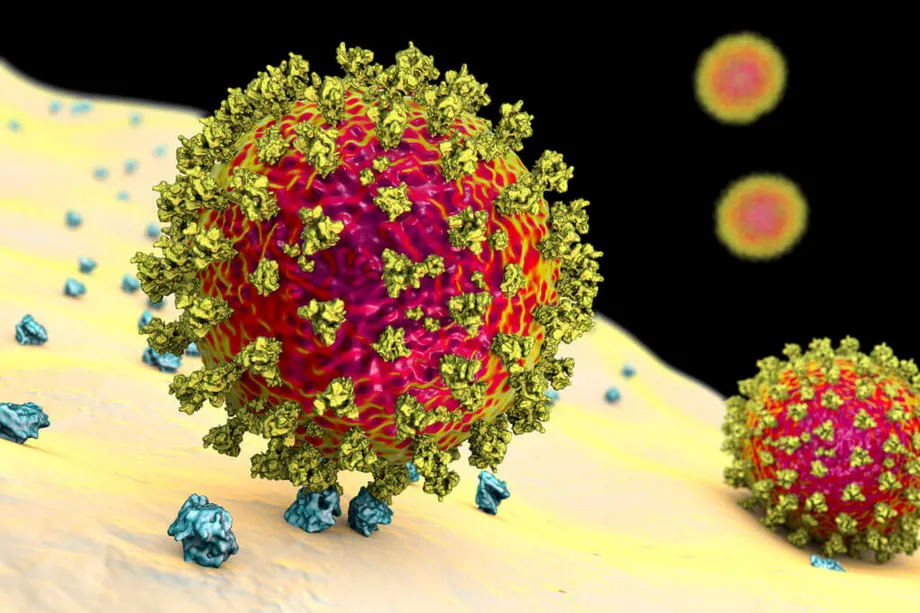
NB.1.8.1 is a descendant of Omicron, the highly mutated and readily transmissible branch of SARS-CoV-2, the virus that causes COVID-19. Like other variants, it has developed changes in its spike protein, the part of the virus that helps it enter human cells.
Laboratory studies suggest Nimbus can bind more efficiently to ACE2, a receptor on human cells that acts as an entry point for the virus. That could help it spread more easily, including among people who have some protection from vaccination or an earlier infection.
Some of its mutations may also help it partly evade antibodies, the immune proteins that recognize and act against the virus. Protection against infection and protection against severe disease are different: a person can still become infected while retaining protection that reduces the chance of hospitalization.
Dr. Chun Tang, a general practitioner in the United Kingdom, described the changes in the variant and the early picture of its severity:
NB.1.8.1 isn't too different from the Omicron variant, but it does have some tweaks to its spike protein, which might make it spread a bit more easily or slip past some of our existing immunity. That said, early signs suggest it doesn't seem to cause more serious illness, but of course, we're still learning more about it.
From January detections to June concern
Genetic sequencing data from GISAID, a global virus database, places the first identification of NB.1.8.1 in January 2025, in travelers from East Asia and Europe. Sequencing allows scientists to examine the virus's genetic instructions and identify which variant caused an infection.
The variant has since expanded across continents. The main developments described through June 13 include:
- January 2025: NB.1.8.1 was first identified in travelers from East Asia and Europe.
- Early May 2025: Singapore's weekly COVID-19 cases rose from 11,100 to 14,200.
- Late May 2025: India reported more than 1,000 active COVID-19 cases, with notable clusters in Delhi and Tamil Nadu.
- By June 13, 2025: Nimbus had been detected in at least 22 countries, become dominant in China and Hong Kong, and reached an estimated 37% of new US infections.
The timeline shows how quickly a newly identified variant can become a substantial part of circulating infections. Authorities are following both its share of infections and the pressure COVID-19 places on hospitals.
Where infections are increasing
China and Hong Kong have recorded Nimbus as their dominant strain, with its spread contributing to increases in emergency room visits and hospitalizations. Elsewhere in Asia, the variant accounts for a growing share of cases in India, Singapore and Thailand.
Singapore's increase from 11,100 to 14,200 weekly cases in early May amounts to 3,100 additional cases, or about 28%. Thailand's cases rose from 6,000 to more than 33,000 in a matter of days, an increase of more than five times. India had more than 1,000 active cases in late May, including clusters in Delhi and Tamil Nadu.
Bangladesh's Directorate General of Health Services (DGHS) issued a nationwide alert after confirming the variant's presence. Its response includes precautions at entry points, hospitals and crowded public spaces.
The United States has detected Nimbus in at least 14 states, including California, New York, Ohio, Rhode Island, Virginia and Washington. The CDC estimates that it accounts for about 37% of new cases, more than one in three.
The United Kingdom, France, the Netherlands, Spain and Australia have also recorded infections, although activity has been lower than in Asia. Reduced testing and sequencing mean the true number of infections is likely higher than the number recorded.
What symptoms are being reported?
Nimbus symptoms generally resemble those caused by other Omicron variants. A severe sore throat, sometimes described as "razor blade throat," has drawn particular attention, although many people experience only a slight sore throat or unusual tiredness.
The commonly reported symptoms include:
- Severe sore throat.
- Fatigue.
- Mild cough.
- Congestion or a runny nose.
- Fever or chills.
- Muscle aches.
- Headache.
- Nausea and, less commonly, diarrhea.
- Loss of taste or smell, less frequently than with earlier variants.
Some people develop symptoms affecting the stomach or intestines. Others feel only mildly unwell, or do not realize they are infected. Those experiences make it easier for the virus to pass between people while daily routines continue.
Mild illness also affects how much of an outbreak becomes visible. Someone with a slight sore throat may never seek a test, leaving that infection outside the official case count.
Why spread can be hard to see
Testing has become less routine, and many countries have reduced surveillance. Alongside mild or absent symptoms, those changes make it harder for health authorities to judge how widely Nimbus is circulating.
Dr. Rajendram Rajnarayanan, a virologist at the New York Institute of Technology, described the hospital picture and the need to keep watching:
We haven't seen a big surge in emergency departments due to COVID-related conditions and respiratory things in this term yet. We have to wait and watch.
Wastewater monitoring and airport screening have become important tools for following the variant. Wastewater surveillance looks for signs of the virus in sewage, offering a view of community circulation that does not depend on every infected person taking a test.
Airport screening can help identify variants moving between countries, while sequencing shows which versions of the virus are present. Together, these methods help fill gaps left by fewer people seeking tests.
Public attention has also fallen after years of pandemic fatigue. Many people have stopped wearing masks or seeking tests, and funding for surveillance and research has declined in some regions. Outbreaks can grow with limited warning, including among people most vulnerable to serious illness.
Low assessed risk, with continuing health concerns
NB.1.8.1 has so far shown no increase in the severity of illness, hospitalization or death compared with previous Omicron variants. Most people experience mild symptoms, and current vaccines remain effective at preventing severe disease.
A large number of infections can still put pressure on healthcare services. Even if a small share of infected people needs hospital care, that share can become a substantial number when transmission is widespread.
Dr. T. Ryan Gregory, the Canadian evolutionary biologist who coined the nickname "Nimbus," pointed to both transmission and the effects of repeated infection:
We learned from Omicron that high transmissibility can cause as much damage as high per infection virulence, and at this point it is not just acute severity that is of concern, but longer-term impacts of repeated infection.
Long COVID is among those concerns. It can involve symptoms that persist for months or years after an infection. The health effects of repeated infections remain part of the reason for reducing exposure, even when the immediate illness is mild.
Vaccines and changing eligibility
Current COVID-19 vaccines, including the latest boosters, are expected to remain effective against Nimbus, particularly in preventing severe illness and hospitalization. Its mutations may allow it to partly escape antibodies, while vaccinated people retain protection against the most serious outcomes.
Vaccination policy is changing at the same time. In the United States, the CDC and Food and Drug Administration (FDA) have updated recommendations to limit routine COVID-19 vaccination to adults aged 65 and older and people aged 12 to 64 with underlying health conditions.
Routine vaccination is no longer recommended for healthy children and pregnant women under those changes. Many medical professionals disagree with the shift. Changes in vaccination guidance in the United States and other countries have raised concerns about access and coverage, particularly where insurance arrangements affect whether people can obtain a dose.
Dr. Albert Ko, a professor at Yale School of Public Health, advised people at higher risk to consider their vaccination timing:
Those in high-risk groups should consider getting the vaccine now if they haven't been vaccinated in the last six months and consider receiving an updated vaccine for the upcoming winter season.
People with questions about their eligibility, health conditions or vaccination history can discuss them with a healthcare provider. That is particularly relevant for those whose risk of severe illness makes protection more urgent.
How authorities are responding
Bangladesh's DGHS has called for increased precautions at ports of entry, hospitals and crowded public spaces following confirmation of NB.1.8.1. Healthcare workers are being reminded to prepare isolation facilities, use personal protective equipment (PPE) and screen travelers at airports and land borders.
Health authorities in affected countries have issued renewed guidance and alerts. Their response combines preparation for patients who need care with efforts to limit transmission before infections reach vulnerable groups.
An unnamed health official in Bangladesh described the concern about infections attracting little attention:
This variant isn't loud. That's exactly why we need to listen.
The World Health Network and other organizations recommend monitoring local wastewater readings, wearing high quality masks such as N95 respirators in crowded or indoor settings, and improving indoor air through ventilation and HEPA air purifiers.
Their advice also includes testing when symptoms develop or after a known exposure, staying home rather than attending meetings in person when unwell, and keeping up to date with vaccination and boosters, especially for people at higher risk.
What people can do now
People who are vaccinated and healthy face a low assessed risk from Nimbus, while those more likely to develop severe illness have stronger reasons to take precautions. Small changes to daily routines can reduce the chance of passing an infection to someone else.
The recommended steps are:
- Wear a mask in crowded spaces or places with poor ventilation.
- Improve indoor air by increasing ventilation and using HEPA air purifiers.
- Wash hands regularly and practice good respiratory hygiene.
- Stay home when feeling unwell, even if symptoms are mild, and avoid meetings in person.
- Get tested after developing symptoms or a known exposure to someone with COVID-19.
- Follow current vaccine and booster recommendations, especially when at higher risk of severe illness.
- Consult a healthcare provider about symptoms, vaccination or individual health concerns.
- Follow local wastewater readings where they are available to understand community COVID-19 activity.
A slight sore throat or unusual fatigue can be easy to dismiss. Staying away from others while unwell helps reduce opportunities for transmission, including to older relatives and people with underlying conditions.
Keeping track as the virus changes
SARS-CoV-2 continues to evolve, and further variants will arise. Some may spread more easily or partly evade existing immunity. Reduced testing and surveillance make those changes harder to identify and respond to promptly.
Genetic surveillance, wastewater monitoring and clear public communication remain central to following that evolution. Hospitals also need the capacity to identify and care for infected patients, while communities need information they can use without assuming every infection will become serious.
Gregory also described protection as a concern extending beyond the current variant:
It is not just about protecting people today but also protecting them from any other variant in the future.
The June 13 picture combines rapid geographic spread with a low global risk assessment and continued vaccine protection against severe disease. The pandemic's most dramatic phases have passed, but COVID-19 continues to circulate, making sustained surveillance and practical precautions relevant to everyday health decisions.
Key Points
- NB.1.8.1, unofficially called Nimbus, was first identified in January 2025 and has reached at least 22 countries.
- The WHO classifies it as a variant under monitoring, and its assessed global risk is low.
- It is dominant in China and Hong Kong and accounts for an estimated 37% of new US cases.
- Laboratory findings suggest easier entry into human cells and partial escape from antibodies.
- Symptoms often resemble other Omicron infections, including sore throat, fatigue, cough and fever; some infections have no symptoms.
- It has not shown increased severity compared with previous Omicron variants, and vaccines remain protective against severe illness.
- Bangladesh has issued a nationwide alert, while authorities continue tracking spread through testing, sequencing, wastewater and airport surveillance.
- Masking, cleaner indoor air, testing, staying home when unwell and appropriate vaccination remain recommended precautions.