Four Students Turn a Concern for Sea Turtles Into Packaging
Four Form Three students from Good Hope School in Hong Kong have won top honours at the inaugural Seek Our Ways Social Ideation Programme with an edible, fully biodegradable alternative to plastic. Ho Lok-ting, Law Hau-wing, Lo Sin-sum and Tsang Lok-yu spent more than 200 hours designing, developing and testing two prototypes made from gelatin and agar.
Contents
- Four Students Turn a Concern for Sea Turtles Into Packaging
- Why the Team Chose an Edible Alternative
- How Gelatin and Agar Form Packaging
- Other Young Inventors Are Testing Edible Containers
- What Must Happen Before Wider Use
- A Programme Built Around Practical Social Problems
- Connecting Schools With Elderly Centres
- Giving Apple Pulp Another Use
- Where These Projects Fit in Reducing Waste
- Key Points
Their proposed uses are familiar ones: packaging for dry foods and shopping bags. The students hope their material can replace some conventional plastics, which can remain in the environment for hundreds of years after being used briefly.
The idea began with concern about marine life. After learning about high mortality rates among sea turtles that ingest plastic, the students set out to make a material that would break down naturally instead of continuing to threaten animals and ecosystems.
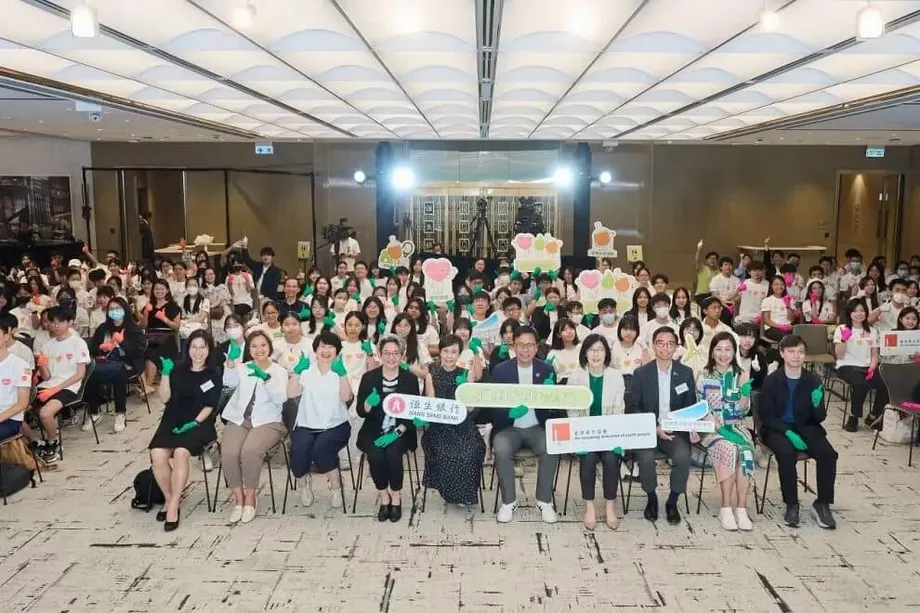
Their project was one of three division winners in a programme supported by Hang Seng Bank and organised by the Leadership Institute of The Hong Kong Federation of Youth Groups (HKFYG). Other winners proposed linking schools with elderly centres and turning apple pulp from juice production into a material resembling leather.
Why the Team Chose an Edible Alternative
Sea turtles, birds and fish can mistake plastic debris for food, leading to injury or death. Millions of tons of plastic waste enter the oceans each year, while discarded bags, bottles and packaging contribute to a problem that lasts far longer than the products are used.
Conventional plastic also breaks into smaller fragments called microplastics. These tiny pieces have been found in water, soil and food. For the Good Hope School students, finding a different material offered a practical way to address waste at the point where packaging is made.
Law Hau-wing, a member of the winning team, explained the students' motivation and their ambition to work with manufacturers:
Traditional plastic lingers for centuries as it's non-biodegradable and harmful to the environment. Our 'Fully Biodegradable Plastic', however, disappears without a trace. We hope to collaborate with food manufacturers to bring the product to market.
The team describes its invention as edible and fully biodegradable. Those qualities serve related purposes: the packaging could be consumed after use, or it could break down naturally instead of accumulating as persistent waste. Turning that idea into a widely used product will require further work on strength, safety and production.
How Gelatin and Agar Form Packaging
Gelatin is a protein derived from animal collagen. Agar is a substance obtained from seaweed that forms a gel. Both are commonly used in food and can form flexible films that resist water.
Combining them produces a material that can be moulded into thin sheets or bags. The students' two prototypes explore how those sheets might protect dry food or carry shopping, replacing some of the functions of conventional plastic.
The proposed material is described as safe to eat, able to dissolve in water and capable of breaking down naturally without leaving toxic residue. In food packaging, the intended result is a wrapper that could be eaten or composted after its contents have been consumed.
Water resistance and eventual dissolution have to be balanced. Packaging must hold together while it protects a product, yet break down after disposal. The same design challenge applies to flexibility: a sheet needs to bend without tearing while remaining suitable for its intended use.
The students' work brings those requirements together in a practical prototype. Their more than 200 hours of development covered design, experimentation and testing, with the aim of making an alternative useful enough for everyday packaging.
Other Young Inventors Are Testing Edible Containers
Edible packaging is also being explored outside Hong Kong. In the United States, 12-year-old Madison Checketts developed an edible water bottle called the Eco-Hero, using a process known as reverse spherification.
The technique originated in molecular gastronomy, which applies scientific methods to preparing food. It uses food safe substances, including calcium lactate and sodium alginate, to form a gel membrane around a liquid. The membrane holds the water inside an edible container that can be consumed or composted.
The Ooho water bottle, developed by students at Imperial College London, uses a comparable method to enclose water in an edible membrane. These projects tackle liquid containers, while the Good Hope School team has focused on sheets and bags suitable for dry food and shopping.
All three approaches explore whether packaging can have a useful life without becoming waste that persists for centuries. They are especially relevant to disposable products for which conventional recycling is impractical or ineffective.
Daniel Rittschof, an environmental scientist at Duke University, described the value of Checketts' experimentation and the range of skills involved:
This is the kind of innovation that people need to do, and they need to figure out how to move forward. [Checketts] is on the right path, because she wants to make a difference, and she's learning chemistry and biology and a little bit of business.
Rittschof also identified practical concerns: whether the packaging is safe to consume, whether trace chemicals are present, and how edible containers can be transported without damage. Those issues connect laboratory experiments with the demands of making and distributing a product.
What Must Happen Before Wider Use
Durability is a central challenge for edible plastics. Packaging must be strong enough to protect its contents during transport and storage, while still dissolving or degrading quickly after use. Achieving that balance requires careful formulation and testing.
Food safety brings another set of requirements. Gelatin and agar are generally recognised as safe for consumption, but production at a larger scale must deliver consistent quality and prevent contamination. A material intended to be eaten becomes part of the food supply chain as well as a container.
Regulatory approval and consumer acceptance also matter. Manufacturers need packaging that performs reliably, and consumers need confidence in what they are being asked to eat. Research, clear safety standards and public education are therefore part of the work needed to bring edible packaging into wider use.
The Good Hope School team hopes to collaborate with food manufacturers. No commercial launch date or manufacturing agreement was given. Its next ambition is to move beyond prototypes, with further development needed to establish how the material could be produced and used consistently.
Investment and cooperation among inventors, manufacturers, regulators and consumers would support that process. The potential applications extend from food packaging to disposable containers, but each use brings its own demands for protection, handling and disposal.
A Programme Built Around Practical Social Problems
The inaugural Seek Our Ways Social Ideation Programme attracted nearly 1,000 applications from secondary and tertiary students. More than 400 participants formed teams to work on environmental sustainability, sports and elderly wellness.
Over six months, students devoted more than 10,000 hours to experiential learning and mentorship, guided by social leaders and professionals. The programme was designed to help young people develop creative responses to real problems while learning how to turn an idea into a proposal.
Nearly 90 proposals emerged, and nine teams advanced to the finals. Judges assessed the effectiveness, innovation, scalability and presentation of the proposed solutions. Scalability means whether an idea can grow beyond its initial trial and serve more people or be produced in greater quantities.
Diana Cesar, Executive Director and Chief Executive of Hang Seng Bank, described why the bank supported the programme:
As Hong Kong's largest local bank, Hang Seng Bank is proud to put our network, expertise, and resources behind young social innovators. Programmes like this demonstrate how we turn belief in the next generation into action – equipping students to tackle real-world challenges while expanding their own potential.
The programme combined environmental projects with proposals addressing social needs. Its winners illustrate that social innovation can involve developing a new material, changing how institutions work together, or finding a use for something that would otherwise be discarded.
Connecting Schools With Elderly Centres
In the senior secondary division, a team from Fanling Kau Yan College won with One School, One Elderly Centre. Its proposal would pair schools with elderly centres to encourage contact between generations and support emotional wellbeing.
The initiative includes a matching service, a sustainable curriculum and recommended activities. Together, those elements are intended to help schools and centres establish and maintain connections between students and older adults.
Its focus differs from the Good Hope School project, but both begin with a specific problem and propose a practical response. One seeks to change the materials people use; the other seeks to strengthen relationships through organised participation.
Giving Apple Pulp Another Use
At tertiary level, a team drawn from different universities developed Fruitful, which turns apple pulp left over from juice production into a material resembling leather. The project seeks to reduce reliance on synthetic fabrics and materials made from petroleum.
After six months of research and experimentation, the team produced an alternative with potential uses in wallets, coasters and other accessories. Its starting point is a byproduct that already exists, giving that material another purpose.
Fruitful applies a circular economy approach in Hong Kong. In simple terms, that means keeping resources useful by turning material left over from one process into an input for another, instead of treating it only as waste.
The three division winners each received HK$20,000 and opportunities for career immersion at Hang Seng Bank. Public voting also carried an additional HK$5,000 award for favourite projects, giving the wider community a role in recognising the ideas.
Where These Projects Fit in Reducing Waste
Recycling and waste management remain important responses to plastic pollution, but they are insufficient to address its scale. The Good Hope School project approaches the issue earlier, by trying to replace persistent packaging before it becomes rubbish.
Edible and biodegradable materials offer one possible response to the short useful life of disposable packaging. Their value depends on whether they can protect products, remain safe and break down as intended. That is why research into materials must be accompanied by work on manufacturing, regulation and public understanding.
The programme also supports a broader form of community action. Students can develop materials, rethink product design and encourage more sustainable behaviour while learning from mentors and testing their ideas against practical needs.
The Hong Kong team's ambition now rests on further refinement and collaboration. Alongside the water containers developed by Checketts and the Imperial College London students, its prototypes show the different ways young inventors are exploring alternatives to disposable plastic. Fruitful adds another approach: making useful products from a byproduct rather than relying on new petroleum based materials.
For consumers, the intended changes are concrete: a wrapper that could be eaten or composted, a container that avoids persistent plastic waste, or an accessory made from apple pulp. Moving from those ideas to dependable products will require continued experimentation and cooperation across the organisations that make, regulate and use them.
Key Points
- Good Hope School students Ho Lok-ting, Law Hau-wing, Lo Sin-sum and Tsang Lok-yu won with an edible, fully biodegradable plastic alternative made from gelatin and agar.
- The four Form Three students spent more than 200 hours developing and testing two prototypes for dry food packaging and shopping bags.
- The inaugural Seek Our Ways programme attracted nearly 1,000 applications, involved more than 400 participants and produced nearly 90 proposals, with nine teams reaching the finals.
- Other division winners proposed pairing schools with elderly centres and turning apple pulp into a material resembling leather.
- Each division winner received HK$20,000 and career immersion opportunities at Hang Seng Bank.
- Durability, food safety, consistent production, regulatory approval and consumer acceptance remain central tasks before edible packaging can be used widely.