A chip gap, and a strategy to work around it
Huawei's chips remain one generation behind their US competitors, founder and CEO Ren Zhengfei acknowledged in an interview with People's Daily published as US and Chinese officials resumed trade talks in London. His message, as of June 11, 2025, was that the company can still build useful, competitive computing systems by changing how chips work together.
Contents
- A chip gap, and a strategy to work around it
- What Ren means by combining chips
- How US restrictions changed Huawei's choices
- CloudMatrix shows the gains and the costs
- A $25 billion research commitment
- Why engineers and infrastructure matter
- Nvidia faces a determined domestic competitor
- Washington's May warning reaches beyond China
- London talks put chips and critical materials together
- AI ambitions depend on power and practical uses
- The Bottom Line
Huawei is putting that approach into practice with its AI CloudMatrix 384, launched in April 2025. The system connects 384 Ascend 910C chips in a cluster. Analysts say it can outperform Nvidia's GB200 NVL72 on certain measures, even though each Huawei chip is less powerful than Nvidia's leading products. The tradeoff is substantial: the Huawei system reportedly consumes about four times as much power as comparable Nvidia systems.
Ren also described an annual research and development budget of 180 billion yuan, about $25 billion, with roughly a third devoted to fundamental theoretical research. Huawei is targeting shipments of 700,000 Ascend chips in 2025, while concentrating on a Chinese market where demand for artificial intelligence hardware is growing rapidly.
Those figures capture the central challenge facing China's telecommunications and technology giant. US restrictions have limited its access to advanced chips and manufacturing equipment. Huawei is responding with larger computing systems, changes to chip architecture, investment in theory and a stronger focus on domestic customers.
Semiconductors sit at the center of this contest because they underpin modern computing, AI and national security. Ren's unusually candid comments describe both a continuing hardware disadvantage and the methods Huawei is using to narrow the gap with US companies.
What Ren means by combining chips
Ren described Huawei's approach as a combination of mathematical methods, alternatives to conventional chip advances and cluster computing. He said:
Our single chip is still behind the US by a generation. We use mathematics to supplement physics, non-Moore's law to supplement Moore's law, and cluster computing to supplement single chips. The results can also achieve practical conditions. Software is not a bottleneck for us.
Cluster computing means connecting multiple chips or computers so they can work together on complex problems. Instead of asking one processor to do all the work, a system distributes the task across many processors. Huawei is making this approach a cornerstone of its response to restrictions on advanced hardware.
Ren's reference to Moore's law concerns the longstanding expectation that the number of transistors on a chip doubles roughly every two years. Transistors are the tiny electronic components that allow chips to process information. Fitting more of them onto a chip has driven decades of progress in computing.
Physical limits and restrictions on access to technology make that route harder for Huawei. Its alternative is to seek more useful performance through mathematics, software, chip architecture and the way processors are connected. Ren's statement that software is not a bottleneck expresses the company's confidence in that part of its computing system.
Huawei's aim is practical performance: a system that can carry out demanding work despite weaker individual chips. Ren's remarks marked the first public discussion by him or the company of its advanced chipmaking efforts, according to the account published on June 11.
How US restrictions changed Huawei's choices
The US government has imposed a series of export restrictions since 2019, seeking to curb China's technological and military advances. Huawei has been a particular target, losing access to advanced chips and equipment needed to manufacture them.
Washington alleges that Huawei's telecommunications equipment could be used for espionage by Beijing. Huawei strongly denies that claim. The restrictions have nevertheless forced the company to reconsider how it designs chips, obtains manufacturing capacity and builds computing products.
US controls also prevent Nvidia from selling its most advanced products to China. That has created an opening for Huawei's Ascend series in the Chinese AI market, even while Huawei faces constraints of its own.
The main developments span several years and months:
- Since 2019: The US has imposed export restrictions targeting Huawei and limiting access to advanced semiconductor technology.
- April 2025: Huawei launched AI CloudMatrix 384, connecting 384 Ascend 910C chips.
- May 2025: The US Commerce Department issued guidance warning that using Huawei's Ascend chips anywhere in the world could violate US export controls.
- June 11, 2025: Ren's comments came into focus as US and Chinese officials resumed trade talks in London.
- During 2025: Huawei is targeting shipments of 700,000 Ascend chips.
CloudMatrix shows the gains and the costs
Huawei's CloudMatrix 384 illustrates the difference between the performance of an individual chip and the performance of a complete computing system. Each Ascend 910C trails Nvidia's leading chips, yet connecting 384 of them allows Huawei to compete on some system measures.
Analysts say the cluster can outperform Nvidia's GB200 NVL72 on certain metrics. Huawei's wider cluster approach can also match or exceed Nvidia's capabilities in some applications. The June account gives no detailed benchmark results or named measures for those comparisons.
The method relies on putting more hardware to work together, an approach described as "brute force." Its attraction is straightforward: Huawei can build a powerful system using chips it can access, even when a more advanced individual processor is unavailable.
Electricity is a major cost of that choice. CloudMatrix reportedly uses about four times the power of comparable Nvidia systems. Higher consumption raises operating costs and increases the importance of energy supply and sustainability. Combining many chips can also bring greater complexity in system integration, the work of making the components function together.
For many applications in China's large domestic market, the approach can still be practical and effective. Its commercial value depends on the balance between useful computing performance, the expense of running the system and the work required to integrate it.
A $25 billion research commitment
Huawei's annual research and development budget of 180 billion yuan, about $25 billion, supports both immediate products and research intended to produce breakthroughs over a longer period. Ren said roughly one third goes to fundamental theoretical research, with the remaining two thirds devoted to product development.
Those shares imply approximately 60 billion yuan for theoretical research and 120 billion yuan for product development, based on the rounded annual budget he gave. The split shows how much Huawei is committing to ideas that may take longer to become commercial products.
Ren, explaining why Huawei needs that foundation, said:
Without theory, there will be no breakthroughs, and we will not catch up with the United States.
Huawei's research priorities include compound chips, described as semiconductors made from multiple elements rather than traditional silicon. Such materials could potentially provide new routes to better performance and help the company work around some manufacturing constraints associated with US export controls.
Huawei has also patented techniques for stacking chiplets on top of one another. Chiplets are small functional units that can be combined within a processor. Stacking them is intended to make processors smaller and more powerful. Together, material research and chiplet design broaden the company's search for progress beyond advances in a conventional individual chip.
Why engineers and infrastructure matter
Ren and other Chinese industry leaders have pointed to the need to develop a new generation of engineers and researchers. Their focus on talent reflects the demands of Huawei's strategy: theory, chip design, software and large computing systems all require skilled people.
China's large population, robust power grid and advanced communications infrastructure provide a foundation for that effort. These strengths are especially relevant to an approach that connects many processors and depends on reliable electricity and communications.
Huawei's experience also illustrates the growing role of innovation across an entire system. Performance depends on how chips, software and infrastructure work together, alongside the capability of each component. A company can improve the results delivered by a complete system even while its individual chips trail those of a competitor.
Huawei is applying that thinking under the pressure of export restrictions. Investment in basic research supports the search for new designs, while product development turns those ideas into equipment that customers can use. The company is trying to strengthen both parts of that process at once.
Nvidia faces a determined domestic competitor
Nvidia remains the global leader in AI chips, but restrictions on its most advanced products have reduced what it can sell to Chinese customers. Huawei's Ascend series now competes directly with Nvidia's products in China, making the rivalry a concrete example of the broader technology contest between the US and China.
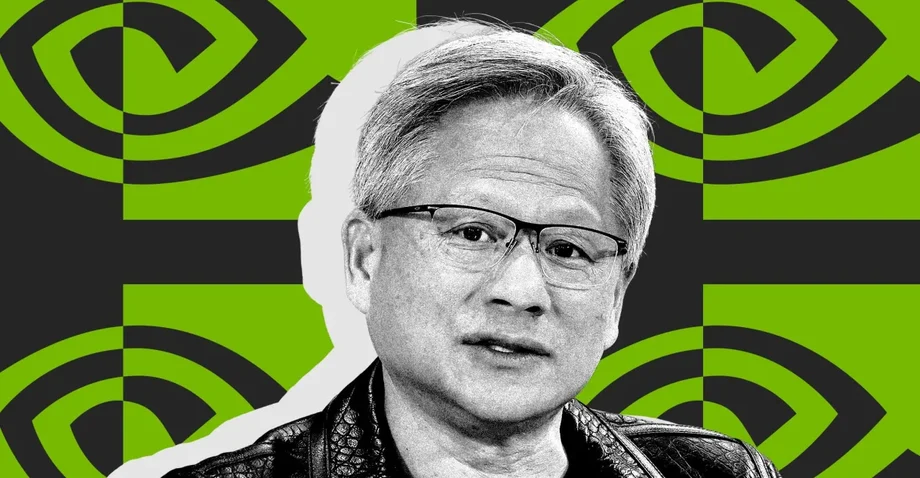
Nvidia CEO Jensen Huang has acknowledged the determination and technical ability of Chinese companies. Describing how export controls have affected their development, he said:
Chinese companies are very, very talented and very determined, and the export control gave them the spirit, the energy and the government support to accelerate their development.
Some analysts similarly argue that US restrictions have accelerated Chinese progress by forcing domestic investment and innovation. Huawei's efforts to combine less advanced chips into competitive systems show one way companies can respond when access to leading technology is limited.
Huawei is also increasing production capacity and pursuing its target of 700,000 Ascend shipments in 2025. China's growing demand for AI hardware gives it a substantial customer base at home. The shipment figure is a target for the year, while Ren's comments describe the company's technical position and strategy as of June.
Nvidia's leadership and Huawei's system capabilities therefore coexist. Nvidia retains the advantage in leading individual chips, while Huawei is seeking competitive results by connecting more processors and improving the surrounding architecture.
Washington's May warning reaches beyond China
The US Commerce Department's guidance in May warned that using Huawei's Ascend chips anywhere in the world could violate US export controls. The warning extended the pressure facing Huawei beyond restrictions on obtaining technology and into the decisions of potential customers.
The guidance represented an escalation in efforts to isolate Huawei's AI ecosystem internationally. Companies considering Ascend hardware face the possibility of export control exposure alongside ordinary questions about performance, cost and integration.
Huawei's global reach remains constrained by those rules, even as its domestic market provides room for expansion. The June account describes the possibility of a violation but gives no detailed conditions for individual cases.
China has accused the US of "bullying" and "abusing export controls to suppress and contain" its firms. Washington's restrictions and China's objections form part of a wider dispute over access to advanced technology and the role of national security in trade.
London talks put chips and critical materials together
US and Chinese officials resumed trade talks in London as Ren's interview was published. Technology restrictions were high on the agenda, placing Huawei's chip strategy within a broader negotiation over economic and strategic interests.
Both governments have used access to technology and critical materials, including rare earth metals, as bargaining tools. Semiconductors therefore matter beyond the products in which they are installed: access to them is also part of the relationship between the world's two technology rivals.
Ren's acknowledgment of Huawei's disadvantage came alongside a message about sustained work and investment. His decision to downplay the company's achievements while describing its efforts may have been intended to reduce geopolitical pressure and maintain momentum at home. That remains an interpretation of his tone, rather than a stated purpose.
The June account gives no date for a decision on the technology restrictions discussed in London. For Huawei and its customers, the immediate situation is continued investment and product development under the existing controls, with the 2025 Ascend shipment target still ahead.
AI ambitions depend on power and practical uses
Ren predicted that AI would be "the last technological revolution of humankind," while also identifying nuclear fusion as a clean energy source. His comments connected computing progress with the energy needed to support it.
Ren said AI's ultimate effects would be felt in sectors including power, infrastructure, coal and pharmaceuticals. He pointed toward applications shaped by the needs of individual industries as a source of future breakthroughs.
China's "Eastern Data, Western Compute" initiative moves computing workloads to regions with abundant renewable energy. The government's recent "Computing Power Interconnection Action Plan" aims to improve network interconnection and the allocation of computing resources across the country.
Those initiatives fit the demands of large computing clusters: power must be available where systems operate, and networks must help connect resources with the places that need them. For Huawei, infrastructure is part of the practical setting in which its chip strategy must work.
CloudMatrix's reported electricity demand makes energy efficiency and operating costs central to the durability of that strategy. Huawei has demonstrated how combining chips can produce competitive capabilities in certain situations. Its continuing challenge is to make those capabilities economical and sustainable while export controls limit its international reach.
The Bottom Line
- Ren Zhengfei says Huawei's individual chips remain one generation behind US competitors.
- Huawei is pursuing competitive performance through mathematics, software, chip architecture and cluster computing.
- AI CloudMatrix 384 connects 384 Ascend 910C chips and can outperform Nvidia's GB200 NVL72 on certain measures, according to analysts.
- The Huawei system reportedly consumes about four times the power of comparable Nvidia systems.
- Huawei spends 180 billion yuan, about $25 billion, annually on research and development, with roughly one third going to fundamental theory.
- Its research includes compound chips and patented techniques for stacking chiplets.
- US Commerce Department guidance in May warned that using Ascend chips worldwide could violate export controls.
- Huawei is increasing production capacity and targeting 700,000 Ascend chip shipments in 2025.
- London trade talks, China's computing infrastructure and energy costs are central to the setting in which Huawei is pursuing its strategy.