A Morning Meal at Block 228A
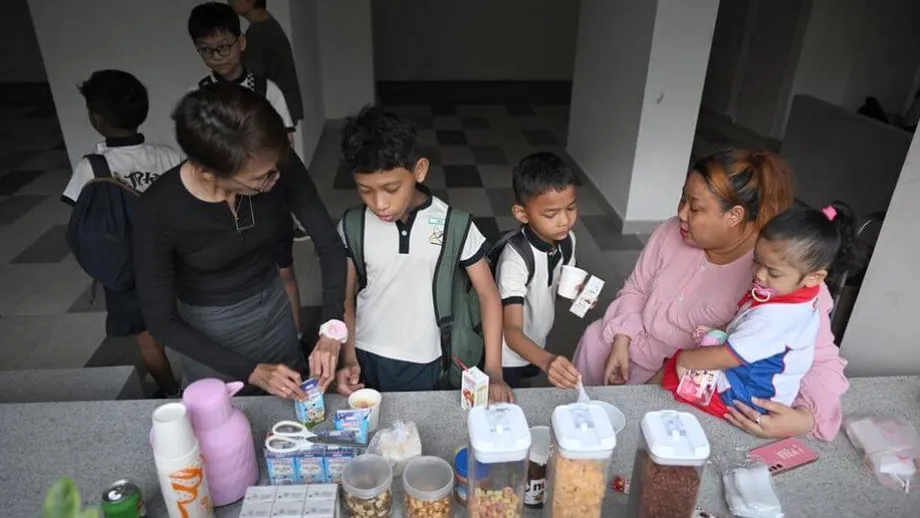
At 6:30 a.m. every Monday, Wednesday and Friday, children gather at the void deck of Block 228A in Ang Mo Kio for a free breakfast. Behind the tables is Lydia Susiyanti Sukarbi, a mother of six who began Breakfast Buddy in February 2025 while supporting her own family on about S$3,000 a month.
Contents
- A Morning Meal at Block 228A
- The Experience Behind the Breakfast Table
- Three Jobs and a Household Budget
- Children Help Choose the Menu
- Halinah Makes the Journey to Help
- A Breakfast That Fits a Family's Morning
- Neighbours and Organisations Share the Work
- Sharing the Strengths of the Neighbourhood
- Food, Belonging and Keeping Breakfast Going
- Key Points
By June 10, 2025, the initiative was serving about 15 children, with help from fellow resident Halinah Yatim and a growing circle of donors and community organisations. Cereal, bread, biscuits and drinks give the children something to eat before school, while the chance to sit together gives them time to talk and feel welcome.
Lydia, 36, is her family's sole breadwinner. She lives in a rental flat with two rooms, works three jobs and receives government subsidies. In the early days of Breakfast Buddy, she spent S$300 to S$400 of her own money each month on the meals.
Her decision to start the programme grew from something she had seen while working as a school canteen vendor: some students skipped their own recess meals so their younger siblings could afford food. Breakfast Buddy became her answer to a practical question about what neighbours could do to help.
The Experience Behind the Breakfast Table
Lydia's concern for children arriving at school without enough to eat came from watching the choices some families faced. A child giving up a meal for a younger sibling was making a sacrifice that could easily pass unnoticed during a busy school day.
She responded with a regular breakfast gathering close to home. The programme offers food and company before children head to school, bringing support into a familiar neighbourhood space.
Lydia's own family also depends on assistance. Her six children, aged one to 15, receive support through the Ministry of Education's Financial Assistance Scheme, which helps families with lower incomes meet school expenses. Her husband stays home to care for the children while she works.
Three Jobs and a Household Budget
Lydia combines a bridal business run from home with roles at the social enterprises Skillseed and Allkin Singapore. The three jobs are all undertaken on a part time basis, allowing her to earn a living while managing the demands of a large household.
Her monthly earnings of about S$3,000, together with government subsidies, support the family. Against that income, the S$300 to S$400 she initially spent on Breakfast Buddy represented about 10 to 13 per cent of her monthly earnings.
Friends, relatives and members of the wider community later began contributing. Their donations eased the amount she had to cover herself and helped turn a personal commitment into a shared neighbourhood effort.
Lydia's willingness to help others has roots in her childhood. The eldest of five children, she often invited friends home for meals. Her mother, now a retired hawker, was known for her generosity, giving Lydia an early example of sharing food with people beyond the immediate family.
Children Help Choose the Menu
Breakfast Buddy's menu is simple: cereals such as Froot Loops, bread with Nutella or peanut butter, biscuits, and drinks including hot Milo, milk and juice. Lydia and Halinah encourage the children to choose what they would like.
The menu changed after the organisers listened to the children. They initially offered cooked food, including scrambled eggs and hot dog rolls, but found that cereals and sweet spreads were more popular.
Lydia, the programme's founder, explained why some children wanted a change from the cooked options:
They told us they get sausages at home every day—they want something different.
Giving the children a say helps make breakfast something they look forward to. Their preferences shape what is served, and choosing for themselves gives them a sense of dignity and control over a small but personal part of the morning.
Halinah Makes the Journey to Help
Halinah Yatim, 52, helps Lydia set up and serve breakfast despite facing mobility challenges of her own. She travels for 20 minutes on a scooter from her rental flat to join the programme.
For Halinah, seeing the children eat together and share their stories is part of the pleasure of volunteering. The gathering gives the adults time to listen as well as serve food.
Halinah, Lydia's partner in running Breakfast Buddy, explained why she asks the children about their preferences:
We ask them what they want (to eat) to make them feel they have the privilege of choosing. That they can choose also brightens their day.
Her approach makes the breakfast table a place where children are asked what they think. A meal meets an immediate need, while the conversation recognises each child as someone with tastes, opinions and experiences worth hearing.
A Breakfast That Fits a Family's Morning
Aina Adrianna Mohammad Fareez, 11, attends Breakfast Buddy regularly with her younger brother. Their mother is a single parent who works in childcare and often has to leave early for work.
For their household, the difficulty is fitting breakfast around the start of the working day. Having somewhere nearby to eat helps the children get a meal when their mother is rushing to work.
Aina, one of the children who regularly joins the breakfast gathering, described what it means to her:
It fills my stomach. We don't eat much at home, as my mum needs to rush to work in the morning. And it has some of my favourite things such as Froot Loops, Nutella and Milo.
Her experience captures both sides of the programme: the immediate relief of having something to eat and the enjoyment of finding familiar favourites on the table. Breakfast becomes a moment of comfort before the school day begins.
Neighbours and Organisations Share the Work
Breakfast Buddy reflects the spirit of gotong-royong, a Malay term for communal help and mutual support. Lydia started the effort, but neighbours, donors and organisations have helped carry it forward.
The Singapore Government Partnerships Office (SGPO) and the People's Association (PA) have supported the initiative, including through the provision of storage space. They are also helping Lydia apply for community grants through Skillseed.
Storage had been an early problem because Lydia had little room for food supplies in her small flat. Access to additional space has eased that pressure, giving the programme practical support alongside donations.
The SGPO, which works to strengthen government partnerships with citizens, described Breakfast Buddy as a "heartwarming citizen-led, ground-up effort that brings the neighbourhood together." A spokeswoman for the office also spoke about Lydia's example:
Everyone in the community can be a change maker. We are completely inspired by Lydia's spirit of wanting to help others.
Sharing the Strengths of the Neighbourhood
Skillseed has another connection to Lydia's community work. As a mentor guide, she leads learning journeys through her neighbourhood, sharing her life experiences and showing the strengths of the community living in rental flats.
Phua Huijia, Skillseed's founding director, said Lydia is paid for each trail she leads as a community guide. Lydia also mentors new guides, extending her contribution beyond the people who take part in her own neighbourhood tours.
Those roles give her opportunities to share what residents can contribute, alongside the pressures they face. Breakfast Buddy puts the same idea into practice: a resident who receives support can also organise support for others.
Lydia rejects the label "poor" and instead describes people as "under-resourced" in different ways. For her, the resource someone lacks may be time, money or love. That view leaves room for people with limited income to recognise what they still have to give.
Food, Belonging and Keeping Breakfast Going
Breakfast Buddy offers children a safe space, a sense of belonging and the reassurance that someone cares. Its regular schedule brings food and familiar faces into the morning three times a week.
Research on breakfast consistently associates eating a morning meal with better concentration and memory, as well as fewer behavioural difficulties. For families with limited resources, reliable access to breakfast can support a child's learning and emotional wellbeing.
Lydia and Halinah's gathering addresses that need through a small, local routine. About 15 children can eat together, choose from the food available and talk with adults who have made time for them.
Funding remains a concern, even as donations have eased Lydia's personal spending and community partnerships have helped with storage. Applications for community grants are part of the effort to support the programme; no decision date has been given.
Lydia's example has also encouraged others to consider what they can contribute within their own circumstances. The programme began with one mother's response to children missing meals and now depends on several people sharing money, supplies, space and time.
Key Points
- Lydia Susiyanti Sukarbi, 36, started Breakfast Buddy in February 2025 after seeing students skip meals so younger siblings could afford food.
- The programme serves about 15 children at 6:30 a.m. on Mondays, Wednesdays and Fridays at Block 228A in Ang Mo Kio.
- A mother of six and her family's sole breadwinner, Lydia initially contributed S$300 to S$400 a month from earnings of about S$3,000.
- Halinah Yatim, 52, helps run the breakfasts, with children choosing from cereals, bread, biscuits and drinks.
- Donors, Skillseed, the SGPO and the PA support the effort, including through storage assistance and help with grant applications.
- The gathering provides food, companionship and a regular place for children to feel welcome, while funding remains a concern.