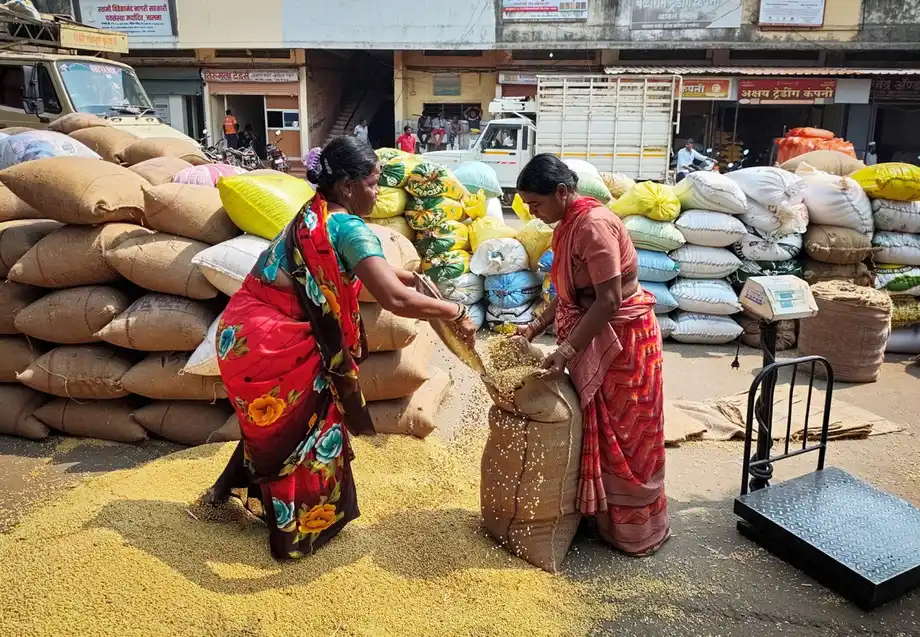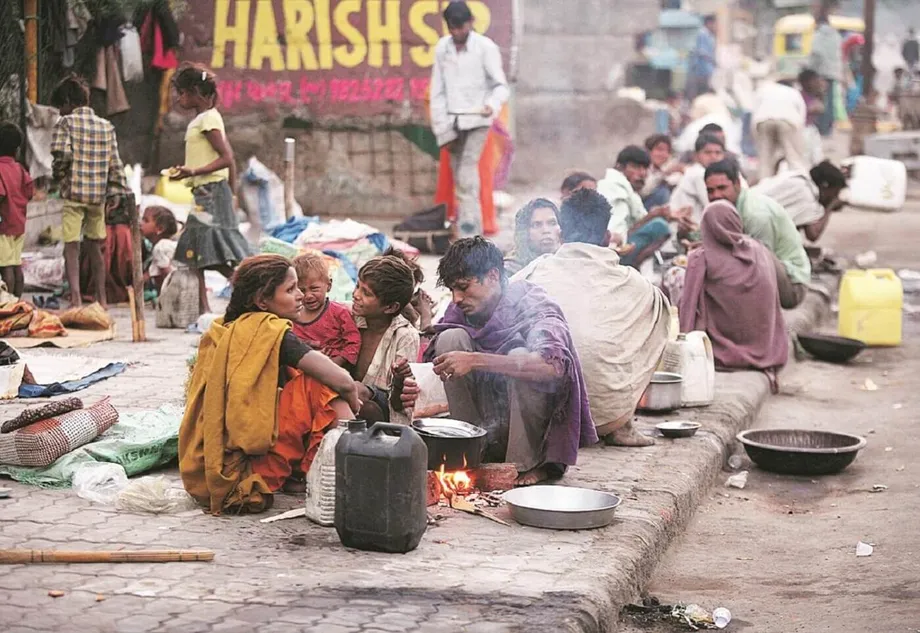
A sharp decline, with millions still facing hardship
India's extreme poverty rate fell from 27.1% in 2011-12 to 5.3% in 2022-23, according to World Bank data described as the latest available on June 10, 2025. The decline comes as the institution raises its international extreme poverty threshold to $3 per person per day, bringing renewed attention to how many people have moved beyond the deepest financial hardship.
Contents
- A sharp decline, with millions still facing hardship
- How many people moved out of extreme poverty?
- What the new poverty thresholds mean
- The dates behind the figures
- Villages and cities both recorded gains
- Food support and growth helped households
- Poverty remains concentrated in populous states
- Pakistan faces a more difficult poverty picture
- Families remain exposed to economic shocks
- Key Points
The figures point to a major improvement in living standards across a country with a large and growing population. They also leave a substantial challenge: just over 75 million people were counted as living in extreme poverty in 2022-23, while many others remained vulnerable to losing the progress they had made.
Economic growth and government assistance, especially free and subsidised food, are credited with supporting the reduction. Progress has reached both villages and cities, and the gap between their extreme poverty rates has narrowed.
Understanding the change requires keeping track of which poverty threshold is being used. The World Bank's figures include calculations under both the older $2.15 daily line and the newer $3 line. Each threshold sets a different boundary for counting people in extreme poverty, so the figures need to be presented with their respective standards and dates.
How many people moved out of extreme poverty?
The World Bank's Poverty & Equity Brief puts the number of people lifted out of extreme poverty between 2011-12 and 2022-23 at approximately 171 million. The population counts also cited for that period show a fall from 344 million people living in extreme poverty to just over 75 million.
Those figures describe a large reduction in hardship, although the stated number leaving poverty and the change between the two population counts do not match. A further estimate puts extreme poverty in 2024 at about 54.7 million people, or 5.44% of India's population, under the $3 daily threshold. How those counts and percentages fit together was not explained.
India's population growth makes the number of people affected an essential part of the story. A poverty rate describes the share of people below a threshold; a population count describes how many people that share represents. Both measures matter when governments decide the scale of assistance needed.
What the new poverty thresholds mean
The World Bank periodically updates its international poverty lines to reflect changes in prices and living costs. The update described in the June 10 account raised the extreme poverty threshold for countries with low incomes from $2.15 to $3 per person per day in June 2024.
For countries with lower middle incomes, including India, the corresponding poverty line increased from $3.65 to $4.20 per day. This broader threshold captures hardship beyond the most severe deprivation measured by the extreme poverty line.
The updated methodology adjusts for inflation and the cost of living. In simple terms, a poverty threshold needs to reflect what money can buy: when the cost of basic necessities changes, the benchmark used to measure hardship needs updating too.
The revised extreme poverty threshold is described as 15% higher for India than the previous $2.15 standard after the methodological adjustment. The purpose of these updates is to keep poverty statistics relevant as prices and economies change.
Under the older $2.15 daily line, India's extreme poverty rate fell from 16.2% in 2011-12 to 2.3% in 2022-23. Under the newer $3 line, the corresponding figures were 27.1% and 5.3%. Both sets show a substantial decline, while the higher threshold counts a larger share of the population as extremely poor.
The dates behind the figures
India's poverty figures cover several periods, rather than a single observation. The main comparison spans 2011-12 to 2022-23, while a further estimate refers to 2024 and the assessment of progress is dated June 10, 2025.
The sequence helps readers keep the household poverty comparison separate from the later estimate and the change in the international benchmark:
- 2011-12: India's extreme poverty rate was 27.1% under the $3 line and 16.2% under the older $2.15 line.
- 2022-23: The rates fell to 5.3% and 2.3%, respectively, with just over 75 million people counted in extreme poverty under the newer threshold.
- June 2024: The international extreme poverty threshold was described as rising from $2.15 to $3, while the line for countries with lower middle incomes increased from $3.65 to $4.20.
- 2024: A further estimate placed extreme poverty at 54.7 million people and a rate of 5.44% under the $3 line.
- June 10, 2025: India's progress was assessed alongside continuing risks to household finances and economic growth.
Villages and cities both recorded gains
Rural extreme poverty fell from 18.4% to 2.8%, while urban extreme poverty declined from 10.7% to 1.1%. These figures accompany the comparison using the older $2.15 poverty threshold.
The rural and urban gap narrowed from 7.7 percentage points to 1.7 percentage points. A percentage point measures the distance between two percentages: here, it shows how much higher the rural poverty rate was than the urban rate.
Villages still had a higher extreme poverty rate at the end of the period, but the smaller gap shows that the improvement extended beyond cities. Rural development programmes and infrastructure investment are identified as contributors to that progress.
Food support and growth helped households
The World Bank and experts cited in the assessment attribute India's reduction in poverty to robust economic growth alongside government programmes aimed at people facing financial hardship. Growth and assistance operate through different channels: an expanding economy can support livelihoods, while public support helps households meet essential needs.
Free and subsidised food transfers were identified as one of the most consequential measures. They provided a safety net for millions of people, particularly during the COVID-19 pandemic and other periods of economic uncertainty.
Food support matters directly to household budgets. When families receive food free or at a reduced price, they have less to pay for that basic necessity. The account credits the expansion of this assistance with helping protect people during difficult periods.
Improvements in the quality and scope of household surveys have also given policymakers better tools to identify poverty and respond to it. Surveys collect information about household circumstances, helping authorities understand where assistance is needed and assess changes over time.
Poverty remains concentrated in populous states
Five of India's most populous states account for 54% of the country's extremely poor people. More than half of those facing the deepest deprivation are therefore concentrated in a small group of states.
Targeted intervention in these regions could help accelerate further reductions. The concentration also shows why a falling national rate needs to be considered alongside conditions in individual places: chronic poverty persists in some regions even after substantial national progress.
For the people still below the extreme poverty threshold, the central issue remains access to basic necessities and dependable support. The national improvement reduces the scale of the challenge, while the concentration of hardship helps indicate where continued action could reach many of those still affected.
Pakistan faces a more difficult poverty picture
Pakistan provides a regional contrast. World Bank figures cited for the country place nearly 45% of its population in poverty, including 16.5% in extreme poverty. A poverty rate of 42.4% is also given.
Pakistan's economic growth of 2.6% is described as insufficient to reduce poverty. An additional 1.9 million people are expected to fall into poverty in 2024-25, with population growth and difficulties in agriculture identified as contributing pressures.
India's reduction is attributed to stronger economic growth and more effective social safety nets. The contrast highlights the importance of both household support and the pace of economic expansion in the two countries' poverty assessments.
Families remain exposed to economic shocks
The World Bank cautions that a substantial share of India's population remains vulnerable to slipping back into poverty. Economic shocks, health crises and what the assessment calls "accidents of life" can put household finances under pressure.
India's real gross domestic product, a measure of economic output adjusted for price changes, remains about 5% below its trajectory before the pandemic. The economy has therefore not fully returned to the path described by that earlier trend.
Trade tensions and changes in economic policies elsewhere create further uncertainty. Such pressures form part of the economic setting in which India must sustain poverty reduction and support households that remain financially insecure.
The financial outlook also contains stabilising factors. India's current account deficit is expected to remain manageable, and foreign exchange reserves are projected to stay stable. The current account tracks trade and other income flows with the rest of the world; foreign exchange reserves are holdings of foreign currencies and related assets.
India's progress leaves a cautiously optimistic picture: extreme poverty has declined sharply, food assistance has supported millions, and the rural and urban gap has narrowed. Continued hardship in some regions and households' exposure to sudden setbacks remain central concerns.
Key Points
- India's extreme poverty rate fell from 27.1% in 2011-12 to 5.3% in 2022-23 under the $3 daily threshold.
- The Poverty & Equity Brief cites approximately 171 million people leaving extreme poverty; population counts of 344 million and just over 75 million are also given.
- Under the older $2.15 line, extreme poverty fell from 16.2% to 2.3%.
- Rural extreme poverty declined from 18.4% to 2.8%, and urban extreme poverty from 10.7% to 1.1%.
- Five populous states account for 54% of India's extremely poor people.
- Economic growth, food transfers, rural development and better household surveys are credited with supporting progress.
- Pakistan faces continuing poverty pressures, with an additional 1.9 million people expected to enter poverty in 2024-25.
- Health crises, economic shocks and global uncertainty continue to threaten financially vulnerable households in India.