A distant planet revealed by its gravitational pull
A planet about 10 times the mass of Earth, orbiting a star roughly 2,472 light-years away, has emerged as a promising discovery in the search for potentially habitable worlds. Named Kepler-725c, it completes an orbit every 207.5 days and spends part of that journey within its star's habitable zone, the region where conditions might allow liquid water to exist.
Contents
- A distant planet revealed by its gravitational pull
- What kind of world is Kepler-725c?
- How another planet exposed the hidden world
- Why the usual searches can miss planets
- A habitable zone with a changing distance
- Why a star like the Sun draws attention
- Distance limits the next observations
- What future planet searches could gain
- Key Points
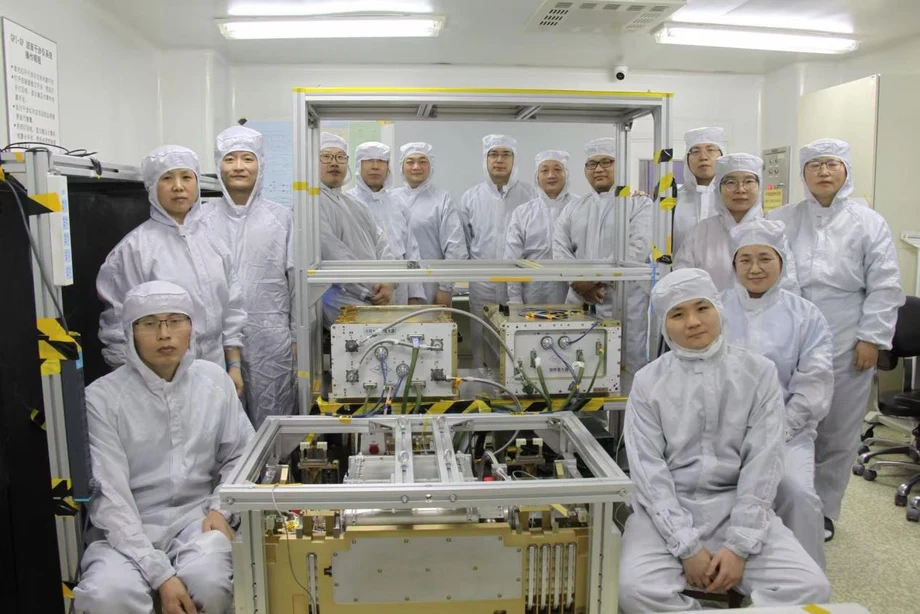
An international team led by the Yunnan Astronomical Observatory of the Chinese Academy of Sciences announced the discovery. The finding, published in Nature Astronomy on June 3, 2024, used changes in the timing of another planet's movements to reveal a world that astronomers could not see passing in front of its star.
The team included scientists from China, Germany and the UK. Their work marks the first use of the Transit Timing Variation technique, known as TTV, to discover a super-Earth in the habitable zone of a star similar to the Sun.
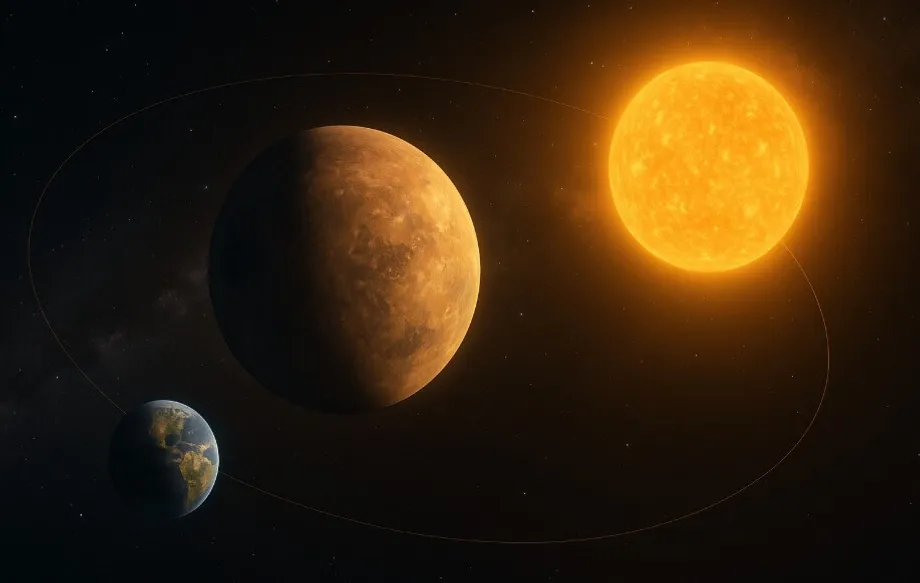
Kepler-725c receives about 1.4 times the solar radiation Earth receives. Its orbit is elliptical, so its position relative to the habitable zone changes during its year. Understanding that movement is central to understanding the planet: its distance from its star offers a reason to investigate whether conditions could support liquid water, while its atmosphere and surface remain unknown.
What kind of world is Kepler-725c?
Kepler-725c belongs to a category called super-Earths, planets larger than Earth but smaller than Neptune. These are among the most common types of planets in our galaxy. The newly discovered world's mass, about 10 times Earth's, places it far above our planet in mass while leaving its physical character uncertain.
Its mass suggests that it could be rocky. Scientists still need to establish whether it is a rocky world, a planet rich in water or one dominated by gas. Direct observations of its atmosphere would help resolve that uncertainty.
The star it orbits, Kepler-725, is a G-type main sequence star, the same broad type as the Sun. It is younger and more magnetically active than our own star. Those similarities and differences matter when considering the environment of a planet receiving more radiation than Earth.
Kepler-725c is therefore a world with several known measurements, including its estimated mass and orbital period, but with basic features still awaiting investigation. Its place near a Sun-like star's habitable zone makes those missing details especially interesting.
How another planet exposed the hidden world
Kepler-725b, a gas giant in the same system, provided the clue that led astronomers to Kepler-725c. From Earth's viewpoint, the gas giant passes in front of its star. Each passage, called a transit, gives astronomers an event whose timing they can measure.
The researchers found that these transits occurred slightly earlier or later than expected. Kepler-725c's gravity was influencing its neighbour's movements, changing the timing of the gas giant's crossings. By carefully analysing those variations, the team inferred the hidden planet's presence, mass and orbit.
Sun Leilei, the study's lead author, used a clock comparison to explain how an unseen planet can reveal itself through changes in another planet's timing:
"It's like observing how fast a clock runs to determine whether someone has quietly moved the hands," explained Sun Leilei, lead author of the study.
The approach makes the visible planet a guide to an invisible companion. Astronomers follow the effect of the companion's gravitational pull rather than waiting to see the companion itself cross the star.
Why the usual searches can miss planets
Most exoplanets, meaning planets outside our solar system, are discovered through two main techniques. The transit method looks for a dip in a star's brightness when a planet passes in front of it. The radial velocity method measures a slight wobble in the star caused by the gravitational pull of an orbiting planet.
Both methods tend to favour large planets moving on short orbits. Finding planets more like Earth, with longer orbits farther from stars like the Sun, is more difficult. A search shaped by those limits can leave other worlds hidden.
TTV takes a different route. It examines the timing of a known planet's transits to search for the gravitational influence of another body. In the Kepler-725 system, that allowed researchers to investigate a planet that does not transit its star from our viewpoint.
The technique extends the search beyond planets whose own crossings or effects on their stars are easiest to measure. Kepler-725c demonstrates how observations of one member of a planetary system can reveal another.
A habitable zone with a changing distance
Kepler-725c's 207.5-day year carries it along an elliptical orbit rather than a circular one. It spends only part of that year within the habitable zone. Its possible climate therefore depends on a changing relationship with the radiation coming from its star.
The planet receives about 1.4 times as much solar radiation as Earth, or roughly 40 percent more. That comparison helps explain why its atmosphere and surface conditions are essential to understanding whether liquid water could exist there.
An elliptical orbit could produce dramatic climate variations. How the planet experiences those changes would depend on the atmosphere surrounding it and the conditions at its surface, both of which remain to be observed directly.
The habitable zone describes a region around a star where conditions might permit liquid water. For Kepler-725c, the key questions concern what happens during the different parts of its orbit and how the planet's own physical makeup affects those conditions.
Why a star like the Sun draws attention
Most known super-Earths in habitable zones orbit red dwarf stars. These stars are smaller and cooler than the Sun, and planets around them produce stronger transit and radial velocity signals. That makes those planets easier to detect with the two common search methods.
Finding a super-Earth in the habitable zone of a Sun-like star is much rarer. Such systems are especially interesting in the search for life because their stars are more similar to the one at the centre of our solar system.
Kepler-725c brings together that relatively unusual stellar setting and a method capable of uncovering a hidden planet. The discovery broadens the kinds of systems astronomers can investigate when looking for potentially habitable worlds.
Sun Leilei, the lead author, described the value of the result for searches around stars like the Sun:
"This discovery demonstrates the potential of the TTV technique to detect low-mass planets in habitable zones of Sun-like stars," said Sun Leilei.
Distance limits the next observations
Kepler-725c lies approximately 2,472 light-years from Earth, about 160 million times farther away than Earth is from the Sun. That enormous distance makes direct study challenging, even after astronomers have inferred the planet's presence.
Current telescopes such as the James Webb Space Telescope cannot probe its atmosphere because Kepler-725c does not transit its star from our viewpoint. The transit timing measurements have opened a way to find the planet, while detailed atmospheric study remains beyond that route.
Scientists hope future telescopes and missions will allow them to observe the atmospheres of planets like this directly. They want to search for water, oxygen and other possible indicators of life. For Kepler-725c, those goals depend on gaining access to information that the discovery measurements do not yet provide.
What future planet searches could gain
The TTV technique is expected to play a major role in upcoming missions, including the European Space Agency's PLATO mission and China's Earth 2.0 project. Both aim to find more planets like Earth around stars similar to the Sun.
By tracking the gravitational effects of unseen planets on their neighbours, astronomers could uncover worlds in systems where other methods miss them. The approach could greatly increase the number of potentially habitable planets available for investigation, including planets that do not transit their stars or are too small and distant for other detection methods.
Kepler-725c gives that prospect a concrete example: a hidden super-Earth identified through a gas giant's changing transit times. The collaboration between researchers in China, Germany and the UK also reflects the international effort to find other worlds and investigate whether any could support life.
More capable technology and wider use of techniques such as TTV could improve the chances of finding truly Earth-like planets and, eventually, evidence of life. For now, the next scientific challenge is to learn what kind of world Kepler-725c actually is.
Key Points
- Kepler-725c has about 10 times Earth's mass and lies approximately 2,472 light-years away.
- It orbits the Sun-like star Kepler-725 every 207.5 days and receives about 1.4 times the radiation Earth receives.
- Its elliptical orbit takes it through the habitable zone for only part of its year.
- A team led by the Yunnan Astronomical Observatory detected it through changes in the transit timing of the gas giant Kepler-725b.
- The discovery is the first use of TTV to find a super-Earth in the habitable zone of a Sun-like star.
- Its composition, atmosphere and surface conditions remain unknown, and its lack of transits limits current atmospheric observations.
- PLATO and China's Earth 2.0 project are expected to benefit from the technique in future searches.