From Price Wars to Strategic Alliances
Chinese automakers have shifted their strategy in Vietnam from relying on low prices to building robust local partnerships. After initial struggles due to inadequate after-sales service and parts availability, major brands like BYD, Geely, Lynk & Co, and Omoda & Jaecoo are now collaborating with financially strong Vietnamese firms. This approach ensures better distribution networks and reliable maintenance support.
Contents
Between January and September 2026, Vietnam recorded over 14,840 first-time registrations of cars from 11 Chinese brands. This growth reflects a more mature market approach compared to earlier attempts in the 2000s and 2010s, where many brands withdrew due to limited service networks.
Three distinct business models now dominate the landscape. BYD operates its own dealership network. Geely and Lynk & Co have exclusive distribution agreements with Tasco, a major Vietnamese auto distributor. Omoda and Jaecoo, brands under Chery, formed a joint venture with Geleximco and are constructing a manufacturing plant in Hung Yen.
Changing Business Models Address Past Weaknesses
Chinese automakers first entered Vietnam in the 2000s with brands like Chery, Lifan, Geely, and BYD. Most vehicles were imported through small distributors, with low prices as their main advantage. However, consumers remained concerned about durability, build quality, safety, and spare parts availability. Some models faced criticism for designs that closely resembled other manufacturers. When sales did not meet expectations, several brands gradually withdrew from the market.
The closure of some distributors undermined customers ability to access warranty services and repairs. Between 2017 and 2021, Chinese vehicles made another push into Vietnam through private importers. Models such as the Zotye Z8, Brilliance V7, and BAIC Beijing X7 attracted attention with eye-catching designs, extensive equipment, and competitive prices. The Beijing X7 received more than 1,000 orders in its first month on sale in late 2020.
Nevertheless, initial consumer interest was not enough to ensure long-term business viability. Some models were gradually discontinued in Vietnam, while service networks and spare parts supplies remained limited. Some companies simply imported vehicles and sold them. When business became difficult, they withdrew from the market. When customers later needed spare parts and there was no reliable supply, they were the ones who ultimately suffered.
When distributors participate in investments from the outset, they are better positioned to make recommendations to manufacturers regarding vehicle configurations, equipment, and market launch strategies.
This quote from Doan Anh Dung, an automotive expert who runs the Xe Cung channel, highlights the importance of early distributor involvement. Working with local partners also gives automakers greater opportunities to tailor their products to Vietnamese consumer preferences.
Doan Anh Dung explained that Geely EX2 went on sale in Vietnam in March, some four months after its price was announced in Thailand. Dealerships reported periods when prospective buyers had to register for a waiting list. Lynk & Co has also made Vietnam its first market in Southeast Asia. Alongside more mainstream offerings, the brand has introduced premium models such as the 08 EM-P and showcased the Lynk & Co 900.
Strong Sales Reflect Evolving Consumer Preferences
The changes in distribution strategies are beginning to be reflected in new vehicle registration figures. BYD recorded 4,029 vehicles during the January to September 2026 period. Geely and Lynk & Co collectively registered 3,772 vehicles, while Omoda and Jaecoo reached 3,361.
Together, these three groups form a three pronged presence among Chinese automotive brands in Vietnam, each representing a different business model. All three also had products recognized at the Car Choice Awards 2026, including the Geely EX2, Jaecoo J5, and BYD M6. This demonstrates that, beyond distribution scale and registration volumes, developing products that align with consumer needs is also becoming an important competitive factor.
Imports of cars from China rose 44.2 percent year on year in January to October, the fastest growth among Vietnam's three largest import sources. Indonesia remained the biggest supplier by volume. Shipments from Indonesia totaled 89,362 units, up 37.1 percent year on year, while China ranked second with 56,299 units, up 44.2 percent.
Vietnam imported 212,339 completely built up cars, up 26.6 percent from a year earlier, according to Vietnam Customs data. Imports of other types of vehicles increased by 28.5 percent. Passenger cars with up to nine seats accounted for 148,841 units, up 14.5 percent year on year, while trucks totaled 37,517 units, up 66.9 percent.
All these developments reflect the rapid growth of vehicle electrification in Vietnam. This is a clear sign of China's expanding global exports of new energy vehicles.
Assoc. Prof. Dr. Do Van Dung, chairman of the Ho Chi Minh City Society of Automotive Engineers, noted that Indonesian imports remain Vietnam's leading source by volume, thanks to affordable mass market models such as the Toyota Yaris Cross, Mitsubishi Xpander, and Mitsubishi Xforce. Chinese vehicles, however, have a higher average import value than those from Indonesia and Thailand, reflecting a greater share of commercial vehicles and more technologically advanced electrified models.
The Crucial Role of After Sales Service
Beyond the vehicles themselves, after sales service plays a crucial role in determining whether automakers can sustain their operations in Vietnam. Buyers need reliable access to maintenance, repairs, and spare parts throughout the ownership period. When an importer exits the market because its business is no longer viable, customers may face difficulties obtaining replacement components.
Automakers need to work with distributors that have sufficient resources to invest in dealership networks, spare parts warehouses, and after sales service infrastructure. However, the financial strength and scale of a distributor alone cannot guarantee success. Long term viability will also depend on choosing the right products, expanding service networks, and ensuring a consistent supply of spare parts throughout the vehicle ownership cycle.
Consumers are increasingly paying attention to technology, performance, and operating costs rather than simply low prices. This shift is particularly evident as incentives for electric vehicles have been extended through 2030. VinFast, Vietnam's domestic electric vehicle maker, delivered more than 200,000 electric cars in the first 10 months of 2026.
The Vietnamese domestic market is undergoing rapid electrification along two parallel paths: domestic electric vehicle production led by VinFast and imports of new energy vehicles and hybrids from China. Chinese imports are adding more hybrid and higher end electric vehicle options, increasing competition and diversifying the market.
Omoda and Jaecoo Launch Manufacturing Hub
Omoda and Jaecoo, both brands under Chery, have formed a joint venture with Vietnamese diversified business group Geleximco. They are building a manufacturing plant in Hung Yen, marking a significant step toward local production.
The Omoda & Jaecoo Vietnam plant was officially inaugurated with a total investment of 319 million US dollars for its first and second stages. The factory is located in Hung Phu industrial park in Hung Yen province and has a design capacity of 120,000 cars per year.
Phu Thuong Truong Thuong Truyen, Deputy Prime Minister of the Government, emphasized that the inaugurated projects help realize the common recognition between Vietnam and China and the spirit of Resolution 57 on science, technology, innovation, and digital transformation. The project covers an area of more than 380,000 square meters.
Phu Van Tien, Chairman of the Founding Council of Geleximco, stated that the Omoda & Jaecoo Vietnam automobile factory is the heart of the Geleximco Chery joint venture. He expressed hope that it would not only be an industrial construction project but also a foundation to promote national production capacity, gradually making Vietnam a center for automobile production and export.
The factory aims to serve the domestic market and gradually expand exports. It focuses on producing Omoda, Jaecoo, and iCaur car lines, especially prioritizing the development of new energy vehicles. The project is expected to create about 5,000 direct jobs and 20,000 indirect jobs in Hung Yen.
Jaecoo J5 and iCAUR V27 are expected to be the first models assembled at the plant. In parallel with the car factory, Omoda & Jaecoo Vietnam continues to expand its ecosystem through subsidiaries implementing semiconductor and robot production projects.
The semiconductor factory has an area of 10.3 hectares and is expected to produce in batches from February 2028. The robot production plant has an area of about 50,000 square meters and is expected to operate from November 2027. These projects aim to develop production capacity and provide technology solutions for industry, commerce, education, and smart application fields.
Addressing Recalls and Quality Assurance
Quality assurance has become a key focus for Chinese automakers. Chery recently faced a wave of recalls related to the Omoda 5 model after reports of rear axle failures. The issue was first recorded in Malaysia, where an image shared on social media showed the entire rear wheel assembly separating from the body of an Omoda 5.
The cause of the failure was linked to uncalibrated robot welding at a supplier. Two axle breakage incidents occurred in Malaysia in April 2024 and October 2026. Chery Malaysia subsequently launched a larger scale recall campaign, with 8,878 Omoda 5 cars from two versions, C and H, affected.
Mr. Nguyen Dang Quang, Vice President of Business for Omoda & Jaecoo Vietnam, confirmed that Omoda C5 vehicles in Vietnam are unaffected. He stated that the vehicles are imported from Indonesia, not Malaysia, and belong to a different supply chain. The company checked the imported goods information and confirmed that the Omoda C5 vehicles in Vietnam do not belong to the category needing recall.
Recalls were subsequently extended to other markets. In China, Chery sent a notice to the State Administration for Market Regulation on November 6, with recalls expected to start from November 27. A total of 53,882 Omoda 5 and Tiggo 5X vehicles were affected. In Indonesia, Chery announced preventive recalls on November 10 for some Omoda 5 Z and RZ versions. South Africa and Australia also announced recalls for Omoda 5 vehicles.
This multi market approach demonstrates the growing global footprint of Chinese brands and their ability to manage quality issues across different regions. The rapid response from Chery and Omoda & Jaecoo Vietnam helps maintain consumer confidence and ensures that local customers are not adversely affected by international supply chain issues.
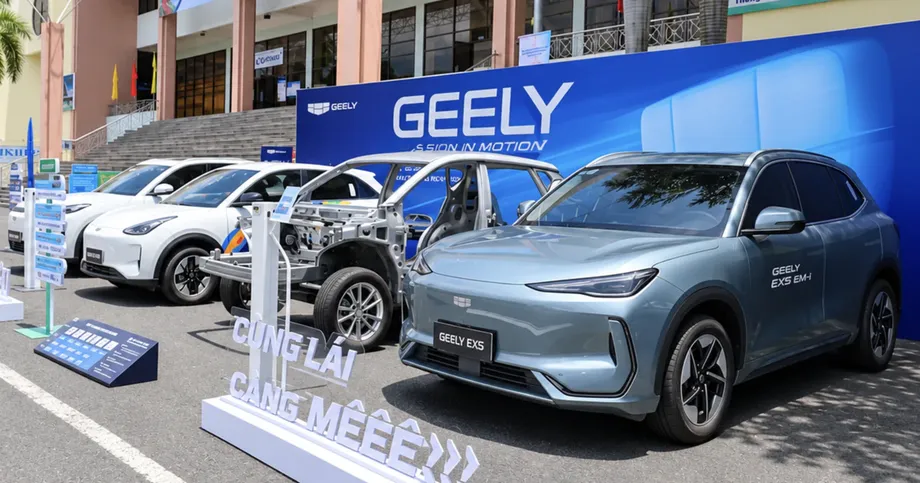
The Vietnam Mobility Show 2026, held on December 5 and 6, provided a platform for over 40 brands to showcase their vehicles. Geely, BYD, and Lynk & Co participated, with Tasco Auto ecosystem brands presenting new models. TMT Motors and iCaur joined for the first time, introducing new electric and gasoline models.
The event included test drives for nearly 100 vehicles and a dedicated luxury car area featuring Mercedes, Land Rover, and Maserati. The show highlighted the diversification of the Vietnamese auto market, with a focus on technology, safety, and consumer experience.
Key Points
Chinese car imports to Vietnam rose 44.2 percent year on year in January to October 2026, with 56,299 units imported.
BYD, Geely, and Omoda & Jaecoo lead the market with distinct business models focusing on local partnerships and distribution.
Omoda & Jaecoo inaugurated a 319 million US dollar manufacturing plant in Hung Yen with a capacity of 120,000 cars per year.
Vietnam recorded over 14,840 first time registrations of cars from 11 Chinese brands between January and September 2026.
Consumer focus is shifting from low prices to technology, performance, and reliable after sales service.
Recalls for the Omoda 5 model are being managed effectively, with Vietnamese imports from Indonesia confirmed as unaffected.
The Vietnam Mobility Show 2026 highlighted the growing presence of Chinese brands alongside domestic and Western manufacturers.