Physical Form for Oral Scripture at Salpa Silichung
Approximately Rs 26.2 million has been invested in constructing new cultural structures at Salpa Silichung, a sacred site in eastern Nepal that now offers trekkers a physical connection to the Mundum, the traditional oral scripture of the Kirat community. The development campaign, which began in 2022 with the establishment of an international committee, collected around Rs 28.4 million from Kirati and non Kirati donors across Nepal and abroad. Rajen Khimbule Rai Mulghare Kancha, chairperson of the Salpa Silichung Concern, Conservation and Promotion Centre, confirmed that the funds were used to erect statues of Sumnima, Paruhang, Nakchhung, the Nakchhung bird, and a Mundum Mangtham featuring three hearths.
Contents
These additions give tangible shape to ancient myths at the historically significant site. Rai explained that the physical structures aim to preserve indigenous knowledge and present traditional beliefs in a way that is accessible to international travelers. The initiative seeks to protect indigenous knowledge by presenting traditional beliefs through permanent physical landmarks, helping future generations study and research Mundum wisdom.
Salpa Silichung is where Kiratis from around the world gather for Mundum and Risima. Our goal is to conserve and promote the area and eventually list it as a world heritage site.
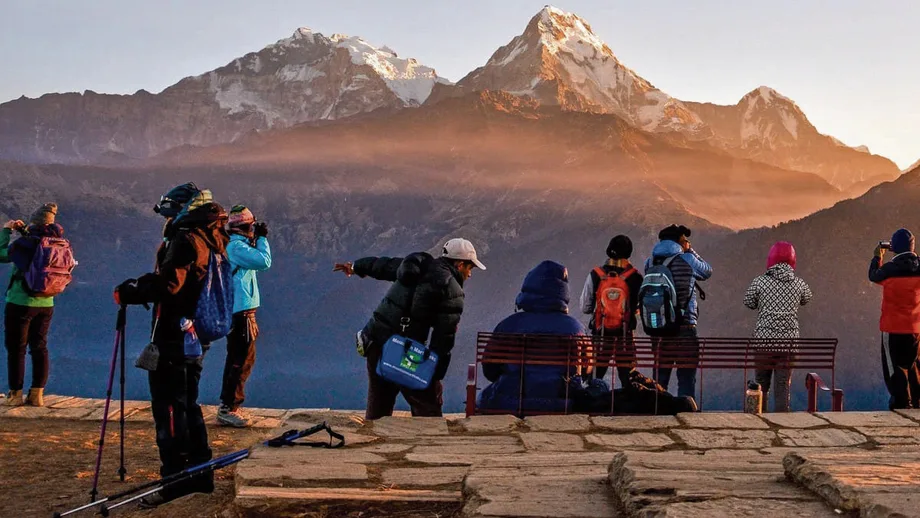
The site, located at the junction of Khotang, Bhojpur, Sankhuwasabha and Solukhumbu districts, sits at an altitude of 3,443 meters. From Silichung, visitors can enjoy panoramic views of Mount Everest, Makalu, Kanchenjunga, Kumbhakarna and Mera Peak, as well as the southern plains, rivers and forests.
The Greater Mundhum Trail Connects Terai to Everest
The physical developments are part of a larger effort to develop the Greater Mundhum Trail, a unique trekking route connecting the lowland Terai to the base of Mount Everest. Ramesh Kumar Rai, chairperson of the Maiyung Tyamke Salpa Silichung Tourism Promotion Center, stated that the trail has been divided into three distinct segments to highlight the natural and ethnic diversity of the region.
The Lower Mundhum Trail stretches from Khuwalung in Chataradham to Tawa Vanjyang in Khotang. The Main Mundhum Trail continues from Tawa Vanjyang to Salpa Silichung in Bhojpur. The Upper Mundhum Trail extends from Chheskam in Solukhumbu all the way to Everest. Rai described the route as an attempt to create Nepal's first major tourist trekking route that captures global attention by connecting the Terai, hills, and Himalayas.
Trekkers on the Greater Trail experience a diverse landscape, moving from the warm lowland breezes of the Terai to the snowy peaks of the Himalayas. The route offers glimpses of rich biodiversity, from the endangered wild buffalo to yaks and sheep. The route was finalized after extensive exploration in coordination with the Mahakulung Rural Municipality of Solukhumbu, which identified viable walking paths, suitable accommodation spots, and significant natural and cultural highlights.
Fundraising from a Global Diaspora
The financial backing for the Salpa Silichung project demonstrates the importance of community participation in preserving cultural heritage. An economic collection committee, led by Bhogindra Chamling Rai and based in Saudi Arabia, coordinated the fundraising efforts. The campaign received support from Nepalis living in the UK, Hong Kong, South Korea, the US, Australia, Japan, and Israel.
The fundraising campaign launched in 2079 BS (2022 AD) and has been ongoing for four years. A detailed project report was prepared to guide the upgrading works, and the financial and physical progress of the campaign will be made public during a grand program in Kathmandu on Mangsir 18. The Detailed 24-point joint resolution letter for Mundhum Trail development was issued at the April 22 inter-municipality meeting, which included key speakers Hari Prasad Ghimire, Madhav Kumar Adhikari, Asmita Kulung, Daulath Kulung, and Kailash Kumar Magar.
Instead of focusing exclusively on commercial tourism infrastructure, the project places considerable emphasis on religious identity and historical conservation. The new structures complement existing religious attractions, such as Salpa Pokhari, a sacred mountain lake where pilgrims believe prayers will fulfill their wishes. The area sits at an altitude of 3,443 meters, with Silichung peak reaching 4,155 meters.
Boosting Local Tourism and Infrastructure
The construction of these structures has already begun to transform the local economy. Nawa Raj Kangmang, a hotel entrepreneur in the Chakewa area, reported a significant increase in tourist footfall. He noted that between 150 and 200 people pass through the Chakewa area daily during peak seasons. The 16 hotels in Chakewa are often fully occupied during the favorable trekking weather, which typically runs from Bhadra to Mangsir and Chaitra to Ashwin.
The influx of tourists has created new opportunities for local businesses. Kangmang highlighted that visitors not only stay in hotels but also purchase local agricultural produce and household goods, thereby expanding the market for local products.
As the number of tourists increases, the business in hotels is growing. This has boosted the income of hotel operators and helped expand the market for local agricultural produce.
Local government officials are also investing in infrastructure to support this growth. Saroj Basnet, chairman of the Tamkeyrung Rural Municipality, emphasized that the Mundum Trail is being developed as a key tourism asset. The municipality is focusing on conservation, cleanliness, and improved transportation to ensure a safe and enjoyable journey for visitors. Ramadevi Rai, the deputy chair, added that tourism development plays a vital role in increasing the income of local citizens by creating opportunities for hotels, food shops, and the marketing of local products.
Historical and Spiritual Significance
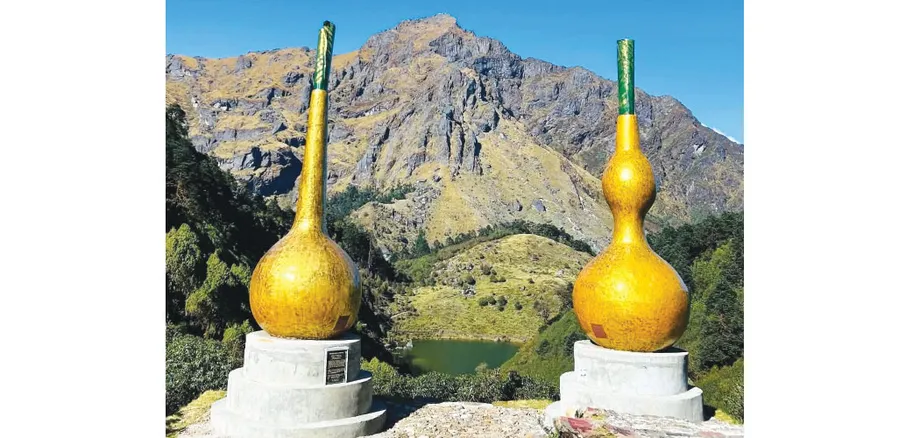
Salpa Silichung holds deep spiritual significance for the Kirat community. According to Mundum mythology, Salpa Silichung is considered the center of creation and the origin of Mundum. The site features a 35 foot brass pair of gourds, a statue of Paruhang in deep meditation inside the pond, and a Nakchhung bird statue.
Salpa Pokhari, situated at an altitude of 3,672 meters, is a central attraction. Fairs are held at the pond four times a year on the full moon of Baisakh, Bhadau, Kartik, and Falgun, drawing pilgrims from Khotang, Bhojpur, Sankhuwasabha, Dhankuta and Solukhumbu. Local beliefs hold that prayers at Salpa Pokhari can cure speech impediments, grant children to those who desire them, and bestow Mundum power on shamans.
Historical accounts suggest that Edmund Hillary and Tenzing Norgay Sherpa used the Salpa Pokhari route during their first ascent of Mount Everest. The area also features other high peaks such as Temke at 3,165 meters and Maiyung at 3,333 meters, which is one of the highest hills in the vicinity.
Strategic Vision for World Heritage Status
The long term ambition for Salpa Silichung is to secure its inscription on the World Heritage List. The Nepal Tourism Board designated 2025 as the Mundum Trail Visit Year, aiming to attract more than 100,000 domestic and international visitors. The promotional activities focused on cultural traditions, community experiences, trekking, mountain cycling, and regional festivals. The specific government allocation details for the 100 must-visit tourist destinations include a target of 100,000 tourists to the Mundhum Trail by 2025, with all rural municipalities agreeing to allocate money to celebrate "Mundhum Trail Visit Year 2025".
The development of Mundum facilities supports the conservation of the Kirat ethnic group's traditional culture while encouraging both local and global tourists to explore the Eastern Himalayas. By combining cultural preservation with nature based tourism, the initiative aims to strengthen the destination's position within Nepal's diverse tourism landscape.
The Mundum Trekking Trail, which extends approximately 80 kilometers, has been included in the government of Nepal's list of 100 must visit tourist destinations. Local levels across the four districts are constructing trails to connect with the route, leading to a recent expansion of hotels and homestays.
What to Know
- Rs 26.2 million spent on new structures at Salpa Silichung, the terminal point of the Mundum Trekking Trail.
- Raes of Sumnima, Paruhang, Nakchhung and the Nakchhung bird now stand at the site, giving physical form to Mundum myths.
- The Greater Mundhum Trail connects the Terai to Everest, divided into Lower, Main, and Upper segments.
- Raij Khimbule Rai Mulghare Kancha leads the international committee established in 2022.
- Fundraising supported by a global diaspora including the UK, US, Japan, and Saudi Arabia.
- Tourist footfall has increased to 150 200 people daily in peak seasons, boosting local hotel and agricultural sales.
- The site aims for World Heritage List status, with a progress report due on Mangsir 18 in Kathmandu.