Two prices for the same shipment
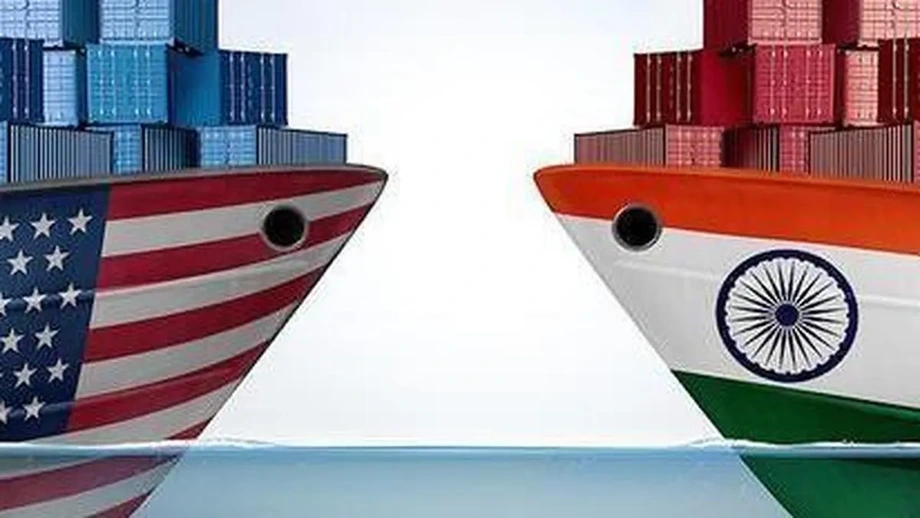
On November 25, the Office of the United States Trade Representative published the findings of its investigation into structural excess manufacturing capacity and attached two price tags to Indian exports. Goods from India would face additional duties of up to 25 per cent. If New Delhi signs a reciprocal trade agreement that answers those findings, the rate would fall to 17 per cent.
Contents
India sits second on the list of proposed rates, behind Vietnam at up to 35 per cent. Asia's other manufacturers are quoted lower numbers: Bangladesh, Cambodia, Indonesia, Malaysia and Thailand are offered 18 per cent if they sign deals, China and Vietnam 20 per cent, and Taiwan, Japan, South Korea, Switzerland and the European Union up to 15 per cent. Mexico and Norway were investigated and left out of the proposal.
The rates are proposals. The USTR has asked for written comments by January 5, 2027 and has scheduled a public hearing on January 25. No date for the duties to take effect has been announced. Jamieson Greer, the US Trade Representative, said he did not expect them to apply sooner than a couple of months, and that the lower figure is tied to a signature.
Greer described the offers as consistent with the agreements Washington reached over the past year, which also opened markets to American goods.
We're sticking to that in terms of our proposals because we think a lot of these deals we made actually solve a lot of the problems we see in excess capacity or can go toward it. We've talked to our trading partners about this. They know what we're proposing. I think a lot of this is baked in.
The legal basis is Section 301 of the Trade Act of 1974, which lets Washington investigate and then penalise foreign government policies it considers unfair to American commerce. The investigation opened on March 11 under Section 301(b) and covered 16 economies, including Mexico and Norway. Washington's argument is that subsidies and industrial targets push factories to build more than markets can absorb, and that the surplus is then exported at prices American producers cannot match.
What Indian exporters pay today
India currently pays a 10 per cent Section 301 charge on covered goods, imposed on July 24, 2026 after a separate investigation into forced labour practices across 60 trading partners, on top of ordinary customs duties. The new levy would be calculated net of existing Section 301 duties rather than added to the 10 per cent, and the USTR asked for views on adjusting it for duties under Section 232, the national security trade law.
Those carve-outs matter. Steel, aluminium and copper articles and derivatives, vehicles and parts, wood products, patented pharmaceuticals and semiconductors already carry Section 232 duties and are exempt from the new proposal for countries other than China. Brokerage Jefferies estimates that pharmaceuticals, energy products and several electronics and auto component categories, together about 45 per cent of India's $104 billion of annual exports to the US, sit outside the current tariff framework or fall under separate sector investigations.
The exposure is large because the US has been India's largest trading partner since 2021-22. Indian exports to the US grew 0.92 per cent to $87.3 billion in 2025-26 while imports rose 15.95 per cent to $52.9 billion, shrinking India's surplus to $34.4 billion from $40.89 billion a year earlier. Textiles, pharmaceuticals, engineering goods, gems and jewellery, chemicals and electronics all depend on that market.
Twenty months of tariff whiplash
Indian exporters have watched the rate on their goods move seven times in under two years.
- April 2, 2025: Washington announces a 26 per cent duty on Indian goods on "Liberation Day", made up of a 10 per cent baseline and a 16 per cent reciprocal charge.
- April 9, 2025: the reciprocal component is suspended for 90 days, until July 9, while the 10 per cent baseline stays.
- July 31, 2025: a 25 per cent rate is announced, effective August 7, 2025.
- August 6, 2025: an extra 25 per cent penalty is announced over Indian purchases of Russian oil, taking the combined burden to 50 per cent once it takes effect on August 27, 2025.
- February 2, 2026: the two sides agree to cut the reciprocal rate to 18 per cent.
- February 6 and 7, 2026: a joint statement sets out the framework for an interim agreement, and the 25 per cent Russian oil penalty is withdrawn.
- February 20, 2026: the US Supreme Court rules 6-3 that the emergency powers law does not authorise country-specific reciprocal tariffs, voiding the system.
- July 24, 2026: after a temporary 10 per cent global levy under Section 122 expires, a 10 per cent Section 301 charge applies to Indian goods over forced labour concerns.
- September and October 2026: President Donald Trump signs the Sanctioning Russia and Iran Act, which allows duties of up to 100 per cent on buyers of Russian oil and gas, then waives them for 60 days.
The 18 per cent rate agreed in February was never applied, because no agreement was signed. The 17 per cent now on offer is close to that figure, which is why officials in Delhi treat the proposal as the tariff framework they had been waiting for.
What Washington wants in return
The joint statement of February 6 set out the price of the lower rate. India would eliminate or reduce tariffs on all US industrial goods and a wide range of food and agricultural products, including dried distillers' grains, red sorghum for animal feed, tree nuts, fresh and processed fruit, soybean oil, and wine and spirits. It would address long standing barriers to US medical devices and scrap import licensing rules that delay or cap access for American information and communications technology goods.
The two sides also agreed to decide within six months of the agreement taking effect whether US developed or international standards, including testing requirements, are acceptable for American exports in identified sectors. India said it intends to buy $500 billion of US energy products, aircraft and aircraft parts, precious metals, technology products and coking coal over five years.
The statement carried an escape clause that both governments can use if rates move again.
In the event of any changes to the agreed-upon tariffs of either country, the US and India agree that the other country may modify its commitments.
The USTR's case against India names the Make in India initiative and production-linked incentive schemes, manufacturing expansion plans, what it calls inadequate labour protections, financial repression, market access barriers and reliance on inputs and investment from non-market economies. It flags pharmaceuticals and medical devices, steel, solar and information and communications technology as the sectors where American producers lose ground.
The political arithmetic in Delhi
Officials who have followed the talks say the economics can be settled by trade specialists, but the decision cannot. The package has to be defended in front of farmers, small manufacturers and trading communities who will see what India gives up more clearly than what it gains.
A person tracking the negotiations said the team led by the Commerce Department will keep talking in the changed tariff scenario, while the final package of tariff concessions and market access commitments goes to the top leadership for an assessment of its economic and political viability.
It is not merely a question of securing a lower tariff rate. The concessions India has to make in return will also matter.
The same person set out the optics problem in plain terms: the tariff on Indian exports rises in any case, India must lower duties on several US products, and a deal that leaves Indian exporters facing higher tariffs while American goods get wider access to the Indian market could be hard to sell. Opening the domestic market to American farm products is the most sensitive item, given the political cost of touching prices for growers.
India's answer: no such thing as excess capacity
The Ministry of Commerce and Industry said it had taken note of the notice of determination and the request for comments and was examining them. It rejected the premise of the case, maintaining during the proceedings that India has no structural excess capacity in any sector, and said trade concerns should be settled inside the bilateral negotiation rather than through tariffs.
Commerce Minister Piyush Goyal has said the free trade agreement is nearing completion, with the roadmap and process for finalising it almost ready. Commerce Secretary Rajesh Agrawal said in November that negotiations on the first tranche were close to conclusion, but that signing would depend on Washington finalising its new tariff framework and giving clarity on the Section 301 investigations.
That clarity has now partly arrived in the form of the two rate structure, and the ministry reiterated India's commitment to concluding the agreement in line with the joint statement issued on February 7, 2026.
The Graham Act shadow
A second legal instrument sits behind the tariff question. The Sanctioning Russia and Iran Act, championed by the late South Carolina senator Lindsey Graham and signed in September 2026, lets the president impose additional duties of up to 100 per cent on goods from countries that keep buying Russian oil and gas. Trump waived those duties in October, but the waiver runs for sixty days and the authority stays on the statute book.
An industry source called the law one of the biggest uncertainties for India and said the risk would have to be written into the trade negotiations, including any assurances India seeks under the agreement.
The Delhi based think tank Global Trade Research Initiative argues that signing under pressure invites more pressure, since Washington can open fresh Section 301 cases even after a deal. Ajay Srivastava, its founder, wants the case answered industry by industry instead.
India must reject the trade deal and instead answer the allegations sector by sector, showing that its investment serves domestic buyers, overseas customers, and future demand rather than letting exports alone be treated as proof of excess capacity.
What a one point edge buys
The arithmetic of the offer is thin. At 17 per cent India would be one percentage point below Bangladesh, Cambodia, Indonesia, Malaysia and Thailand, and three points below China and Vietnam. Vijay Kalantri, chairman of MVIRDC World Trade Center Mumbai and president of the All India Association of Industries, said that margin has to be weighed against everything else in the package.
Even if India secures a trade agreement with the United States at a tariff rate of 17%, its competitive advantage over countries such as Bangladesh and Indonesia, which could attract a tariff of 18% under their respective trade agreements, would be a mere one percentage point. India must carefully assess whether the concessions sought in return for such a marginal competitive advantage are commensurate with the long-term interests of its domestic industry, agriculture and exporters.
Ashwani Mahajan, national co-convener of the Swadeshi Jagaran Manch, an organisation linked to the Rashtriya Swayamsevak Sangh, said the deal reaches well beyond duties into agriculture policy, dairy policy and patent rules.
There are many slips between the cup and the lip. The deal involves not just the tariffs, but changes in agriculture policy, dairy policy, patent rules etc, all of which have been central to the US demands. They can't reduce their ask (demands) and we can't increase our give (offers).
Biswajit Dhar, a former professor at Jawaharlal Nehru University, points to the shape of the bargain: Washington wants duty free entry for many products in exchange for its 17 per cent. India has never let developed countries charge higher tariffs than it does, and reversing that could raise questions at the World Trade Organization and complicate farm subsidy rules. He also wants a standstill promise that the US will not impose unilateral duties before talks resume.
One comparison cuts against India's edge. The excess capacity case covers 14 economies, while the forced labour case covered 60, which leaves countries such as Pakistan, Sri Lanka, the Philippines and Turkiye outside the additional action and therefore relatively cheaper in the US market.
What is not yet decided
No agreement has been signed, and no date has been fixed for the new duties to begin. The USTR's product lists sit in annexes that can still change, and it has invited comment on whether goods should be added or removed.
The choice before the government comes down to four paths: accept the offer and accept the loss of room to manoeuvre, reject it and absorb the cost, shift exports towards other markets, or wait for US policy to settle. Some in Washington expect a lower rate to be enough for Delhi to sign before the G20 summit in Florida next month and claim a win at home. The final call, officials say, will be made on whether the terms can be defended to the people who will feel them first: farmers, exporters and the industries asked to compete with American goods in their own market.
Key Points
- The USTR proposed additional duties of up to 25 per cent on Indian goods on November 25, under a Section 301 case into excess manufacturing capacity covering 14 economies.
- The rate would drop to 17 per cent if India signs a reciprocal trade agreement addressing the findings.
- India's proposed rate is second only to Vietnam's 35 per cent; Bangladesh, Cambodia, Indonesia, Malaysia and Thailand face 18 per cent with deals, China and Vietnam 20 per cent.
- Indian goods currently pay a 10 per cent Section 301 charge over normal customs duties; the new duty would be calculated net of existing Section 301 tariffs.
- The February 2026 framework, which set an 18 per cent rate and $500 billion of planned US purchases over five years, was never implemented after the Supreme Court struck down the reciprocal tariff system on February 20, 2026.
- India's exports to the US reached $87.3 billion in 2025-26, with a surplus of $34.4 billion, down from $40.89 billion.
- The Ministry of Commerce and Industry says India has no structural excess capacity in any sector and wants the dispute handled inside the trade talks.
- Written comments are due January 5, 2027, with a public hearing on January 25; up to 100 per cent duties under the Sanctioning Russia and Iran Act remain available once a 60 day waiver ends.