An Apron Over a Buttoned Shirt
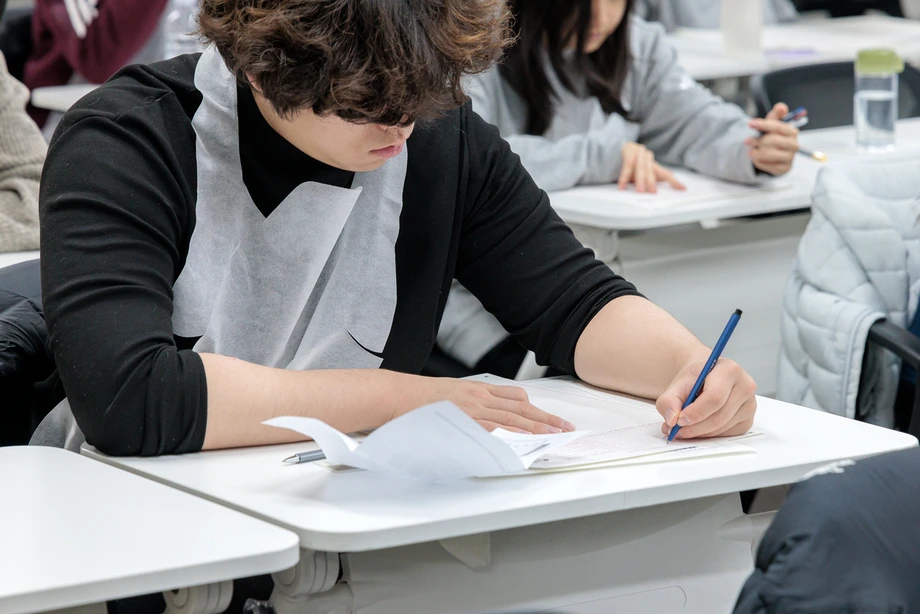
Candidates sitting the 2027 essay and interview exams at Kyung Hee University in Seoul on the weekend of Nov 21 and 22 were handed a disposable white apron made of nonwoven fabric and told to wear it over their clothes. The university prepared about 30,000 of them. Applicants who refused to put one on were not allowed to sit the test.
Contents
- An Apron Over a Buttoned Shirt
- One Confession, Four Days Before the Suneung
- A National Exam Under Guard
- The Penalties Being Written Into Law
- The Minister Who Doubted He Could Deliver
- What the Rules Cost the Candidates
- The Crackdown Spreads to Every Test
- Keeping the Paperwork for the Prosecution
- Why the Whole Region Is Watching
- Key Points
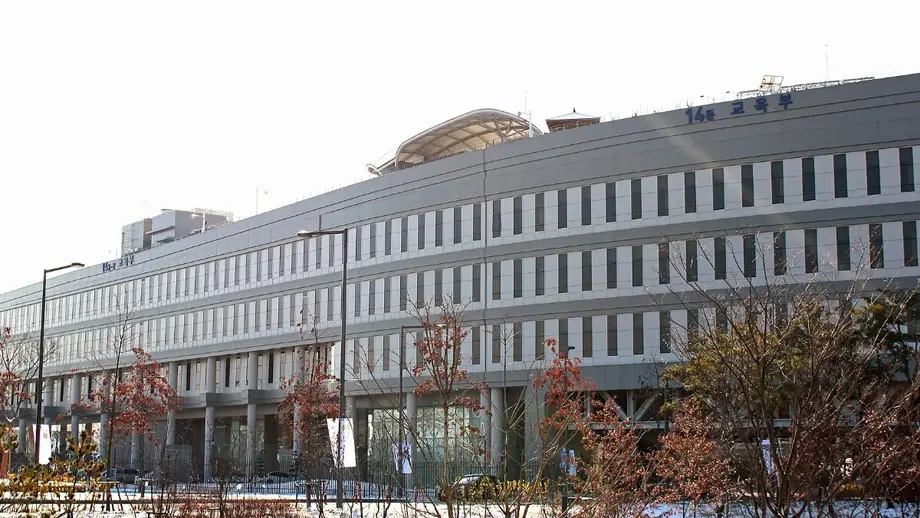
The apron covers the chest, and with it the shirt buttons, plackets and collars where a camera the size of a grain of rice can be sewn. It is the most visible piece of a security regime South Korea assembled in less than a week, after a cheating confession in a different examination exposed how far the country's exam halls had fallen behind the technology in students' pockets.
Seoul National University issued aprons and arm covers for the same weekend of tests. Sogang University deployed detectors that hunt for concealed cameras. Dongguk University supplied every writing instrument except black pencils, and banned analog watches. In the space of two days, the essay hall had been refitted as a screening point.
One Confession, Four Days Before the Suneung
The measures trace to Han Won-seok, 34, who finished first in the national certified tax accountant examination, a professional licensing test, and on Sunday Nov 15 posted a video to his lawyer's YouTube account explaining how he did it.
Han said he photographed the questions with a concealed microcamera, sent them to an artificial intelligence system and read the answers off a smartphone. He got one question wrong out of 160.
I cheated in the tax accountant exam. My top placing is not the result of legitimate effort.
The confession landed four days before the Suneung, the College Scholastic Ability Test that about 550,000 candidates sat on Nov 19 and that decides which university, and therefore which career and income, a young South Korean can reach. Officials had spent weeks preparing rules aimed mostly at smart glasses. They rewrote them over a weekend.
A National Exam Under Guard
At 8:30 a.m. on Nov 19, ten minutes before the exam began at 8:40, phones across the country sounded an emergency alert at maximum volume. Two more alerts followed during the day. The system is normally reserved for disasters, and the purpose this time was to expose any handset a candidate had failed to surrender to a proctor.
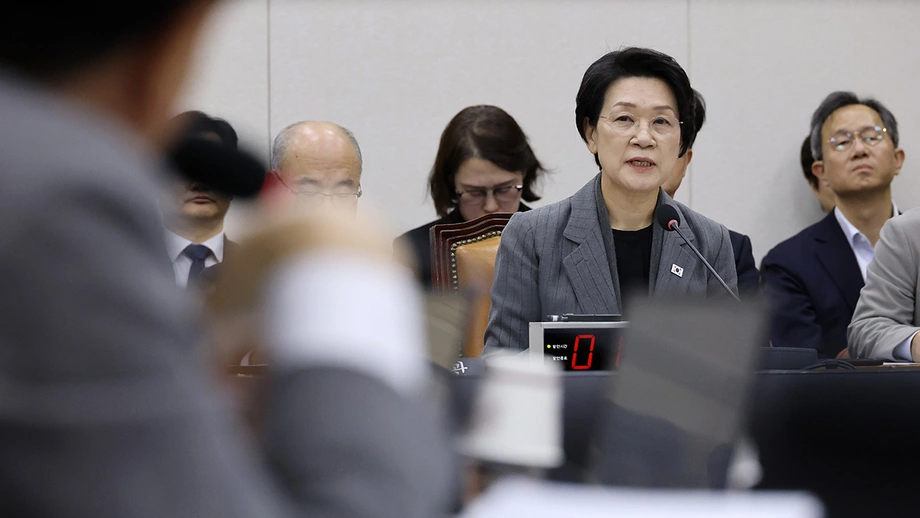
Vice Education Minister Choi Eun-ok told a briefing that 22 candidates had been found with smartphones after the morning alerts and would be examined for miniature cameras and other devices.
We believe we are in a situation where excessive measures are necessary.
Choi said that failing to run the test in a strict and fair way would bring South Korea disruption worse than a disaster. Even the ordinary choreography of the day was in place: takeoffs and landings were suspended during the English listening section, the stock market opened an hour late, offices opened later to clear the roads, and police cars ferried latecomers to exam centres.
The numbers, released afterwards, explain the alarm. By Nov 25 the Ministry of Education had logged 474 violations of exam rules, 195 more than the previous year. Cases involving smart devices rose from 31 to 112, a rise of 3.6 times. Of the 111 cases involving electronic devices identified during the test itself, 54 were caught through the phone alerts. Six were serious enough that a device was used or carried during the exam, and all six were referred for criminal complaint.
The Penalties Being Written Into Law
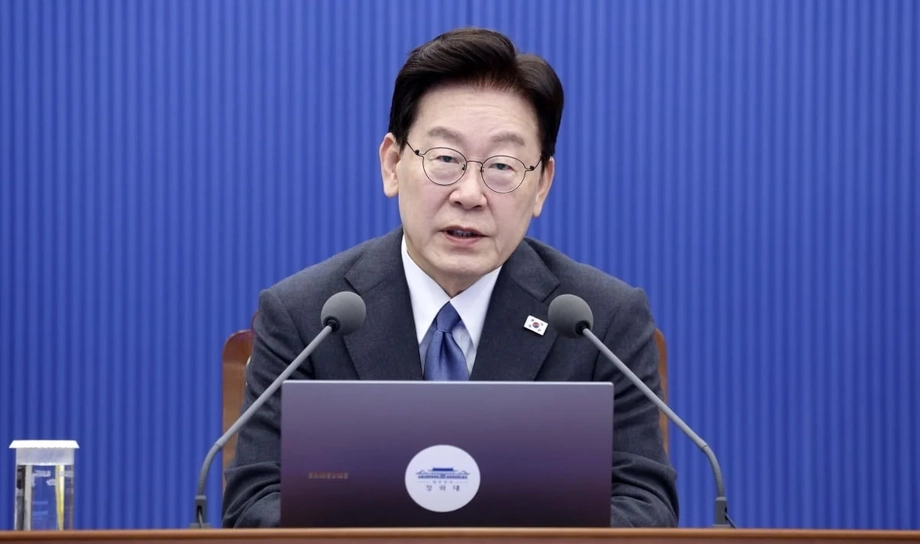
President Lee Jae-myung announced on X on Nov 17, two days before the exam, that anyone reporting cheating would receive at least 100 million won, about $75,000. He said a cheater who confessed and named accomplices would face lighter punishment and still collect the reward.
Cheating on exams using advanced equipment is no different from stealing the scores of hundreds of thousands of examinees who worked hard.
In a later post Lee called exam cheating a crime as serious as corruption by public officials, and added: "If anyone is considering cheating on the exam, please do not ruin your life by hoping for a lucky break."
Harsher sanctions are moving through the system. The government is seeking amendments to the Higher Education Act and changes to individual university regulations so that a cheater can be barred from sitting exams for up to 10 years, up from one year, and face criminal investigation carrying up to five years in prison for obstructing official duties by deception. Students already enrolled at a university who resit the Suneung and are caught could be expelled. The ministry also wants universities to share personal information about offenders so a cheater cannot simply enrol somewhere else.
The draft amendment would create a legal basis for paying whistleblowers and for searching belongings with metal detectors. The data sharing provision needs further legislative change and university rule changes before it can operate, and no date has been set for that.
The Minister Who Doubted He Could Deliver
Education Minister Choi Kyo-jin resigned on Sunday Nov 22, three days after the exam, and President Lee accepted the resignation, the presidential office said. The Ministry of Education had announced the new measures on the Tuesday before the test, two days ahead of it, with a vice minister fronting the briefing while Choi stayed out of public view.
Choi, 72, had been asked at a parliamentary hearing on Nov 16 whether he was confident the authorities could catch would be cheaters on exam day. He replied that because of his age he was not confident he could, a remark that drew immediate public anger.
His resignation statement, posted on X, accepted the criticism directly.
The exam concluded without any major incidents. However, as the minister in charge, I do not believe I am immune from public criticism that we failed to prepare adequately in advance. Now that the exam is over, I take full responsibility and hereby offer my resignation.
The Korean Federation of Teachers' Associations had demanded his exit in a Nov 17 statement, questioning whether the ministry could train invigilators fast enough to spot device assisted cheating.
Will hurriedly selecting supervisors today, training them tomorrow, and deploying them the day after tomorrow really create the expertise to identify sophisticated AI cheating?
What the Rules Cost the Candidates
Kwak Yoo-Min, 18, had planned to wear a shirt with buttons to his exam centre in central Seoul and changed into a T-shirt instead, fearing that buttons would make him look like a cheater. "Now, I wonder if it would have been better to postpone the exam altogether and come up with a proper plan," he said.
Jang San, 18, put the fairness argument in personal terms.
I had worked hard and thought I was doing just as well as everyone else. But all that effort could potentially go to waste because someone uses AI just once.
Bang Min-ji, 18, worried about the stationery rule, under which candidates arrived with pencils only and took erasers from the test centre. "I'm worried I might panic if I have difficulty using the stationery provided during the test," she said. Song Ji-eun, 18, said she would struggle to concentrate if supervisors kept checking her glasses, and described a saying that even a slight breeze can change focus, a score and an entire life.
Park So-hyun, a candidate at Yeouido Girls' High School, said the response had arrived late. "My friends and I all think the exam may have already been compromised in the past, and we're only taking action now because of Sunday's confession. Adults have been irresponsible." Park Sun-mi, 46, a mother escorting her daughter, said the expulsion rule was the measure she found most satisfying.
Organised anger followed the same lines. Test-Takers' Solidarity, a group of high school seniors and other candidates, said in a Nov 21 statement that schools had not applied the rules uniformly and called the changes a dereliction of duty by the ministry. Two petitions opened on Nov 16 had gathered 2,964 signatures by Nov 23; of 2,225 respondents, 1,902, or 85.5%, were sitting the exam this year. The group wants an investigation into suspected cheating, clearer rules on cancelling scores and on appeals, and plans a protest in late December.
Jang Dong-hyeok, leader of the opposition People Power Party, wrote that the exam must not be forced ahead when its fairness is not guaranteed, and the Reform Party urged a postponement. A high school student filed a constitutional petition against the decision to proceed; a court rejected it on the Wednesday before the exam, citing insufficient evidence of irreparable harm.
Public scrutiny also fell on the top scorer in this year's law school entrance exam, who was under police investigation and had promised to livestream part of the test to prove his ability. He did not appear on Thursday and was later found dead in a motel, police said.
The Crackdown Spreads to Every Test
Each institution has improvised its own version. Gyeonggi University stuck red stickers on the outside of candidates' glasses frames at its Nov 27 essay exam and allowed only black pencils as personal stationery; anyone caught with smart glasses faces a ban of three years from its exams and possible criminal referral. Ajou University, which holds essay exams on Dec 5 and 6, will use metal detectors and a Bluetooth scanning app installed on proctors' tablets, and has banned personal stationery altogether.
Ewha Womans University forbade watches, jewellery and earplugs, sealed phones in bags, had proctors announce the remaining time six times and ran radio signal checks in corridors during the test. Chung-Ang University sealed devices in security envelopes, Hanyang University checked every candidate in glasses for smart glasses at the door and again mid exam, Hankuk University of Foreign Studies handed out disposable neck covers, and Sejong University added thermal imaging cameras to its metal and radio wave detectors. Dankook University will use metal detectors at interviews, and Gachon University is preparing countermeasures for its essay exams.
The same logic reached the country's biggest English test. The Korea TOEIC Committee, part of the publisher YBM, began on Nov 29 inspecting glasses and sealing frames with stickers that leave a mark when peeled, changing the colour and size of stickers for each sitting to stop reuse. A desk may hold only two pencils, one eraser without its cover, an identification card and an analog watch, which must be taken off the wrist. Hats are banned. Anyone leaving for the restroom passes a metal detector, and radio wave detectors are being installed at every test centre. Staff will also monitor social media advertisements recruiting cheaters and report them to the Korea Communications Standards Commission.
As types of cheating become more diverse with the advancement of smart devices such as AI glasses, it is crucial to continuously and promptly respond to them. We will do our utmost to ensure that all test-takers can take the exam in a fair environment.
The Seoul Metropolitan Office of Education applied the model to its own hiring. At the first round of the secondary school teacher recruitment exam on Nov 28, candidates were given disposable aprons, had stickers placed on buttons left visible outside them, and had sleeves and glasses checked in every session, with thermal imaging detectors added to metal and radio wave equipment.
Keeping the Paperwork for the Prosecution
Prime Minister Han Seong-sook gave an order while the Suneung was still being sat on the Thursday afternoon: last year's papers were to be kept. "The Ministry of Education shall maintain the current storage conditions of last year's papers until further notice," her office said, noting that the papers are normally destroyed once the following year's test is held. The point is to allow a later comparison between what candidates wrote and what an AI system might have supplied.
The ministry then told universities running essay and interview exams to retain every question paper and answer sheet. Of 46 such universities, 23 had finished their tests as of the following Tuesday and 23 were still to come. The ministry said on Nov 23 that it would file criminal complaints against five students caught using smart devices during the Suneung, and that no cheating had been confirmed in the weekend essay exams. Scores are due on Dec 11.
Investigators are working backwards as well. A task force is reviewing the Wi Fi and Bluetooth signals that invigilators logged during the test. Lee said AI companies had agreed to hand over records of users who photographed exam questions during the testing period; the government has not named the companies, and none has publicly confirmed the arrangement.
Why the Whole Region Is Watching
The problem is not South Korea's alone. National Taiwan University disqualified a candidate in June from an entrance exam for allegedly using AI smart glasses, after he was seen staring oddly at the paper. In Japan, an 18 year old man allegedly used smart glasses to photograph questions and seek answers on social media during a Waseda University entrance test in 2024. China's Ministry of Education warned in June against bringing smart devices into the gaokao, and state media reported that any candidate found with a device able to transmit or receive information would have scores cancelled for every subject.
Keita Takayama, an education scholar at Adelaide University, sees a shared anxiety and sharply different answers.
There have been growing concerns in Korea as well as in other East Asian countries about this issue. But the responses are quite remarkably different.
Takayama said the pull of a famous degree explains the intensity of the reaction. "The name of the university follows you for the rest of your life," he said. In Japan, he added, phones are switched off and bagged and proctors patrol constantly: "In a room of 100 students, there would usually be four or five proctors walking around and closely watching them."
Philip Chan, a senior lecturer in education at Monash University, framed the stakes for the honest candidate. "When somebody cheats, a candidate who follows the rules has a reason to question whether they had a fair chance," he said. Thomas Corbin, an associate professor of higher education at Deakin University, argued the region's answer is not automatically the right one. "This moment is where we really need to rethink what we're trying to assess and how we're going to do it," he said.
The pressure behind the security is measurable. Families spent 27.5 trillion won, about $20 billion, on private lessons for school students in 2025, when around 3.8 million students took lessons at some 95,000 registered private academies. The three most prestigious universities, Seoul National, Korea and Yonsei, planned about 12,200 places for the 2027 academic year, roughly 2.2% of this year's exam registrants. A 2025 national mental health survey found that more than half of high school girls and a third of high school boys usually felt a lot of stress.
Key Points
- About 550,000 candidates sat the Suneung on Nov 19, 2026, four days after Han Won-seok, 34, admitted using a microcamera, a smartphone and AI to finish first in the certified tax accountant exam.
- South Korea sent three emergency alerts during the test, found 22 smartphones, and identified 111 cases involving electronic devices, 54 of them through the alerts.
- Smart device violations reached 112 this year against 31 last year, and total rule violations rose to 474 from 279.
- President Lee Jae-myung offered at least 100 million won, about $75,000, for reports of cheating, with lighter punishment for those who turn in accomplices.
- Education Minister Choi Kyo-jin, 72, resigned on Nov 22 and President Lee accepted it.
- Kyung Hee University handed out about 30,000 disposable aprons for its essay exams; Seoul National issued aprons and arm covers; Sogang used hidden camera detectors; Dongguk banned analog watches.
- Planned penalties include a ban of up to 10 years on retaking the exam, expulsion for enrolled students and up to five years in prison.
- The TOEIC began sealing glasses with stickers and banning hats on Nov 29, and the Seoul education office used aprons at its teacher recruitment exam on Nov 28.
- Exam scores are due on Dec 11, and student groups plan a protest in late December.