A Capital Race Settled Before Nine
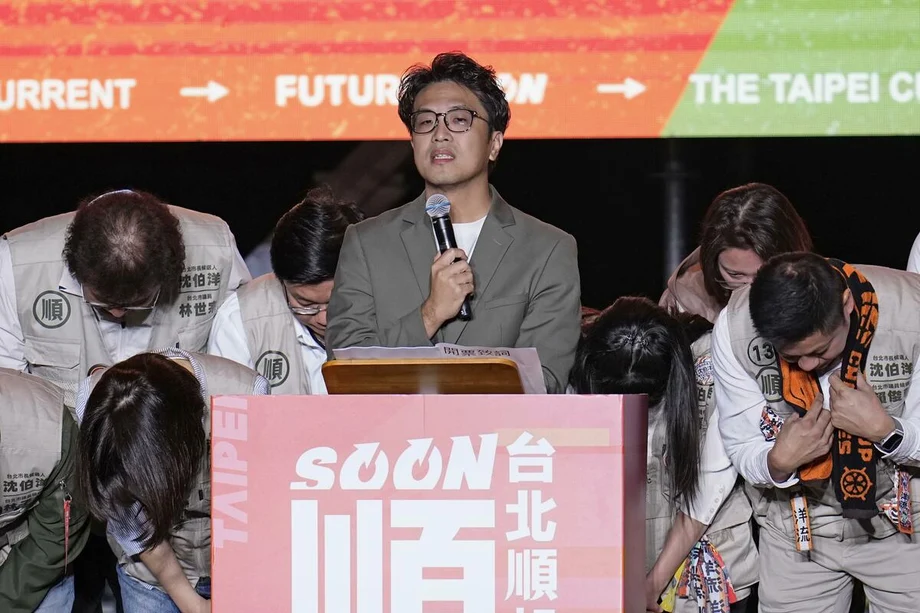
Taipei Mayor Chiang Wan-an declared victory in the city's mayoral election at about 8:24 p.m. on Saturday, minutes after his Democratic Progressive Party challenger, Legislator Puma Shen, conceded defeat in front of his own crowd. If the Central Election Commission confirms the count, Chiang, 47, secures a second term running Taiwan's capital, a city the Kuomintang has long treated as a stronghold.
Contents
- A Capital Race Settled Before Nine
- How the Island Voted
- The Challenger Who Made a City Race National
- Deepfakes in the Feed
- Chiang's Answer: A Silent Majority
- Lai Apologises and Looks to 2028
- Taichung and the Fight Inside the KMT
- Beijing and Taipei Trade Statements
- Bleached Hair and a Promise Kept
- What to Know
Preliminary figures put Chiang at nearly 54% of the vote. Four years ago, when he first won the office, he took more than 67%. The distance between those two numbers frames much of what happened on Saturday, in Taipei and across the island.
The Democratic Progressive Party has not held the Taipei mayor's office for nearly three decades, so a Shen win would have been a genuine upset. Chiang's camp read the night as an endorsement of city hall, while his opponent argued that the result still belonged to democracy.
How the Island Voted
Voters filled 22 city and county leadership posts on Saturday, and the shape of the map changed. The Kuomintang, which favours closer engagement with mainland China, won 11 of the races, with an independent candidate holding one more. The DPP, which campaigns on Taiwan's separate identity, took at least nine mayoral and magistrate seats, up from the five local governments it led before the vote.
The KMT entered the election defending 15 local governments, so holding Taipei while losing ground elsewhere leaves the party with a smaller footprint than the one it started with.
One race, Yunlin, remained unresolved. The Central Election Commission said the DPP candidate drew the most votes there, while the KMT rival was reported to be preparing a recount request. No decision on that request had been announced when the counts were released.
The six special municipalities, the island's largest cities, ended up split evenly, three seats each. Taichung was the DPP's biggest prize of the night, taken from the KMT in a city whose outgoing mayor is widely seen as a future presidential contender.
The local elections were widely read as a midterm verdict on President Lai Ching-te, who took office in 2024 and is expected to seek a second four-year term in the presidential election due in early 2028. Beijing claims Taiwan as its territory and has labelled Lai a separatist.
- Friday evening: KMT lawmaker Hsu Chiao-hsin hints at a campaign event that Chiang will recreate his look from an AI video if he wins.
- Saturday, Nov. 28: Voters choose mayors and magistrates in 22 city and county races.
- Saturday, about 8:24 p.m.: Shen concedes and Chiang declares victory in Taipei. Lai later offers heartfelt apologies to DPP supporters.
- Sunday, Nov. 29: Winning and losing candidates tour the six special municipalities in motorcades to thank voters.
The Challenger Who Made a City Race National
Puma Shen came to the contest as a legislator with an unusual profile: a scholar who built his reputation studying disinformation and alleged Chinese influence operations aimed at Taiwan, and a former civil defence activist. Beijing sanctioned him and, during the campaign, called him a danger to stability in the Taiwan Strait.
His campaign used social media to reach voters and kept to neighbourhood concerns such as affordable housing and public transport, a combination that drew crowds and, by several readings of the night, generated momentum for DPP candidates in races far from the capital. Shen told supporters the outcome was still a victory for democracy, pointing to DPP wins in areas long seen as KMT territory.
There will be times we succeed, and there will be times we fail, but we will carry forward Taiwan's courage and spirit, it will not decline.
One supporter at his rally put the mood plainly.
It's a shame. I think he has shown us a new way of doing politics.
Deepfakes in the Feed
Falsehoods travelled with this campaign. BBC Verify found AI generated videos circulating in the run-up to the vote that spread false claims about Shen and about President Lai, including clips that appeared to show Shen using drugs and others that mocked politicians by dressing them in children's clothing.
Beijing's stance on the DPP leaves little room for contact. The Chinese Communist Party refuses to engage with a party it calls separatist, and it routinely sends fighter jets and warships around the island. Local races turned on rent, buses and city services, but the military backdrop stayed in place through the campaign.
Chiang's Answer: A Silent Majority
Speaking through tears at his own campaign event, Chiang said Taipei's residents had used their ballots to endorse the city government's record. He argued that the result showed a quieter bloc of voters had made itself heard, and he named what he said it wanted: "stability, prosperity and practical solutions to problems, rather than political noise and division."
The mayor's supporters read the night the same way. One woman at his event described the emotional pull of the count.
I feel really emotional. The last four years were only his first term, so we needed to get him re-elected so he can continue his policies.
Lai Apologises and Looks to 2028
President Lai offered heartfelt apologies to supporters after Shen's defeat and said the party would keep working for the future. He told members that Shen had earned the public's respect and recognition through his campaign, and urged them to stay united and optimistic, adding that there would be another opportunity to win next time.
Lev Nachman, an associate professor at National Taiwan University who researches Taiwanese politics, said the Taipei defeat does "take the wind out of" Lai's "re-election sails", even with the DPP's gains in other cities.
Interestingly, I think everyone was a little bit disappointed with the results.
William Yang, senior Northeast Asia analyst at the International Crisis Group, described the Taipei outcome from Beijing's side of the strait: the mainland had "dodged their worst nightmare" of a capital run by the DPP and by Shen, a politician it had placed under sanctions.
Taichung and the Fight Inside the KMT
The night's most consequential KMT loss came in central Taiwan. Taichung's outgoing mayor, Lu Shiow-yen, had served the maximum eight years allowed in the office and is considered a leading contender for her party's nomination for president. She could not hand the city to a KMT successor, and the DPP took it.
Yang said that failure damages her chances of securing the nomination and deepens friction inside the party.
Beijing will have to closely monitor the power struggle in the KMT in the coming months and then determine whether they need to recalibrate their approach toward dealing with the 2028 presidential election.
Chiang's reduced majority fits the same picture. The KMT was defeated in places historically considered its strongholds, and the party now holds fewer local governments than it did before Saturday, even with its most visible mayor returned to office.
Beijing and Taipei Trade Statements
In its first comment after the vote, the mainland's Taiwan Affairs Office said the result changed nothing fundamental. Zhang Han, a spokeswoman for the office, which oversees Beijing's policy toward Taiwan, said changes in the island's political landscape would not alter the direction of relations across the strait.
No matter how Taiwan's political landscape changes, it cannot stop the historical trend that the motherland must and will inevitably be reunified.
Zhang said the mainland would "resolutely combat separatist forces advocating Taiwan independence, oppose interference by external forces, and firmly promote the peaceful development of cross-strait relations," according to the official Xinhua News Agency.
Taipei's Mainland Affairs Council, which handles the island's policy toward Beijing, urged the mainland to pragmatically accept the results by respecting its democratic system and the choices of its people. The council called for dialogue with the democratically elected government on the basis of "no preconditions and equal dignity," and said the long standing position of keeping the status quo of peace and stability in the Taiwan Strait was unchanged.
Mainland China and Taiwan have been governed separately since 1949, when the Nationalist government retreated to the island after its defeat in the Chinese civil war.
Bleached Hair and a Promise Kept
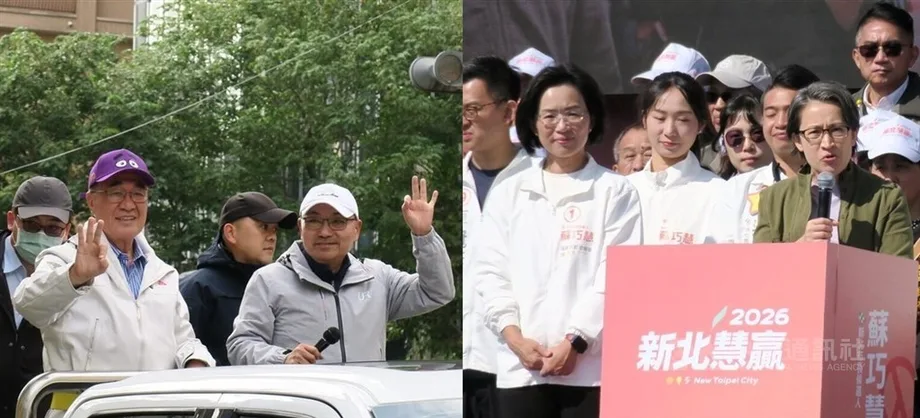
The day after the vote, winners and losers in Taiwan's six special municipalities climbed into motorcades and toured their cities, waving and bowing to supporters along the streets. Chiang drew the cameras for a reason beyond politics: he appeared with bleached hair and a white leather jacket.
He said it was the first time he had dyed his hair, and that the new look fulfilled a promise he had made to internet users. KMT lawmaker Hsu Chiao-hsin had hinted at a campaign event on Friday evening that Chiang would recreate his appearance from an artificial intelligence generated video if he was reelected. That video, a parody of the popular South Korean television drama "Teach You a Lesson," showed Chiang with bleached hair and a white jacket.
What to Know
- Chiang Wan-an of the Kuomintang declared victory in Taipei at about 8:24 p.m. on Saturday after Puma Shen of the DPP conceded.
- Chiang took nearly 54% of the vote, down from more than 67% four years ago.
- The result is not final until the Central Election Commission confirms it.
- The KMT won 11 of 22 city and county races and an independent held one; the DPP took at least nine, up from five before the vote.
- Yunlin stays unresolved, with the KMT candidate reported to be seeking a recount.
- The DPP took Taichung, costing outgoing KMT mayor Lu Shiow-yen a handover she needed for her presidential bid.
- President Lai offered heartfelt apologies to supporters and said there would be another chance to win.
- Beijing's Taiwan Affairs Office said the result cannot stop what it called the historical trend of reunification; Taipei's Mainland Affairs Council urged it to accept the outcome and talk without preconditions.