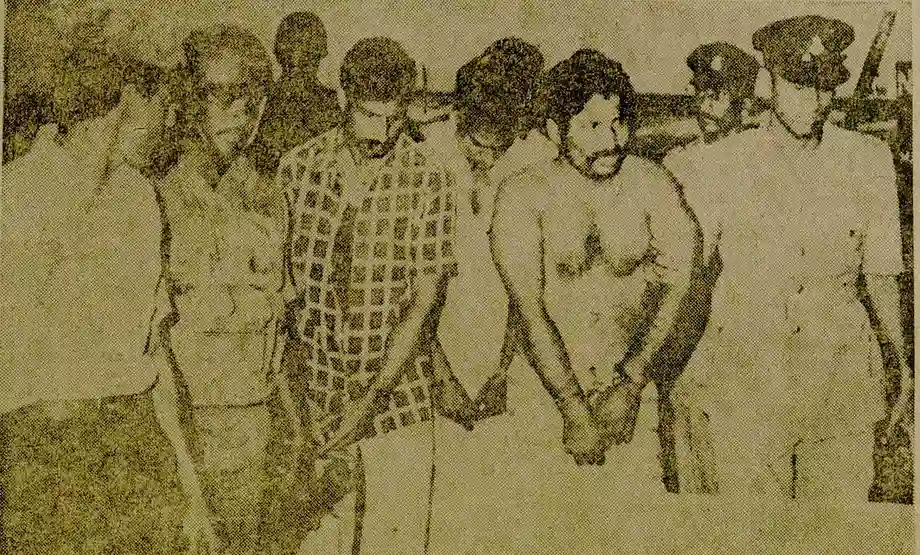
An Inquiry Announced From the Speaker's Chair
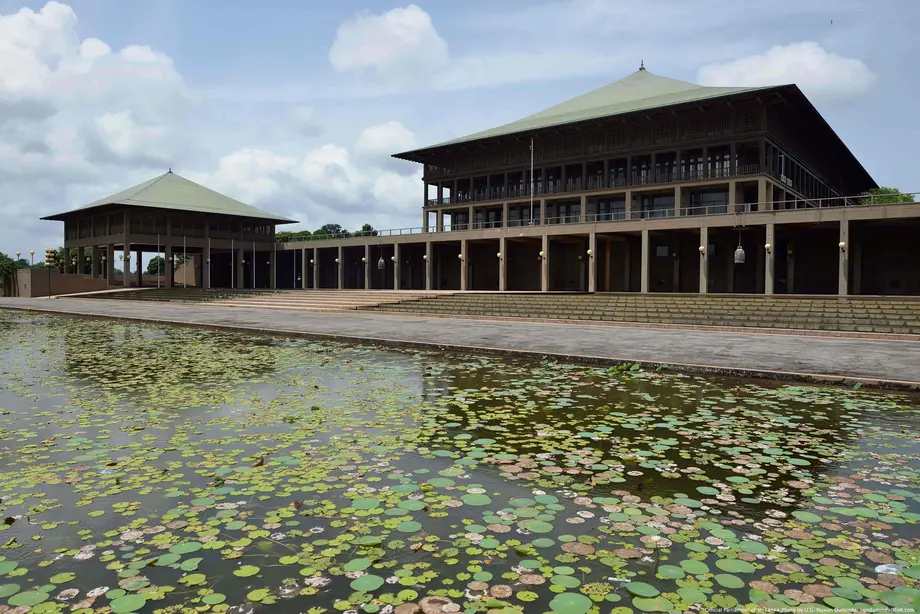
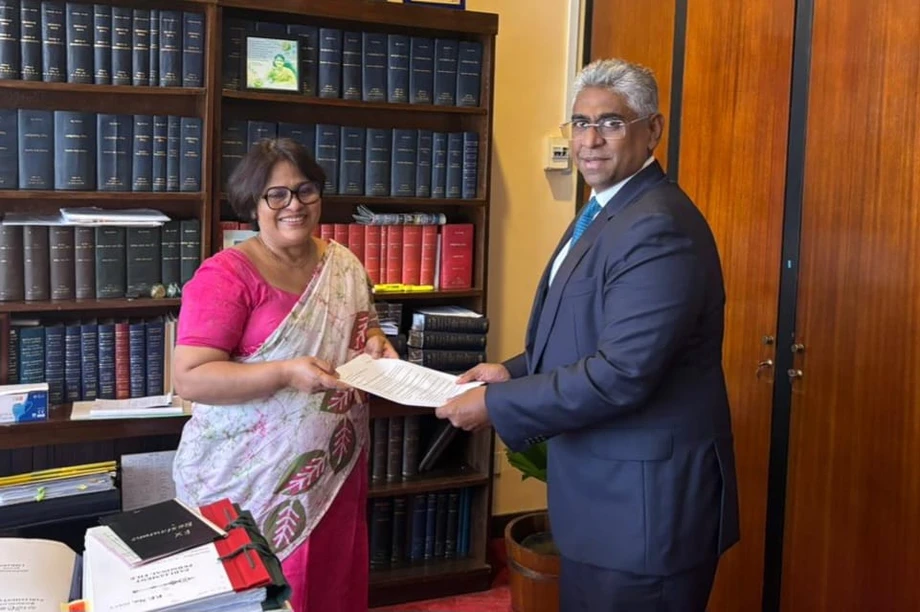
On Saturday, 28 November 2026, the Speaker of Sri Lanka's Parliament, Jagath Wickramaratne, told the House that a parliamentary select committee had been appointed to examine the 1983 anti-Tamil riots and their impact. The committee has 11 members. It is chaired by Saroja Paulraj, the Minister of Women and Child Affairs, whose name also appears in some listings as Savithri Paulraj.
Contents
- An Inquiry Announced From the Speaker's Chair
- Who Sits on the Committee
- What the Committee Can Do
- Seven Days in July 1983
- A Toll That Has Never Been Settled
- A Pogrom, Not a Riot
- Survivors Remember
- What Came Before: The Laws Behind the Grievance
- How Black July Changed the War
- Why 43 Years Matters
- Remembering Under Pressure
- What Comes Next
- Key Points
The date carries weight of its own. More than four decades have passed since mobs burned, looted and killed their way through Tamil neighbourhoods across Sri Lanka in July 1983, and no formal parliamentary inquiry into those events had been held in all that time.
The mandate, as the Speaker set it out, is to study the riots and their effects, submit a report to Parliament, and recommend what should be done for the people they harmed. That covers reparations, relief for those affected, and proposals to strengthen national reconciliation and coexistence between communities.
Who Sits on the Committee
The published list mixes government and opposition. Harshana Nanayakkara, the Minister of Justice and National Integration, is a member, along with two deputy ministers, Eranga Gunasekara for urban development and Muneer Mulaffer for religious and cultural affairs.
The rest come from the back benches and opposition parties: Mano Ganesan of the Samagi Jana Balawegaya, Amirthanathan Adaikkalanathan of the Democratic Tamil National Alliance, Gnanamuthu Srineshan of the Ilankai Tamil Arasu Kachchi, and Krishnan Kaleichelvi, Thanura Dissanayake, Sena Nanayakkara and Hiruni Wijesinghe of the National People's Power, plus Suranga Rathnayake of the Samagi Jana Balawegaya.
The announcement described the committee as including two opposition members from the Tamil community. Adaikkalanathan and Srineshan both belong to Tamil parties, and Ganesan has spent years representing Tamil voters. The list names the chair and eleven others, twelve people in all, while the body has been described throughout as a committee of 11 members.
What the Committee Can Do
Select committees are Parliament's own investigating tools. They can gather evidence, call witnesses and produce findings that shape legislation or government policy. That gives the new body reach beyond a ceremonial gesture, as long as its terms of reference let it use those powers.
What those terms are, and when the committee will report, Parliament has not said. The announcement carried no timetable and no deadline.
Civil society groups and community representatives who have spent years calling for accountability and official acknowledgement of the violence welcomed the appointment.
Seven Days in July 1983
The trigger came at about 11:30 pm on 23 July 1983, when the Liberation Tigers of Tamil Eelam ambushed a military patrol known as Four Four Bravo at Thirunelveli, near Jaffna in the north. Thirteen soldiers died.
The government flew the bodies to Colombo for a mass burial. Relatives demanded individual funerals. On the night of 24 July, anti-Tamil rioting started in the capital and spread across the country, and over the following days mainly Sinhalese mobs attacked Tamil homes, shops and people. The worst of it came on 29 July, remembered as Black Friday. By 30 July the violence had subsided.
Warnings had been public. On 17 July, a newspaper in the pro-government Dawasa group carried a Sinhala headline saying another terrorism would emerge to counter northern terrorism, and that a very strong course of action would follow 22 and 23 July. The government extended emergency regulations nationwide on 18 July, allowing dead bodies to be disposed of without an inquest, and imposed press censorship on matters concerning terrorism on 20 July.
The violence later spread to Indians as well. The Indian High Commission in Colombo was attacked and the Indian Overseas Bank was destroyed.
A Toll That Has Never Been Settled
Around 3,000 Tamils were killed between 23 and 30 July 1983, the figure cited when the committee was announced. The government of the day put the number at 400 to 600, most of them Tamils. The Tamil Centre for Human Rights, which keeps its own record, counts 5,638 killed, 466 disappeared, 2,015 injured and 670 raped.
Displacement and damage were counted more closely. About 150,000 people were made homeless, around 18,000 homes and 5,000 shops were destroyed, and the economic cost was put at $300 million.
A Pogrom, Not a Riot
MA Sumanthiran, a Tamil legislator, argues that the word riot misdescribes what his community lived through.
We don't regard what happened in 1983 as a riot, because it was planned violence unleashed on the Tamil people in this country. It was a pogrom.
Sumanthiran said the events of that July changed the course of history. The International Commission of Jurists, in a report published in December 1983, described the violence as having amounted to acts of genocide. Nobody has been prosecuted for any of the killings.
JR Jayewardene, then president, gave an interview to The Daily Telegraph on 12 July 1983 that is read as a signal of the government's posture towards the north.
I am not worried about the opinion of the Jaffna people now. Now we cannot think of them. Not about their lives or of their opinion about us.
Survivors Remember
Mohan Panneer Selvam was eight years old when the violence reached the central tea town of Hawa Eliya on 29 July. A gang set fire to his family home with 13 people inside, among them his parents, relatives and household staff.
He and his younger brother were at boarding school when the riots broke out and returned two months later as orphans. His sister, then 10, survived because their mother threw her out of a kitchen window. Police found her wounded two or three days later and sent her to a camp for Tamils made homeless by the violence.
My grandmother started to escape, they shot her and threw her body into the house.
Panneer Selvam told the story as his older sister had told it to him, and described her seeing the burned bodies loaded into a municipal tractor trailer and dumped somewhere.
What Came Before: The Laws Behind the Grievance
The Ceylon Citizenship Act of 1948 denied citizenship to Tamils on the grounds of Indian descent. Under British rule, English-speaking Tamils from the Jaffna peninsula had filled a share of the civil service out of proportion to their numbers: by 1946 they held 33 percent of clerical jobs while making up 11 percent of the population. After independence in 1948, Sinhalese leaders built politics around the majority vote and treated that legacy as an unfair advantage.
- 1948: The Ceylon Citizenship Act denies citizenship to Tamils of Indian descent.
- 1956: The Official Language Act, known as the Sinhala Only Act, makes Sinhala the only official language, with no parity for Tamil.
- 1972: A policy of standardization restricts Tamil entry into universities.
- 1977: A constitutional amendment prohibits peaceful advocacy of independence, and anti-Tamil violence follows the United National Party's rise to power.
- 1981: A Sinhalese mob burns the Jaffna Public Library, destroying more than 95,000 Tamil texts and manuscripts.
- May to July 1983: Tamil students and staff at Peradeniya University are attacked, and at least 27 Tamils are killed in Trincomalee.
Each of those steps narrowed the ground on which Tamils could press claims peacefully. By mid-1983 the government had adopted a hardline approach to Tamil militancy in the north, and the parties that later sat on the new committee inherited a country where the memory of that July had never been formally examined in Parliament.
How Black July Changed the War
Before July 1983, Tamil militant groups were small, each with 20 to 30 members, and few Tamils were willing to join an armed struggle. Within months of the pogrom, thousands of young Tamils were signing up.
Sumanthiran estimates that about 1.3 million Tamils left the country after the riots, many of them crossing to India, which drew New Delhi deeper into the conflict. India's direct intervention came in 1987, when the Indian Peace Keeping Force was deployed. It stayed until 1990, and more than 1,100 Indian soldiers died while more than 3,000 were injured.
The war that Black July is widely credited with starting ended on 18 May 2009, when the army declared victory over the LTTE and its leader Velupillai Prabhakaran was killed. About 100,000 people died in the conflict and about 800,000 were displaced. Of the roughly 27,000 service personnel killed over three decades, more than 6,200 soldiers and 22,000 LTTE fighters died in the final phase, which began in July 2006. The LTTE remains a prohibited organisation in Sri Lanka.
Why 43 Years Matters
MR Narayan Swamy, a journalist based in Delhi who has followed Sri Lanka for decades, said the violence had never been properly investigated and nobody had ever been punished for it. He welcomed the appointment while asking what it can deliver so long after the events.
Given that 1983 was so long ago, questions remain about how effective the investigation will be, as many of those involved may no longer be alive. However, the government's willingness to investigate is itself a recognition of what happened in 1983 as a colossal blunder.
He describes the riots as the catalyst for the Tamil Eelam movement and the armed struggle that followed, and argues that the probe should sit inside a wider reconciliation process: the government acting against those responsible for killings, returning land held by the military to its owners, and addressing older injustices.
The LTTE no longer exists, but action should be taken for the killing of innocent Tamils.
Swamy also acknowledges that the LTTE killed innocent Muslims and Sinhalese during the war. He ties the committee's credibility to promises the ruling party made before it was elected.
The ruling party made promises on taking steps for reconciliation before it was elected. If it makes an honest beginning towards a slow and steady process, reconciliation is possible. But the government needs to do much more.
Remembering Under Pressure
Nimalka Fernando, a human rights lawyer who is Sinhalese, describes autonomy as the political standard of Tamil politics: Tamils consistently voted for a federal system and pressed for a separate state in the 1977 election.
To quell that, to subdue that, violence was practised. So '83 was the height of that kind of strategy by the government.
Fernando speaks of the years since as a struggle with repeated displacement.
Over 40 years, it has been a journey to grapple with waves of internally displaced people, waves of refugees in my own country.
Memory itself has been contested. On 23 July 2023, the 40th anniversary, a handful of people gathered near Borella Cemetery in Colombo to commemorate the pogrom and were set upon by young men from an extremist Sinhala nationalist group, who branded them Tiger and terrorist. Riot police asked the activists, not the disruptors, to disperse. The same scene had played out at the same cemetery on 18 May, at a rare Colombo commemoration of the end of the war.
The Civil Rights Movement of Sri Lanka has described the 1983 events as a holocaust, and the figures behind the dead have never been reconciled: thousands in the Tamil record, hundreds in the account of the government that stood by in 1983.
What Comes Next
The committee has a chair and a membership but not yet a calendar. Its terms of reference and a timeline for its proceedings have not been published.
Its report will go to Parliament, where any reparations scheme would have to be approved. The body is expected to table proposals on relief for people affected by the riots alongside recommendations on advancing national reconciliation.
Sumanthiran has said successive governments since the war ended have delayed Tamil political demands by promising and not delivering, and that they cannot keep doing so indefinitely. The committee's first test will be whether its hearings produce findings with names attached, and its second will be what Parliament does with them.
Key Points
- Speaker Jagath Wickramaratne announced on 28 November 2026 an 11-member parliamentary select committee on the 1983 anti-Tamil riots, the first such inquiry in more than four decades.
- The committee is chaired by Women and Child Affairs Minister Saroja Paulraj and includes Justice Minister Harshana Nanayakkara and three MPs from Tamil parties.
- Its mandate is to study the impact of the riots, recommend reparations and relief, and propose measures for national reconciliation.
- Rioting followed the LTTE ambush of the Four Four Bravo patrol at Thirunelveli on 23 July 1983, which killed 13 soldiers.
- Around 3,000 Tamils were killed between 23 and 30 July 1983; the Tamil Centre for Human Rights records 5,638 killed, 466 disappeared and 670 raped, while the government of the day gave a toll of 400 to 600.
- About 150,000 people were made homeless and 18,000 homes destroyed, at an estimated cost of $300 million.
- No one has been prosecuted for the killings, and no timetable has been set for the committee's report.