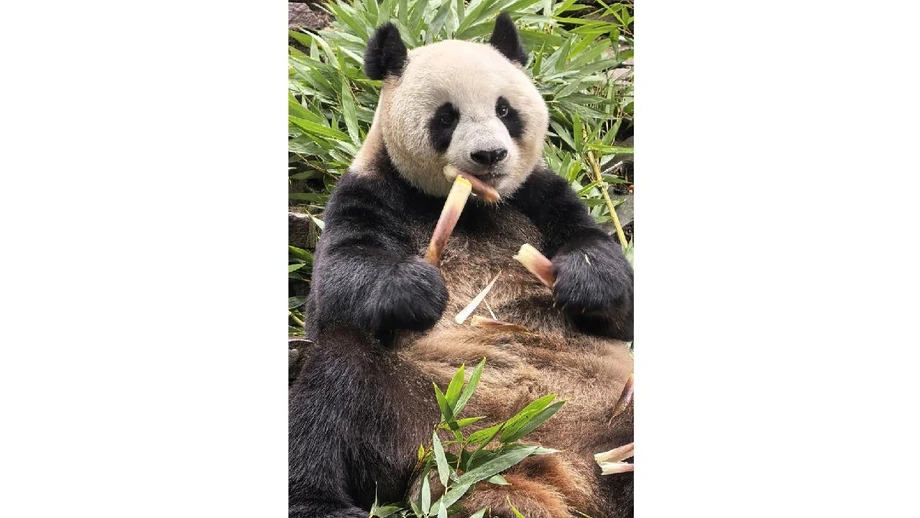
A Panda Lands and a Belgian Zoo Has Two Again
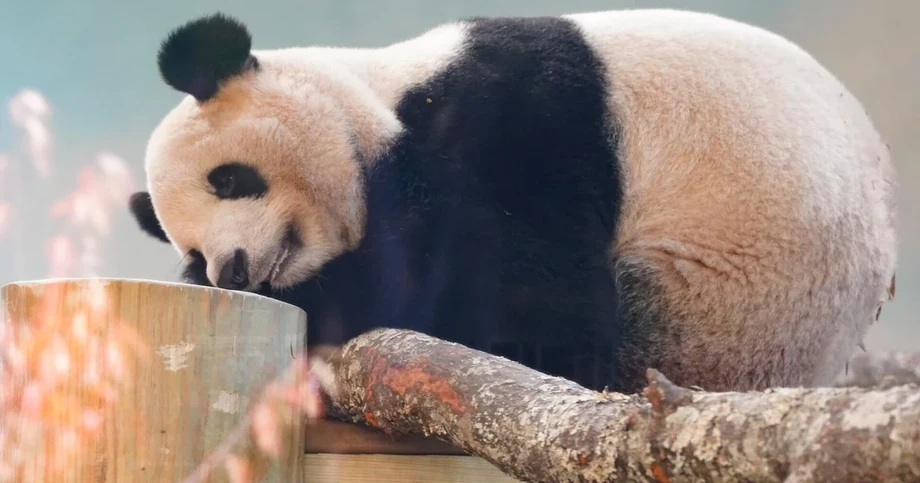
Ran Ran, a female giant panda born on May 31, 2017, landed at Brussels Airport at 12.20 pm on Saturday and reached Pairi Daiza in Brugelette, in Hainaut province, at about 4 pm. She flew on a Sichuan Airlines Airbus A330-200 registered B-308L, flight 3U9005, from Chengdu with a stop at Moscow Sheremetyevo.
Contents
- A Panda Lands and a Belgian Zoo Has Two Again
- What Travelled With Her on the Flight
- Who Is Ran Ran?
- Why Belgium Needed a New Panda
- Companionship, Not Cubs
- Twelve Years, Three Cubs and a Magnolia Tree
- The Panda Effect on the Balance Sheet
- From 1,100 to 1,900: the Numbers Behind the Loan
- What Happens Next
- Key Points
The airport fire service turned out for her arrival. Waiting beside the crate were Li Yan, chargé d'affaires ad interim at the Chinese embassy in Belgium, and Su Chen, minister-counsellor at the Chinese Mission to the European Union. The Belgian side sent Cécile Neven, Walloon minister for energy, air and climate, housing and airports, Christine Romeyns, chief executive of the Federal Agency for the Safety of the Food Chain, Éric Domb, founder and chairman of Pairi Daiza, and Geert Aerts, chief cargo and real estate officer at Brussels Airport.
After health checks at the airport Animal Care and Inspection Centre, Ran Ran went by road to the zoo at Cambron-Casteau, where staff and visitors gave her what the park described as a discreet but warm welcome so that she could settle in quietly. She walked into an indoor enclosure prepared for her, and a few metres away, behind glass panes, the resident male Xing Hui could see her for the first time.
Li Yan tied the arrival to a round number in relations between the two countries. This year marks 55 years since China and Belgium opened diplomatic ties, and she presented the panda as a gift to that friendship.
The giant panda has always held a special place in the friendship between China and Belgium.
She also recalled the opening of the panda house at Pairi Daiza in 2014, when the park received its first pair.
What Travelled With Her on the Flight
Ran Ran left the Shenshuping base of the China Conservation and Research Center for the Giant Panda in Sichuan province. At 5 am Beijing time a truck carrying her crate pulled out for Chengdu Tianfu International Airport, still in darkness.
Her handlers had completed a quarantine and a medical examination in China, which found her in good health, and had put her through training to get used to the transport crate. The aircraft carried fresh bamboo, bamboo shoots, wotou (a steamed corn bread), fruit, vegetables, water and emergency medicines.
Two people flew with her: Liu Yang, a veterinarian and panda keeper at Pairi Daiza, and Professor Deng Linhua. Chinese experts had also inspected the panda quarters in Belgium and given technical guidance, while the zoo upgraded the enclosure, secured a steady supply of edible bamboo and assembled an experienced care team with written procedures and technical standards.
Who Is Ran Ran?
Her studbook number is 1062, and her early life was unusual for a zoo animal. Ran Ran was born at the Hetaoping wild training base in Wolong, a facility built around the idea that a cub raised with little contact with people, alongside its mother, might one day survive in the forest. At 33 days old she moved with her mother, Long Xin (#516), into a first phase training enclosure.
By December 2019 she had finished the programme and was named one of the candidates for a reintroduction trial at the Guanshan National Nature Reserve in Jiangxi, alongside two other pandas, Pan Wang and Yun Er. Reintroduction means releasing animals born in captivity, trained for the wild, into range their species once held. The release never went ahead, and Ran Ran returned to Hetaoping. Keepers at Bifengxia later described her as alert, cautious and unusually tidy.
In 2023 she was paired with a wild male to bring fresh genes into the captive population, and on August 22 she gave birth to twins, a male named Long Ye and a female named Feng Ye. The family moved to the Ya'an Bifengxia base in 2024, and the twins were weaned and separated from her in late July 2025, a little over a year before she left for Belgium.
Her Chinese keepers describe her as a gentle animal who likes to spend time alone, values peace and quiet and is fond of tender bamboo shoots. She weighs about 110 kilograms.
Liu Yang, the vet and keeper who made the trip, went to Sichuan in advance to learn her habits and expected a timid, anxious young female. Ran Ran ate when it was time to eat and rested when it was time to rest, staying calm around new people, and at the zoo she showed curiosity about her surroundings. Her verdict was short.
She is brave, and her mood is very stable.
More time is needed, Liu Yang said, to learn how she settles and how her health behaves in the Belgian winter.
Why Belgium Needed a New Panda
Ran Ran replaces Hao Hao (#741), who returned to China on December 4, 2025, after 11 years at the park. Hao Hao and Xing Hui (#745) arrived in February 2014 under an agreement signed in 2013 that covered conservation, research and public education and ran for 15 years.
From March 2025 Hao Hao suffered recurring moderate ascites, an abnormal build up of fluid in the abdomen. Chinese and Belgian experts stayed in close contact and a veterinary team from the research centre flew to Belgium to help diagnose and treat her. Her condition stabilised but still required specialist care, so the two sides agreed she should fly home early. She was 16. She landed in Chengdu and moved to the Wolong Shenshuping base for quarantine and recovery.
The departure left Xing Hui, now 17, as the only giant panda at Pairi Daiza for most of a year. On September 16, 2026, the China Wildlife Conservation Association and the zoo signed a supplementary agreement under which China would provide a healthy adult female bred in captivity, and the partners announced the choice of Ran Ran on October 26. Her stay runs until the cooperation programme ends in February 2029, about two years and three months.
Companionship, Not Cubs
The agreement states that Ran Ran will not take part in breeding during her time in Belgium. She and Xing Hui are cousins, which rules out a match on genetic grounds. Her role is company for an ageing male and shared research on care, a different brief from the arrivals of 2014, when the birth of cubs became the headline result.
Giant pandas live alone in the wild. Each of the two animals has its own enclosure inside the Chinese Garden and they can look at each other through glass without sharing space, which is also how the zoo handled the pairing of Hao Hao and Xing Hui.
Twelve Years, Three Cubs and a Magnolia Tree
The panda programme grew out of a garden. Eric Domb, the park founder, built a panda house of 5,300 square metres and a Chinese Garden of 45,000 square metres, the largest Chinese style garden in Europe, at a reported cost of 8 million euros. A red archway on the path carries three characters: 中国梦, the Chinese Dream.
In March 2014, on a state visit, President Xi Jinping and his wife Peng Liyuan opened the panda house with King Philippe and Queen Mathilde, and planted a magnolia to mark the friendship. The tree now stands more than three metres tall and flowers more each year. Domb sent Xi a photograph of it, and the reply noted that the magnolia had bloomed full.
Under the partnership Hao Hao gave birth to Tian Bao on June 2, 2016, the first giant panda born in Belgium, and to the twins Bao Di and Bao Mei on August 8, 2019. All three flew to China in December 2024, as the cooperation terms required.
Domb, who greeted Ran Ran at the airport, spoke of the children who will now meet her.
Seeing Ran Ran arrive at Pairi Daiza today brings me immense joy. I'm also thinking of all the children who will get to meet her, and the sense of wonder this encounter will inspire in them. Perhaps it will spark a passion, or even a calling. It is one of my dearest dreams: that the world's wonders will inspire everyone to protect them.
He has described the arrival as a homecoming of sorts for the park's Chinese corner. Ran Ran, he said, will be surrounded by a small piece of China.
Our friendship with China started when we began building a traditional Chinese garden in 2006, 20 years ago, even before Hao Hao and Xing Hui, our first giant pandas, arrived in Belgium. It's a beautiful and long friendship and collaboration for wildlife conservation.
The Panda Effect on the Balance Sheet
The animals have been good business for the park in Wallonia. In their first year, visitor numbers rose 12 per cent and net profit was multiplied by five, lifted by tickets as well as restaurant sales and merchandise. Profit went from less than 1 million euros in 2013 to 4 million in 2015 and 14 million in 2025.
Domb has put the money back into new themed worlds, the park's term for areas built around a group of animals and the scenery that goes with them. The panda house itself was a wager on that model long before Ran Ran was born.
From 1,100 to 1,900: the Numbers Behind the Loan
The transfer is framed as conservation, and the figures behind it have moved. In the 1980s an estimated 1,100 giant pandas lived in the wild; today the count stands at nearly 1,900, a rise the zoo credits to China's work to protect and restore habitat. In 2016 the International Union for Conservation of Nature moved the species from endangered to vulnerable. Bamboo forests are still broken into fragments, which the zoo calls the main remaining threat to the animal's survival.
Cooperation between the two countries covers breeding and husbandry, disease prevention and control, public education and scientific research. It has widened beyond pandas: three golden snub nosed monkeys arrived from Shaanxi province in May 2025, and Domb has said he hopes one day to keep crested ibis, a rare bird China has brought back from very low numbers.
What Happens Next
Ran Ran now faces a quarantine of 90 days, required by the Federal Agency for the Safety of the Food Chain and supervised by veterinary teams. Visitors may glimpse her from the Panda Cave when she comes into view, and the zoo has asked them to respect her peace and quiet.
Time in the outdoor garden comes later. The zoo did not say when the quarantine ends or when she will first go outside, and the Chinese veterinarian will stay for a period to help her through the change of surroundings. Her term closes with the programme in February 2029, when the two sides would have to agree on what comes after.
Key Points
- Ran Ran, a female giant panda born on May 31, 2017, landed at Brussels Airport at 12.20 pm on Saturday and reached Pairi Daiza at about 4 pm.
- She flew from Chengdu Tianfu International Airport at 5 am Beijing time on Sichuan Airlines flight 3U9005, accompanied by veterinarian and keeper Liu Yang and Professor Deng Linhua.
- She weighs about 110 kilograms and was raised through a wild training programme at Hetaoping before giving birth to twins fathered by a wild male in 2023.
- She replaces Hao Hao, who returned to China on December 4, 2025, for treatment of recurring moderate ascites after 11 years in Belgium.
- The China Wildlife Conservation Association and the zoo signed a supplementary agreement on September 16, 2026, and announced her selection on October 26.
- The agreement says she will not breed while in Belgium; she and the resident male Xing Hui are cousins and live in separate enclosures.
- Her stay runs until February 2029, and she must complete a quarantine of 90 days before moving freely around the park.
- Pairi Daiza has bred three cubs since 2014, Tian Bao in 2016 and twins Bao Di and Bao Mei in 2019, all of whom returned to China in December 2024.