Twenty Kilometres From Kuching, a Temple Made of Ironwood
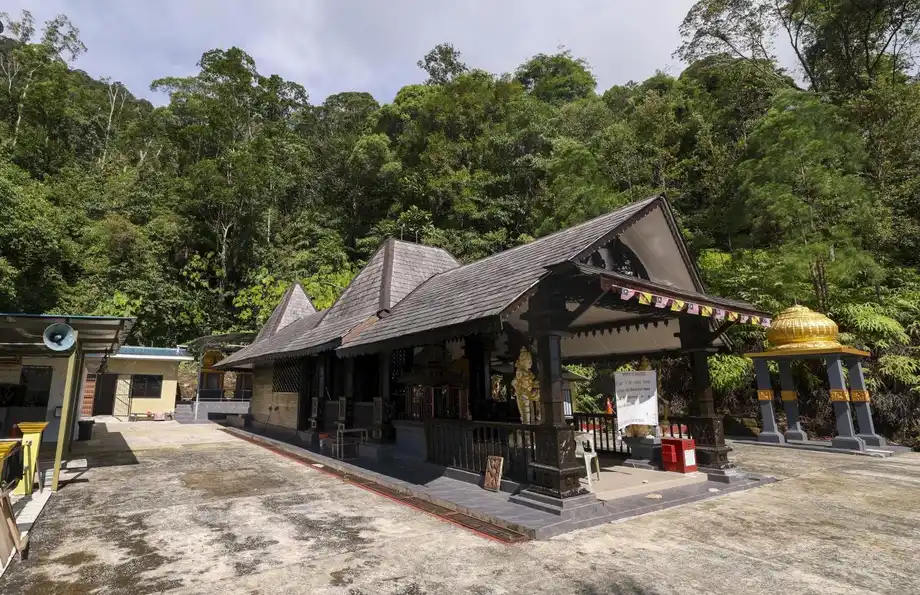
On the slopes of Mount Matang, about 20 km from Kuching, a Hindu temple has stood for more than a century with almost no ordinary timber in its frame. The Mount Matang Sri Maha Mariamman Temple is built entirely from belian, the Borneo ironwood that botanists know as Eusideroxylon zwageri, among the hardest and strongest woods in the region and the official tree of Sarawak.
Contents
- Twenty Kilometres From Kuching, a Temple Made of Ironwood
- Coffee, the White Rajahs and the Workers Who Stayed
- The Jungle Kept It for Fifty Six Years
- From a Jungle Clearing to a Celebration of 500 People
- A RM500,000 Rebuild With the Same Wood and the Same Design
- 108 Steps, Solar Panels and Water From the Mountain
- The Driver Who Has Climbed the Hill for Fifty Years
- Why a Hill Temple Matters as Sarawak Votes
- Key Points
Vaithilingam Palanisami, 70, who has chaired the temple committee for almost 10 years, said the building is believed to be the only Hindu temple in Malaysia made wholly from ironwood. Its age is put at 129 years, which places its beginnings in the 19th century, under the Brooke family that ruled Sarawak as the White Rajahs. It is also counted among the oldest Hindu temples in the state.
Belian is used across Borneo for houses, bridges and structures that stand in water, and the temple has lasted because of the same qualities that make the wood useful to builders. A wooden Hindu shrine of this size, left untended in jungle for decades, is an unusual survivor. The building sits above the city in the Tupong state constituency, at the end of a narrow road and a long flight of steps, and it is run by the Sri Maha Mariamman Temple Association in Kuching.
Coffee, the White Rajahs and the Workers Who Stayed
The temple began as part of a plantation. Sir Charles Brooke, the second White Rajah, brought people from India, Kerala and Ceylon, now Sri Lanka, to plant coffee in the Matang area. The estate opened as a coffee plantation in 1867 and was turned over to tea around 1886, and workers kept arriving between 1867 and 1897.
Vaithilingam dates the temple itself to 1897 and says it served the estate community until the plantation closed.
The temple was here from 1897 until 1912. The second White Rajah, Sir Charles Brooke, brought people from India, Kerala, Ceylon (now Sri Lanka) and elsewhere to plant coffee in this area, which was then developed into a coffee estate.
When the estate shut in 1912, the temple shut with it and the deity was carried down the mountain. Most of the workers went back to India. Between 40 and 200 families stayed in Sarawak and installed the image of the goddess Sri Maha Mariamman in a wooden temple at Batu Lintang in Kuching, which kept the worship alive while the hill shrine stood empty.
The Jungle Kept It for Fifty Six Years
The building then slipped out of memory for more than half a century. Its return came from a thunderstorm. In 1968, a Bidayuh-Melanau hunter named Abi bin Benggali took shelter in the old structure and, as the story is told in Kuching, carried home a small elephant statue from the site. Strange dreams followed, and he was guided to take the figure back.
News of what he had found reached the Hindu community in Kuching. Sarawak had joined the Federation of Malaysia five years earlier, in 1963, and the story of a forgotten temple on the mountain drew the attention of local authorities, heritage groups, archaeologists and devotees. Young men went to their elders to ask whether a temple really stood up there, and the answer was yes, though nobody knew what condition it was in.
Some Indian youth tried to get some information on whether it was true that there was a temple up there. They asked the older generation, who said, 'Yes, there was a temple up there, but we don't know how it looks like now. The hunters then offered to bring them up here. They found the temple and after that, cleared the area and started prayers according to Indian rituals.
Volunteers from the community cleared a path of about 3 km to the site, work that counts as the start of the restoration campaign in 1968. Prayers went on at the temple on a small scale until 2000, when the community took on a larger repair job.
From a Jungle Clearing to a Celebration of 500 People
On 4 December 1970 a large poojai, an act of Hindu worship that combines prayer, offerings and the blessing of the building, marked the reopening of the temple. About 500 onlookers and devotees attended. The temple was handed to the Persatuan Kuil Hindu Kuching in 1976, and a temple committee at Gunung Matang has run it since.
The dates trace how a lost building became a working place of worship again:
- 1867: the coffee estate opens at Matang with workers brought in from India and Ceylon.
- 1897: the ironwood temple is in use during the Brooke era.
- 1912: the estate closes, the temple closes and the deity is moved to Batu Lintang.
- 1968: hunter Abi bin Benggali rediscovers the building and volunteers clear a path to it.
- 4 December 1970: a poojai attended by about 500 people marks the reopening.
- 1976: the temple is handed to the Persatuan Kuil Hindu Kuching.
- 2007: a major restoration begins, using belian cut on Mount Matang.
- 2011: the finished project is inaugurated with a poojai.
A RM500,000 Rebuild With the Same Wood and the Same Design
Work that began in 2007 cost about RM500,000. Craftsmen brought from India rebuilt sections of the temple in belian cut on Mount Matang, keeping the original design and the original material. A profile of the Sri Maha Mariamman Temple records that the restoration campaign began in 1968 and that the project was completed in 2011, when a poojai ceremony was held to mark the reopening.
Almost 500 people came for the 2011 ceremony, among them James and Jason Desmond Brooke, descendants of Charles Vyner Brooke, the third White Rajah. Their presence tied the shrine back to the family whose plantation first brought worshippers up the hill, and to a chapter of Sarawak history that began before the state existed in its present form.
108 Steps, Solar Panels and Water From the Mountain
Getting there takes effort. Visitors can walk the Beccari Discovery Trail, a tarred route of about 3 km that takes between 45 minutes and an hour, or ride in an authorised four wheel drive vehicle along a narrow, steep access road. Unauthorised vehicles are not allowed up. There is no entrance fee, and parking at the foot of the hill costs about RM5.
From the foot of the temple, 108 steps climb to the main altar. That altar is being refurbished, and the deities have been moved to an adjacent one while the work is done, with completion expected within two months. The temple stays open for prayers every day from 8 am to noon and closes for evening prayers except on special days in the Hindu calendar. No date has been fixed for a ceremony to mark the finished altar.
Running the place leans on the mountain itself. Water comes from the hillside and electricity from solar panels, which keeps the bills low for a site far from town. Upkeep still costs about RM5,000 a month, mostly for the priest and the caretaker.
Our monthly maintenance costs are about RM5,000, particularly for the priest and caretaker. So far, we have been able to meet these expenses through funds and donations.
The Driver Who Has Climbed the Hill for Fifty Years
Vaithilingam drives visitors up himself in his four wheel drive vehicle. A former driver with the Public Works Department, he is a Malaysian Indian whose family has lived in Sarawak for four generations, and he was born and raised in the state. He has visited the temple regularly for 50 years and has chaired its committee for almost 10, meeting the cost of the priest and caretaker through donations from devotees.
Pilgrims who want to stay overnight for special prayers can use a homestay next to the Gunung Matang Indian Heritage Centre. The centre, a short distance from the temple, holds artefacts from the site and explains its history to visitors, and it gives the small community around the shrine a second reason to keep the road open and the buildings in repair.
Why a Hill Temple Matters as Sarawak Votes
Sarawak holds its state election on 12 December, with the temple inside the Tupong constituency. For the communities around Kuching, the building holds a shared history: workers brought from South Asia by a Brooke rajah, a Bidayuh-Melanau hunter who found the site by accident during a storm, and an Indian community that cleared the jungle, paid for the repairs and still covers the monthly bills.
The temple also shows how heritage sites survive in Sarawak, through a mix of volunteer labour, donations and the willingness of a few people to keep climbing the hill. Its ironwood frame has outlasted the coffee estate that built it, the decades when nobody remembered it, and two rounds of restoration. What remains is the routine: the altar work to finish, the priest to pay at the end of each month, and the daily hours of prayer from 8 am to noon.
Key Points
- The Mount Matang Sri Maha Mariamman Temple near Kuching is believed to be the only Hindu temple in Malaysia built entirely from belian, or Borneo ironwood.
- The shrine dates from 1897, when Sir Charles Brooke brought workers from India, Kerala and Ceylon to a coffee estate at Matang that opened in 1867.
- The estate and temple closed in 1912, and the deity was moved to a wooden temple at Batu Lintang, where between 40 and 200 families stayed.
- The temple stood forgotten for 56 years until 1968, when Bidayuh-Melanau hunter Abi bin Benggali took shelter there during a thunderstorm.
- A poojai on 4 December 1970 marked the reopening, attended by about 500 people, and the temple was handed to the Persatuan Kuil Hindu Kuching in 1976.
- A restoration that began in 2007 cost about RM500,000, used belian from Mount Matang and craftsmen from India, and was inaugurated in 2011.
- Monthly upkeep is about RM5,000, with water drawn from the mountain and electricity from solar panels.
- The temple is in the Tupong constituency, and Sarawak votes in its state election on 12 December.