A coffee stop turns into a public rebuke
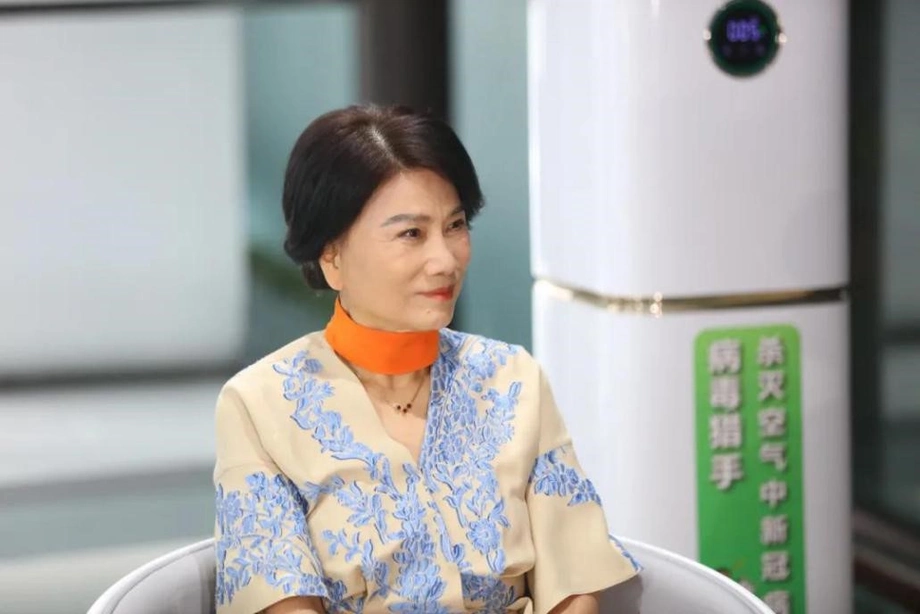
A cup of coffee prepared before anyone asked for it turned a corporate product tour into a public argument about management, dignity and what employees owe their bosses. On November 26, 2026, Great Wall Motor chairman Wei Jianjun visited the Zhuhai headquarters of Gree Electric Appliances. Gree chairwoman Dong Mingzhu accompanied him throughout the visit, which was also broadcast online. The number of people watching at one point exceeded 100,000.
Contents
- A coffee stop turns into a public rebuke
- How a company visit became a trending controversy
- Wei Jianjun's attempt to give everyone a way out
- Dong's earlier explanation for scolding employees
- Why responsibility and dignity became competing measures
- The substantial business exchange behind the clip
- A shared concern about employees trained for a decade
- Key Points
The awkward moment came as the two executives passed Gree's intelligent robotic coffee kiosk during a tour of exhibition space and products. Dong suggested sitting down for a coffee. A staff member said a drink had already been prepared, so the employees did not carry out a live demonstration of the machine. Dong objected immediately and in front of the guest and the camera.
Dong Mingzhu, the Gree chairwoman, answered with a rebuke that centered on the purpose of the stop rather than the drink:
Prepared in advance? We wanted to experience it. The way you do things... honestly... You prepared it in advance. I am not here to drink coffee. I am here to experience it... The way you do things is really infuriating.
Descriptions of the exchange said she repeated three times that she was not there to drink coffee and used an expletive. Her underlying point was simpler. Serving a finished cup provides refreshment, while allowing a visitor to watch and operate a robotic kiosk demonstrates a product. On a tour intended to display Gree technology, the employees had supplied the drink but removed the experience she wanted her guest and the audience to see.
How a company visit became a trending controversy
The coffee rebuke was one of two interactions that later circulated together. During a car ride, Dong asked an employee to retrieve her phone from her handbag. When the employee did not act immediately, she loudly urged the worker to hurry. Wei was sitting beside her and was described as looking embarrassed.
Two days later, the discussion had spread far beyond the livestream audience. Weibo is a Chinese social media platform with a list of subjects drawing heavy attention. On November 28, a topic whose name translated as Dong Mingzhu's livestream scolding of employees sparks controversy reached No. 1. A separate topic about the phone request, describing her becoming agitated when the employee did not move, also rose high on the list.
- November 26, 2026: Wei arrived at Gree headquarters in Zhuhai for a tour and exchange, with Dong accompanying him and the event streamed online.
- During the product tour: Employees offered coffee prepared in advance. Dong objected to the skipped demonstration, and Wei later operated the machine.
- During a car ride: Dong asked for the phone in her handbag and loudly urged the employee to act when there was no immediate response.
- November 28, 2026: The livestream scolding topic reached No. 1 on Weibo, while the phone topic also rose high on the trending list.
The two moments gave the debate its shape. One concerned whether staff understood the purpose of a task, and the other concerned how quickly they responded to an instruction. Wei's presence connected both scenes and made an internal management style visible to customers, workers and other businesses.
Wei Jianjun's attempt to give everyone a way out
Wei did not take up Dong's criticism or publicly challenge her. After the coffee rebuke, he shifted attention to the equipment by asking a series of questions about the machine. He then operated it himself to try its functions. The action allowed the visit to return to the product demonstration without requiring him to comment on the treatment of the employees.
The cameras also captured smaller gestures. He rubbed his hands and scratched his head during the awkward exchange, details that viewers seized on as signs of discomfort. During the phone episode, he was again portrayed as embarrassed while sitting nearby.
His response became part of the story because it offered a visual contrast to Dong's anger. She addressed the employees directly; he focused on the coffee machine and created an opportunity to move on. The employee under criticism, the visiting chairman and the large online audience were all placed in the same uncomfortable scene, which helps explain why gestures lasting only seconds received so much attention.
Wei's actions also changed what happened next at the kiosk. Instead of remaining a guest watching a dispute, he became the person trying the equipment. That gave Dong the demonstration she had requested, gave the employees a chance to move beyond the rebuke and allowed the tour to continue.
Dong's earlier explanation for scolding employees
The viral exchange revived an earlier interview in which Dong acknowledged that she often scolded people at Gree. Her comments were not made during Wei's visit, but they supplied her own explanation of the management philosophy viewers were seeing.
Dong, who leads Gree as chairwoman, rejected the idea that her criticism was malicious and drew a distinction between ability and responsibility:
I have no ill intent. I just think you are too stupid. Making a mistake does not mean your ability is inadequate; it means your sense of responsibility is inadequate.
At the coffee stop, that distinction turned the skipped demonstration into more than a minor service error. In her reasoning, an employee can complete the visible request, provide coffee, and still fail the real assignment if the purpose was to demonstrate the machine. Her earlier words also explain why she treats slow or mistaken responses as a question of attitude rather than a lack of skill.
Some employee comments circulating with the controversy supported that direct approach. A Gree employee said Dong demanded near perfection at work and would always raise a problem on the spot. A related discussion tag said Gree employees viewed her as addressing the issue at hand. Those comments presented immediacy as a management rule: identify the problem where it happens and deal with it directly.
Why responsibility and dignity became competing measures
Supporters of Dong read the scene as evidence of a leader who insists that employees understand their work. They argued that Gree's rise to a leading position in its industry depended on taking details seriously and treating responsibility as a core standard. From this perspective, preparing coffee in advance was not a thoughtful shortcut; it showed that staff had missed the point of receiving a visiting executive for a product tour.
Critics focused less on the machine than on the setting. The correction happened in front of an important guest, during a broadcast whose audience had exceeded 100,000. They argued that public rebukes damage an employee's dignity, consume trust within a team and make other workers feel unsafe. Some also questioned whether fear and embarrassment produce better efficiency.
The strongest version of that criticism said the harm extended beyond the person being scolded. Observers could conclude that they too might be corrected harshly in public. Wei's hand rubbing and decision to operate the machine gave those viewers a vivid illustration of discomfort spreading through the room.
The two camps were therefore applying different tests. Supporters asked whether the work met its purpose. Critics asked what the method of correction did to the people involved. The public accounts did not identify the employees, describe any disciplinary action or include a response from Gree or Great Wall Motor. No date was announced for further comment.
The substantial business exchange behind the clip
The viral seconds displaced a much broader agenda. During the visit, Dong introduced Wei to Gree's product lines, the company's development history and its current operating condition. The two also exchanged experience on business management. Their meeting brought together the heads of an appliance manufacturer and an automaker, with the livestream turning part of that exchange into a public presentation.
The coffee kiosk belonged to that presentation as well as to the hospitality surrounding it. This is why the detail about a finished cup already sitting on the table matters. It shows that hospitality had been arranged, but the robotic equipment had not been shown in action. Wei's questions and his own operation of the machine restored part of the product experience.
For Gree, the broadcast offered a chance to display the range and history of the business to a large audience. For viewers, however, the most memorable demonstration became Dong's management style. The disclosed account of the visit gave no financial figures and announced no commercial agreement, leaving the product tour, operational discussion and management exchange as the substance of the meeting.
The episode also showed how much a live product tour depends on preparation. Staff must arrange hospitality, operate equipment and understand what a visitor is meant to see. When those purposes collide in front of a camera, even a practical decision such as preparing drinks early can become a very public management dispute.
A shared concern about employees trained for a decade
Dong and Wei devoted another part of their conversation to the movement of employees between companies. Both said businesses have great difficulty cultivating people through practical work. They described the recruitment of someone trained for more than 10 years by another employer as a serious loss to the company that had invested that time.
Their concern described a general business cost rather than an identified departure. A company spends years teaching processes, standards and practical judgment. When an experienced employee leaves, the replacement must learn more than a job description. The former employer loses familiarity with how its own work is done, while the employee carries valuable experience into the next role.
A contrasting tag in the online discussion declared that talent is not company property and changing jobs is not theft. That wording shifted attention from the employer's investment to the worker's freedom to choose a career. The executives were describing a business cost; the tag was challenging the idea that a long period of training gives a company ownership of a person.
This gave the livestream two connected labor debates. One concerned how a manager should speak to employees who are still learning or making mistakes. The other concerned what happens when experienced employees decide to leave. No individual departure was identified, and neither executive announced a new policy for retaining staff.
Key Points
- Wei Jianjun visited Gree headquarters in Zhuhai on November 26, 2026, for a tour and management exchange hosted by Dong Mingzhu.
- The online audience exceeded 100,000 at one point during the visit.
- Dong publicly rebuked staff after coffee was prepared in advance and the robotic kiosk was not demonstrated.
- Wei asked questions and operated the coffee machine himself, helping move past the awkward scene.
- A separate moment in a car showed Dong loudly urging an employee to retrieve her phone after no immediate response.
- The controversy reached No. 1 on Weibo's trending list on November 28.
- Debate divided between support for Dong's responsibility standards and concern about employee dignity and team trust.
- The executives also discussed the serious loss caused when employees trained for more than a decade are recruited away.