A former MP's attack on the 2027 budget
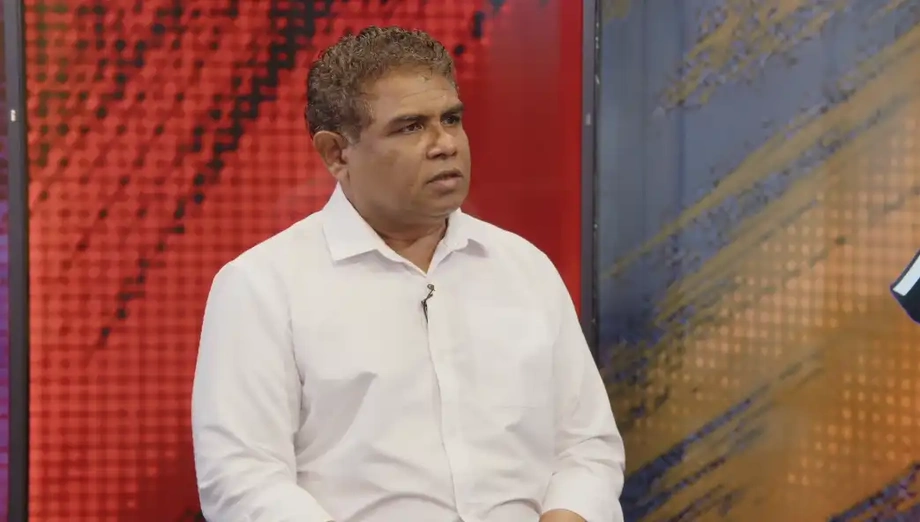
Ibrahim Rasheed, the former MP for Maafannu Medhu who is widely known as Bonda, has accused the Maldivian government of turning the 2027 budget into a device for public debt and private enrichment. Speaking on RaajjeTV, he alleged that major theft was taking place through the sale of Treasury bills and bonds. He also claimed that pension savings and reserves at the Maldives Monetary Authority (MMA), the central bank, were being drawn into government financing.
Contents
- A former MP's attack on the 2027 budget
- How the alleged T-bill scheme would work
- Pension money, central bank reserves and confidence
- What parliament approved on 24 November
- The MVR 9.4 billion deficit and the running-cost warning
- A smaller budget with a higher revenue forecast
- Where the budget says the money will go
- The figures that will test the budget and the allegations
- What to Know
The budget at the centre of his criticism totals MVR 59.7 billion, equivalent to about US$3.87 billion. Bonda described the roughly MVR 59 billion plan as a deficit budget intended to push citizens further into debt. He said national debt had grown and alleged that the airport and other state assets had been sold. His argument goes beyond the size of the budget: he is challenging how the government raises money, who profits from that process and whether public savings are being placed at risk.
Bonda, speaking as a former parliamentarian rather than on behalf of parliament, used blunt language to summarise his accusation about Treasury bills.
A T-bill is a major theft. It is simply outright theft.
How the alleged T-bill scheme would work
A Treasury bill, commonly called a T-bill, is a way for a government to borrow money for a short period. An investor supplies cash and receives repayment with a return when the bill matures. Governments use such borrowing to meet cash needs while waiting for revenue. Bonda's allegation concerns the terms of these transactions and the people he says benefit from them, rather than the basic existence of government borrowing.
Bonda claimed that banks such as the State Bank of India could borrow money at interest of 3 percent and then make those funds available to the Maldivian government for 28 days at a much higher return. In his example, a T-bill worth MVR 200 million generated a return of about 7 percent. He said this allowed approximately MVR 14 million to enter the pockets of certain parties within about 28 days.
The MVR 14 million figure equals 7 percent of MVR 200 million. Bonda did not specify whether the 7 percent described the return for the entire 28 days or an annualised rate, a distinction that determines the actual payment on a bill maturing so quickly. He also did not name the parties alleged to have received the money or provide transaction details with his televised figures. His example therefore sets out the mechanics of his accusation, including the amounts and timing he wants investigated.
Pension money, central bank reserves and confidence
The pension allegation involves a much larger pool of money. Bonda claimed that efforts were under way to gain access to reserves of between MVR 25 billion and MVR 30 billion held in the pension fund. He also said he had received information that borrowing had reached into the MMA. He presented both claims as part of the same pattern of a government searching for money while passing budgets that deepen public liabilities.
Pension savings are accumulated to pay retirement benefits to contributors. Central bank reserves serve a different purpose, supporting monetary stability and the country's ability to meet external obligations. Bonda's argument is that drawing either source into government financing would expose institutions whose responsibilities extend beyond a single budget year. He did not give dates, transaction values or the names of officials involved in the alleged pension and central bank arrangements.
Bonda also argued that confidence in Maldivian banks had deteriorated to the point where foreign parties were becoming reluctant to deposit money in them. No deposit figures accompanied that assessment. No response from the government, the MMA or pension authorities to his specific allegations was reported, and no date for an investigation or formal review was given.
What parliament approved on 24 November
Parliament approved the 2027 budget on Tuesday, 24 November 2026, with 65 lawmakers voting in favour and no support from the 13 opposition Maldivian Democratic Party (MDP) members. The vote tally listed the 13 members as voting against, while the sitting summary said they did not vote for the budget. Under either description, the ruling People's National Congress (PNC) had sufficient numbers to pass the spending plan.
Lawmakers considered 23 proposed amendments before passage. The PNC supermajority rejected all seven MDP amendments put to a vote, and the budget was approved unchanged. A supermajority gives the ruling party control well beyond the bare majority needed to win an ordinary vote, explaining why the opposition amendments could be defeated without altering the government's proposal.
- 2026 budget year: US$4.16 billion was allocated.
- 24 November 2026: Parliament approved the 2027 budget after considering the proposed amendments.
- 2027 budget year: The approved plan totals MVR 59.7 billion, or about US$3.87 billion, with government revenue and grants projected at US$2.80 billion.
The vote gives the government authority to implement the budget, while Bonda's accusations leave a separate dispute over borrowing practices and the treatment of public financial institutions.
The MVR 9.4 billion deficit and the running-cost warning
The approved budget breakdown projects revenue of MVR 43.2 billion and expenditure of MVR 52.6 billion. The gap between those figures is MVR 9.4 billion, the stated deficit. A deficit means that planned expenditure exceeds expected revenue, requiring the government to cover the difference through borrowing or other financing.
Recurrent expenditure accounts for MVR 42.7 billion of the spending figure. This category covers the regular cost of operating the state, including salaries and the daily running of public institutions. Its scale matters because money absorbed by routine operations cannot simultaneously pay for new services, investment or debt reduction.
The MMA and the Auditor General warned of major fiscal risks before the budget was passed. Their warning included an assessment that about 101 percent of revenue would go towards running costs. A ratio above 100 percent means that revenue would be fully consumed by those costs, with additional money still needed. The warning directs attention to the government's ability to sustain its regular operations, not merely to the MVR 9.4 billion gap between the headline revenue and expenditure figures.
A smaller budget with a higher revenue forecast
In dollar terms, the 2027 budget is US$291.83 million smaller than the US$4.16 billion allocation for 2026. The reduction from US$4.16 billion to about US$3.87 billion is approximately 7 percent. This gives the government a numerical answer to criticism that the budget simply continues to expand: the total allocation is lower than in the previous year.
Revenue and grants are forecast to move in the opposite direction. The projection of US$2.80 billion is US$90.79 million higher than the comparable figure for the current year. Higher revenue would reduce pressure on financing if it materialises and expenditure remains within the approved limits.
A smaller allocation and a better revenue forecast do not eliminate the deficit shown in the rufiyaa breakdown. Expenditure of MVR 52.6 billion still exceeds revenue of MVR 43.2 billion by MVR 9.4 billion. The practical issue is therefore how that remaining gap is financed, the interest and other returns paid to lenders, and the space left for public services after recurrent spending and debt obligations are met.
Where the budget says the money will go
The 2027 budget covers ten major areas, ranging from services used directly by households to the administration of the state and the environment.
- Healthcare
- Economic and industrial development
- Debt servicing
- Defence and justice
- Education
- Public services
- Social security
- Housing
- Community welfare
- Environmental protection
Debt servicing means paying interest and other amounts due on money already borrowed. Its inclusion connects the budget directly to Bonda's criticism of borrowing. Greater repayment obligations can leave less room for health, housing or other programmes unless revenue grows or spending is adjusted elsewhere. The budget summaries list the ten areas without providing an amount for each one, so they show the spread of responsibilities rather than a detailed sector breakdown.
The figures that will test the budget and the allegations
For citizens, the immediate consequences lie in revenue collection, the cost of running government and the terms of financing. If the MVR 9.4 billion deficit is covered through borrowing, repayment obligations will enter future budgets. Bonda's allegations add a further concern: whether banks or other parties receive excessive returns from short borrowing cycles, and whether pension assets or central bank reserves become involved.
The clearest fiscal markers for 2027 are whether revenue reaches MVR 43.2 billion, whether expenditure remains at MVR 52.6 billion and how the MVR 9.4 billion difference is financed. The performance of the US$2.80 billion revenue and grants forecast will also show whether the expected improvement of US$90.79 million is achieved. Bonda has supplied specific figures for his T-bill example, but the unnamed beneficiaries, transaction dates and official response remain absent from the public account of his remarks.
What to Know
- Bonda alleged that Treasury bills and bonds were being used for major theft and private profit.
- He claimed that a MVR 200 million T-bill could generate about MVR 14 million for some parties within roughly 28 days.
- He also alleged that pension reserves of MVR 25 billion to MVR 30 billion and MMA resources were being targeted for government financing.
- Parliament approved the MVR 59.7 billion budget for 2027 on 24 November 2026, with 65 votes in favour and no changes.
- Projected revenue is MVR 43.2 billion, expenditure is MVR 52.6 billion and the resulting deficit is MVR 9.4 billion.
- The US$3.87 billion budget is US$291.83 million below the 2026 allocation, while revenue and grants are forecast to rise by US$90.79 million to US$2.80 billion.
- The MMA and Auditor General warned of major fiscal risks, including running costs absorbing about 101 percent of revenue.