A trillion dollar warning in Geneva
More than 350,000 chemicals and mixtures are registered for production and use around the world, yet only a small fraction have been assessed for their ability to disturb hormones. That mismatch sits at the center of State of the Science on Endocrine Disrupting Chemicals 2026, launched by the United Nations Environment Programme (UNEP) and the World Health Organization (WHO) on 17 November 2026. The assessment runs to 240 pages and estimates health costs and lost productivity linked to endocrine disrupting chemicals, or EDCs, at more than US$1.1 trillion a year, equivalent to at least 1% of global economic output.
Contents
- A trillion dollar warning in Geneva
- How hormone disrupting chemicals reach daily life
- Evidence begins before birth
- Why safety testing lags behind exposure
- What Geneva agreed, and what it deferred
- The missing global hazard label
- Farmworkers, children and the unequal burden
- Who pays for prevention?
- What action looks like
- Dates and decisions to watch
- Key Points
The launch took place during the first International Conference of the Global Framework on Chemicals in Geneva, attended by representatives from 140 countries. Requested by the UN Environment Assembly, the assessment is the first major global update since 2012 and follows earlier work in 2002. Its message gave the conference an uncomfortable contrast: the scientific evidence has become much stronger, while governments left several decisions on measurement, finance and protection unfinished.
Bruce Gordon, acting director of WHO's Department of Environment, Climate Change, One Health and Migration, said prevention had to come before illness and exposure.
Protecting health means preventing harmful exposures before they occur. The growing evidence on EDCs highlights the importance of identifying risks early, strengthening scientific monitoring and ensuring that chemicals used in everyday products are safe, particularly for pregnant women, children and future generations.
How hormone disrupting chemicals reach daily life
Hormones are chemical messengers that help regulate growth, sleep, brain development, reproduction, metabolism and immunity. EDCs can imitate a natural hormone, block its action or interfere with its production and movement through the body. Timing matters because a hormonal signal that guides development at one stage can cause harm when disrupted at another. Some substances can also act at extremely small concentrations.
The assessment discusses bisphenol A and other bisphenols used in hard plastics and resins, phthalates used to make plastics flexible, parabens used as preservatives, polychlorinated biphenyls, some pesticides and members of the PFAS family. PFAS are valued for resisting grease and water and can appear in food packaging, cookware and fabrics treated to resist stains. Other exposure routes include toys, cosmetics, cleaning products, building materials, textiles and medical equipment. Chemicals can enter the body through food, drinking water, air, household dust, skin contact and medical procedures.
Laura Vandenberg, a lead author and professor of environmental health sciences at the University of Massachusetts Amherst, said the reach of these products made the issue relevant to almost everyone.
This is not a niche issue. These EDCs are in everyday products in virtually every aspect of our lives.
Evidence begins before birth
EDCs have been detected in human blood, breast milk and umbilical cord blood, showing that contact can begin before a baby is born. Pregnancy, infancy, childhood and puberty receive particular attention because organs and hormonal systems are developing rapidly. Children also eat, drink and breathe more for each unit of body weight than adults. Some effects associated with exposure in the womb or during puberty may appear only many years later.
The lead authors included Vandenberg and Thomas Zoeller of the University of Massachusetts, Juliette Legler of Utrecht University and Leonardo Trasande of New York University School of Medicine. Their review of thousands of studies found the strongest evidence for certain effects on brain development, behaviour and reproduction, including declining sperm quality and count. Evidence has grown for links with fertility problems, thyroid disruption, immune effects, obesity, insulin resistance, type 2 diabetes and asthma. Links with cardiovascular disease are still emerging, while metabolic liver disease and possible kidney effects require more research. Some studies have also examined ADHD, autism spectrum disorder and hormone related cancers.
A separate 2026 systematic review and combined analysis, led by Guoqi Yu and published in Environmental Science & Technology, brought together 106 observational studies covering 98,133 births in 31 countries. It found associations between prenatal exposure to some PFAS and phthalates and premature birth. Some PFAS were also associated with low birth weight or babies who were small for their gestational age. The researchers measured associations for particular chemicals and birth outcomes, while noting the difficulty of measuring exposure to several substances at once.
Wildlife shows a parallel pattern. EDCs have reached the Arctic and Antarctic, and exposure has been associated with disrupted reproduction, development and behaviour in fish, birds, amphibians and mammals. The financial estimate does not include a full price for this ecological damage.
Why safety testing lags behind exposure
Around 1,000 chemicals are currently identified as endocrine disruptors, a small number beside the hundreds of thousands registered for use. The PlastChem database makes the testing problem visible in one industry: it records more than 16,000 chemicals in plastics, including more than 4,200 considered potentially hazardous to people or the environment. That is more than one in four of the chemicals listed, yet only 6% are subject to global regulation.
People and animals usually encounter mixtures, but many regulatory systems still examine one substance at a time. Several chemicals that appear acceptable separately may present a different risk in combination. Substitution creates another problem. A manufacturer can replace a restricted substance such as bisphenol A with a closely related chemical that has received far less study, a pattern Vandenberg compared to a game in which one removed hazard quickly appears elsewhere.
The practical level of risk depends on the substance, the amount and route of exposure, its duration and the stage of life at which it occurs. A product is not automatically dangerous because it belongs to a category discussed in the assessment, and following safety instructions remains sensible. The wider concern is that consumers often cannot know whether an ingredient has been tested for hormonal effects because that information is absent from labels and safety documents.
What Geneva agreed, and what it deferred
The Global Framework on Chemicals was adopted by 110 countries in Bonn in 2023. It replaced the Strategic Approach to International Chemicals Management, which operated from 2006 to 2023, and provides a voluntary structure for managing chemicals from production through use and disposal. It has 28 targets, most intended for 2030. By then, global chemical production is projected to have doubled from its 2017 level.
The economic stakes are substantial. Chemicals are involved in about 95% of manufactured goods, while UNEP estimates that the industry contributes about US$5.7 trillion to global GDP and supports roughly 120 million jobs. Geneva was also one of three international gatherings during the year addressing climate change, biodiversity loss and pollution, alongside meetings in Yerevan and Antalya.
Delegates adopted a first set of progress indicators, but only 10 of the 40 under discussion were agreed, and those remained provisional. Two implementation programmes were approved: one for stronger laws and institutions, and another for industry engagement across construction, electronics, health and textiles. Proposals to expand work on lead, protect children from chemical hazards and adopt a gender action plan were not approved. Yuyun Ismawati, senior adviser at Nexus3 Foundation and cochair of the International Pollutants Elimination Network, said some delegations had sought to weaken provisions and dispute scientific findings despite the rising scale of chemical production.
UNEP chief Inger Andersen welcomed the measurement decisions while pressing governments to turn them into changes in factories, farms and workplaces.
There is no time to lose. The decisions taken in Geneva give countries and stakeholders a stronger basis for measuring progress, identifying where gaps remain and directing support where it is most needed. What matters now is quickly translating these commitments into real action that delivers safer chemistry, cleaner production, healthier workplaces and economies that protect people and planet.
The missing global hazard label
A separate regulatory gap determines whether workers and companies are even told that a chemical may disrupt hormones. The Globally Harmonised System, known as GHS, is the UN framework for classifying and labelling chemical hazards. An OECD report published in December 2025 concluded that its hazard classes generally cannot identify EDCs as such under the definition established by WHO and the International Programme on Chemical Safety in 2002.
The conclusion followed 18 months of work by an expert group that included national specialists, CHEM Trust and scientists from the Endocrine Society. Its findings were presented to the GHS Sub-Committee in Geneva in December 2024. Without a globally agreed class, companies have no international obligation to flag endocrine disruption on product labels or safety data sheets, allowing chemicals to move through supply chains with different warnings in different countries.
The European Union has gone further. It adopted classes for known and suspected endocrine disruptors in 2023 through changes to its Classification, Labelling and Packaging Regulation. They entered into force on 1 May 2025, the first legal system of their kind in the world. The EU also added classes for chemicals that are persistent, bioaccumulative and toxic, or persistent, mobile and toxic. The United States and Canada have called for further discussion at the UN level, while the United Kingdom has criticised the EU for acting before the global system. Decisions in the GHS Sub-Committee require consensus, and countries can choose which parts of the system to put into national law.
Michael Warhurst, executive director of CHEM Trust, said the OECD findings exposed a practical information failure for chemical users.
Science has shown that endocrine disrupting chemicals pose a threat to human health and wildlife. This OECD report is right to identify gaps in the global GHS system for classifying chemical hazards which means that users of chemicals will be unaware of their harmful properties.
Discussions now return to the GHS working group chaired by the European Commission. The European Chemicals Agency has also launched an improved public database containing classifications for endocrine disruption and the other newer hazard groups, making that information available beyond Europe.
Farmworkers, children and the unequal burden
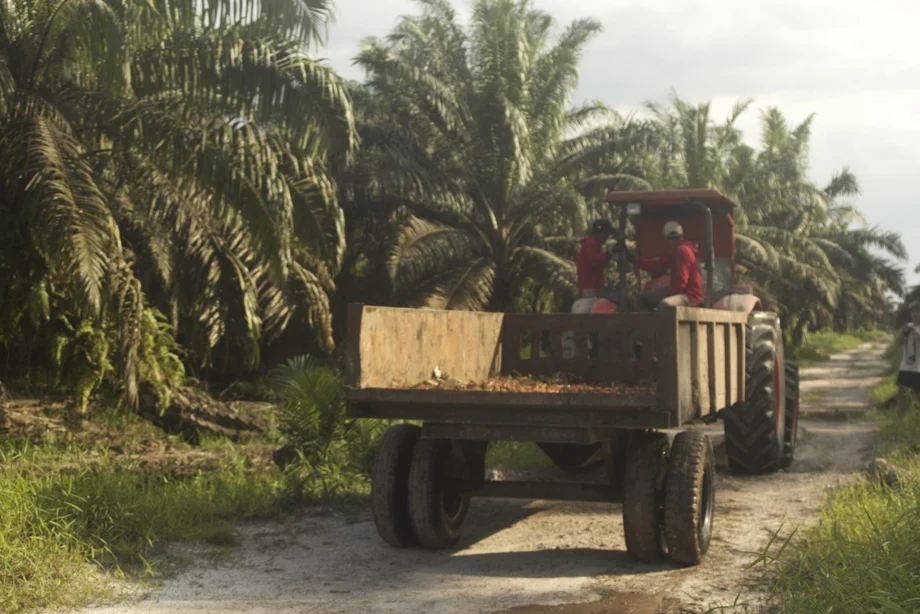
A study published in Frontiers in Public Health in September 2026 estimated that between 402 million and 433 million cases of unintentional acute pesticide poisoning affect farmers and agricultural workers each year, equivalent to about 46% of the world's farmers. Global pesticide use reached 3.8 million tonnes in 2023, twice the amount used in 1990. The researchers urged implementation of UN recommendations to eliminate highly hazardous pesticides.
Rossana Dewi, director of the Indonesian organisation Gita Pertiwi, said supervision must cover imports, production and distribution as well as the moment a farmer sprays a field. She called for government support, training and finance to help farmers adopt agroecology, an approach that uses ecological relationships, soil health and diverse crops to reduce dependence on hazardous chemical inputs. Civil society groups argue that a ban without practical alternatives would leave farmers carrying the cost of the transition.
The framework already seeks to phase out highly dangerous pesticides in agriculture by 2035. Governments agreed to develop a Global Alliance on Highly Hazardous Pesticides at their next conference in Malta in 2029, leaving the design and support for that alliance to future negotiations.
The wider pollution burden is also uneven. The Lancet Commission on Pollution and Health estimates that pollution causes about 9 million deaths annually, or one in six deaths worldwide. Lead and other chemicals contribute around 1.8 million of those deaths, and deaths attributed to this category have risen by more than 66% since 2000. About 92% of pollution deaths occur in countries with low and middle incomes.
UNICEF and Pure Earth estimate that as many as 800 million children, roughly one in three worldwide, have blood lead levels of at least 5 micrograms per decilitre, a level requiring action. Their analysis puts the lost economic potential from childhood lead exposure in countries with low and middle incomes at about US$1 trillion over those children's lives. Pesarean in Indonesia was one of its five case studies. Workers face concentrated exposure too: a 2024 IPEN study using silicone wristbands detected more than 20 hazardous chemicals among plastic waste and recycling workers in Thailand and Kenya, while office workers acting as a comparison group were exposed to at least 11.
Who pays for prevention?
The US$1.1 trillion estimate covers medical costs and lost productivity and is described as conservative. It excludes effects on water contamination, biodiversity and food production. An estimate limited to seven well known substances or groups still put their annual health burden at €1 trillion. A European calculation using 2010 data estimated that prenatal exposure to organophosphate pesticides caused more than 59,300 cases of intellectual disability each year in the EU, with children born that year losing about 2.5 IQ points on average.
Geneva extended the Global Chemicals Framework Fund to 2035 so that it can continue supporting developing countries. Delegates did not agree on changes to the fund's governance or on a mechanism to raise additional money. No date was given for resolving those questions or the remaining progress indicators.
Nindhita Proboretno of Nexus3 Foundation said Indonesia still faces limited inspection capacity, scarce pollution data and inadequate assistance for exposed communities. She argued that the chemical industry should bear more of the costs instead of leaving them with families and governments.
Without clear funding, this global commitment will be difficult to translate into real protection for communities.
Sheila Aggarwal-Khan, director of UNEP's Industry and Economy Division, said companies have unusual control because they choose product ingredients. She advised businesses to test early, disclose contents and replace hazardous substances carefully, reducing both regulatory and legal risks. The American Chemistry Council said safe use was paramount and argued for predictable regulation grounded in science, using existing regulatory frameworks. The UN assessment counters that the costs of illness, lost productivity, ecological damage and delay would exceed the cost of prevention and effective regulation.
What action looks like
UNEP's companion publication, From Evidence to Action: Addressing Endocrine Disrupting Chemicals Across Sectors, turns the science into recommendations for food packaging, cosmetics, toys, textiles, health care, agriculture, pharmaceuticals and waste management. It calls for problematic chemicals to be phased out, mixtures to be assessed, exposure monitoring to improve and pregnant women and children to receive priority protection. It also identifies possible commercial benefits, including safer food packaging and alternative materials.
After Geneva, civil society groups asked Indonesia and other participating governments to take five steps:
- Strengthen chemical regulation and inspection, including a gradual elimination of highly hazardous pesticides.
- Require disclosure of chemical ingredients and make industry responsible for resulting damage.
- Support farmers in moving towards agroecology and safer pest control.
- Provide new, sustained and accessible finance for implementing the framework.
- Measure progress through open data and meaningful public participation.
India illustrates the distance between a legal restriction and its enforcement. Bureau of Indian Standards rule IS 14625:2015 has barred bisphenol A in plastic feeding bottles since 2015. Testing by Toxics Link at IIT Guwahati in 2019 nevertheless found bisphenol A leaching from all 20 feeding bottles and sippy cups examined, at concentrations from 0.9 to 10.5 parts per billion, including some labelled as BPA free. Those results date from 2019. India's food safety authority has also drafted packaging changes that would prohibit PFAS in food contact materials and require certain polycarbonate and epoxy materials to be free of bisphenol A and its derivatives. The draft was notified to the World Trade Organization in December 2025, with comments closing in February 2026; it remained a draft with no final adoption date given.
Families can reduce some exposure while wider reforms proceed. Vandenberg suggests storing food in glass rather than plastic, avoiding artificial fragrances and wet mopping floors because household dust is an exposure route for babies who play on the ground. Other practical measures include not heating food in plastic containers, replacing heavily scratched coated cookware, reading ingredient information, following product instructions and using protective equipment when spraying pesticides. Vandenberg stressed that individual shopping choices cannot carry the whole response.
We're not going to solve this problem by asking people to shop differently.
Dates and decisions to watch
The next stages will show whether the scientific assessment changes labels, national laws, farm support and the money available to developing countries.
- 15 December 2026: Scientists scheduled a public webinar on the global EDC assessment and its call for urgent action.
- 2029: Malta is due to host the next framework conference, where governments plan to develop the Global Alliance on Highly Hazardous Pesticides.
- 2030: Most of the framework's 28 targets are due, the same year by which chemical production is projected to double from 2017.
- 2035: The extended framework fund is scheduled to end, and the framework targets the phaseout of highly dangerous pesticides in agriculture.
Key Points
- UNEP and WHO estimate that EDCs cost more than US$1.1 trillion a year in health care and lost productivity.
- More than 350,000 chemicals and mixtures are registered for use, but only a small fraction have been assessed for hormonal effects.
- Exposure can begin before birth, with the strongest evidence concerning brain development, behaviour and reproductive health.
- Geneva provisionally agreed 10 of 40 progress indicators and approved two implementation programmes.
- Decisions on lead, child protection, gender action and new financing were left unresolved, although the existing fund was extended to 2035.
- An OECD review found a gap in global chemical hazard classes, while the EU has already introduced legally enforceable EDC classifications.
- Indonesian civil society groups want stronger inspections, ingredient transparency, support for safer farming, accessible finance and open pollution data.