A 1993 game that never left Japan finds an audience abroad
Dragon Quest Heroes: Torneko's Mystery Dungeon -Classic HD- reached players outside Japan for the first time on September 9, 2026, with almost no advance warning. Within weeks it had done something its publisher did not plan for: it sold more copies than Square Enix had forecast.
Contents
- A 1993 game that never left Japan finds an audience abroad
- What the financial briefing actually said
- Why one modest remaster matters to a much larger turnaround
- The complaints that followed launch, and the patches that answered them
- Nintendo Switch 2 turns up across the whole business
- An older library does more of the work than the new releases
- A cautious second half, and the April 2027 test
- What is not yet known
- At a Glance
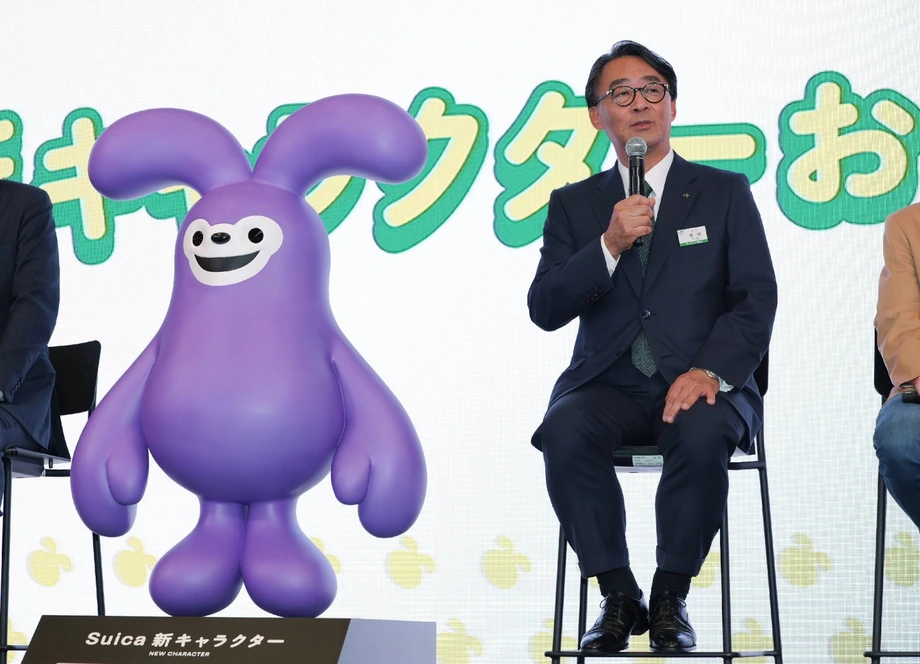
Takashi Kiryu, president of Square Enix Holdings, said so in prepared remarks for the company's financial results briefing covering the six months to September 30, 2026. The game, he said, sold above internal expectations, together with The Adventure of Elliot: The Millennium Tales, which launched in June. Square Enix did not disclose how many copies either title sold.
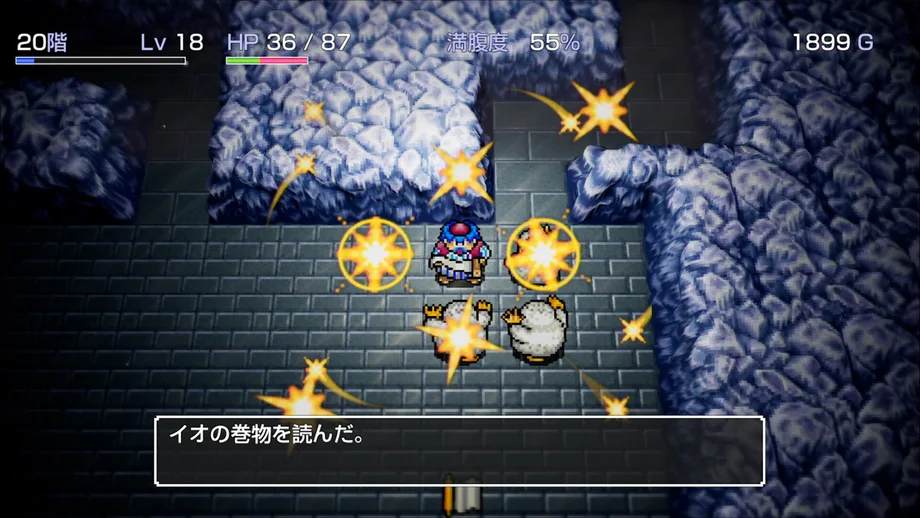
The remaster rebuilds Torneko's Great Adventure: Mystery Dungeon, a Super Famicom title from 1993 that never had an official release outside Japan. Players guide Torneko, the weapons merchant first met in Dragon Quest IV, through a dungeon whose layout changes every time he steps inside. He is chasing the title of the world's greatest weapons merchant by hauling treasure back to his shop. The original is one of the earliest console roguelikes made in Japan and the game that started the long running Mystery Dungeon series.
The rules are simple and unforgiving. Every step, attack or item use gives nearby monsters a turn of their own, so a careless move can cost health, food or a rare sword. Defeating monsters earns experience points, and better equipment is what makes deeper floors survivable.
The new version adds high definition visuals, quality of life changes and a new opening video. Its world and key art come from illustrator Naoki Ikushima, who drew the package illustrations for the Dragon Quest III HD-2D Remake and the Dragon Quest I & II HD-2D Remake. It sells for 3,520 yen, or 3,500 yen on iOS and Android, across PlayStation 5, Xbox Series X|S, Switch, Switch 2, PC through Steam and Google Play PC, and mobile.
What the financial briefing actually said
Square Enix published the full outline of the briefing and the analyst question and answer session on November 25, 2026, two weeks after the headline earnings release on November 11. That document places the Torneko remaster inside a sub-segment that had been losing money.
The HD games business, meaning console and PC titles rather than the online role playing games or mobile output, reported net sales of 35.6 billion yen for the half, up 11.6 billion yen on the same period a year earlier. Operating income reached 13.0 billion yen, an improvement of 8.0 billion yen, and the sub-segment's operating margin came to 37%.
Those numbers read differently against the recent past. The same sub-segment posted an operating loss of 3.6 billion yen in the half year to March 2024 and a loss of 1.2 billion yen a year later. Turning that into 13.0 billion yen of profit in six months is the single largest swing in the company's accounts.
Company wide, net sales rose 21.9% to 163.179 billion yen and operating income rose 42.2% to 38.793 billion yen. Ordinary income reached 40.336 billion yen, up 41.3%, and net income attributable to owners of the parent climbed 184.2% to 28.566 billion yen. Earnings per share came to 79.20 yen against 27.89 yen a year earlier, and the operating margin moved to 23.8% from 20.4%.
The Digital Entertainment segment, which holds games, carried the result with net sales of 97.681 billion yen, up 33.7%, and operating income of 32.854 billion yen, up 63.5%.
Why one modest remaster matters to a much larger turnaround
Kiryu devoted much of the session to Square Enix Reboots and Awakens, the three year plan announced in May 2024, and to a shift he described as a move from volume to quality. He pointed to the HD games figure as the clearest evidence: a 3.6 billion yen loss in the year to March 2024 against 13.0 billion yen of profit in the latest half year. The mobile business's operating margin rose to 30% from 25% over the same stretch.
The efforts we have been advancing under our medium term management plan have led to an improvement in profitability.
Smaller releases sit inside that story rather than outside it. A remaster of a 1993 cartridge, sold at a low price and released without a marketing campaign, is exactly the kind of low cost, low risk product the plan called for. When Kiryu described the half year, the Torneko title and The Adventure of Elliot were the two examples he gave by name, and both were described in the same phrase: sales that exceeded the company's expectations.
The comparison with Final Fantasy XIV shows the scale difference. The online game's sub-segment brought in 25.7 billion yen of net sales and 8.9 billion yen of operating income, with a margin of roughly 35%. The HD games sub-segment, with its two modest new titles and a large catalog, reached 37%.
The complaints that followed launch, and the patches that answered them
Not every buyer was satisfied. Players who picked up the remaster in its first days complained about the controls and the pace of play, and three problems came up repeatedly. The game froze briefly each time Torneko levelled up, dialogue wrapped at awkward points, and the sensitivity of the directional input made turning and diagonal movement fiddly.
Square Enix answered with updates. Patches have since shortened the pause at level up, moved where text breaks, and retuned how the controls respond when Torneko changes facing or moves diagonally. Those fixes land harder in this game than in most. In a roguelike where each action hands a turn to the monsters, an input that reads late or wrong costs health, food and items, and the run can end because of it.
The response also shows how a remaster is now sold. A game can ship, take criticism in its first week and be repaired while it is still on the storefront charts, which is part of why the sales result arrived in the same half year as the complaints.
Nintendo Switch 2 turns up across the whole business
Nintendo's new console appears three times in Square Enix's account of the half. Kiryu named support for new hardware, including the Switch 2, as one of the drivers of HD game sales, alongside stronger catalog sales and the two titles that beat expectations. The Torneko remaster shipped on Switch 2 at the same time as the original Switch, PlayStation 5, Xbox Series X|S and PC.
The console's arrival also shows in the online game sub-segment, where net sales rose 5.8 billion yen to 25.7 billion yen and operating income reached 8.9 billion yen. A Switch 2 version of Final Fantasy XIV went on sale, the Evercold expansion was announced for February 23, 2027, and fan festivals ran in North America, Europe and Tokyo from October 31 to November 1. Server travel between North America and Europe opens on December 1.
Smart devices and PC browser games brought in 36.3 billion yen of net sales, up 7.3 billion yen, and 10.8 billion yen of operating income, up 3.7 billion yen, helped by two new titles and more ways to pay. Amusement rose 13.2% to 39.147 billion yen with 5.446 billion yen of profit, lifted by more visitors to existing arcades, a jump in online crane games after television advertising, and stronger prize sales. Publishing rose 9.9% to 15.844 billion yen with 5.393 billion yen of profit, helped by anime adaptations of Yomi no Tsugai and Behind the Supermarket, Smoking With You, and by the continuing strength of The Apothecary Diaries. Overseas publishing sales came to 2.2 billion yen, 1.0 billion yen more than a year earlier.
Rights and properties moved the other way. Net sales fell 9.6% to 11.489 billion yen and operating income dropped 39.5% to 4.111 billion yen, with the margin falling to 35.8% from 53.5%, after one off Magic: The Gathering licensing income booked a year earlier. Kiryu said the segment grew once that item is excluded.
An older library does more of the work than the new releases
Behind the new titles sat a back catalog selling at a rate Square Enix has not seen in years. The company moved 12.59 million catalog units in the half, close to double the 6.55 million sold in the same period of the year to March 2024, before the three year plan began. Total Digital Entertainment software reached 14.87 million units against 9.93 million, and downloads accounted for 13.35 million against 8.55 million.
Promotions timed to news about Final Fantasy VII Revelation and Kingdom Hearts IV pushed older games, as did price cuts and marketing guided by player data. Romancing SaGa 2: Revenge of the Seven passed 1 million cumulative units in October. Paranormasight: The Mermaid's Curse drew a strong reception and lifted sales of the original Paranormasight: The Seven Mysteries of Honjo.
A cautious second half, and the April 2027 test
Guidance for the year to March 2027 was raised to 310.0 billion yen of net sales, 59.0 billion yen of operating income, 59.0 billion yen of ordinary income and 37.0 billion yen of net income, a margin of 19.0%. The operating income target sits just below the company's record of 59.2 billion yen set in the year to March 2022. The dividend stays at 43 yen a share, 18 yen at the interim and 25 yen at the year end, about 15.5 billion yen in total.
Second half sales are forecast about 10% below the same period a year earlier, despite Final Fantasy Resonance on October 22, Dragon Quest Monsters: The Withered World in December and Romancing SaGa 3: Destinies United in February 2027. An analyst asked whether the plan was deliberately conservative. Kiryu said Dragon Quest Monsters is a sequel and the SaGa title a remake, both selling mainly in Japan, so a large upside from overseas sales is hard to assume.
The following year carries heavier numbers. Final Fantasy VII Revelation is due in April 2027 and Kingdom Hearts IV is in development. The content production account, which tracks money spent on games not yet released, rose 10.3 billion yen to 56.5 billion yen. Kiryu said both titles carry larger development budgets and heavier amortisation, the accounting charge that spreads a game's cost across the years it sells.
We will first assess how Final Fantasy VII Revelation performs, and then we would like to explain our future measures with greater precision.
He also declined to rule out a special loss in the second half, when an analyst noted that the profit implied for the period looks thin next to the first half. "I will refrain from giving a clear answer at this point regarding the possibility of a future extraordinary loss," he said, adding that the structural and organisational reforms under the current plan have run their course.
Square Enix plans to look for growth investments in a range of 800 billion to 1,000 billion yen, with money going to artificial intelligence and data infrastructure, though Kiryu acknowledged that rising semiconductor prices are pushing costs up. Total assets stood at 457.167 billion yen, 19.1 billion yen more than at the end of March, and the equity ratio was 80.3%.
What is not yet known
Square Enix has not given unit sales for the remaster, so the size of the surprise stays inside the company. No further patch schedule has been announced, and there is no word on whether other games that stayed in Japan will follow Torneko abroad. The company also gave no figure for how much of the 10% second half decline comes from each title.
Dates already on the calendar will settle much of it. Server travel for Final Fantasy XIV opens on December 1, Dragon Quest Monsters: The Withered World arrives in December, Romancing SaGa 3: Destinies United follows in February 2027, the Evercold expansion lands on February 23, 2027, and Final Fantasy VII Revelation is due in April 2027.
At a Glance
- Dragon Quest Heroes: Torneko's Mystery Dungeon -Classic HD- shipped on September 9, 2026 as the first release of the 1993 Super Famicom game outside Japan.
- President Takashi Kiryu said the title sold above internal expectations; Square Enix gave no unit figure.
- HD games net sales reached 35.6 billion yen, up 11.6 billion yen, with operating income of 13.0 billion yen, up 8.0 billion yen, and a 37% margin.
- Group net sales rose 21.9% to 163.179 billion yen and operating income rose 42.2% to 38.793 billion yen.
- Catalog sales reached 12.59 million units against 6.55 million in the same half of the year to March 2024.
- Full year operating income guidance was raised by 10.0 billion yen to 59.0 billion yen, near the 59.2 billion yen record.
- Patches have addressed the level up pause, text line breaks and directional input sensitivity reported after launch.
- The next big test is Final Fantasy VII Revelation, due in April 2027 alongside heavier cost amortisation.