An Open Channel and a Rule Women Were Told to Accept
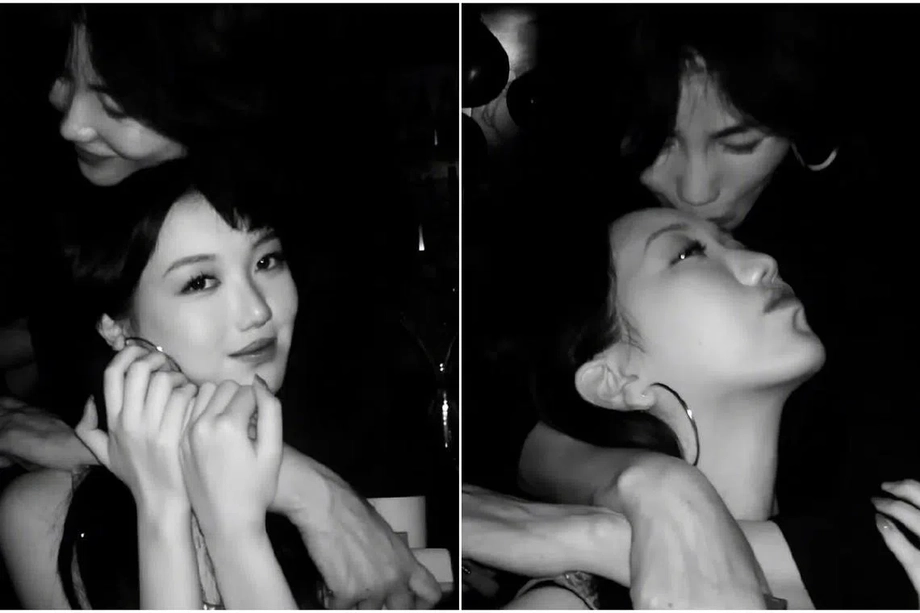
Zhao Zhaoyi, 27, turned a conversation about old habits on Chinese film sets into a public dispute on November 27, 2026. Speaking in the second episode of season two of Lai Guanlin's video podcast, known as Guishan Township 2 and also described in English as Youth, the actress said a director once used an open walkie-talkie to comment on her body in front of a crew during an overnight shoot. She also said that when she first joined productions, she was told women could not sit on boxes used to store camera lenses.
Contents
- An Open Channel and a Rule Women Were Told to Accept
- What Zhao Said Happened During the Overnight Shoot
- Why the Camera Equipment Case Rule Stung
- What Lai Guanlin Said His Own Set Does Differently
- Why Betel Nut Became Part of the Conversation
- The Fan List and the Search for an Unnamed Director
- Who Is Zhao Zhaoyi and Why Her Work Is Familiar
- What Is Known and What Is Still Unanswered
- Why an Old Film Set Habit Can Affect a Whole Crew
- Timeline of the Disclosure
- Key Points
By the morning of that day, the topic was No. 1 on Weibo's hot search rankings. The discussion widened from one actress's account to two everyday questions on sets: who is allowed to feel comfortable at work, and which old habits keep being treated as normal. Lai, the podcast host and now a director, offered a practical contrast on the same program. He said his camera team does not smoke, drink alcohol or eat betel nut on set, and he told Zhao she could sit on camera equipment cases on his productions without worry.
What Zhao Said Happened During the Overnight Shoot
Zhao did not identify the director, the drama or the year. She described a scene filmed late at night when the crew had been working for hours. The director, she said, spoke on a walkie-talkie, a two way radio channel that crew members could hear, and made a remark about her body in front of everyone.
Zhao said the comment was public and humiliating because the channel was shared by the crew. She then repeated the director's words.
Don't be so petty. The guys have stayed up late with you for this scene. Just show a little to everyone, let them relax.
Zhao, an actress whose roles include Hua Rong in The Romance of Hua Rong and Youyou in Blossom in Darkness, said she was furious and briefly thought about getting even. She said the setting made her feel that fighting back was impossible at the time.
Lai asked Zhao whether she had ever considered standing up against that kind of treatment. Zhao said the experience still shaped her feelings at work and in life.
I can no longer be as cheerful and open as I used to be. I feel like tragedies like this will continue to happen. I know these things are still going on, but I feel powerless to do anything about them.
Zhao said changing those feelings had been extremely difficult.
Why the Camera Equipment Case Rule Stung
Camera equipment cases are the hard boxes that protect lenses and camera gear during transport and storage. On busy sets, crew members often sit on them because there may be few chairs. Zhao said that when she entered the industry she was told women should not sit on those boxes.
Zhao, the actress, placed that rule in the same category as the director's comment, calling both 'subtle malice'. She viewed the practice as a subtle form of hostility and discrimination and described the message as a quiet way of telling women they did not belong in a shared workspace.
One of the first rules you hear when joining a production crew is that women are not allowed to sit on the boxes used to store camera lenses. Right now, I'm trying to break that rule. In many places, you have to deal with hostility that is expressed in very subtle ways.
The belief behind the camera box rule has appeared in earlier accounts from other actresses. Guo Xiaoting and Wen Qi have said in past interviews that women were kept away from camera boxes because of a notion that women were unclean or could bring bad luck to a production. Such a rule is unwritten, which means it can survive without appearing in any rulebook. It is passed from crew to crew as habit.
What Lai Guanlin Said His Own Set Does Differently
Lai has a direct answer to the camera box rule. The podcast host, who now directs productions, told Zhao that if she works with him she can sit wherever she needs to sit, even lie down for makeup on a camera case. His message was that equipment is a tool for work, not a seat reserved by gender.
He also described rules for his camera team. The team does not smoke, drink alcohol or eat betel nut while working. Anyone who wants betel nut has to leave the production space to chew it.
Lai explained the reason in practical terms. Betel nut, also called areca nut, is a seed chewed in parts of Asia. It can leave red or brown residue in the mouth and on the ground, and it has a stimulating effect. Smoke can cling to clothes and hair. For an actor trying to stay in a scene, both can interrupt concentration.
Lai said the point was to protect the performer's state of mind and keep the set clean. He described his approach as being dedicated to breaking such rules, and he said a workplace that allows old habits to continue will keep causing harm.
Why Betel Nut Became Part of the Conversation
The original exchange began with a smaller, very visible detail. Lai told Zhao that in his crew, anyone eating betel nut must go outside. Zhao replied that many sets are different, with betel nut residue scattered on the floor. She also said smoke smell could be even more disruptive. Lai answered that his team does not smoke either.
This part of the conversation mattered because film sets are crowded workplaces. A camera operator, a lighting assistant, an actor and a director may stand close together for hours. A strong smell, smoke or chewed residue on the floor is not a private habit. It becomes part of the shared environment.
Lai's rule also shows how set culture is made. A production can treat small comforts as unimportant, or it can set clear boundaries before a problem grows. His standard was simple: keep smoke, alcohol and betel nut outside the working area so actors can focus and the crew has a cleaner place to work.
The Fan List and the Search for an Unnamed Director
The podcast clip spread across Chinese social media soon after it appeared. One page carrying the Chinese version showed a publication time of 22:08 on November 27, 2026. Online comments called the remark harassment, not a joke, and some readers widened the point to offices and companies where vulgar topics are used as social tools.
The discussion produced a list made by fans of directors Zhao had worked with. The names included Fu Dongyu, Gao Linbao, Ren Haitao, Zhu Chunyong, Cao Dun and Gao Xiang. Some posts attached productions to those names, including Being a Hero, The Romance of Hua Rong, Unbelievably Clear and The Wolf Hunter.
None of those names has been confirmed as the director in Zhao's story. Zhao did not give the project, the year or a detail that would identify the set. No director or production team named in the online discussion has issued a public response.
Who Is Zhao Zhaoyi and Why Her Work Is Familiar
Zhao was born in 1999 in Dalian, Liaoning Province, and graduated from the Communication University of Zhejiang with a degree in broadcasting and hosting. She began acting in 2019. Her breakout role was Hua Rong in The Romance of Hua Rong, and later credits included Being a Hero, Nancheng Banquet, Feud, Royal Betrothal and Blossom in Darkness.
Her public profile grew after she joined the fifth season of the reality show Divas Hit the Road in 2023. A few months before the podcast discussion, she played Yan Fuzhi in Royal Betrothal, a production starring Wu Jinyan and Chen Zheyuan. At the time of the discussion, she was playing Youyou in Blossom in Darkness, a role that drew positive comments for her styling, performance and distinctive delivery.
That recognition helps explain the scale of the reaction. The account came from an actress with a visible body of work, not from an anonymous post. Even so, the details that could lead to a specific director remained absent, which kept the public attention on the broader working culture.
What Is Known and What Is Still Unanswered
Known details are narrow. Zhao said an unnamed director spoke over an open walkie-talkie during an overnight shoot. She said the remark asked her to show part of her body so male crew members could relax. She said she felt furious, pressed down and unable to respond in that moment. She also said the camera box rule was one of the first rules she heard after entering the industry.
Several practical details remain unknown. The director, production and year were not named. The first person account has not been independently verified beyond Zhao's words on the podcast. No public response from a director or production team has followed. No date has been given for a further statement.
That absence matters for readers who want to attach the story to one person. The online list gives names of people Zhao has worked with, but it does not supply the missing details from the podcast. The first person account is Zhao's own description of what happened and how it affected her.
Why an Old Film Set Habit Can Affect a Whole Crew
A film set works like a small workplace under time pressure. People work long hours, move between locations and depend on teamwork. Instructions often travel by radio, and senior figures such as directors can shape what junior performers feel able to say. An open comment about an actress's body is not a private joke in that setting. It is heard by the people who work with her every day.
The camera box rule works in a quieter way. A woman who is told she cannot sit on a case learns that a common object is marked as hers to avoid. If she accepts it, the rule continues. If she challenges it, she may be treated as difficult. Lai's promise to Zhao changes the practical situation on his sets: a female visitor or performer can sit, and even lie down for makeup, without being told that she brings bad luck.
The no betel nut and no smoking rule works in the same direction. It turns comfort into a shared standard instead of leaving each person to endure smells or residue. For actors, that can mean a cleaner space and fewer distractions while they try to hold emotion and timing in a scene. For crew members, it means the expectations are clear before filming starts.
Timeline of the Disclosure
The public record is short and concentrated in one day.
- November 27, 2026, morning: the topic of Zhao's comments reached No. 1 on Weibo's hot search rankings.
- November 27, 2026, 22:08: a Chinese page carrying the podcast discussion showed a publication time in the evening.
- November 27, 2026: the second episode of season two of Guishan Township 2 featured Zhao's account of the walkie-talkie remark, the camera box rule and Lai's set standards.
Key Points
- Zhao Zhaoyi, 27, said an unnamed director made a sexual comment about her over an open walkie-talkie during an overnight shoot.
- She said the comment left her furious and less cheerful, and that she felt powerless at the time.
- The actress also described an unwritten rule that women should not sit on camera equipment cases, a practice she linked to subtle malice.
- Lai Guanlin said his camera team does not smoke, drink alcohol or eat betel nut on set, and anyone who wants betel nut must go outside.
- Lai told Zhao she can sit on camera cases, and even lie down for makeup, on his productions.
- The topic reached No. 1 on Weibo on November 27, 2026, while the director, production and year remained unnamed.
- A list of directors made by fans circulated online, but none of the names has been confirmed in connection with Zhao's account.