A sellout in 28 minutes at a fully booked event
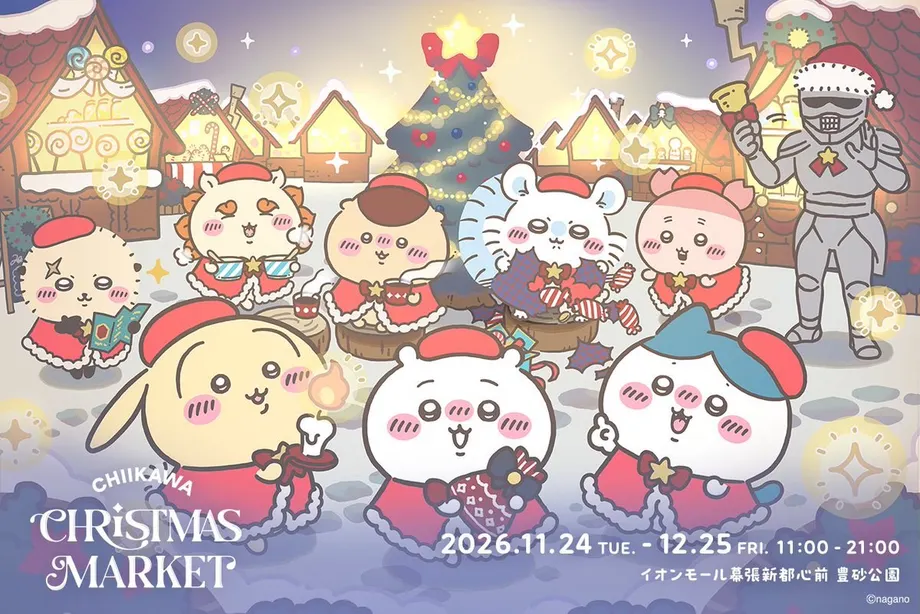
The first warning came at 11:28 a.m. on November 24, 2026, just 28 minutes after the Chiikawa Christmas Market opened at Toyosuna Park in Chiba, Japan. Some merchandise was already gone. By 3:10 p.m., ABEMA, the company planning and operating the event, said the day's stock had sold out except for balloons and a small number of other products. The market was due to stay open until 9 p.m., and the last admission slot did not begin until 6:30 p.m.
Contents
- A sellout in 28 minutes at a fully booked event
- What visitors paid to experience
- How the response changed over three days
- Why timed tickets did not protect later shoppers
- Who can receive a refund?
- How ordering for later production will work
- Safety problems, resales and checks at the shop
- A comedian's own sold out trip to Taiwan
- What remains unfinished before December 25
- What to Know
That timing left people holding paid admission tickets with little or nothing to buy. Admission for visitors aged 12 and over cost 2,500 yen on weekdays and 2,800 yen on weekends and public holidays, including tax. Entry slots were spaced 30 minutes apart, and every ticket had sold out before the market opened. There were no plans to sell tickets at the gate.
Inside, shelves became almost bare. One shopper waited about two and a half hours to make a purchase, while another saw a desired product sell out moments before reaching it. The problem continued after opening day: on November 26, some products disappeared roughly 40 minutes after the 11 a.m. opening. ABEMA responded that night with a broader apology, ticket refunds and a promise to produce goods according to customer orders rather than rely mainly on stock prepared in advance.
What visitors paid to experience
Chiikawa began as a manga posted on X by illustrator Nagano. Its characters, including Chiikawa, Hachiware and Usagi, experience cheerful, painful and sometimes harsh daily lives. A television anime began in April 2022, and a new film opened on July 24, 2026. The Christmas market was designed to let fans enter that world through decorations, food, games, photography and shopping.
The venue covers about 6,000 square metres beside Aeon Mall Makuhari New City. Its central decoration is a Christmas tree standing about six metres tall, with an original story presented through light, video and sound. Other attractions include character balloons about three metres tall, a snow dome, games and a moving merry go round display intended for viewing and photographs rather than rides.
A food area was scheduled to serve 35 kinds of dishes, desserts and drinks. They included marshmallow smores made with character cookies and colourful churros inspired by weapons used in the story, each priced at 1,400 yen. Merchandise ranged from 440 yen stickers to Santa mascots costing 2,000 yen, character plush toys costing 3,190 yen and a snow dome priced at 4,620 yen. For many visitors, especially those travelling long distances, buying these exclusive products was a central reason for purchasing admission.
How the response changed over three days
ABEMA altered its plan several times as complaints spread from disappointed shoppers to people still waiting for their visit.
- October 31: Every dated admission ticket had already sold out, demonstrating the scale of demand nearly a month before opening.
- November 24: After the opening day sellouts, the organizer apologized to visitors who could not buy goods. It announced an online reservation sale at the Chiikawa Pocket Goods Store, but said orders would stop once a sales ceiling was reached.
- November 26: ABEMA apologized again, this time covering rapid sellouts at both the venue and online store. It replaced the capped reservation plan with production based on orders and announced refunds for eligible tickets.
- November 27: The organizer acknowledged pushing in the admission queue and changed the entry procedure so visitors would be called forward according to the reference number printed on each ticket.
The initial online plan had been scheduled for December 4 to 25. Although it offered another route to purchase goods, its sales ceiling meant shoppers could still face a race to place an order before acceptance ended. The November 26 revision addressed that concern for most eligible products, while the refund policy gave dissatisfied ticket purchasers a separate choice.
Why timed tickets did not protect later shoppers
The central mismatch was simple. Admission was divided into time slots, but merchandise stock was divided by day. People entering in the morning could therefore buy products intended for the entire day, leaving visitors with afternoon or evening tickets to find empty shelves. The system controlled how many people entered at once, but it did not preserve a share of the goods for each group.
Advance ticket sales also meant ABEMA knew how many visitors were expected in every slot. Setting aside part of each day's stock for different admission periods could have kept some products available for later arrivals. The organizer has not disclosed how many units it prepared or how it calculated the quantities needed.
Before opening, ABEMA had tried to spread purchases more widely. For most products, it reduced the maximum at each checkout from two units to one, with some exceptions. Visitors nevertheless questioned how the available stock could be so far below demand when both attendance and purchase limits were known.
Travel expenses made the disappointment more costly. A fan writing from South Korea said they had arranged roughly 40,000 yen in airfare and 30,000 yen in accommodation for an evening visit on the event's fourth day. They had not expected every product to remain available, but had not expected to find nothing at all.
One customer summed up the objection to selling admission for hours after the merchandise had disappeared:
If everything sells out at 3 p.m., you should only sell tickets for entry up to 3 p.m., shouldn't you?
Another asked why inventory was insufficient when the organizer knew the number of attendees and had introduced a purchase limit. ABEMA initially explained that it prepared stock separately for each day, but that did not address the uneven distribution within each day.
Who can receive a refund?
The refund rules depend on the date printed on the ticket, and the broadest provision covers people who actually entered during the troubled opening period.
- November 24 to 27: Purchasers can request a refund whether they used their tickets or not. This includes visitors who entered the park but could not buy the goods they wanted.
- November 28 onward: Refunds are limited to unused tickets, with the purchase required to remain unused as a unit. A ticket that has already been used does not qualify under this part of the policy.
- Application deadline: Requests in both categories must be submitted by December 2, 2026. Customers are instructed to use the address provided in an email from Asoview, the ticket service.
The announced repayment concerns admission, which costs 2,500 yen or 2,800 yen depending on the date. ABEMA did not announce compensation for airfare, hotels or other travel expenses. For someone who visited from overseas, a ticket refund would therefore recover only a small part of the journey's cost.
How ordering for later production will work
Production based on orders means the organizer collects purchases first and then manufactures the required quantity. This differs from selling a fixed batch online, where the fastest shoppers can exhaust the supply. It also means customers must wait for production and delivery instead of receiving goods immediately.
The revised sales plan has two stages:
- People who bought event tickets: Orders are scheduled to open at noon on December 4 and continue through December 25. Attendance at the market is not required. Each ticket permits an order for one of each eligible product, while random products can be ordered in quantities of up to eight of each kind.
- All other customers: A separate window is scheduled from December 26, 2026, through January 10, 2027. No event ticket is required.
Most products sold at the venue are expected to be included in the first stage, but some large items and some plush toys are excluded. ABEMA has not provided a date when those excluded products might become available through another sale.
Delivery will also take time because manufacturing will follow the order period. The organizer apologized for making customers wait, but did not give a shipping schedule or say whether Christmas products would arrive before December 25. The new system removes the immediate buying race for covered goods, while leaving the delivery date and several popular exclusions unresolved.
Safety problems, resales and checks at the shop
Merchandise shortages were accompanied by congestion. On November 27, ABEMA acknowledged that people had pushed against one another while waiting to enter. The organizer introduced its apology by describing the danger and anxiety experienced by customers:
We deeply apologize for causing danger and anxiety to our customers, including the pushing that occurred in the admission waiting line for the Chiikawa Christmas Market.
Staff then began guiding visitors inside according to their ticket reference numbers. The change was intended to make admission depend on an assigned sequence rather than physical pressure within the queue.
Social media posts also described shoppers holding several products in baskets and passing them to acquaintances arriving later. ABEMA subsequently said it had confirmed goods being secured in ways that exceeded purchase limits, as well as resales at high prices through online flea market services. One toy with a list price of about 2,000 yen appeared to have changed hands for more than 10,000 yen, over five times the original amount.
One person writing on social media said they had spent about 200,000 yen travelling from overseas, entered at noon and found that sellouts had already been announced. The post said crowding caused a collision and an injury, and that the visitor obtained only one product. Such accounts added to pressure on ABEMA to address both stock management and conditions inside the venue.
The organizer promised more thorough identity checks at admission, changes to movement through the sales area and stronger checks by staff. Comedian Satoshi Mukai noted that identification and limits on buying can help, but they cannot create enough stock when demand has been underestimated.
A comedian's own sold out trip to Taiwan
Satoshi Mukai, 40, a member of the comedy trio Panther, discussed the market on Nippon Television's DayDay on November 27. He explained that his enthusiasm for Chiikawa had already taken him abroad in search of merchandise:
I got hooked through the film and even went to Taiwan for Chiikawa. I went to buy the item I wanted, but it was sold out, so I could not buy it even after going all the way to Taiwan. This sort of thing happens quite often in this community, but when this much sells out, I think the organizers must have misjudged their demand forecast.
Mukai also said the event appeared to be taking reasonable measures against reselling. He described having to show a driver's licence when buying elsewhere, with one item available per person. His conclusion was that the characters had proved even more popular than expected. He welcomed a quick response and said he hoped the changes would leave fans happy.
What remains unfinished before December 25
Rain left parts of the opening day venue muddy, adding to the discomfort of visitors who had already faced queues and empty shelves. The food and drink booths also lacked roofs. ABEMA said it was considering measures for both problems, but did not announce a completed design or a date for the work.
Visitors whose main goal was one of the excluded plush toys still have no confirmed purchasing route under the new order system. Customers with later tickets must instead weigh the remaining attractions against the shopping uncertainty, while observing the December 2 refund deadline if their tickets qualify.
ABEMA said it would review the quantity of goods prepared, its inventory management and its sales methods, using customer feedback to improve operations and prevent a recurrence. The market remains scheduled to run through December 25, 2026. The order process will continue beyond the event's closing date, with general sales ending on January 10, 2027.
What to Know
- Some goods sold out 28 minutes after the market opened on November 24, and most opening day stock was gone by 3:10 p.m.
- Admission cost 2,500 yen on weekdays and 2,800 yen on weekends and holidays for visitors aged 12 and over, and every ticket sold out in advance.
- Tickets for November 24 to 27 can be refunded whether used or unused; later tickets qualify only if unused. Applications close on December 2.
- Orders for people who bought tickets open at noon on December 4, followed by sales to everyone from December 26 through January 10, 2027.
- Some large products and plush toys are excluded, and no delivery schedule has been announced.
- ABEMA changed admission to ticket number order after pushing in the queue and promised stronger checks against purchase abuses and resales.
- Muddy ground, uncovered food booths and improvements to venue operations were still under consideration.