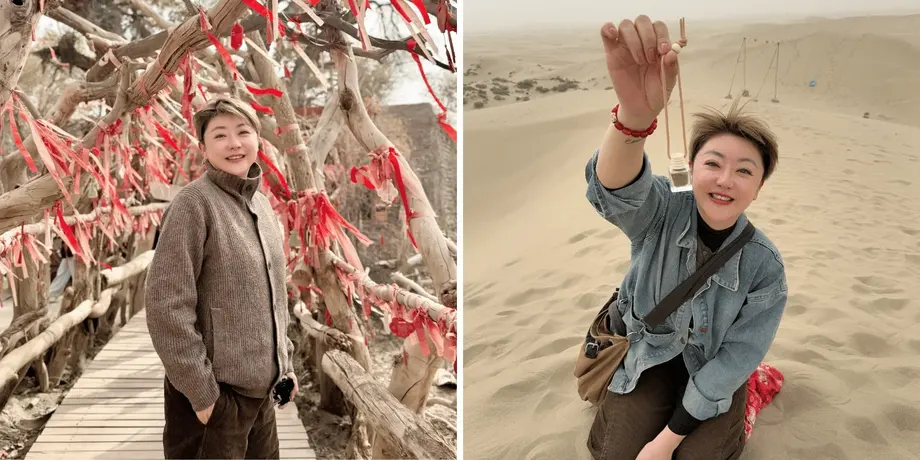
A luxury tour that became an expensive ordeal
Singaporean television host Quan Yi Fong says a journey she had long wanted to make to Xinjiang turned into an ordeal of crowded bus travel, pressure to buy expensive local products and severe dehydration. She and a friend paid more than 20,000 yuan, about S$3,845, for what was presented as a luxury tour of southern Xinjiang. They then spent nearly 30,000 yuan, or about S$5,800, more on shopping in an attempt to buy peace of mind.
Contents
- A luxury tour that became an expensive ordeal
- Why she joined a local tour in southern Xinjiang
- The contract promised no shopping, then came two jade shops
- Nearly S$5,800 to buy peace of mind
- Plastic bottles, long toilet queues and too little water
- The sequence from winter closures to a hospital visit
- The agency has not answered, while travellers share similar stories
- Why her advice goes beyond checking online reviews
- What to Know
The shopping bill was therefore about one and a half times the original package price when those rounded figures are compared. Their combined outlay came to roughly S$9,600. Quan said the extra spending was not simply a case of two holidaymakers choosing souvenirs. She alleged that travellers who refused to buy anything were mocked and scolded by their guide, while she and her friend felt vulnerable in an unfamiliar and remote region.
The package itself also fell short of what she believed had been promised. The group was supposed to have no more than 12 people but ultimately contained 20, eight above the maximum and two thirds larger than the promised limit. A luxury vehicle with six seats was replaced by a tour bus. Accommodation had been presented as hotels rated four or five stars, yet Quan found that rooms at some of the hotels could be booked for as little as S$30 a night.
The health toll emerged after the journey. Quan said she deliberately drank less water because toilet opportunities were so limited, despite the dry climate. After returning to Beijing, she sought medical attention at a hospital and was diagnosed with severe dehydration. She did not name the hospital or give details of her treatment.
Quan shared her account on Instagram on Nov 1, 2026, and subsequently supplied further details about the package, shopping and transport. Her description has resonated with people who said they had also faced pressure to shop on organised tours, although others urged her not to let the experience determine her view of the entire region.
Why she joined a local tour in southern Xinjiang
Winter weather had disrupted her original plan to visit northern Xinjiang. Quan said many tourist routes there were already closed or risked temporary closure because conditions were unpredictable and sudden snowstorms could shut roads and attractions. She chose southern Xinjiang instead, allowing her to fulfil at least part of a long-held wish to see the region.
The distances involved made independent travel appear impractical to her. Southern Xinjiang's plains at high altitude and its deserts create very different scenery from the north, but attractions can be separated by long drives. After arriving, she joined a local tour rather than attempting to arrange every journey herself. That decision placed the group, its transport, its accommodation and its daily schedule in the hands of the operator and guide.
Quan said she had researched the trip extensively before booking. Her later frustration came from the gap between that preparation and what she felt able to control once the tour was underway, particularly when the bus was hours from the next attraction or rest stop.
The contract promised no shopping, then came two jade shops
Quan said the written agreement made the shopping excursions especially jarring. Speaking as someone who believed the contract had settled the issue in advance, she described her reaction in these words:
We had signed a contract stating in black and white that there would be absolutely no compulsory shopping or additional fees. And yet!
The group was nevertheless taken shopping on two consecutive mornings, according to her account. Products on sale included Xinjiang cotton with long fibres, Hetian jade, camel wool blankets and camel milk. The itinerary included two jade shops. Hetian jade is associated with the Hotan area of Xinjiang and was among the most expensive items travellers were encouraged to consider.
Quan said the cheapest jade pieces cost more than 2,000 yuan, about S$390, and that each purchase was expected to cost at least 2,000 yuan. Travellers interested in camel milk had to buy four cartons together for 1,000 yuan, about S$190. A summary published in Chinese described individual purchases as starting at S$1,000, but gave no product breakdown that would reconcile that higher figure with the yuan prices in her detailed account.
She alleged that the pressure continued after travellers left the shops. Those who bought nothing were mocked and at times scolded by the guide on the bus, she said. The shopping stops were therefore not brief visits that people could simply ignore; in her telling, their decisions about whether to spend money followed them back onto the vehicle and shaped the atmosphere for the rest of the journey.
Nearly S$5,800 to buy peace of mind
Quan eventually bought a piece of Hetian jade. The Singaporean host said she then watched the guide continue to harass and ridicule other members of the group, behaviour she had previously encountered only in short videos online. She described her disbelief in her own words:
I bought a piece of Hetian jade. For the rest of the journey, I just watched the tour guide constantly harass and make fun of the other tourists. I was completely dumbfounded.
The final shopping bill for Quan and her friend approached 30,000 yuan, about S$5,800. She said their location influenced their decision to spend. They were far from home, travelling through a vast region and dependent on the tour for transport, so walking away from an unpleasant confrontation was not as simple as leaving a shop in a city and returning to a hotel independently.
Her phrase about buying peace of mind captures that distinction. The money was spent in the hope of avoiding further trouble, rather than solely because every item was something they had set out to purchase. Quan said she had never personally experienced such pressure before. She even remarked that the drama unfolding inside the bus had become more entertaining than the scenery outside, a wry observation that also conveyed how consuming the disputes had become.
Plastic bottles, long toilet queues and too little water
The journeys between attractions created a second set of problems. Quan said the bus spent long periods on expressways and could not simply pull over whenever someone needed a toilet. Stops were typically around two hours apart. For travellers trying to predict when they would next find a toilet, that meant planning around the bus schedule rather than their own needs.
Quan alleged that the guide instructed male travellers to urinate into plastic bottles, and she described travellers resorting to bottles during the journey. She also said the guide discouraged people from drinking water so that they would need fewer toilet breaks. Her own response was to restrict how much she drank throughout the trip.
Reaching a rest stop did not necessarily bring quick relief. Quan said toilet queues could take 20 to 30 minutes and compared them with lines at amusement parks. She also described foul smells and difficult conditions. Her most memorable summary of that part of the journey was characteristically blunt:
The most unforgettable thing about southern Xinjiang might just be the toilets. You have no choice but to use them, and once you do, you'll never forget the experience!
The dry climate made her decision to limit water especially consequential. Dehydration means that the body does not have enough fluid to function properly; severe dehydration is much more serious than ordinary thirst. Quan connected her eventual diagnosis with the combination of that climate and her reduced intake. By the end of the experience, she said, she wanted to lie down and recover.
The sequence from winter closures to a hospital visit
Quan's account covers the planning of the journey, several days of disputed tour practices and events after she left the group. The sequence she described can be set out as follows:
- Before the tour, winter weather and possible snowstorms led her to abandon her plan for northern Xinjiang and choose the south.
- After arriving, she joined a local tour because the distances made independent travel seem impractical.
- The promised small group and luxury vehicle became a party of 20 travelling by bus, while some hotels appeared available online for S$30 a night.
- On two consecutive mornings, the group visited shops selling local products, including two jade shops.
- During long transfers, stops were generally about two hours apart, bottles were allegedly suggested for urination and Quan limited her water intake.
- After returning to Beijing, she went to a hospital and said she was diagnosed with severe dehydration.
- On Nov 1, 2026, she published her Instagram account, prompting both similar complaints and suggestions for other ways to travel.
The exact dates of the tour itself were not given. Quan also did not provide a full list of hotels or a detailed breakdown of every purchase making up the nearly 30,000 yuan shopping total.
The agency has not answered, while travellers share similar stories
The travel agency had not responded to a request for comment by the time Quan's interview was published. That leaves the disputed shopping arrangements, the change in vehicle and the standard of accommodation without a public explanation from the company. Her account did not say whether she had lodged a formal complaint, and no deadline for a reply or resolution was given.
Readers responding to her post described a divided reaction. Some shared their own experiences of being taken to shops and pressured to spend while travelling with organised groups. Others encouraged her not to write off Xinjiang, particularly the northern routes she had originally hoped to visit.
A recurring suggestion was to hire a private driver rather than join a group. Supporters of that approach said it could allow a more flexible schedule and reduce the chance of being taken to designated shops. That suggestion came from people responding to her account, rather than from an official travel body or a finding about the agency involved.
Why her advice goes beyond checking online reviews
Quan's main advice was to use reliable travel agencies recommended by friends instead of relying solely on online research. She stressed that she had done extensive preparation and still felt she had been massively ripped off. In her experience, neither research nor a written contract provided an immediate remedy once the journey had begun and the group was travelling through remote areas.
Her account also explains why the practical details mattered as much as the headline price. A limit of 12 travellers, a vehicle with six seats, hotels of a stated standard and a ban on compulsory shopping all shaped what she thought S$3,845 was buying. When those elements changed, the difference affected crowding, comfort, time at attractions and the amount of pressure she said travellers faced.
For all her frustration, Quan said she remained glad that she had seen southern Xinjiang's scenery and fulfilled her wish to visit the region. The experience nevertheless made her reconsider travelling to northern Xinjiang. Her initial Instagram verdict was much more severe: she wrote that, to be honest, she would not recommend going.
The contrast between those statements is central to her story. She still valued the destination and the scenery, but strongly objected to the way the tour was conducted. Her advice about personal recommendations, together with readers' suggestions of a private driver, focuses on changing the arrangements rather than pretending that the vast distances and limited rest stops will disappear.
What to Know
- Quan Yi Fong and a friend paid more than 20,000 yuan, about S$3,845, for a luxury tour of southern Xinjiang.
- They spent nearly another 30,000 yuan, about S$5,800, on shopping to buy peace of mind, bringing the rounded total to roughly S$9,600.
- The group grew from a promised maximum of 12 people to 20, and a luxury vehicle with six seats was replaced by a bus.
- Quan alleged that two mornings of shopping breached a contract promising no compulsory shopping or additional fees, and that travellers who refused to buy were mocked or scolded.
- Stops were typically about two hours apart, bottles were allegedly suggested for urination and rest stop toilet queues could last 20 to 30 minutes.
- Quan limited her water intake and said a Beijing hospital later diagnosed her with severe dehydration.
- The agency had not responded by publication, while Quan advised booking through agencies recommended by friends and some readers suggested hiring a private driver.