A Historic Case Begins in The Hague
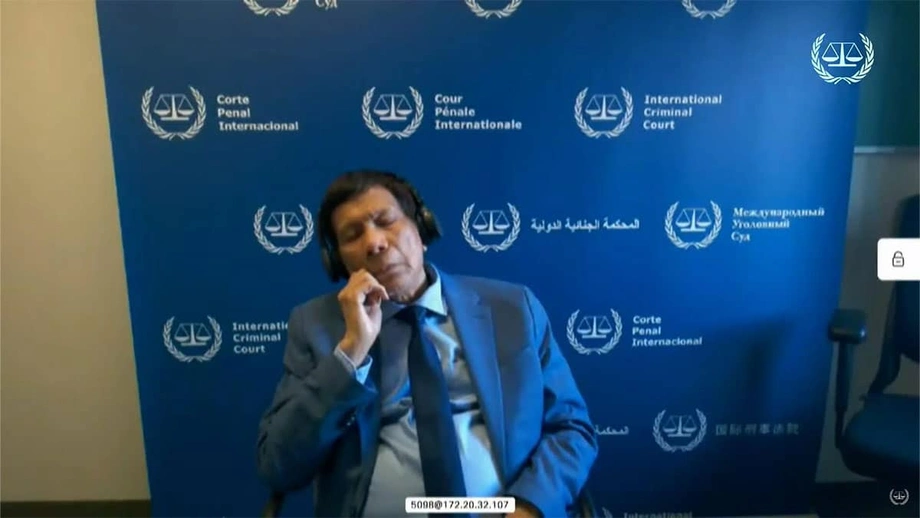
Trial Chamber III will open the International Criminal Court trial of former Philippine president Rodrigo Duterte on November 30 at 10 a.m. in The Hague, 09:00 GMT, or 5 p.m. in the Philippines. Proceedings are set for four hours on each weekday until December 18. The court will hold four sessions, each lasting one hour, separated by morning and afternoon recesses and a lunch break, ending at 4 p.m. The schedule follows five status conferences over seven months and takes account of Duterte's age and possible medical conditions.
Contents
- A Historic Case Begins in The Hague
- What the Prosecution Says Happened
- How the First Days Will Unfold
- Can Duterte Take Part in His Own Defense?
- The Victims the Court Recognizes
- Why the Case Reached The Hague
- The Davao Model and the Alleged Killing System
- A Country Divided Over Safety and Justice
- Claims of Political Motive and Disinformation
- What the Trial Means for Philippine Politics
- What Happens After December
- Key Points
Duterte, 81, faces three counts of crimes against humanity linked to killings during his campaign against drugs. Crimes against humanity are very serious crimes, including murder, committed as part of a broad attack on civilians. The ICC is a court of last resort, created to hear such cases when national courts cannot or will not genuinely deal with them. Duterte is the first Asian leader to be tried by the court and only the second former national leader to appear there over acts alleged while in office, after Laurent Gbagbo of Ivory Coast, who was acquitted in 2019. If convicted, Duterte would be the first former head of state or government convicted by the court.
What the Prosecution Says Happened
Prosecutors allege that Duterte funded and armed execution squads responsible for murders across Davao City and, later, the Philippines. The case covers alleged acts from 1 November 2011 to 16 March 2019, spanning his last years as Davao mayor and the first half of his presidency. Some descriptions of the three counts use the shorter period from 2011 to 2018, while the March 2025 arrest was linked to killings said to run through 2019.
The scale remains bitterly disputed in public debate. Philippine authorities recorded 6,252 deaths in operations against suspected drug users and dealers, with police saying officers acted in self defense. Human rights organizations estimate 12,000 to 30,000 deaths; some put the toll as high as 30,000. The lower rights estimate is nearly twice the official count, and the upper estimate is almost five times it.
The trial will address dozens of cases the court treats as representative of alleged targeting of drug users and sellers by death squads. Prosecutors have listed 85 murders and two attempted murders to show a pattern of crimes against humanity. They also point to the Davao Death Squad, which rights groups say carried out extrajudicial killings during Duterte's long tenure as Davao mayor. In August 2017 in Bulacan near Manila, 32 suspects were killed overnight.
Duterte has denied wrongdoing and has called the charges an outrageous lie. In a video filmed as he was taken to The Hague, the former president challenged the basis of the case.
What is the law and what is the crime that I committed?
Police have also maintained that they killed only in self defense.
How the First Days Will Unfold
Trial Chamber III is presided over by British Judge Joanna Korner, with South Korean Judge Keebong Paek and French Judge Nicolas Guillou completing the bench. If the trial proceeds as scheduled, judges will first ask Duterte whether he understands the charges, then take a plea of guilty or not guilty. He is expected to plead not guilty.
The prosecution has two hours and 15 minutes for its opening statement. Legal representatives for victims have one hour and 30 minutes. The defense has one hour and may save its opening statement until it begins presenting witnesses and evidence. The first prosecution witness is expected after the openings, with witnesses due from the next day. The defense will present its witnesses after the prosecution.
The court will keep witness identities secret, including details that could indirectly reveal them. Witnesses will be identified by alphanumeric codes. Trial Chamber III recognizes four kinds of witnesses: fact witnesses with personal knowledge of an event, insider witnesses with direct links to the accused, expert witnesses who explain scientific or methodological points, and overview witnesses who give context to judges. The prosecution's witness list has been filed but remains confidential.
Public livestreams will carry a delay of 30 minutes, giving the chamber time to protect people whose identities could be exposed through evidence about killings in poor urban communities.
Can Duterte Take Part in His Own Defense?
Duterte's presence in court is now required unless health concerns stop him from attending. Presiding Judge Joanna Korner told the defense that the chamber expects him to be present when there is no medical issue. The shorter daily sessions were set with his age and possible medical conditions in mind.
On November 25, the defense filed a pretrial brief saying Duterte has cognitive impairments. It said the former president has difficulty recalling names of relatives, remembering conversations from only hours earlier, and giving lawyers clarification on some questions. The chamber has not yet ruled on these latest concerns.
Under the Rome Statute, the treaty that created the ICC, an accused person must be able to understand the charges and the proceedings that could lead to conviction. In a June filing, the chamber said meaningful participation depends on understanding court developments, giving instructions to lawyers, and giving testimony if the accused chooses to do so. The judges also said those abilities do not need to be at their highest level, as long as the accused has a reasonable understanding of the proceedings.
Independent experts may examine Duterte, but the court decides whether he is fit to stand trial. His lawyers argue that the killings do not amount to crimes against humanity and belong before Philippine courts. ICC Assistant to Counsel Atty. Ross Tugade said that argument faces difficulties, especially because the defense cites a Truth Commission made up of civilians as proof of a working Philippine justice system. Tugade said that body was a civil society initiative rather than an effort led by the government.
The Victims the Court Recognizes
The ICC has recognized at least 500 victims of the drug war. ICC spokesperson Oriane Maillet said they have the right to take part in the proceedings and may apply for reparations if Duterte is convicted. Reparations can include money, services or other measures meant to address harm, and they are ordered after a conviction.
Legal representatives for victims will use opening statements to reinforce the prosecution's case and explain how the campaign affected victims and their families. Some widows and orphans are expected to attend the opening on November 30. For families who stayed quiet while Duterte and his allies held power, the trial offers a public place to speak.
Rights groups say the campaign targeted people suspected of selling small amounts of drugs and people from urban poor communities, while major dealers were rarely brought to justice. Police figures count deaths in operations where officers said they fired in self defense. Rights organizations count a much wider group of people they say were killed by gunmen or death squads, often after being accused of using or selling drugs.
Why the Case Reached The Hague
The ICC opened a preliminary examination into the drug war in 2018. Duterte responded by withdrawing the Philippines from the court's founding treaty. A formal investigation began in September 2021.
For years, President Ferdinand Marcos Jr. refused to cooperate with the investigation. Marcos had run and won in 2022 with Sara Duterte as his vice president, but that alliance broke down after November 2024, when the vice president said she had arranged for Marcos to be killed if she were killed. Marcos' father ruled the Philippines as a dictator until the 1986 People Power Revolution, and the two families became rivals after the election victory. Sara Duterte has since faced successive impeachment efforts.
Philippine authorities arrested Rodrigo Duterte in March 2025, acting on an ICC warrant issued four days earlier. He was taken at Manila airport after returning from Hong Kong. Marcos eventually allowed the arrest, and the former president, once treated as untouchable in Philippine politics, was flown to The Hague on a Gulfstream jet.
ICC judges confirmed three charges of crimes against humanity involving murder and attempted murder in April. The case is now a test for a court facing political pressure, including arrest warrants for Russian President Vladimir Putin and Israel's then prime minister Benjamin Netanyahu over the war in Gaza that have not been enforced.
The Davao Model and the Alleged Killing System
Prosecutors are expected to present Duterte's rise to power, his rule in Davao City, and the alleged spread of that model across the country during his presidency. Duterte served as Davao mayor for more than two decades and built a reputation for making a violent city safer. He said peace and order were needed to attract investment. Rights groups also found killings by the Davao Death Squad, which prosecutors say Duterte helped establish and oversee.
David Johnson, a professor of sociology at the University of Hawaii at Manoa, said the killings were part of how Duterte governed, not simply crime enforcement. He described the campaign in plain terms.
Duterte's ruthless war on drugs was not simply a campaign against crime; it was a way of governing through killing.
Johnson said the violence was sustained by impunity in the Philippine criminal justice system and failures of democracy. He added that extrajudicial killing was politically useful even though it did not work as crime control. Diane Desierto, a professor of law and global affairs at the University of Notre Dame, said Duterte also used state power against opposition politicians, civil society groups, journalists, lawyers and judges.
Cleve Arguelles, a political scientist and chief executive of pollster Momentum Research, said many Filipinos were angry about daily injustice and government inaction before Duterte won power. Duterte cast himself as a political outsider for people in provinces he said were pushed aside by Manila's elite.
A Country Divided Over Safety and Justice
Duterte left office in June 2022 with high approval. A Social Weather Stations survey found 88 percent of Filipinos were satisfied with his performance. His daughter was elected vice president in May 2022, and their allies won many Senate seats. Even while detained overseas, Duterte won the 2025 mayoral race in Davao by a large margin.
Pauline Ybañez, 30, a house cleaner and caregiver in Cainta near Manila, belongs to one of the poorer sectors affected by the crackdown. She supports Duterte because she believes the streets were safer under him and said his approach to drugs was the right thing for public safety.
He was a decisive leader, and so he must not be punished for what he did.
A communications student in the first year of a course at Ateneo de Manila University, who asked not to be named, disagreed. The student said the violent approach to drug trafficking was wrong and that Duterte must face accountability.
His violent approach against drug trafficking was wrong. He must be held accountable.
Jarius Bondoc, a political analyst, said support remains strong among disadvantaged Filipinos because many experienced safety during Duterte's presidency even while killings happened nearby.
because they experienced a sense of safety during his time, regardless of the killings around them.
The Duterte family remains powerful. Sara Duterte is vice president, his son Sebastian has served as acting mayor of Davao, and his eldest son Paolo is a congressman. Duterte is also known for offensive rhetoric, including sexist remarks, curses aimed at the late Pope Francis and former United States president Barack Obama, and a comparison of himself to Hitler. His human rights record strained ties with the United States and the European Union, which threatened to withdraw preferential trade privileges.
Claims of Political Motive and Disinformation
Sara Duterte, the vice president and the former president's daughter, said the ICC would not give her father a fair trial. She said the court wanted to make a statement and described China, Russia and the United States as viewing it as a political organization rather than an impartial arbiter. She used the abbreviation BFF, meaning best friend forever, in a likely reference to Manila's close ties with Washington under Marcos.
I think the ICC, after the ganging up of superpowers, (will) want to make a statement that they are in the right. So there is no-one else there that they would like to make a statement to. And that's the case of Rodrigo Duterte.
She said both her impeachment case and her father's trial are tied to efforts to keep her from running for president in 2028.
I still believe that it's about the 2028 elections, whether there will be elections or there will be no elections. It's about the change of leadership, if there will ever be a change of leadership.
Supporters of the former president have also said he was kidnapped and sent to The Hague after the falling out between the Duterte and Marcos families. Jofelle Tesorio, a journalist covering the trial in The Hague, said social media campaigns have spread claims that Duterte had already been released and that the ICC was attacking Philippine sovereignty.
Media plays an important role in helping Filipinos understand international justice better.
Bondoc, the political analyst, said the public needs to understand that Duterte will receive a fair trial. He also said people killed during the drug war never had a chance to defend themselves.
What the Trial Means for Philippine Politics
The trial arrives while Sara Duterte faces an impeachment trial in the Senate over unexplained wealth and alleged misuse of confidential funds, with the case weeks from conclusion. If convicted, she would be barred from elected office. She is still a leading contender for the 2028 presidential election, and her brother Sebastian has been mentioned as another possible candidate.
Cleve Arguelles said the country faces two linked questions: whether Rodrigo Duterte should be held criminally accountable and whether his family should be trusted with national power again. Senators aligned with Duterte and implicated in the investigation could also face arrest and transfer to The Hague.
Jayson Lamchek, a legal scholar at Western Sydney University, said the Duterte family is trying to preserve the political capital from the drug war by describing the ICC case as foreign interference and political persecution. Ronald Holmes, a political science professor at De La Salle University and president of Pulse Asia Research, said Sara Duterte's ratings fell before her father's arrest amid allegations about confidential funds, then rebounded after his detention.
Holmes said a conviction or a long trial near the election period could turn the 2028 vote into a contest over the Duterte family's record.
A conviction or prolonged trial near election season will likely turn the 2028 vote into a direct referendum on the Duterte legacy, either rallying sympathetic voters against perceived foreign and domestic persecution or galvanizing opposition forces around demands for accountability.
Jean Encinas-Franco, a political science professor at the University of the Philippines Diliman, said the case matters to the whole country and to relatives of people killed.
The Filipino people deserve an answer. The Filipino people deserve justice.
What Happens After December
The initial trial period runs from November 30 to December 18. Prosecutors are expected to call about 100 witnesses in total, but only five may appear during this first block. The schedule then pauses and resumes in three blocks in 2027: January 12 to February 19, March 1 to March 24, and April 5 to April 30. No dates have been set beyond April; the chamber says they will be announced next year.
The defense added 63 items to its evidence list on November 24. It may challenge the prosecution's account by arguing that Philippine courts should hear the case and that the killings do not meet the legal definition of crimes against humanity. The judges will decide what evidence they can consider.
The verdict date is not known. The ICC says it will issue judgment within a reasonable amount of time, and a final decision could take years. For a conviction, the charges must be proven beyond reasonable doubt, a high standard that requires the judges to be sure of the facts after hearing the evidence.
Key Points
- Trial Chamber III will begin Duterte's ICC trial on November 30 in The Hague, with four sessions of one hour each weekday until December 18.
- Duterte, 81, faces three counts of crimes against humanity involving murder and attempted murder linked to acts from 1 November 2011 to 16 March 2019.
- Philippine authorities recorded 6,252 deaths in operations against suspected drug users and dealers, while rights groups estimate 12,000 to 30,000 deaths.
- At least 500 victims are recognized by the court and may seek reparations if Duterte is convicted.
- Duterte's defense says cognitive impairments may affect his participation, and the chamber has not yet ruled on the latest filing.
- Proceedings resume in 2027 in three blocks, and the timing of any verdict is not yet known.
- The case divides Filipinos, with some recalling safer streets and others demanding accountability, and it could shape politics around the 2028 election.