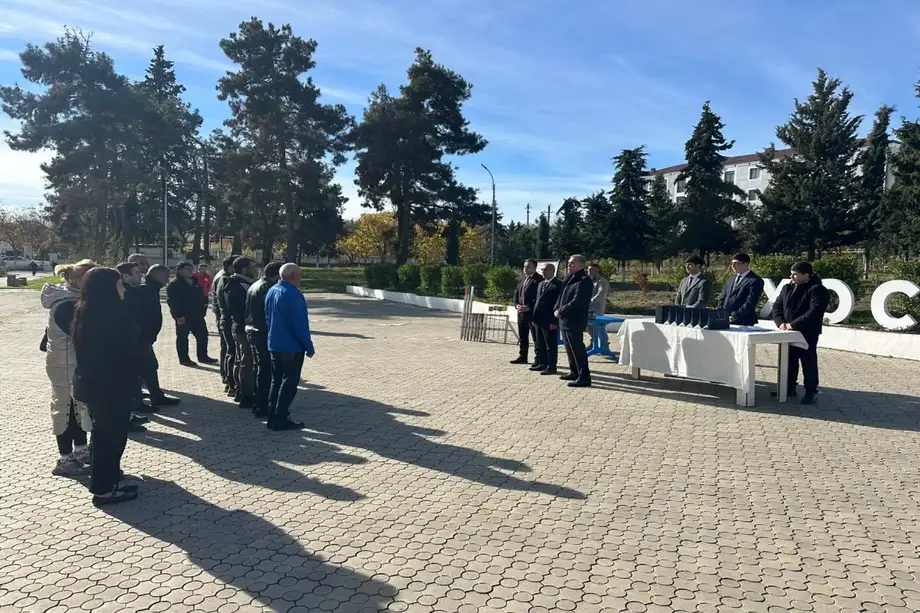
A morning convoy ends with new keys
Azerbaijan moved 73 families, comprising 271 former internally displaced people, into nine settlements in Aghdara, Khojaly and Khojavand districts on November 27, 2026. Convoys left that morning, and the returning residents received keys to homes restored by the state. The largest group consisted of 71 people going to Guzeykhirman village, while the smallest was one person returning to Heyvali.
Contents
- A morning convoy ends with new keys
- Where each of the 73 families is settling
- From temporary rooms to restored houses
- How decades of displacement led to the Great Return
- The 2026 target and the return arithmetic
- Billions for rebuilding, and a mine problem lasting decades
- Why some returnees go back to Baku
- What could help families remain
- Construction and demolition are reshaping the region
- What November 27 changes on the ground
- Key Points
A ceremony in Khojaly city brought together 170 people from 49 families whose homes are in seven villages across Khojaly and Aghdara. They did not all settle in Khojaly city itself. Another 24 families, comprising 101 people, travelled to Khojavand city and Guzeykhirman. The two groups account for the full total of 73 families and 271 people.
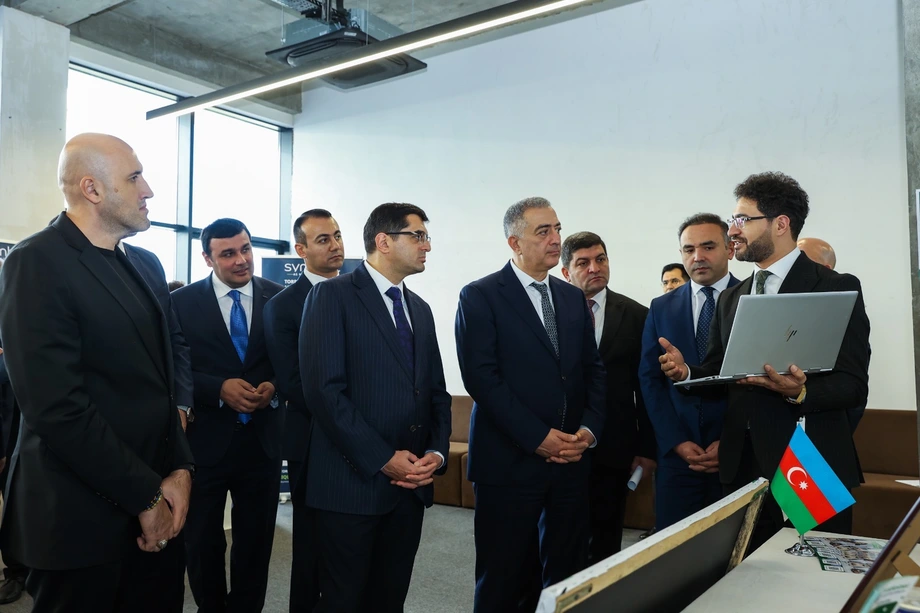
Employees of the Special Representative Office of the President in Khankandi city, Aghdara and Khojaly districts attended the Khojaly ceremony, alongside staff of the Restoration, Construction and Management Service for the same areas. In Khojavand, representatives of the presidential office covering Aghdam, Fuzuli and Khojavand districts joined officials from the State Committee for Affairs of Refugees and Internally Displaced Persons. Keys there were presented when the residents arrived.
The returning families thanked President Ilham Aliyev and First Vice President Mehriban Aliyeva for state support. They also expressed gratitude to the Azerbaijani Army and commemorated soldiers killed during the fighting. Their relocation was carried out under the Great Return program, which the government implements in phases according to instructions from the president.
Where each of the 73 families is settling
The district totals show how the 271 people were distributed. Aghdara received 28 families and 98 people, Khojaly received 21 families and 72 people, and Khojavand received 24 families and 101 people.
- Aghdara district: 10 families and 42 people went to Vangli; 15 families and 49 people to Childiran; two families and six people to Kolatag; and one family consisting of one person to Heyvali.
- Khojaly district: nine families and 32 people went to Khanyurdu; eight families and 33 people to Khanabad; and four families and seven people to Badara.
- Khojavand district: seven families and 30 people settled in Khojavand city, while 17 families and 71 people went to Guzeykhirman village.
The figure of 42 people for Vangli produces Aghdara's stated total of 98 and the full total of 271. An early village tally listed 43 people there. One summary also described 210 returnees, although its own detailed village figures added up to 271.
Khojavand, known in Armenian as Martuni, was controlled by the unrecognized Nagorno-Karabakh Republic from 1993 until Azerbaijan took control of the region in 2023. The first groups of former Azerbaijani displaced people returned to Khojavand on February 20, 2026. Another 34 people returned to Guzeykhirman in September, before the latest group of 71 arrived.
From temporary rooms to restored houses
The returning residents are former internally displaced persons, often shortened to IDPs. An internally displaced person has fled home but remains within the same country. Before this relocation, the families had lived in various parts of Azerbaijan, mainly in dormitories, sanatoriums and administrative buildings rather than in permanent homes of their own.
Conditions in such accommodation could be difficult. More than 30 families from Zangilan and Jabrayil districts who were housed in a Baku lyceum dormitory had previously complained about their living conditions. For families leaving shared or improvised spaces, receiving a house key represents an immediate change in privacy, space and security of residence.
The Restoration, Construction and Management Service said the new homes had been restored by the state and connected to electricity, gas and water. Village infrastructure had also been renewed, including internet services at high speed. Families therefore arrived at residences with basic utilities already connected, rather than empty sites requiring them to organize construction themselves.
Housing alone has not removed economic insecurity. A World Bank assessment cited in academic research found that most Azerbaijani IDPs lived in housing supplied by the government and that family incomes remained below the national average. Among households receiving IDP allowances, 86.5 percent considered the payments one of their two most important sources of income, with much of their money going toward food and other necessities.
How decades of displacement led to the Great Return
The First Karabakh War from 1988 to 1994 forced around 700,000 Azerbaijanis from the former Nagorno-Karabakh Autonomous Oblast and seven surrounding districts. Azerbaijan still had a registered IDP population of 658,000 when Farid Guliyev published his resettlement research in 2025. Displacement also affected Armenians during the first war, making the conflict's legacy wider than any single convoy or community.
By the early 2000s, around 100,000 Azerbaijani IDPs lived in 12 tent camps in the south and east of the country. Others occupied schools, kindergartens and dormitories in cities including Baku and Sumgayit. A housing program begun in 2002 and financed through the State Oil Fund of Azerbaijan led, by the middle of 2011, to 63 new settlements and 29 apartment buildings with several floors. Around 100,000 people moved from tent camps into these homes. The fund allocated USD 2.8 billion in total to projects improving conditions for refugees and IDPs.
The more recent territorial and political changes form the immediate background to the November 27 relocation:
- 2020: Azerbaijan regained territory during a war that lasted 44 days.
- November 16, 2022: President Ilham Aliyev approved the Great Return State Program covering 2022 to 2026.
- September 19 and 20, 2023: Azerbaijani military operations brought the remainder of Nagorno-Karabakh under Baku's control.
- October 7, 2023: Armenia had recorded 100,632 arrivals from Nagorno-Karabakh after the offensive began. More than 100,000 Karabakh Armenians ultimately fled, according to the academic research.
- November 27, 2026: The latest 73 families received homes across Aghdara, Khojaly and Khojavand.
Nagorno-Karabakh is internationally recognized as part of Azerbaijan, but it had around 100,000 ethnic Armenian residents before the 2023 exodus. This history explains why reconstruction there involves both the return of displaced Azerbaijanis and a profound transformation of the region's population.
The 2026 target and the return arithmetic
Researching Internal Displacement published Farid Guliyev's Karabakh resettlement study on February 13, 2025. It states that the initial phase of Great Return aims to resettle 140,000 IDPs in 100 rebuilt settlements across the Karabakh and East Zangezur economic regions by the end of 2026. The program also treats voluntary return as the lasting answer to displacement.
By January 2025, the study counted 2,614 returning families and 10,274 individuals. Around 30,000 people lived in the recovered territories when construction personnel, government employees and other workers were included. Guliyev calculated that roughly 10,000 returns over three years amounted to an average of 3,333 people annually. At that pace, reaching 140,000 would take about 39 years. Clearing the remaining 130,000 places during 2025 and 2026 would instead require 65,000 returns in each year.
Later snapshots show continued growth. By March 11, 2026, 7,541 families comprising 30,261 people had returned to 41 settlements. Analyst Toghrul Juvarly subsequently put the figure at about 35,000 returnees in 45 settlements, with 80,000 to 85,000 people living there when builders, personnel seconded from other sectors and law enforcement officers were included. Near the end of 2026, Baku put returns at 41,000. Limited access for foreign journalists meant that figure could not be independently verified.
A total of 41,000 would equal about 29 percent of the 140,000 target, leaving 99,000 places. Juvarly assessed the program against an announced first phase goal of about 120,000 people, lower than the target cited in the academic study. He expected faster returns but still concluded that the goal would be missed:
This goal, in terms of returning forced migrants, will obviously not be achieved. By the end of the year, even considering the acceleration of the return pace, about 30,000 more people will return to the region.
Billions for rebuilding, and a mine problem lasting decades
The government earmarked USD 3.29 billion for Karabakh reconstruction in 2023, USD 2.82 billion in 2024 and USD 2.35 billion in 2025. Annual allocations therefore declined across those three years, even while cumulative spending increased. By early 2025, about 19 billion Azerbaijani manats, equivalent to USD 11.2 billion, had been allocated from the state budget since 2021. A later estimate put total rebuilding expenditure at approximately USD 15 billion.
Turkish companies have led much of the infrastructure work, securing contracts valued at about USD 3.4 billion. Azerbaijan says its construction program includes 1,500 kilometres of new roads and the clearance of mines from around 22 percent of the recaptured territory. Road building supports construction and transport, while mine clearance determines where people can safely live, farm and travel.
The February 2025 study recorded 382 landmine victims, comprising 70 deaths and 312 injuries. Civilians accounted for 198 of these casualties, including 55 deaths and 143 injuries. Around 30,000 mines and unexploded devices had been cleared at that point. Unexploded devices are bombs, shells or other weapons that did not detonate when used and can still kill years later.
Full clearance was estimated to require at least 25 years and cost more than USD 50 billion. That estimate exceeds several times the amount allocated for reconstruction since 2021, illustrating why the restoration of a house and its utilities represents only one part of making a settlement safe.
Why some returnees go back to Baku
Farid Guliyev of the American University in Dubai has interviewed Azerbaijanis displaced by the First Karabakh War. He argues that resettlement targets have not fully reflected changes in displaced people's lives, particularly among younger generations who established themselves in cities:
The targets do not fully account for how much the lives of displaced people have changed over the past three decades. Many IDPs, particularly younger ones, have become integrated into urban life in Baku and other cities and may be reluctant to relocate.
Financial considerations also affect the decision. Guliyev said displaced people may receive state food allowances of around USD 35 per person each month, alongside other forms of assistance. Returning can place some benefits at risk while local employment remains uncertain:
Returning may mean losing some of these benefits, while employment opportunities in the recovered territories remain uncertain.
Aytaj Amirjanli, an IDP who returned to Nagorno-Karabakh, described in September how unemployment was driving some residents away again. Her account presents a stark contrast with the welcoming ceremonies:
Our refugees and internally displaced people are all unemployed. Most have already locked up their homes and gone back to Baku," she said, adding: "if I can't put food on the table there, what am I supposed to do?
Other returnees have described improved living conditions while continuing to raise concerns about employment and infrastructure. Residents previously identified a shortage of jobs in Fuzuli and unresolved property questions in territories under Azerbaijani control. These experiences make regular income and secure property arrangements central to whether a return becomes permanent.
What could help families remain
Guliyev's study recommends giving displaced people a larger role in rebuilding their homes and communities. It also calls for vocational and technical training, business education, microfinance and support for agriculture and small enterprises. Public works could supply immediate employment, while foreign direct investment and assistance from international donors could support broader economic activity.
Different generations may require different arrangements. Older returnees from rural backgrounds can find modern smart housing unfamiliar and may need training to use its technology. Younger people with jobs, education and social networks in Baku may be less willing to leave urban life. The study also records a desire among IDPs for greater autonomy rather than relying entirely on decisions made by government agencies.
Settlement figures from January 2025 show that returns initially concentrated where urban rebuilding was most advanced. Fuzuli city had 3,132 returnees from 822 families, Lachin city had 2,090, Shusha had 1,386 and Jabrayil had 1,346. Khojaly city then had 169 returnees, while Ballija village in Khojaly district had 152.
Villages also demonstrated alternative models. Zabukh in Lachin district had 823 returnees, and Aghali in Zangilan had 871. Aghali was built as the region's first smart village, with digital street lighting, solar panels, waste management, resilient housing and fast internet. The November 27 arrivals extend resettlement into much smaller places, including Heyvali, where the newest group consists of just one resident.
Construction and demolition are reshaping the region
Satellite images comparing earlier years with 2025 and 2026 show apartment complexes rising in Jabrayil and Fuzuli, extensive development on the site of Aghdam and new housing in Khidirli, a village that had stood abandoned until August 2023. Aghdam was home to 28,000 people before the First Karabakh War. Images also document construction in Aghali, reconstruction in Shusha and the creation of Victory Park through a suburb of Khankendi.
The same visual record documents destruction alongside construction. Khankendi's Holy Mother of God Cathedral was demolished in April 2026. The village of Dasalti, known in Armenian as Karintak and previously home to several ethnic Armenian families, was erased in early 2023. By July 2025, a mosque stood on its site. These changes have prompted outrage over the treatment of historic churches and Armenian cultural heritage.
Elnara Akimova, a member of Azerbaijan's parliament, rejected the accusation that the state intended to destroy religious heritage. She described Baku's position in these terms:
protects religious and historical monuments on its territory as a state policy, and has never intended to destroy religious heritage.
What November 27 changes on the ground
The immediate effect is concrete: Childiran gains 49 residents, Vangli 42, Khanyurdu 32, Khanabad 33 and Guzeykhirman 71, alongside the smaller groups elsewhere. Seventy three households leave temporary accommodation for restored homes with utilities connected. Local presidential offices and refugee officials now share responsibility for receiving communities that range from a city neighbourhood to a village gaining one person.
The announcements did not give a date for the next relocation convoy or a new cumulative return total incorporating these 271 people. They also did not set out the jobs awaiting individual families or resolve the wider property concerns raised by earlier returnees. The next fixed date in the program is the end of 2026, when its first phase and its resettlement target reach their deadline.
Key Points
- Azerbaijan relocated 73 families comprising 271 people to Aghdara, Khojaly and Khojavand on November 27, 2026.
- Aghdara received 98 people, Khojaly 72 and Khojavand 101, across nine settlements.
- Returning families left dormitories, sanatoriums and administrative buildings for restored homes with electricity, gas, water and fast internet.
- The initial Great Return phase targets 140,000 IDPs in 100 settlements by the end of 2026.
- Baku's claimed figure of 41,000 returnees would represent about 29 percent of that target.
- Reconstruction has absorbed billions of dollars, but full mine clearance was estimated in 2025 to take at least 25 years and cost more than USD 50 billion.
- Employment, state benefits, generational preferences and property concerns will influence whether the newest residents remain permanently.