November 8 links a battlefield victory to the work of rebuilding
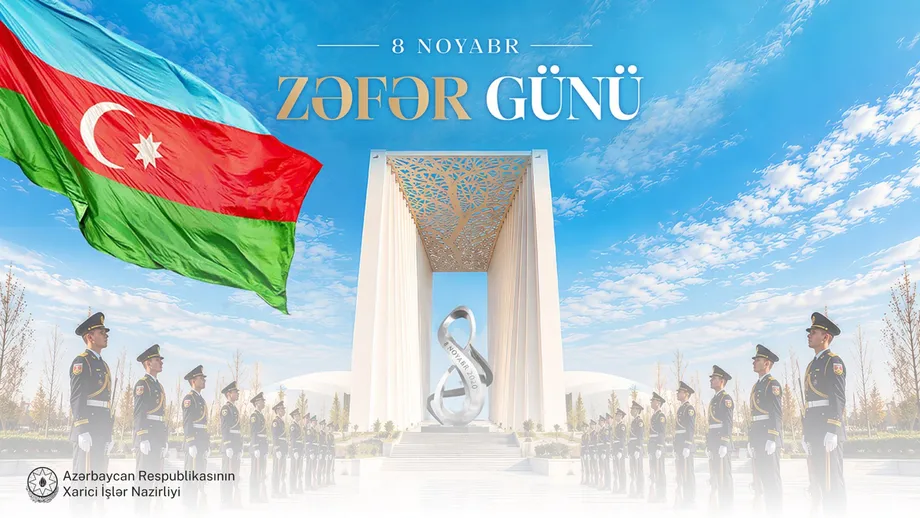
Azerbaijan is marking the sixth anniversary of its victory in the 2020 war with Armenia, commemorating the capture of Shusha on November 8 and the 44 days of fighting that changed control of large parts of Karabakh and surrounding districts. The national holiday combines celebrations with remembrance of 2,908 Azerbaijani servicemen killed during the war.
Contents
- November 8 links a battlefield victory to the work of rebuilding
- How the 44 days of fighting unfolded
- Why Shusha became the defining moment
- What the ceasefire changed on the ground
- The human cost behind the celebrations
- Rebuilding Shusha and helping displaced families return
- How communities are marking the anniversary
- Messages from Pakistan and Chinese participants
- Peace and reconstruction are the stated next priorities
- Key Points
Shusha remains the central symbol of the anniversary. President Ilham Aliyev announced its capture from the Alley of Martyrs in Baku on November 8, 2020. Two days later, a ceasefire signed by the leaders of Azerbaijan, Armenia and Russia stopped the fighting and provided for the return of three additional districts to Azerbaijani control.
The anniversary also brings attention to what followed the fighting: reconstruction, the return of people displaced from their homes and Azerbaijan's stated efforts to build mutual trust with Armenia. The Foreign Ministry says the Great Return program is developing infrastructure and supporting former internally displaced people as they move back.
Commemorations extend beyond Shusha. A district gathering in Baku's Qaradag district brought together veterans, bereaved families and elected representatives, while Chinese teachers and students offered greetings in two languages. Pakistan's prime minister sent congratulations alongside a call for closer strategic and economic cooperation.
For Azerbaijan, November 8 therefore connects several experiences: military victory, personal loss, the recovery of places left decades earlier and the practical task of making those places habitable again. The holiday was established by a presidential order on December 3, 2020, and is a nonworking day.
How the 44 days of fighting unfolded
The war began on September 27, 2020. Azerbaijan describes its military campaign as a response to renewed Armenian aggression and calls it the Patriotic War. Under Aliyev, who is also supreme commander of the armed forces, Azerbaijani troops advanced through territory that had been outside Baku's control for nearly 30 years.
The sequence of advances explains why November 8 became the date chosen for national commemoration:
- September 27, 2020: Fighting began.
- October 3: Azerbaijani forces took Sugovushan.
- October 4: Jabrayil came under Azerbaijani control.
- October 9: Azerbaijani forces took Hadrut.
- October 17: Fuzuli came under Azerbaijani control.
- October 20: Azerbaijani forces took Zangilan.
- October 25: Gubadli came under Azerbaijani control.
- November 8: Azerbaijan announced the capture of Shusha.
- November 10: The ceasefire took effect at 00:00 Moscow time.
The Azerbaijani government's liberated territories page lists five cities, four settlements and 286 villages recovered by November 9, 2020, a total of 295 populated places, while broader Azerbaijani descriptions put the number of settlements recovered at more than 300. The detailed list includes Minjivan, Aghband and Bartaz in Zangilan district, as well as villages in Khojavand, Tartar and Khojaly districts.
Azerbaijani forces also took strategic heights in the Aghdara, Murovdagh and Zangilan areas. Higher ground can help troops observe surrounding territory and control approaches. Azerbaijani accounts describe advances through defensive positions and fortifications built over many years.
Why Shusha became the defining moment
Shusha had been under Armenian control since May 8, 1992. Its recovery after about 28 and a half years became the defining public moment of Azerbaijan's campaign and the event around which Victory Day was built.
Aliyev had identified the city as a key military objective before its capture. In an October 16, 2020, television interview, the Azerbaijani president explained its place in his government's goals:
My position has always been that without Shusha our mission would be half done. Therefore, of course, the liberation of Shusha occupies a special place among our goals.
On November 8, Aliyev announced the result at the Alley of Martyrs, a place of national remembrance in Baku. His choice of location connected the military announcement with the memory of those killed.
Azerbaijan subsequently established the "For the Liberation of Shusha" medal for military personnel who participated in the operation and displayed courage. A presidential order also designated November 8 as Shusha City Day, giving the date a local significance alongside its national role.
What the ceasefire changed on the ground
Aliyev, Armenian Prime Minister Nikol Pashinyan and Russian President Vladimir Putin signed the trilateral ceasefire statement on the night of November 9 to 10, 2020. It called for a complete halt to firing and military operations in the Nagorno-Karabakh conflict zone from midnight Moscow time on November 10.
Azerbaijan presents the agreement as Armenia's capitulation. Its immediate practical effect was to stop the fighting and set in motion the transfer of Aghdam, Kalbajar and Lachin districts to Azerbaijani control.
Aghdam was returned on November 20, Kalbajar on November 25 and Lachin on December 1. Azerbaijan says it recovered those three districts without further losses. Their transfer extended the territorial changes beyond the places Azerbaijani troops had captured during the military campaign.
The Foreign Ministry's anniversary statement also identifies a later turning point. It says Azerbaijan fully restored its state sovereignty following military action in September 2023, which the ministry describes as local measures against terrorism. The 2020 ceasefire and the events of September 2023 are separate stages in the government's account of how it regained control.
As a result of local anti-terror measures carried out in September 2023, the state sovereignty of the Republic of Azerbaijan was fully restored.
The human cost behind the celebrations
Azerbaijan's commemorative figures record 2,908 servicemen killed in the 2020 war and six still missing. Those losses give the anniversary a solemn dimension for military families, even as public events celebrate the outcome.
Azerbaijan also records 93 civilians killed, including 12 children and 27 women, and 454 civilians injured. Its account attributes those casualties to Armenian attacks using ballistic missiles and heavy artillery against populated areas and strategic sites.
The places named include Ganja, Barda, Tartar, Mingachevir, Yevlakh, Beylagan, Gabala, Goranboy, Agjabadi, Absheron and Khizi. The Azerbaijani damage tally lists 12,292 residential and other buildings, 288 vehicles and 1,018 farms affected.
For surviving families, the consequences reached beyond the period of combat. Damaged homes meant losing shelter, while damage to farms and vehicles affected the means to earn a living. The anniversary brings those civilian experiences together with the commemoration of fallen soldiers.
The Foreign Ministry's statement pays tribute to those killed and expresses gratitude to veterans and other participants in the war. Families of fallen servicemen and veterans also attended the Qaradag district celebration, placing people directly affected by the fighting at the center of a local public event.
Rebuilding Shusha and helping displaced families return
Azerbaijan's Great Return program links reconstruction with the resettlement of former internally displaced people. These are people who had to leave their homes but remained within their own country, rather than becoming refugees across an international border.
The Foreign Ministry says work under the program includes modern infrastructure and arrangements for people to return to their home areas. Roads, utilities and usable buildings are part of what makes a return possible in practice, alongside the personal significance of recovering access to a hometown.
The ministry's anniversary statement describes that work in these terms:
In recent years, Azerbaijan has been implementing large-scale initiatives aimed at the restoration and reconstruction of the liberated territories. Within the framework of the 'Great Return' program, efforts are underway to establish modern infrastructure and ensure the return of former internally displaced persons to their homeland.
Shusha's reconstruction also carries cultural importance. Azerbaijani descriptions of damage during the years of Armenian control say 16 of its 17 mosques were destroyed, along with other cultural and historical sites. They identify the palace of Panahali Khan, the mausoleum of Vagif, Natavan's house and the house museums of musicians Uzeyir Hajibeyli and Bulbul among the affected buildings.
Restoration and construction are continuing in the city. The anniversary statements describe the direction of that work without giving a total number of people returned, a completion date or a detailed reconstruction budget.
The official Great Return State Program provides a separate planning timetable. Prepared to implement a national priority in Azerbaijan's 2022–2026 socioeconomic development strategy, it sets out measures to be carried out through 2026. Its construction plan calls for 34,500 apartments and individual homes during 2022–2026 in Aghdam, Fuzuli, Shusha, Khojavand, Zangilan, Kalbajar, Lachin, Gubadli, Jabrayil, Tartar and Khojaly districts. These are planned construction targets, not a count of people who have returned.
Hikmat Hajiyev, assistant to the president and head of the Presidential Administration's Foreign Policy Affairs Department, connected the city's recovery with his own sense of belonging. Writing before Victory Day, he described being in his native Shusha:
Being in beautiful Shusha on the eve of Victory Day brings a feeling of endless pride and happiness.
How communities are marking the anniversary
Qaradag district held its Victory Day event on November 7 at the A. Amirov Culture Palace. Attendees included district executive authority head Natiq Aliyev, members of parliament Aydin Huseynov and Sabina Khasayeva, and district New Azerbaijan Party chairman Ilgar Ilyasov.
Guests first visited an exhibition of photographs, objects and handmade works depicting the war, the army's campaign and national cultural traditions. The formal program began with the national anthem and a minute of silence for former president Heydar Aliyev and those killed defending the country.
Natiq Aliyev spoke about national unity and the military victory. Local cultural groups then performed patriotic songs, traditional mugham music, ashig performances and staged compositions. The gathering combined remembrance with cultural celebration rather than limiting the anniversary to military ceremony.
Public celebrations also present the war as an achievement of the people, armed forces and national leadership acting together. Praise for the use of modern military technology sits alongside tributes to soldiers and their families in this commemorative language.
Messages from Pakistan and Chinese participants
Pakistan's Prime Minister Muhammad Shehbaz Sharif congratulated Aliyev on behalf of Pakistan's people and government. His message praised Azerbaijan's defense of its sovereignty and territorial integrity and connected the anniversary with reconstruction and development.
Sharif also expressed Pakistan's commitment to a stronger strategic partnership with Azerbaijan. He looked forward to a visit by Aliyev at mutually convenient dates, with discussions covering bilateral, regional and global matters and the launch of proposed initiatives to strengthen economic and strategic cooperation. No date was announced for that visit.
At the Azerbaijan University of Languages, Chinese teachers and students at the Confucius Institute congratulated Azerbaijanis in both Chinese and Azerbaijani. The event brought an educational and cultural dimension to the international anniversary messages.
Rafiq Abbasov, the institute's director, said Beijing had consistently supported Azerbaijan's sovereignty and territorial integrity. He also said Chinese companies were interested in reconstruction and the economic revival of territories recovered by Azerbaijan.
Abbasov identified advanced technology, smart cities and smart villages as areas of interest. These terms describe using digital systems to help manage services and infrastructure. His remarks focused on potential Chinese participation in rebuilding communities.
Peace and reconstruction are the stated next priorities
Azerbaijan's Foreign Ministry uses the anniversary to connect victory with its current diplomatic objectives. Its statement says the government is working to strengthen lasting peace and regional stability and describes efforts to build mutual trust with Armenia.
The ministry's message brings two tasks into the same frame: rebuilding places affected by conflict and developing a more stable relationship with the neighboring country. For former displaced families, the most concrete changes are the possibility of returning and the availability of services in the places they left.
Pakistan's call for closer economic ties and Abbasov's comments about Chinese business interest add an international dimension to that rebuilding agenda. November 8 remains rooted in the events of 2020, while the official anniversary message places reconstruction, return and regional cooperation among the work that follows.
Key Points
- Azerbaijan observes Victory Day on November 8, the date its forces captured Shusha in 2020.
- The war lasted 44 days and ended with a ceasefire signed by Azerbaijan, Armenia and Russia.
- Aghdam, Kalbajar and Lachin districts were returned between November 20 and December 1, 2020.
- Azerbaijani figures record 2,908 servicemen and 93 civilians killed, with six servicemen still missing.
- The Great Return program supports reconstruction and the return of former internally displaced people, with an official target to build 34,500 apartments and individual homes during 2022–2026.
- Anniversary events include local commemorations, cultural performances and international messages of support.
- The Foreign Ministry says reconstruction, mutual trust with Armenia and lasting regional peace remain government priorities.