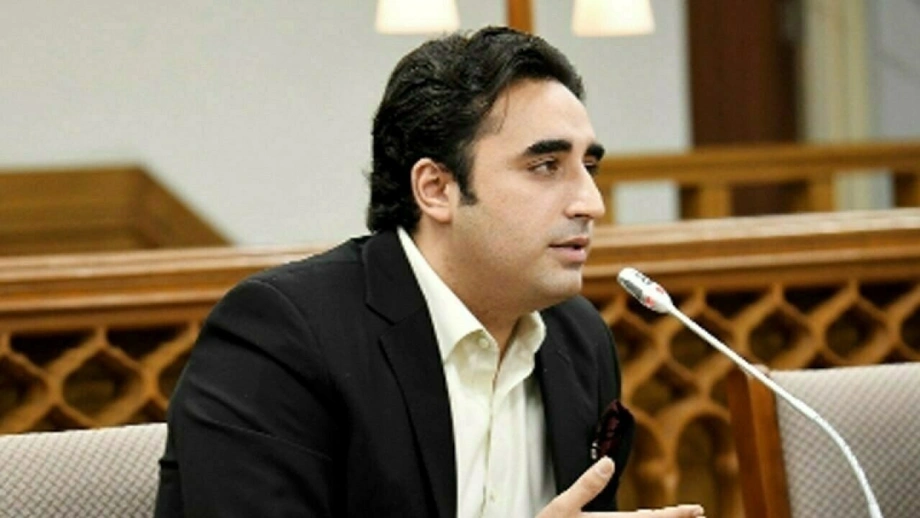
Bilawal makes PTI inclusion central to a democratic reset
Pakistan Peoples Party Chairman Bilawal Bhutto Zardari on 26 November 2026 called for a new Charter of Democracy that would bring the government, its allies and opposition parties into negotiations over Parliament, elections, the judiciary and accountability. Speaking at a Meet the Press session at the Multan Press Club, he said Pakistan Tehreek-e-Insaf must be included because it remains a political reality, despite its treatment of opponents while Imran Khan was in power.
Contents
- Bilawal makes PTI inclusion central to a democratic reset
- What a new Charter of Democracy would mean
- Reserved seats, prisoners and a conditional offer on governor's rule
- Why elections and accountability are in the same package
- The constitutional amendments at the heart of the consensus dispute
- The household crisis driving his appeal
- Why Punjab and Sindh are central to the dispute
- Press freedom, local government and a willingness to revisit PECA
- How the reset debate reached Multan
- The test of consistency and the next practical steps
- What to Know
Bilawal accompanied the appeal with two possible steps towards an agreement. He suggested returning reserved seats to PTI as a measure to build confidence and said his party was willing to approach Prime Minister Shehbaz Sharif immediately about reversing governor's rule if PTI reached an agreement. Reserved seats are distributed under constitutional rules rather than won directly by a candidate in a constituency. Bilawal did not set out a legal route or timetable for returning them.
The PPP chairman, a former foreign minister, said his party's grievances against Khan did not alter the need for PTI to participate. He accused Khan of denying fundamental rights to political opponents, including President Asif Ali Zardari, during his tenure, but said political reconciliation could not be limited to parties that already trusted one another.
Whatever opinion you may hold about Khan sahib, even if you think he is not a political prisoner, there is no denying the fact that PTI is a political reality.
His proposal therefore places the burden of initiative on the government while also assigning responsibility to the opposition. Ministers would have to offer measures that rebuild trust, while opposition parties would have to return to parliamentary committees, contribute to legislation and treat participation in Parliament as a duty rather than an optional tactic.
What a new Charter of Democracy would mean
A Charter of Democracy is a political agreement about the rules under which rivals will compete and govern, rather than a single law. The 2006 charter signed by Benazir Bhutto and Nawaz Sharif included commitments to a constitutional court and an independent election commission. Bilawal's proposed version would address a wider loss of confidence in Parliament, the Election Commission, the judiciary and the accountability system.
He presented the 1973 Constitution and the 18th Constitutional Amendment as evidence that agreement across party lines gives constitutional changes greater durability. Parliament passed the 18th Amendment by consensus in April 2010, repealing the presidential dismissal power contained in Article 58(2)(b), devolving major responsibilities and protecting provincial revenue shares. Bilawal contrasted that achievement with changes carried principally by numerical strength.
The reset he described would be democratic and political, not an apolitical exercise designed by a small group. He said elected representatives must take part and objected to leaving the shape of the system to television anchors, media owners or industrialists. Business leaders, in his account, could not replace political parties in deciding why governance had failed and how it should be repaired.
Bilawal then set out his central test for restoring Parliament as the place where national decisions are settled.
If parliament is to be restored, all decisions concerning the country must be taken there. Decisions made outside parliament will render the system incapable of emerging from any quagmire.
That argument also contained criticism of the opposition. Bilawal said boycotts of committees dealing with finance, judicial affairs and electoral reform had weakened Parliament. He urged opposition legislators to join budget discussions and specifically invited PTI to participate in the electoral reforms committee, arguing that parties could not influence decisions while absent from the rooms where those decisions are prepared.
Reserved seats, prisoners and a conditional offer on governor's rule
Imran Khan's imprisonment remains one of the largest obstacles to the reconciliation Bilawal described. He said Khan was in jail following a conviction, while maintaining that prisoners retain rights whether they are described as political prisoners, convicted offenders or terrorists. Earlier in November, Bilawal had gone further by calling Khan a political prisoner and urging an end to political vendettas.
He said PTI's trust could not be restored through words alone. Returning reserved seats was his most specific suggestion for an initial government gesture. He also argued that Pakistan could no longer sustain a pattern in which each governing side treats the prosecution or exclusion of its rivals as a normal political instrument.
The offer concerning governor's rule followed the same conditional approach. Governor's rule is an emergency constitutional arrangement that displaces the normal political administration of a province. Bilawal said the PPP had supported emergency measures even though they were unpopular because terrorism was a red line for the party. He added that he would immediately ask the prime minister to reverse the measure if an agreement were reached with PTI. He did not announce the terms of such an agreement or say that either side had accepted one.
Bilawal also condemned what he described as the house arrest of Jamiat Ulema-e-Islam-Fazl chief Maulana Fazlur Rehman. He said criticism of the government was Fazlur Rehman's right and patriotic responsibility, adding that political leaders needed to tolerate scrutiny. He said the PPP would try to meet the JUI-F chief as soon as possible.
Why elections and accountability are in the same package
The last general election drew criticism from opposition parties and from people associated with the governing side, Bilawal said, making its credibility a problem for more than one party. He warned that another election conducted without reforms accepted across the political spectrum would produce another government whose mandate remained disputed.
The controversy surrounding the February 2024 general election included allegations of manipulated results and disputes over Form 47, the document used to consolidate the result for a constituency. Bilawal connected those arguments to a longer history of rigging allegations affecting different parties. He also recalled past efforts to keep Benazir Bhutto from power, using them to argue that no party should treat electoral fairness as a concern only when it loses.
His proposed remedy begins with opposition participation in the electoral reforms committee. Transparent polling, accepted procedures and confidence in the Election Commission would give future governments a firmer claim to represent voters. Without those changes, he said, elections and referendums would continue to generate disputes instead of settling them.
Accountability received similar treatment. Bilawal said successive governments had pursued political persecution under the name of fighting corruption, while corrupt practices had not disappeared. His proposal was to make accountability a genuine legal process rather than a weapon exchanged between rivals. He did not present draft legislation for a new accountability framework.
The constitutional amendments at the heart of the consensus dispute
Bilawal acknowledged opposition distrust of the existing judicial system and said further constitutional amendments could be considered if they helped restore confidence. That leaves judicial reform inside the proposed negotiation rather than treating the recent amendments as the end of the argument.
He described the 26th Constitutional Amendment as part of the unfinished agenda of the Charter of Democracy. Although it did not secure complete consensus, he said the PPP had worked extensively to incorporate opposition input. On the 27th Amendment, he pointed to its passage by a majority of two thirds and described equal representation of all provinces in the courts as an achievement. He also remains supportive of the constitutional court created through the amendment.
His earlier description of the 27th Amendment as having been passed by a brute majority had caused controversy. In Multan, he said that phrase had been misrepresented. His intended comparison was between legislation carried by numerical strength and documents such as the 1973 Constitution and the 18th Amendment, which gained broader agreement. He nevertheless maintained that a parliamentary majority alone should not decide every disputed national question.
The same reasoning shaped his objection to a referendum. Bilawal said that if voters were asked to settle provincial boundaries, consistency would also require consulting them on the 26th and 27th Amendments and on Khan's imprisonment. His preference was for elected assemblies and negotiations among parties to resolve those matters.
The household crisis driving his appeal
Bilawal described Pakistan's economic condition as the most severe he had witnessed and warned that regional tensions could bring further hardship. His list of pressures included inflation, unemployment, rising electricity and fuel prices, expensive transport and low crop returns for farmers. He also pointed to tensions involving the United States and Iran as an external risk for a country already bearing the burden of regional conflicts.
The PPP chairman used household choices to explain why institutional disputes matter beyond Parliament.
People are distressed about managing two square meals. They're worried whether they should educate their children or arrange medicines for their elders.
Some salaried workers were spending their entire monthly income travelling to and from work, he said, while young people with university degrees were struggling to find jobs. Farmers were not receiving adequate prices for their crops, and labourers were not being properly rewarded. These examples formed his argument that parliamentary conflict and institutional discord were diverting attention from food, healthcare, education and transport.
His response was not a campaign to remove the federal government. Bilawal said he had no intention of toppling it or forming another administration, and argued that Pakistan's difficulties required strengthening Shehbaz Sharif and the government while giving elected representatives a central role. He also refused to become what he called a tissue paper politician, saying he would seek the premiership only with genuine authority and independence.
Politicians, he added, must tell the public the truth about economic conditions instead of promising an immediate improvement. He asked political stakeholders to support efforts to ease the public burden while continuing to question and scrutinise government policy.
Why Punjab and Sindh are central to the dispute
The reset debate has become tied to proposals for new provinces and administrative units. Bilawal said any change must follow constitutional and democratic procedures, with elected representatives involved. He warned against creating fresh political or ethnic divisions while Pakistan was confronting terrorism, economic pressure and security challenges.
His remarks on Punjab had two distinct parts. He reiterated PPP support for a South Punjab province where consensus exists and noted that the Punjab Assembly had passed a favourable resolution under a PML-N government. He said assembly resolutions could provide the basis for action without another referendum. At the same time, he stated his personal opposition to a broader division of Punjab.
Personally, I am against the division of Punjab.
Bilawal said he had not met anyone from Punjab asking for the province to be divided into four parts. The distinction appeared to separate a consensus based South Punjab proposal from a wider breakup, but he provided no draft boundaries or constitutional bill during the session.
On Sindh, his position was more categorical. He said the Sindh Assembly had repeatedly rejected proposals to divide the province and that the PPP strongly opposed such a division. At the Karachi Press Club on 17 November, he warned that forcibly dividing Sindh could lead to bloodshed on Karachi's streets. In Multan, he said he had never called for bloodshed and that his position had been misunderstood.
He also contrasted Karachi's history of violence, prolonged shutdowns and divided services with Lahore's experience, arguing that peace in Karachi had been achieved after a long struggle. His broader message was that administrative changes imposed without public and provincial consent could turn a governance debate into a deeper conflict over identity and security.
Press freedom, local government and a willingness to revisit PECA
Media freedom formed another condition for Bilawal's proposed reset. He called for serious dialogue on restoring independent journalism and said governments must accept scrutiny. He recalled that Quaid-e-Azam Muhammad Ali Jinnah pursued Pakistan through his voice, pen and democratic struggle rather than armed force, using that history to defend the political role of journalists.
The PPP chairman also said he was prepared to reconsider his previous support for the Prevention of Electronic Crimes Act. PECA governs a range of online conduct and has been criticised in debates over restrictions on expression. Bilawal presented a willingness to correct past legislative positions as part of the self examination he wanted from other politicians.
He summarised the connection between journalism and his wider proposal in one sentence.
Freedom of media is a major precursor for a democratic reset.
Bilawal thanked the Multan Press Club for giving Benazir Bhutto a platform when others were unwilling to hear her. He also acknowledged his own mistakes and said constructive political debate required more than parties praising themselves or one another.
Local government was the final institutional commitment in his address. He said he had instructed the Sindh chief minister to develop a system in consultation with political parties, rather than imposing a model chosen by the PPP alone. He promised an empowered local framework for Sindh and reaffirmed support for farmers and labourers. No date for introducing the new system was announced.
How the reset debate reached Multan
Interior Minister Mohsin Naqvi helped trigger the current debate by describing the existing system as having collapsed and calling for a reset, including consideration of new administrative units. Bilawal accepted that the system was failing but disputed both the diagnosis and the proposed remedy. He said it had been made to collapse and argued that a cure would fail unless political leaders first identified who and what had caused the damage.
His argument draws on Pakistan's repeated removal of elected governments through emergency powers, judicial decisions, presidential dismissal powers and accountability campaigns. No Pakistani prime minister has completed a full five-year term. The historical record he invoked shifts the discussion from simply declaring the system broken to examining the actions of governments, parties, courts and unelected institutions.
- On 17 November 2026, Bilawal told the Karachi Press Club that the system had not collapsed on its own but had been made to collapse.
- Before the Multan address, the issue was discussed at a President's House meeting attended by Asif Ali Zardari, Bilawal, Faryal Talpur and Mohsin Naqvi, among others. No exact meeting date was given.
- On 26 November, Bilawal used the Multan Press Club session to propose PTI inclusion, electoral and judicial reforms, a new charter and possible measures to build confidence.
The test of consistency and the next practical steps
Muhammad Azfar Ahsan, a public policy advocate, business strategist and former federal minister for investment, argued before the Multan speech that Bilawal's acknowledgment of past mistakes must lead to accountability for his own party's choices. Ahsan pointed to the PPP's decision to support formation of the coalition government, nominate Shehbaz Sharif for prime minister and secure the presidency for Asif Ali Zardari after an election whose legitimacy remained contested.
Ahsan also called for consistent scrutiny of the PPP's support for constitutional changes and its governance in Sindh and Karachi. He argued that political instability raises the cost of capital and delays investment, giving democratic consistency a direct economic consequence. His proposed national compact would rest on constitutional supremacy, credible elections, judicial independence and peaceful transfers of power.
Bilawal's immediate proposals provide several practical tests of that argument: whether the government offers measures to build trust, whether reserved seats are addressed, whether PTI joins the electoral reforms committee and whether opposition parties return to other committees. His conditional offer on governor's rule provides another measure of whether negotiations have begun.
The Multan session produced no announced agreement, draft charter or negotiating timetable. No date was given for talks between the government and PTI or for the further constitutional amendments Bilawal said could be considered. His speech therefore established a framework and a set of possible concessions, while leaving their acceptance and implementation unresolved.
What to Know
- Bilawal Bhutto Zardari called at the Multan Press Club on 26 November 2026 for a new Charter of Democracy that includes PTI.
- He described PTI as a political reality despite accusing Imran Khan of denying rights to opponents during his tenure.
- Returning reserved seats to PTI was proposed as an initial measure to build confidence.
- The PPP would ask Shehbaz Sharif to reverse governor's rule if an agreement were reached with PTI.
- Bilawal urged opposition parties to rejoin parliamentary committees and invited PTI to participate in electoral reforms.
- He linked credible elections, judicial confidence and impartial accountability to any successful reset.
- He supported a constitutional route for South Punjab, opposed a wider division of Punjab and rejected the division of Sindh.
- He called for stronger local government, independent journalism and a willingness to revisit previous support for PECA.
- No draft charter, agreement or timetable for negotiations was announced.