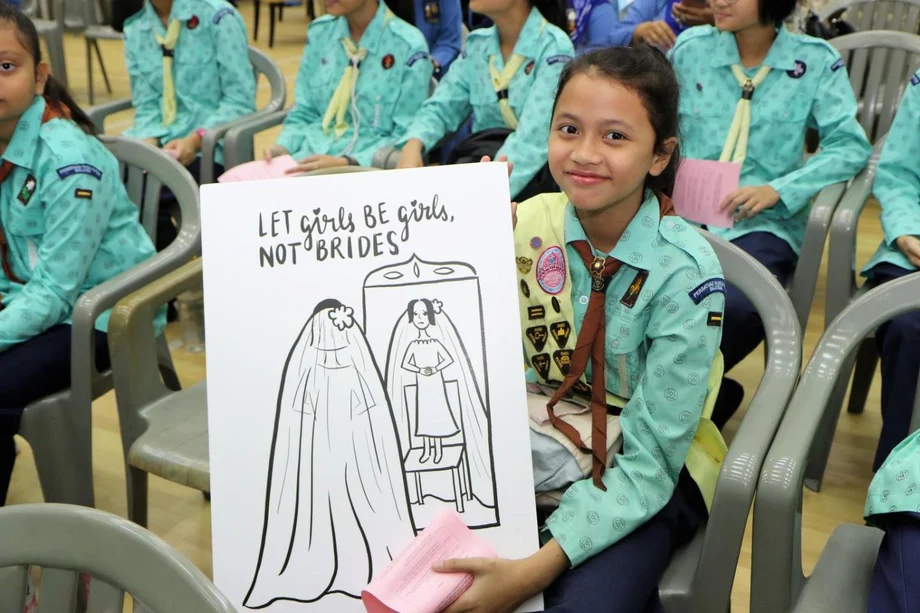
A parliamentary question puts marriage before 18 back in focus
Malaysia recorded 1,361 marriages involving children below 18 in 2024 across its civil, Syariah and customary legal systems. That figure now frames a fresh question for the government: will it prohibit every marriage involving a girl below 18, or continue allowing exceptions through courts and state authorities?
Contents
- A parliamentary question puts marriage before 18 back in focus
- What the two studies will examine
- Why Malaysia has no single marriage rule
- What the available numbers reveal
- Six causes the national plan tried to address
- Kelantan becomes a test of the safeguards argument
- A decade of reviews, directives and partial changes
- International commitments and the right of children to be heard
- What happens while the country waits for the findings
- What to Know
Women, Family and Community Development Minister Datuk Seri Nancy Shukri addressed that question in a written parliamentary reply on November 27, 2026. Pang Hok Liong, the Pakatan Harapan MP for Labis, had asked whether the government was prepared to enact a ban without exceptions and why marriages involving minors remained permitted. Nancy announced no immediate bill. Instead, she said two studies due in early 2027 would guide the government's next position.
The Dewan Rakyat had already been told on November 11 that only Selangor and Kedah had amended their laws to set 18 as the minimum marriage age for Muslims. Penang, where the minimum for Muslim girls remains 16, has announced engagement sessions on raising it. The minister also said part of the increase in recorded marriages from 2023 reflected more systematic data collection in Sarawak, rather than treating the entire change as an increase in ceremonies.
What the two studies will examine
The first study is a collaboration between the Ministry of Women, Family and Community Development (KPWKM) and UNICEF Malaysia. It will assess how effectively agencies implemented the National Strategic Plan to Address the Causes of Underage Marriage for 2020 to 2025. That plan was developed with federal and state agencies, State Islamic Religious Councils, civil society groups, international organisations and children, with technical support from UNICEF Malaysia.
The second study is being conducted through the Malaysian Social Institute (ISM). Its title is Study on Underage Marriage in Malaysia: Risk Factors, Protective Factors and Prevention Strategies. Risk factors are conditions that make marriage before 18 more likely, such as poverty or leaving school. Protective factors are conditions that reduce that likelihood, such as remaining in education or having access to health services and family support.
Nancy, speaking in her capacity as the responsible minister, explained how the findings would be used once both pieces of work were finished.
Once both studies are finalised, the ministry will use their findings to identify implementation gaps, determine priorities for follow-up action with relevant agencies and assess specific resource requirements.
The studies will therefore examine both policy design and delivery. A programme can exist on paper while lacking money, trained staff, access for rural communities or reliable information about who it reached. KPWKM says the results will be used to set priorities, strengthen prevention and determine the resources required for later action.
Why Malaysia has no single marriage rule
Malaysia operates a dual legal system, with civil law and Islamic family law applying to different communities. States also control important parts of Muslim marriage legislation. The Malaysia country profile maintained by Girls Not Brides sets out the resulting rules:
- For Muslims, the general minimum age is 16 for girls and 18 for boys. A Syariah Court can grant permission below the minimum under the Islamic Family Law (Federal Territories) Act 1984 and related state laws.
- For people who are not Muslim, the general minimum is 18 under civil law. Those aged 18 to 20 require parental consent. The Law Reform (Marriage and Divorce) Act 1976 also allows a girl aged 16 to marry in certain states with permission from the State Chief Minister.
- Raising the stated minimum to 18 does not necessarily remove every exception. UNICEF has pointed out that Syariah courts can still permit some Muslim girls below 18 to marry even where state legislation has changed.
When all exceptions are considered, the country profile describes Malaysia as having no absolute minimum marriage age. This explains why campaigners distinguish between raising the usual age and guaranteeing that no child can marry. The first change raises the starting point; the second removes the permission routes around it.
Amanda Bissex, then UNICEF's acting representative in Malaysia, welcomed Kedah's decision to raise the minimum age for girls from 16 to 18 in a statement from July 2022. Kedah joined Selangor, but UNICEF urged other states to follow and advocated 18 as the minimum with or without parental consent and with no exceptions.
Political attempts at harmonisation have faced resistance for years. Prime Minister Mahathir Mohamad issued a directive in 2018 telling state authorities that the minimum should be 18 for Muslims and people of other religions. By January 2020, seven states did not agree to a nationwide ban. The federal government now says it remains committed to standardising the age at 18 gradually and in cooperation with state governments.
What the available numbers reveal
UNICEF's Malaysia child marriage factsheet records 1,856 children marrying in 2018. About 90 percent were girls. Muslim children accounted for 83 percent of the cases and children who were not Muslim for 17 percent. Sabah had the highest number of married Muslim children at 334, while Pahang had the highest number among children who were not Muslim at 102.
The same document records 1,674 Bumiputera children among the 2018 total, equivalent to 90.19 percent. It also lists 100 Chinese children, 20 Indian children and 62 children from other ethnic groups. These figures describe recorded marriages rather than every informal, religious or customary union.
An older estimate, based on ministry statistics covering 2007 to 2017 and published in 2018, put the annual figure at at least 1,500 children. A separate ministry disclosure counted 9,061 Muslim and other child marriages from 2010 to 2015. Dividing that total across six years gives an average of about 1,510 recorded marriages a year, close to the earlier annual estimate. The factsheet also estimated that one in five Malaysian women aged 20 to 24 had married before 18, compared with one in 30 young men, using data from the same older period.
Other datasets use wider age groups. The 2010 Population and Housing Census counted 80,195 girls and 72,640 boys aged 15 to 19 who were married. That bracket includes people aged 18 and 19, so it covers a broader population than marriages before the 18th birthday.
Regular public figures remain limited. Some religious and customary weddings are not registered, and UNICEF cautions that the 2018 count was probably below the real number. The improved collection in Sarawak also means that changes in official totals can reflect better recording as well as changes in behaviour. Globally, an estimated 12 million girls marry before 18 each year, equivalent to about 23 girls every minute.
Six causes the national plan tried to address
The national strategic plan treated marriage before 18 as a problem connected to household circumstances, public services and social pressure. Its six areas of work show why the government is examining more than the wording of marriage laws.
- Low household income and poverty: proposed measures included a Child Grant Scheme for B40 children aged five and below, technical and vocational training, and stronger social work services. B40 refers to households in the lowest 40 percent of the income distribution.
- Limited sexual and reproductive health information: measures included promoting the myKafeTEEN application, parenting workshops and health education modules for teachers, pupils, children outside school, refugees, asylum seekers and migrant children.
- Weak access to education and poor attendance: the plan proposed compulsory secondary schooling until Form 5, wider vocational training and help with costs such as transport and books.
- Stigma and social norms: proposed work included community research, training for teachers and social workers, and instruction for judges, chief ministers and staff on children's rights and marriage law.
- Statelessness and insecure legal status: the plan connected better birth registration and access to basic services with action against the trafficking of child brides. UNICEF and authorities in Sabah also developed a Plan of Action to End Marriage Under 18 Years in Sabah.
- Insufficient data: the plan called for regular public information separated by sex, age, disability, ethnicity, religion and state, alongside information about why marriages took place.
Its legal proposals included setting 18 as the minimum for males and females in civil, Islamic family and customary law. They also included reviewing the Child Act 2001, the Penal Code and the Age of Majority Act 1971, and requiring marriage registration with the National Registration Department.
The country profile describes how poverty, attitudes towards sexuality and violence can combine. It documents reports of girls being married to men who sexually assaulted them, sometimes enabling perpetrators to avoid criminal charges, and cites reports of payments around RM5,000 to parents in poorer communities. It also identifies Malaysia as a destination for the trafficking of Bangladeshi and Burmese Rohingya girls for forced marriage and sexual exploitation.
The consequences extend beyond the wedding. Married children are more likely to leave school, face early pregnancy and become economically dependent. Worldwide, complications during pregnancy and childbirth are the leading cause of death among girls aged 15 to 19, while babies born to adolescent mothers face higher mortality risks.
Kelantan becomes a test of the safeguards argument
Kelantan has defended its position by pointing to social problems and existing safeguards, reportedly describing a blanket prohibition on marriage below 18 as unsuitable. The state has formed a special committee to examine solutions. Women's Aid Organisation (WAO), which works with survivors of domestic violence, welcomed the committee but rejected the argument that social hardship justifies marrying children.
In a statement dated November 23, 2026, the organisation set out its response.
Social problems cannot justify child marriage. They are a reason to address the underlying challenges and strengthen protections for children.
Figures released by the Kelantan administration in November 2023 show why the oversight system is under scrutiny. It reported that 533 couples below the required age had married since 2019, while only 13 applications had been rejected. WAO asked whether such procedures were preventing marriages involving children or mainly regulating them.
The organisation also challenged the reliability of consent and court checks when relatives may be present and decisions depend on discretion in individual cases.
A system that allows for such exceptions embraces the possibility of a child marrying. Oversight can only manage the consequences, not avoid it.
WAO says girls may leave school, assume domestic work and become mothers before they are ready, while boys may also be forced out of education and into work. Economic dependence, isolation and unequal power can make abuse harder to escape. It is seeking a minimum age of 18 without exceptions for girls and boys, regardless of religion, ethnicity or state, alongside healthcare, continued education, psychosocial support and protection from poverty.
A decade of reviews, directives and partial changes
The current studies follow numerous official initiatives. Their dates matter because several earlier proposals changed procedures without removing the underlying permission for a child to marry.
- 2013: The government created a Child Marriage Task Force under the Coordinating Council for the Protection of Children, bringing together agencies, academics and children's rights activists.
- 2014: The National Fatwa Council declared that child marriage was neither wajib (obligatory) nor sunnah (encouraged), and described it as unhealthy. It did not declare the practice haram (prohibited).
- April 2016: The Lower House amended the Child Act 2000 but retained legal exceptions permitting marriage before 18.
- 2018: Mahathir issued his directive for a minimum age of 18. The Human Rights Commission of Malaysia also rejected a standard court procedure for assessing applications, arguing that it would perpetuate the practice.
- January 2020: The five year national strategic plan was launched, while opposition from seven states prevented a nationwide prohibition.
- July 2022: UNICEF welcomed Kedah's amendment and urged every other state to raise its minimum age.
- November 2026: Parliament received updated state and marriage figures, SUHAKAM addressed children's rights, WAO called for reform in Kelantan and KPWKM confirmed the two studies.
Early 2027 is the next stated marker. It is the completion target for the studies, not a promised date for legislation.
International commitments and the right of children to be heard
Malaysia acceded to the Convention on the Rights of the Child and the Convention on the Elimination of All Forms of Discrimination Against Women (CEDAW) in 1995. Its CEDAW accession included a general reservation concerning compatibility with Islamic Sharia law and the Constitution, plus specific reservations to parts of Article 16 on marriage.
The CEDAW Committee recommended in 2018 that Malaysia set 18 as the minimum age for women and men in both civil and Muslim marriages and require the full consent of women. Malaysia has also committed to ending child, early and forced marriage by 2030 under Sustainable Development Goal target 5.3. It did not provide an update on that target during its Voluntary National Review in 2021 and has not submitted another review since then.
On November 20, 2026, the Children's Commissioners of the Human Rights Commission of Malaysia acknowledged efforts by several states to raise the marriage age during the year. Their World Children's Day statement also listed the Anti-Bullying Act 2026, the Online Safety Act 2025, the Anti-Bullying Tribunal, the Student Protection Policy and the Malaysia Student Leaders Council as wider developments affecting children.
The commissioners remained concerned about violence, abuse, neglect, exploitation and sexual offences in homes, schools, care institutions and communities. They also invoked Article 12 of the Convention on the Rights of the Child, which says children should be able to express their views and have those views weighed according to age and maturity.
Children's rights cannot wait for tomorrow. They must be respected, protected and fulfilled today.
That principle connects directly with KPWKM's promise to consider the views and experiences of girls when planning measures that affect their lives.
What happens while the country waits for the findings
The National Child Policy and Action Plan for 2026 to 2030 will continue while the studies are underway. Its stated priorities include keeping girls in education, providing suitable health information and services, protecting them from violence and exploitation, and supporting families facing socioeconomic hardship. KPWKM linked this approach to the 2026 International Day of the Girl Child theme calling for an end to child marriage and investment in the rights of girls.
Nancy's reply gave no date for a bill and did not say when the completed studies would be published. The immediate legislative position therefore remains a mixture of state rules and exceptions. A statutory minimum of 18 in Selangor or Kedah coexists with possible Syariah court permission, while Penang continues to set 16 for Muslim girls.
WAO wants authorities to publish separate figures for applications, approvals and rejections, commission an independent review of safeguards and include child protection specialists, women's rights groups, survivors and young people on reform committees. It has also asked the federal government to lead and fund legal harmonisation. UNICEF has called for sufficient resources and the inclusion of migrant and refugee children, whose limited access to education and basic services can increase their risk.
The early 2027 findings will consequently arrive with three practical decisions waiting: whether the government will seek to remove every legal exception, which education and protection services it will fund, and how it will publish enough reliable information to measure progress towards the 2030 commitment.
What to Know
- Two Malaysian studies on marriage below 18 are due in early 2027, one with UNICEF Malaysia and one through the Malaysian Social Institute.
- Minister Nancy Shukri has not announced a timetable for a complete ban, saying the findings will guide priorities, resources and later action.
- Malaysia recorded 1,361 marriages involving children below 18 in 2024 across civil, Syariah and customary systems.
- Only Selangor and Kedah had set 18 as the minimum marriage age for Muslims as of November 11, 2026, and exceptions can still apply.
- The 2018 count was 1,856 children, about 90 percent of them girls, but incomplete registration means official totals can understate the practice.
- WAO and UNICEF support a minimum age of 18 without exceptions, alongside education, healthcare, social protection and support for families.
- Malaysia has committed to ending child, early and forced marriage by 2030, while the National Child Policy and Action Plan for 2026 to 2030 continues during the review.