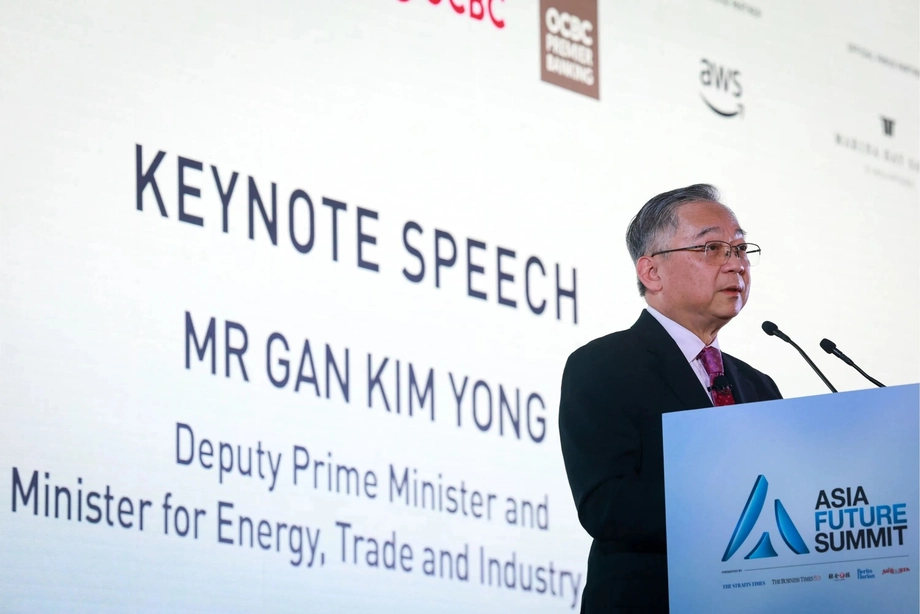
Trust takes centre stage at Marina Bay Sands
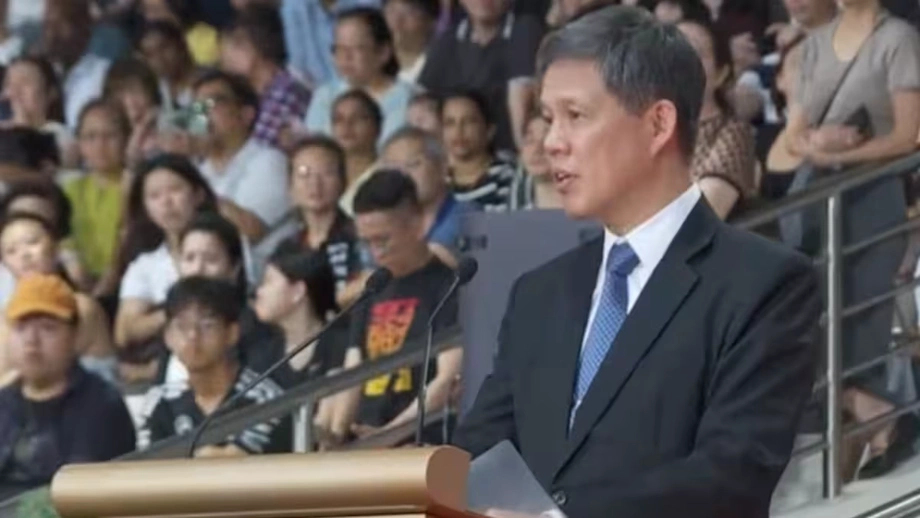
Deputy Prime Minister Gan Kim Yong told about 370 policymakers, business leaders and industry experts at the Asia Future Summit on 27 November 2026 that Singapore would not kowtow to any country, even as the United States presses it on tariffs and technology rules. The setting was the Marina Bay Sands Expo and Convention Centre, where Gan also delivered a keynote on how ASEAN can stay open in a world moving toward barriers and self reliance.
Contents
- Trust takes centre stage at Marina Bay Sands
- Why one participant called trust a big problem
- Tariffs put the principle to a practical test
- Chip shipment claims raise a second trust test
- ASEAN's bridge role depends on trust
- AI brings opportunity and a governance problem
- Distant wars reach household prices
- Trade agreements turn cooperation into gains for companies
- Common rules protect smaller economies
- What comes next for Singapore's diplomacy
- Key Points
A question from the audience put the tension plainly. An attendee worried that Singapore was behaving like gentlemen playing a trust game while others did not follow the same rules. Telkomsel Director of Planning and Transformation Wong Soon Nam called the issue a big problem, especially when Singaporeans start to feel the Government is not taking care of them.
The Prime Minister's Office published Gan's keynote speech, which says ASEAN grew by close to 5 percent last year and should remain a bridge for trade, investment and cooperation. That role, Gan said, depends on trust. Chan Yeng Kit, Executive Chairman of SPH Media, and Tan Teck Long, Group CEO of OCBC, were among the named speakers. The summit was jointly presented by five SPH Media titles, with OCBC as presenting sponsor, Marina Bay Sands as venue partner and Amazon Web Services as cloud partner.
Why one participant called trust a big problem
Wong Soon Nam said he first agreed with Gan that trust matters. He said the difficulty appears when the other side puts domestic needs first or does not share the same commitment.
another party does not believe in trust, or prioritises their own domestic need above trust.
Wong told the dialogue that Singaporeans can feel uncared for when the Government seems overly deferential. Kowtow can describe kneeling and touching the head on the ground. In everyday speech, it means behaving with too much deference to authority.
Gan Kim Yong, Deputy Prime Minister and Minister for Energy, Trade and Industry (Trade), said he agreed with the concern about trust but rejected the idea that Singapore should copy a breach of trust. He said trust reflects who Singapore is and what it stands for.
we need to maintain our principles. We need to preserve our interests. At the same time, we mustn't also become like the other side. If they break their trust, I also break my trust. So, I think that will just make us the same as everybody else. I think we want to be able to stand up as a party that is trusted, regardless of environment, external situation.
Gan also drew a line under negotiation tactics. He said every negotiation has a price, but Singapore must weigh what it gains against what it gives up.
We are not going to pay any price to get concession.
Tariffs put the principle to a practical test
The United States Trade Representative (USTR) proposed tariffs of up to 20 percent on 25 November 2026, covering Singapore and 13 other trading partners, or 14 economies in all. The proposal was made under Section 301, a US trade law that lets Washington investigate practices it sees as unfair and respond with tariffs. The US described the case as structural excess capacity, a claim that an industry has supply well beyond demand because of conditions that last.
- September 2026: RCEP ministers agreed to set up an Accession Working Group.
- 25 November 2026: The US proposed levies of up to 20 percent on Singapore and 13 other partners.
- 26 November 2026: Gan said Singapore would keep engaging the USTR while weighing compromises.
- 27 November 2026: Gan delivered the keynote and answered questions at the Asia Future Summit.
- November 2026: ASEAN signed the Digital Economy Framework Agreement.
- 2027: Singapore takes the ASEAN chairmanship and ASEAN marks 60 years.
On 26 November, Gan said Singapore would continue engaging the USTR to seek reconsideration of the proposed tariffs. He said any deal would require give and take from both sides. Singapore has no Agreement on Reciprocal Trade with the US, the kind of bilateral deal Washington has negotiated with countries in exchange for lower tariff rates. The US has said other negotiations could still address its findings.
China warned that it could take all necessary measures in response to the tariffs. India disputed the USTR findings and urged the US to settle concerns through talks. Gan said the United States remains an important source of technology and a destination for Singapore exports, so Singapore has to work with American counterparts while protecting its own interests.
Gan, who is also minister responsible for trade, said Singapore must enter talks with a clear limit. He added that a good outcome is never guaranteed and that negotiators must compare gains with concessions.
we must be prepared to walk away when the price they ask for is too high. So it's something that we have to accept. There's no guarantee that the negotiation will succeed, and we have to always weigh the pros and cons, what we gain versus what we have to give up.
Chip shipment claims raise a second trust test
Gan was asked about claims that Nvidia had told partners to stop shipping servers containing its chips to Southeast Asian countries, including Singapore. He said Singapore had not confirmed that development. The Government is engaging local companies to assess the impact and is working with the United States so Singaporean firms can keep secure access to advanced chips. Businesses in Singapore are also organising with partners to protect supply.
A US rule announced in November requires firms in Singapore, Thailand, Malaysia, Indonesia and Brazil to obtain export licences for advanced chips. An export licence is official permission to send controlled goods to another country. The measure seeks to limit routes through which powerful processors could reach China. Advanced chips are central to artificial intelligence because they provide the computing power needed to train and run large models.
Gan said Singapore does not want to become a conduit for illegal trade in any form. A conduit is a route through which something passes. He said the Government is reviewing processes, regulations and monitoring so that Singapore does not become such a route. Companies based in Singapore but active elsewhere are expected to follow the rules of those countries, while firms doing business here must respect Singapore's rules.
Gan, Deputy Prime Minister and minister for energy, trade and industry (trade), linked that reputation to visible enforcement and said action against lawbreakers matters to Singapore's standing as an international business hub.
Singapore has always safeguarded our global international reputation very jealously.
Gan said enforcement needs evidence. Activities outside Singapore may not be visible to local investigators, so the Republic needs cooperation from other countries to obtain information. He said Singapore has launched investigations and taken legal action against those who break its laws.
ASEAN's bridge role depends on trust
Gan's keynote speech set out why trust matters beyond Singapore. Competition over trade, investment and technology is reshaping the networks countries use to buy, sell, invest and obtain technology. ASEAN countries cannot decide how major powers manage their differences, Gan said, but they can keep relationships across those divides.
The bridge idea has conditions. Major partners need confidence in ASEAN's integrity, in the reliability of its institutions and in the way business is conducted across the region. Gan said that confidence is earned through clear and predictable rules, laws that are upheld, international commitments that are honoured and firm action against wrongdoing. For a company, that means knowing an agreement will be respected and that rules will be applied consistently.
Gan said ASEAN's 11 countries should use diversity as a source of strength rather than compete in identical industries. If every member produced exactly the same goods, he said, there would be little room for cooperation. The idea is complementarity: one country may supply components, another may provide logistics, and another may offer a large consumer market.
Singapore will take the ASEAN chairmanship in 2027, building on the Philippines' work, and ASEAN will mark its 60th anniversary that year. The United States and China will remain key partners despite tariffs imposed on Singapore and its neighbours. Gan said dialogue between the leaders of the two countries is valuable because greater understanding and respect can help the whole world, especially Asia and ASEAN.
AI brings opportunity and a governance problem
Artificial intelligence, or AI, can help ASEAN raise productivity and move into work that creates more value. Gan said manufacturers can improve quality and reduce waste, logistics firms can plan deliveries better, and smaller companies can use cloud services instead of buying expensive systems of their own. Cloud services are computing tools delivered over the internet, so a firm can use them without owning the underlying machinery.
Those gains require practical work. Companies need better data, redesigned processes and trained staff. Governments, employers and training institutions must prepare workers for changing jobs and help displaced workers move into new roles. Gan also warned that AI can make cyberattacks easier and faster while helping defenders find software weaknesses. As systems become more capable, human control and safeguards against misuse become more important.
Gan pointed to Prime Minister Lawrence Wong's remarks at Asia Pacific Economic Cooperation (APEC) earlier this month that competition for technological leadership can coexist with cooperation on AI safety and responsible use. ASEAN can build on its Guide on AI Governance and Ethics, work with partners on safety research, testing and safeguards, and share lessons from serious AI incidents and near misses. Near misses are events where something almost went wrong but did not.
Distant wars reach household prices
Gan used energy and food supplies to explain why cooperation is not abstract. The wars in Iran and Ukraine have shown that conflicts far from ASEAN can affect businesses and households across the region. When energy supplies or shipping routes come under pressure, higher fuel, freight and fertiliser costs raise business costs and push up prices of everyday goods.
ASEAN economic ministers earlier this year reaffirmed their commitment to keeping markets open and avoiding unnecessary trade restrictions. They also called for closer cooperation on energy security and food supply chains. Gan also cited the ASEAN Power Grid, which links Lao PDR, Thailand, Malaysia and Singapore. The project shows that electricity can be traded across borders through connected grids, though it requires work on infrastructure, regulation and financing.
Gan said coordination gives each country more options when supplies are disrupted. Sharing information and keeping trade flowing can make a region less exposed to a single shock, such as a blocked route or a sudden rise in fuel prices.
Trade agreements turn cooperation into gains for companies
The upgraded ASEAN Trade in Goods Agreement is meant to reduce business costs through simpler procedures and clearer rules. ASEAN's customs related mutual recognition arrangement can also give certified trusted traders faster clearance and priority treatment in participating countries. In plain terms, a trusted trader that meets agreed standards spends less time waiting at the border.
The ASEAN Digital Economy Framework Agreement (DEFA), signed earlier this month, extends integration into digital trade. It is meant to make transactions, payments and access to digital services easier across the region. The Regional Comprehensive Economic Partnership (RCEP), which links ASEAN with major partners under one trade agreement, is also changing. In September, RCEP ministers agreed to establish an Accession Working Group to handle applications from new members and work on upgrading the agreement. Accession is the process by which a new member joins.
Gan also listed an upgrade to the trade agreement with the Republic of Korea, substantially concluded negotiations on an ASEAN Canada free trade agreement, and cooperation with the European Union, the Gulf Cooperation Council and members of the Comprehensive and Progressive Agreement for Trans-Pacific Partnership. These ties can open markets, broaden supply networks and give ASEAN more options beyond any single partner.
Common rules protect smaller economies
Gan said ASEAN must support the World Trade Organisation (WTO) and efforts to make it more effective. Common rules give businesses greater predictability and give smaller economies a voice in decisions that affect them. Dispute settlement, the process for resolving trade disagreements between countries, is one part of that system. Gan also pointed to the WTO electronic commerce agreement as an example of rules that make digital trade easier, with Singapore among its main backers.
Trust also shapes Singapore's role as a business, financial, transport and shipping hub. Gan said Singapore's economy depends on global and regional prospects, so cooperation with partners requires confidence. On cross border haze, he said investigations into companies suspected of burning forests and causing haze were continuing even though the region was no longer experiencing haze. He said auditors and investigators need time, information and a fair chance for companies to respond, describing this as a proper legal process.
Gan said Singapore's small size can be an advantage because the country can move quickly and respond to investors. He also said support for open markets is stronger when workers and smaller businesses can see how cooperation improves their prospects. Economic nationalism, the push to favour domestic control and restrict outside dependence, is understandable when governments want jobs and secure supplies, he said, but barriers among ASEAN members would narrow opportunities for everyone.
What comes next for Singapore's diplomacy
The Government has not announced a final tariff outcome or a date for new chip controls. It is still engaging companies and the United States on both fronts. The next clear markers are institutional rather than immediate deadlines: implementation of DEFA, work by the RCEP Accession Working Group, and Singapore's ASEAN chairmanship in 2027.
Gan said businesses have a role too. They can expand across borders, connect regional economies, develop workers' capabilities and help more people benefit from growth. Singapore's chairmanship will focus on deeper integration, wider partnerships and opportunities in the digital and green economies.
The immediate test for Singapore is practical. It wants to keep markets open, maintain ties with both major powers and protect its standing as a trusted partner, while making clear that trust has limits when its own interests are at stake.
Key Points
- Gan said Singapore will not kowtow to any country and will not pay any price for tariff concessions.
- Audio audience question and Wong Soon Nam's remarks put trust under pressure at the summit.
- The US proposed tariffs of up to 20 percent on Singapore and 13 other partners on 25 November 2026.
- Gan said Singapore has not confirmed claims that Nvidia halted chip shipments to the region.
- Singapore is reviewing rules and monitoring to avoid becoming a route for illegal chip trade.
- ASEAN grew by close to 5 percent last year and aims to stay a bridge for trade, investment and cooperation.
- Singapore will hold the ASEAN chairmanship in 2027, when ASEAN also marks 60 years.