A shortlist, a deadline and 97 per cent of the money left untouched
JPMorgan Asset Management, BlackRock and Endowus Singapore have submitted proposals to run a new investment programme for Singapore's Central Provident Fund, the mandatory pension scheme that holds S$701 billion (US$543 billion), and the three firms are the frontrunners for the mandate, according to people familiar with the matter. The winners will be announced in the first half of 2027, and the product is due to launch in 2028.
Contents
- A shortlist, a deadline and 97 per cent of the money left untouched
- Who is bidding, and who they would bring with them
- What a glide path actually does
- Why so little of the fund is invested today
- A decade of waiting for the Lifetime Retirement Investment Scheme
- The return case, in numbers
- The customisation objection
- Why Singapore equities may feature in the portfolios
- The timeline so far
- What is still open
- Key Points
The stakes are set by a number that sits on the CPF website. As of September, just S$22 billion, or 3 per cent of the fund's net assets, was invested through the scheme's existing optional plan, where members pick their own bonds, stocks and unit trusts from a list of more than 30 asset managers. The other 97 per cent stayed in the default arrangement, which the pension board invests in Special Singapore Government Securities. Proceeds from those securities are pooled with other government money, including budget surpluses and land sales, and managed by GIC, the sovereign wealth fund, for long term returns.
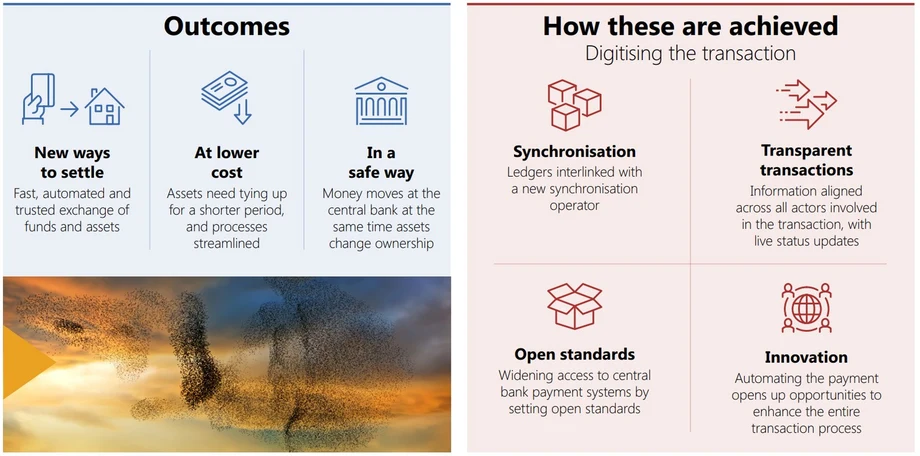
The new programme is designed for members who want more than the return the government guarantees but who do not want to choose funds themselves. Prime Minister Lawrence Wong unveiled it in this year's budget speech as a response to the country's ageing population. Members will opt in to portfolios that adjust automatically as they age, holding more equities early and shifting into lower risk assets such as bonds, before the holdings are liquidated in phases by a set target date.
Discussions are described as preliminary, with no final decisions made. A spokesperson for the CPF Board said the evaluation process is ongoing and that the board cannot comment on individual applications.
Who is bidding, and who they would bring with them
JPMorgan Asset Management would partner with DBS Group Holdings, Singapore's largest bank, extending a retirement portfolio programme the bank piloted in 2024. That existing product is a robo portfolio that follows a glide path and includes a drawdown feature, and it can be customised to a saver's desired retirement age and target withdrawal income.
Endowus, an investment platform, is in talks to work with Capital Group on the CPF programme, according to the people familiar with the matter. The firm said it has been a digital adviser for investing CPF savings since 2019, a role that already puts it in front of members deciding what to do with their balances.
BlackRock has not disclosed a local partner. JPMorgan and Capital Group declined to comment. BlackRock and DBS did not respond to requests for comment. The identities of the three bidders, and the partnerships behind two of them, sketch out the shape of the market the CPF Board is trying to create: global asset managers supplying the portfolios, a local bank or a digital platform supplying the customer relationship and the advice.
What a glide path actually does
A glide path is a rule for moving money between assets over time. A young member starts with a higher share in shares, which historically deliver more over long periods but swing in value, and the mix tilts toward bonds as the target date approaches. Because the shift happens on a schedule rather than at the member's discretion, the portfolio avoids the trap of selling everything after a crash and missing the recovery.
That automatic adjustment is the design's main selling point. A sharp market fall just before or around retirement does lasting damage to someone who is about to start drawing an income, because there is little time left for the balance to recover. Dialling down risk as the target date nears makes the outcome around retirement less sensitive to a crash.
The trade-off runs the other way. A member who retires after a strong late run in shares will have given up part of that gain, because the portfolio had already moved into safer assets. The choice for members is less about chasing the highest possible return and more about how much timing risk they want to carry into retirement.
Why so little of the fund is invested today
The current optional plan has been available for years, yet it holds only 3 per cent of net assets. The scheme on offer is crowded: the CPF Investment Scheme lists around 470 funds, and most of them are equity funds. Choosing among hundreds of options, and rebalancing them, is a task many members do not want.
Cheap products do exist inside the scheme. Dimensional Fund Advisors offers funds that levy no sales charge and pay no trail fees, with a total expense ratio of 0.28 per cent a year. Christopher Tan, chief executive of advisory firm Providend, has said awareness of these low cost options among investors is low.
The guaranteed alternative is also attractive in its simplicity. The Ordinary Account pays 2.5 per cent, and members under 55 earn up to 5 per cent a year across their balances, with no market risk attached. Beating that consistently requires a portfolio, patience and a tolerance for volatility that many savers do not have.
Singapore's pension fund is large and old. The CPF was founded in 1955 to support citizens and permanent residents in retirement, housing and health care. It has more than two million active members, and it received over S$14 billion in contributions in the third quarter alone.
A decade of waiting for the Lifetime Retirement Investment Scheme
The programme now being tendered grew out of a proposal that has sat on the shelf for about 10 years. The CPF advisory panel first mooted the Lifetime Retirement Investment Scheme, or LRIS, in 2016. It lay dormant until Manpower Minister Tan See Leng told Parliament in January 2026 that the ministry was in the "final stages" of studying the scheme and how to support members through an investment option.
that would strike the right balance between risk and return
His reply to MP Jamus Lim of Sengkang GRC went further. Tan said the framework would involve different combinations of stocks and bonds arranged as a glide path, a mechanism that lets investors take more risk when they are young and taper it off in later years. That was the first time the government had signalled what kind of portfolio it had in mind.
The decade long pause has not been empty. Glide path and target date funds have run in the United States since the 1990s, so the machinery exists and does not need inventing. What the LRIS adds for Singapore is a single, low cost option with advice built in, one that prompts members to rebalance rather than leaving them to pick from hundreds of funds.
The return case, in numbers
Advocates of the new option point to long run data on balanced portfolios. According to JPMorgan Asset Management's quarterly guide to markets, a portfolio split 60 per cent equities and 40 per cent bonds, using the S&P 500 for the equity portion, returned 9.4 per cent a year over 20 years. US$100,000 invested on that basis would have grown to US$606,792.
In Parliament, MP Shawn Loh of Jalan Besar GRC noted that a typical portfolio of 65 per cent equities and 35 per cent bonds earned 9.5 per cent a year over the past five years. He argued that further delay of the scheme could deprive members of a chance to take risk in exchange for higher expected returns.
The same data shows why patience matters. Over the long run, the average bull market has lasted 70 months and produced returns of 221 per cent, while the average bear market has lasted 14 months with losses of 39 per cent. The CPF Investment Scheme's quarterly disclosures cover only periods of up to three years, which is too short to capture that pattern.
Higher returns come with a companion problem, which is how members turn a balance into an income. Drawdown, known in the industry as decumulation, is hard even in developed markets, where many retirees do not know how much they can safely withdraw each year. The CPF already runs an annuity, CPF Life, that pays an income for life, and a new investment option would sit alongside it rather than replace it. With Singaporeans living longer, savings may need to last 30 years or more after retirement.
The customisation objection
Not everyone is convinced that a single automatic path fits every member. Providend's Christopher Tan has warned that a glide path portfolio may not match an individual's own tolerance for risk or their particular financial position. A younger saver does not always have a greater appetite for risk, and an older member who already holds bonds elsewhere may not be well served by holding more of them.
may not align perfectly with an individual's specific risk tolerance or unique financial situation
Rebalancing is the other design question. Age is not the only thing that throws a portfolio off its target. A strong bull market will push the equity share above its intended weight and leave the portfolio more exposed to a correction, and a system can watch recent returns and nudge members to take some risk off the table. Delivering that advice cheaply points toward automated tools, the kind younger Singaporeans already use.
Why Singapore equities may feature in the portfolios
Portfolios built for the scheme are likely to hold some Singapore shares, and those shares are the subject of a state backed effort to revive interest. The measures include a S$5 billion Equity Market Development Programme and the Value Unlock programme run by the Monetary Authority of Singapore and the Singapore Exchange to help listed companies reach their valuation potential.
Brokers have put out bullish cases. JPMorgan Securities analysts have projected the Straits Times Index at 6,000 in a bull scenario, while DBS has set a target of 10,000 by 2040. Local investors have lost money on Singapore stocks before, and the hope among supporters of the new programme is that these measures mark a turning point.
The timeline so far
- 1955: The CPF is set up as Singapore's mandatory pension fund for citizens and permanent residents.
- 2016: A CPF advisory panel proposes the Lifetime Retirement Investment Scheme.
- 2024: DBS pilots a retirement portfolio that follows a glide path and includes a drawdown feature.
- January 2026: Manpower Minister Tan See Leng tells Parliament the ministry is in the final stages of studying the scheme and describes a glide path framework.
- Budget 2026: Prime Minister Lawrence Wong unveils the new investment programme.
- September 2026: S$22 billion, or 3 per cent of net assets, sits in the existing optional investment plan.
- First half of 2027: The CPF Board is due to announce the winning managers.
- 2028: The programme is scheduled to launch.
What is still open
No manager has been selected, the shortlist has not been confirmed by the CPF Board, and the board has said it will not discuss individual applications. The fee structure, the number of portfolios offered under the programme and the size of the slice each winner would manage have not been made public. Talks between the bidders and their would be partners are described as preliminary, which means the pairings themselves could change before 2027.
The bigger number to watch is not the size of the mandate but the share of members who opt in. The S$22 billion now in the optional plan is the base the new programme is trying to beat, and it represents a fraction of a fund that has crossed S$700 billion.
Key Points
- JPMorgan Asset Management, BlackRock and Endowus Singapore are the frontrunners to run a new optional investment programme for the CPF, a fund worth S$701 billion (US$543 billion).
- The winners will be announced in the first half of 2027, with the product due to launch in 2028.
- JPMorgan would work with DBS, extending a retirement portfolio piloted in 2024; Endowus is in talks with Capital Group.
- The portfolios would adjust with age, holding more equities early and shifting into bonds before phased liquidation by a target date.
- Only S$22 billion, or 3 per cent of net assets, was in the existing optional investment plan as of September, against more than 30 asset managers and around 470 funds on the CPF Investment Scheme list.
- The plan emerged from the Lifetime Retirement Investment Scheme proposed by a CPF advisory panel in 2016, and was announced by Prime Minister Lawrence Wong in the 2026 budget.
- A 60/40 portfolio using the S&P 500 returned 9.4 per cent a year over 20 years, turning US$100,000 into US$606,792, according to JPMorgan Asset Management data.
- Providend's Christopher Tan has questioned whether a standard glide path fits every member's risk tolerance and financial position.