What Sparked the Anger at the Rawang Plant?
A lithium battery plant in Rawang, described as having more than 2,000 workers, has become the focus of a much larger Malaysian argument: when a foreign manufacturer arrives, who gets the jobs, skills and income? Posts about Linergy Power Sdn Bhd alleged that most employees came from China, Malaysians were recruited mainly for junior roles, and even the canteen employed chefs from China. The claims, which drew wider attention on 26 November 2026, turned an account of a factory encounter into accusations of a closed ecosystem and demands for answers from ministers and enforcement agencies.
Contents
- What Sparked the Anger at the Rawang Plant?
- Why the Claims Struck a Political Nerve
- What Is Known About Linergy Power?
- Is There an 80 Percent Local Hiring Rule?
- How Does Section 60K Work?
- What Did Johari Announce for Manufacturing?
- Why Wages Are Central to the Dispute
- What Happens to Existing Manufacturers?
- What Would Answer the Public's Questions?
- What to Know
Connaught Pua, the Threads user behind the initial account, said he had given a ride to several Linergy Power employees. He described a workforce made up largely of staff from China, with Malaysians designated for junior positions. According to his account, predominantly Mandarin speaking employees used translation apps to communicate with Malaysians, while the canteen and its chefs from China catered to the growing expatriate community. Another user, thyuanedision, claimed that the machinery had also been shipped from China and that most staff were from the mainland. The repeated assertion that Malaysians were offered only 'trainee and office assistant' roles gave the story its sharpest edge.
These descriptions are personal allegations, not an official workforce audit. The posts did not provide a breakdown by citizenship, immigration pass or seniority, and no public response from Linergy Power accompanied them. A useful breakdown would separate expatriate professionals, holders of other passes and Malaysians working in technical, supervisory and junior jobs.
Why the Claims Struck a Political Nerve
One commenter called the arrangement 'modern colonisation', while another condemned 'foreign investment that didn't benefit local populace'. Neocolonialism describes indirect economic, political or cultural dominance by powerful states or corporations without formal territorial annexation. In this debate, that large idea was attached to ordinary concerns about wages, career progression and whether local businesses and workers gain anything when a factory brings in its own staff, equipment and services.
Prime Minister Datuk Seri Anwar Ibrahim was directly challenged by a commenter who asked whether this was how China intended to improve Malaysia's domestic economy. Another person asked how locals would 'cari makan', a Malay expression meaning to earn a living. Investment, Trade and Industry Minister Datuk Seri Johari Abdul Ghani was also tagged in a plea for authorities to investigate companies that break local laws. Other commenters alleged that visa loopholes were being used to bypass employment regulations.
The comments were overwhelmingly negative, although they represented reactions to the posts rather than a representative survey of Malaysian opinion. Their practical demand was for the Immigration Department and the Investment, Trade and Industry Ministry, known as MITI, to explain how enterprises employing large numbers of foreigners serve local interests.
What Is Known About Linergy Power?
Linergy Power was established in December 2024 and operates out of Rawang, in Selangor. It manufactures lithium batteries for electric vehicles and originated with ties to China's Ampace Technology Ltd. Japan's TDK Corp subsequently agreed in May 2026 to acquire full ownership through its Singapore unit, Amperex Technology (S) Pte Ltd. The agreement is an important part of the corporate timeline because the online discussion framed the operation around its Chinese origins and personnel.
TDK's acquisition agreement does not supply the staffing information sought by critics. Corporate ownership, workforce composition and legal compliance are separate questions. Labour and immigration regulators would need to examine employment records, approvals and passes to assess the hiring claims, while investment authorities would consider any conditions attached to the company's licence. The social media accounts supplied none of those underlying records.
Is There an 80 Percent Local Hiring Rule?
An 80 percent local staffing requirement was suggested by one commenter, who tagged MITI while asking whether such a quota existed. Malaysia does not apply a single universal foreign worker ratio to every company. Its system instead combines a national cap on the foreign workforce, quotas or ratios that vary by sector for workers on Temporary Employment Visit Passes, and approval rules intended to make employers prioritise local talent.
Several laws and agencies are involved. Section 60K of the Employment Act 1955 deals with prior approval for recruiting foreign workers. The Immigration Act 1959/63 governs entry and immigration documentation, while the Human Resources Ministry and Home Ministry set relevant policies. MITI and the Malaysian Investment Development Authority also feature in decisions about manufacturing investment and licensing.
The type of pass matters. An Employment Pass is commonly associated with expatriate professionals, a Professional Visit Pass covers certain temporary professional assignments, and a Temporary Employment Visit Pass, or PLKS, is used for other approved categories of foreign labour. An allegation about visa loopholes therefore requires evidence about the route used for each category of employee. The relevant checks include the employer's approval, each worker's pass and any conditions applying to the sector or licence.
How Does Section 60K Work?
The Department of Labour Peninsular Malaysia, or JTKSM, set out the procedure in JTKSM's Section 60K notice, issued on 8 January 2025. Section 60K of the Employment Act 1955, also known as Act 265, has required employers to obtain prior approval before recruiting foreign workers since 1 January 2023. It covers every employee who is not a citizen, as defined in Section 2 of the Act.
The requirement applies to new recruitment, not to renewals of Employment Passes, PLKS passes or other passes. Approval is granted to the employer only. It is mandatory even for employers whose positions are exempt from job vacancy advertising requirements administered by the Social Security Organisation, known as PERKESO.
Applications must go through the Integrated Foreign Workers Management System, called ePPAx. Expatriate applications use a dedicated submodule. Another submodule, Other Passes 1, covers categories including foreign fishermen, security guards, ship crew, RP-T holders, student pass holders, Professional Visit Pass applicants and construction employers graded G1 to G3. Construction contractors graded G4 to G7 must declare their project in the CIMS CIDB system before applying through ePPAx, allowing the project data to be integrated with the application.
Approval documents can be generated directly from the application's status screen. Since 1 October 2024, Section 60K approvals managed by JTKSM have been valid for 12 months across all covered categories, except approvals issued under the Special Employer Change Process, known as PTM Khas.
- 1 January 2023: Section 60K's prior approval requirement took effect.
- 1 October 2024: The 12 month validity period for JTKSM approvals took effect.
- December 2024: Linergy Power was established, and the upgraded ePPAx modules went live on 2 December.
- 8 January 2025: JTKSM's detailed implementation notice was issued.
- May 2026: TDK agreed to acquire full ownership of Linergy Power through its Singapore unit.
- 26 November 2026: The Rawang hiring allegations and the angry public reaction drew wider attention.
What Did Johari Announce for Manufacturing?
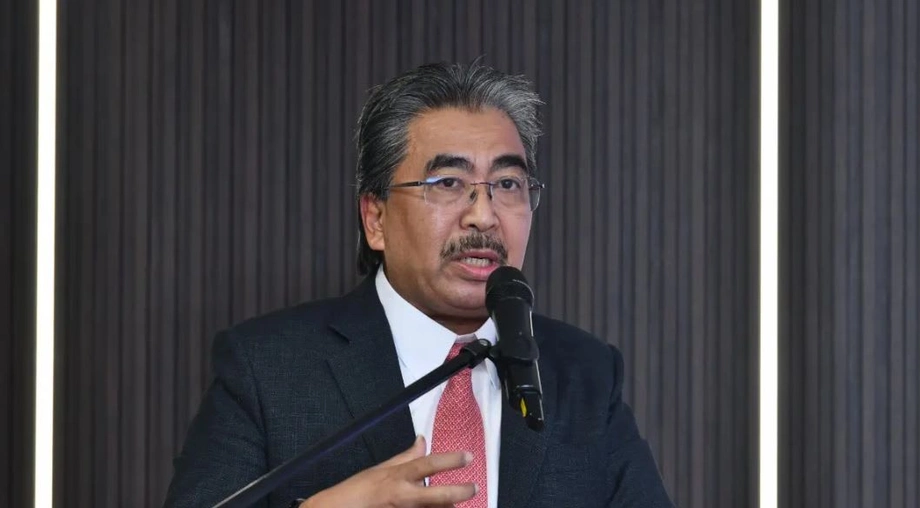
Investment, Trade and Industry Minister Datuk Seri Johari Abdul Ghani addressed the wider labour issue on Monday during oral question time in the Dewan Rakyat, the lower house of parliament. He said the government would reject applications for new manufacturing licences when the proposed business repeated a heavy dependence on cheap foreign labour.
Anyone who comes and asks for a new licence to do something similar to companies already operating in our country [that rely on low-skilled labor], we say no.
Johari said new investments should make greater use of automation and Malaysia's own talent. He put the number of technically trained graduates produced by the country at more than 400,000 each year. He also said Malaysia had approximately 2.6 million documented foreign workers, excluding undocumented people, and described continued dependence on this labour as a structural weakness holding back productivity and wage growth.
Foreign workers, he said, should be confined to 3D jobs: work that is dirty, dangerous and difficult. These are roles generally avoided by local workers because of their nature or conditions. Employers offering technical positions or jobs requiring some training were told to pay wages that would attract Malaysians. Johari's address covered national manufacturing policy and did not name Linergy Power. No start date or detailed regulations for the new licensing standards were given.
Why Wages Are Central to the Dispute
RM2,000 and RM1,700 were the two monthly wage figures Johari used to challenge the claim that Malaysians simply do not want factory work. The minister questioned why highly profitable manufacturers would offer local recruits the lower amount.
Why are some companies earning hundreds of millions of ringgit in profits reluctant to offer local workers RM2,000 a month, instead starting them at RM1,700?
The difference is RM300 a month, or RM3,600 over 12 months. A monthly wage of RM2,000 is about 17.6 percent higher than RM1,700. Johari argued that Malaysians will work when compensation makes economic sense, pointing to those who commute to Singapore and those who have entered gig work. He also connected pay to living costs, including accommodation.
Technical and Vocational Education and Training, or TVET, was another part of his answer. TVET teaches practical skills for occupations in areas such as manufacturing, engineering and maintenance. Johari criticised companies that had operated in Malaysia for 10 to 20 years while remaining heavily dependent on foreign labour despite the expansion of this training system. He said some wanted to pay TVET graduates at the same levels as foreign workers, depressing local incomes and discouraging young people from entering the sector.
What Happens to Existing Manufacturers?
Bakri member of parliament Tan Hong Pin raised the business community's concerns during the parliamentary exchange. He said some manufacturers had automated as much as was commercially feasible but still needed people for certain manual tasks. He also warned that encouraging businesses to move to cheaper neighbours such as Indonesia or Vietnam could cause capital flight and weaken Malaysia's industrial base.
The investment, trade and industry minister replied that the government wanted to upgrade existing industries progressively rather than push them out of the country.
We are not pursuing a blanket relocation of lower-technology manufacturing activities overseas.
The exchange separates two policy questions. Johari's licensing announcement concerns applications for new manufacturing licences, while existing factories are expected to transform progressively. Existing employers remain subject to labour, immigration and pass requirements. The parliamentary exchange did not announce any enforcement action concerning the Rawang plant.
What Would Answer the Public's Questions?
An explanation focused on the plant could identify the broad pass categories used, whether prior approvals were required and obtained, and how many Malaysians hold junior, technical and supervisory positions. Aggregate figures could address those issues without identifying individual employees. Information about recruitment, training and pay would also help answer the claim that local workers are confined to the lowest levels of the operation.
For Malaysians, the concrete stakes are access to skilled careers, wages that meet living costs and a fair opportunity to benefit from industrial investment. For investors, Johari's message is that new projects should budget for automation, competitive local pay and the correct hiring approvals. For the government, a factual response would show how national workforce controls operate in a case that has captured public attention.
No date was given for a response from the Immigration Department or MITI, and no official findings about Linergy Power's hiring practices had been published when the allegations drew attention. The plant's detailed staffing picture remains unanswered, while the approval rules and Johari's licensing position provide the established policy framework.
What to Know
- Social media posts alleged that Linergy Power's Rawang operation, described as having more than 2,000 workers, relied heavily on staff from China and offered Malaysians mainly junior roles.
- The claims included imported machinery, translation apps and a canteen with chefs from China, but no official breakdown of staff by citizenship, pass or seniority was provided.
- Linergy Power was established in December 2024. Japan's TDK agreed in May 2026 to acquire full ownership through a Singapore unit.
- Malaysia has no universal rule requiring every company to maintain an 80 percent local workforce. It uses a national cap, sector quotas and prior approval controls.
- Section 60K requires approval for new foreign recruitment through ePPAx. It does not apply to pass renewals, and JTKSM approvals generally remain valid for 12 months.
- Johari said new manufacturing licences would be rejected when proposals depend heavily on cheap foreign labour, with foreign workers intended mainly for dirty, dangerous and difficult jobs.
- He cited about 2.6 million documented foreign workers and more than 400,000 technically trained graduates produced annually.
- His RM2,000 versus RM1,700 wage comparison amounts to a difference of RM300 a month, or RM3,600 a year.