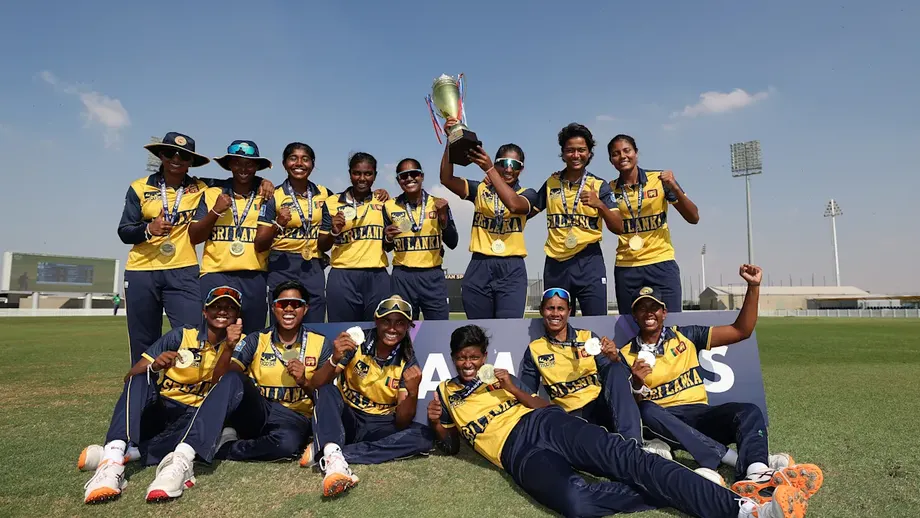
A Trophy Won Without a Single Defeat
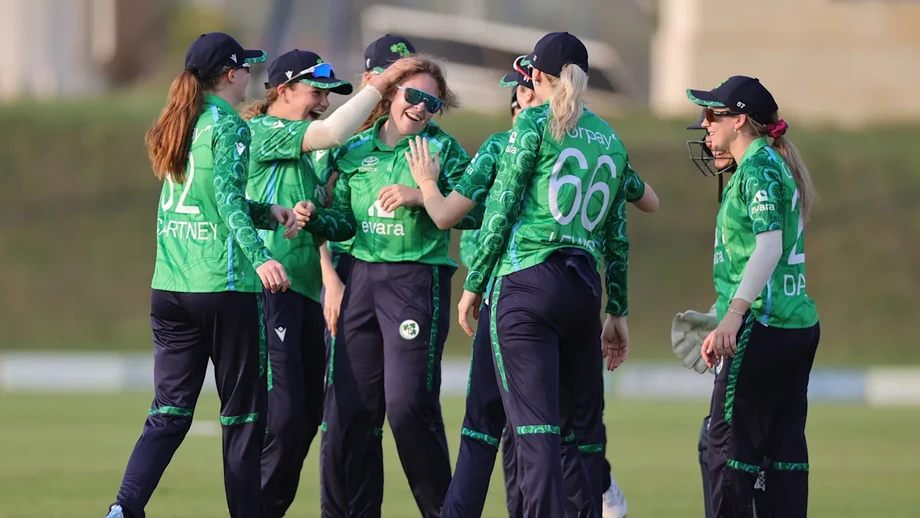
Sri Lanka's women's cricket team landed at Katunayake airport with the ICC Women's Emerging Nations Trophy, a day after beating Ireland by six wickets in the final in Ajman, United Arab Emirates. Ireland were bowled out for 96 in 19.3 overs. Sri Lanka reached 99 for four in 12.4 overs on 25 November, leaving 44 balls unused.
Contents
- A Trophy Won Without a Single Defeat
- How the Final Slipped Away From Ireland
- Dulani Settles the Chase Before It Can Tighten
- Eight Wins From Eight: Sri Lanka's Route to the Title
- The Numbers That Explain the Gap
- A Stand-In Captain Who Asked for Roles, Not Heroes
- Ireland's Rollercoaster and the Positives They Take Home
- A Bigger Tournament and a Wider Field
- What Comes Next for Sri Lanka
- Key Points
The final turned on two players. Sathya Sandeepani, a fast bowler with one international cap before this year, took four wickets for 13 runs from her four overs and was named Player of the Match. Vishmi Gunaratne finished as the tournament's leading scorer with 324 runs and took the Player of the Tournament award.
The Emerging Nations Trophy is a Twenty20 International competition, which means each side bats for a maximum of 20 overs of six balls and has 10 wickets to lose. The 2026 event was the second edition and the first to field full member nations. Bangladesh, Ireland, Pakistan, Sri Lanka and Zimbabwe joined five associate members with one day international status: the Netherlands, Papua New Guinea, Scotland, Thailand and the host United Arab Emirates.
Ten teams played 30 matches from 12 to 25 November at two grounds in Ajman, the Karwan Sports Club Cricket Ground and the Seven Districts Sports Club. Sri Lanka won all eight of their matches, the only side to finish the fortnight unbeaten.
How the Final Slipped Away From Ireland
Sri Lanka won the toss and put Ireland in, and the plan worked inside four balls. Sandeepani bowled Ireland captain Gaby Lewis for 4 with the total on five, and in the third over she had Lara Maritz caught for 3. Ireland were 10 for two before the match had properly begun.
Amy Hunter and Louise Little steadied the innings with 24 runs for the third wicket, the first of only two stands worth more than 20. Kavisha Dilhari bowled Little for 15 from 17 balls, Sugandika Kumari trapped Hunter leg before wicket for 10, and Ireland were 40 for four in the eighth over. Two run outs, both involving wicketkeeper Kaushini Nuthyangana, removed Laura Delany for 7 and Georgina Dempsey for 13. The innings reached 54 for six in the 12th over and never recovered its shape.
Alana Dalzell top scored with 24 from 25 balls, the only Ireland batter to pass 20, and shared a seventh wicket stand of 28 with Dempsey. Sandeepani returned to take the wickets of Cara Murray and Dalzell, and Chethana Vimukthi bowled Kia McCartney to close the innings at 96 in 19.3 overs. Sri Lanka's bowlers shared the load, as the ICC match report sets out: Sandeepani four for 13, Dilhari one for 16, Kumari one for 19, Nimasha Meepage one for 21 and Vimukthi one for 24.
Dulani Settles the Chase Before It Can Tighten
Chasing 97, openers Sanjana Kavindi and Vishmi Gunaratne put on 35 in 32 balls. Kia McCartney then had Kavindi caught for 25 from 22 deliveries, and with the next ball she trapped Sri Lanka's stand-in captain Harshitha Samarawickrama leg before wicket for a first ball duck. Two wickets in two balls left Sri Lanka at 35 for two and the game briefly open.
Cara Murray, Ireland's joint leading wicket taker for the tournament, removed Gunaratne for 10 and Kaushini Nuthyangana for 3, and Sri Lanka were 69 for four in the ninth over. McCartney finished with two for 16 and Murray two for 38.
Imesha Dulani removed the doubt. The 24 year old left hander made 44 not out from 25 balls, with four fours and two sixes, and shared an unbroken stand of 30 with Kavisha Dilhari, who finished 16 not out from 10 balls. Sri Lanka were home at 99 for four in 12.4 overs.
Umpires Ankita Guha and Precious Smith stood in the final, with Champa Chakma as television umpire and GS Lakshmi as match referee.
Eight Wins From Eight: Sri Lanka's Route to the Title
Sri Lanka and Ireland arrived in the final from opposite directions, both unbeaten across the Super Six, after the last round of group games set up the meeting in Ajman.
- Group stage, 12 to 20 November: Sri Lanka win all four Group A matches to top the table.
- Super Six: nine wicket wins over Zimbabwe and the Netherlands, then a four run win over Pakistan.
- Super Six table: Sri Lanka finish first with 10 points.
- 25 November: final against Ireland at the Karwan Sports Club Cricket Ground, won by six wickets.
Ireland finished third in Group A and carried no points into the Super Six. Wins over Pakistan by nine wickets, Zimbabwe by three wickets and the Netherlands by 44 runs lifted them to second place and a place in the final. Lloyd Tennant's side had lost heavily to Sri Lanka earlier in the event, and arrived as clear outsiders.
Scotland, Pakistan and the Netherlands finished level on four points in the Super Six, with Scotland third on net run rate and Zimbabwe sixth. Hosts the United Arab Emirates, Papua New Guinea, Bangladesh and holders Thailand went out at the group stage.
The Numbers That Explain the Gap
Gunaratne's 324 runs came at an average of 81 and a strike rate of 122.26, with three half centuries in eight innings. Ireland's Gaby Lewis was next with 268 runs at 33.50 and a faster strike rate of 143.31. Esha Oza of the UAE made 234, Kathryn Bryce of Scotland 232 and Sterre Kalis of the Netherlands 225.
- Most runs: Vishmi Gunaratne (Sri Lanka) 324; Gaby Lewis (Ireland) 268; Esha Oza (UAE) 234; Kathryn Bryce (Scotland) 232; Sterre Kalis (Netherlands) 225.
- Most wickets: Sathya Sandeepani (Sri Lanka) 17 at an economy rate of 4.27; Cara Murray (Ireland) 17 at 6.28; Christina Mutasa (Zimbabwe) 16; Kavisha Dilhari (Sri Lanka) 14; Kirstie Gordon (Scotland) 12.
Sandeepani's 17 wickets came at an average of 7.29. She had played only one international before 2026, earning a recall on the strength of performances for Sri Lanka A, and she now shares the tournament's leading wicket tally with Murray.
The 14 player squad was led by Samarawickrama and included Gunaratne, Dilhari, Kavindi, Dulani, Hasini Perera, Nilakshika Silva, Nuthyangana, Sandeepani, Rashmika Sewwandi, Kumari, Chamudi Praboda, Malki Madara and Vimukthi.
A Stand-In Captain Who Asked for Roles, Not Heroes
Regular captain Chamari Athapaththu was with the Hobart Hurricanes in the 12th edition of the Women's Big Bash League in Australia, so Samarawickrama led a young side through the fortnight. She made a first ball duck in the final and still described the campaign as a shared effort.
I'm happy with the result because it has been a team effort. Everyone in the team knew their roles going into the match, and they did really well throughout the series. The facilities throughout the tournament at both venues were good. We took it one game at a time and performed well as a team, so we're looking forward to more tours. The Associate nations producing such performances at the tournament is a good thing for the women's game.
Head coach Rumesh Ratnayake said the staff had prepared for opponents they had rarely faced, and treated the event with the seriousness of a series against a higher ranked side.
We had played Ireland and Scotland before, but the other teams were relatively unknown, so we made sure we watched and analysed them, and went about our business as we would against any nation above us. In the past we have got our planning right but not our execution, especially with the ball, so that was our focus here.
Ratnayake said the trophy gives the side a foundation before a demanding home series. "We have a good foundation to build on as we approach a very important tour against Australia," he said.
Ireland's Rollercoaster and the Positives They Take Home
Lewis carried Ireland's batting with 268 runs at 33.50, including three fifties, and admitted the final got away from her side after the toss went against them.
We were confident coming into the game but we underperformed on the day. That being said, this whole tournament has been a real positive for us, and there are lots of learnings we can take from it. Being put in to bat first, we could have adapted better, but that's something we can learn from.
Coach Lloyd Tennant pointed to absent players as part of the reason for an uneven campaign, and to the six matches Ireland won on the way to the final as evidence of progress.
We came here without three of our regulars, so it was a chance to develop new players and a more positive way of playing. We're trying to build an aggressive batting order that frees up Gaby and Amy at the top, and they've played exceptionally well and set games up for us. Once we got into the Super Six, we finished games off really well and came from the bottom to reach the final, which was really pleasing.
A Bigger Tournament and a Wider Field
The 2026 edition expanded from eight associate teams to 10, a change approved on the recommendation of the ICC Women's Cricket Committee and confirmed by the ICC Chief Executives' Committee. The field was confirmed in October 2026, with the five lowest ranked full member sides joining the five associate members holding one day international status.
Thailand won the inaugural edition in Bangkok in 2025, beating Scotland, the Netherlands and the UAE on net run rate after four teams finished level on 10 points. That eight team field also included Papua New Guinea, Namibia, Tanzania and Uganda. Sri Lanka and Thailand now hold one title each.
Ratnayake argued the mix of teams is the point of the event. "This has been a very good tournament for all the teams involved, especially the Associate Member teams. It's important that we have more of the same in future for the growth of the women's game and to help Associate Members close the gap between them and Full Member teams," he said.
What Comes Next for Sri Lanka
Sri Lanka host Australia in three one day internationals from 15 to 20 December, their first bilateral series in the limited overs formats since September 2016. Australia are captained by Sophie Molineux. The venues for the three matches were not given.
A larger stage follows. India host the inaugural ICC Women's T20 Champions Trophy from 14 to 28 February 2027, with Sri Lanka among six teams alongside India, New Zealand, South Africa, Australia and England.
For the players who carried the Ajman fortnight, the prizes are personal as well as national. Sandeepani, who waited six years between her first cap and this tournament, put her own season in plain terms: "I think my hard work has paid off here. Special thanks to my family and the coaches who helped me so far throughout my hard time."
Key Points
- Sri Lanka beat Ireland by six wickets in the final of the ICC Women's Emerging Nations Trophy 2026 in Ajman on 25 November, bowling Ireland out for 96 in 19.3 overs and reaching 99 for four in 12.4 overs.
- Sathya Sandeepani took four for 13 and was Player of the Match; Imesha Dulani made 44 not out from 25 balls to finish the chase.
- Sri Lanka won all eight matches, topping the Super Six with 10 points; Ireland reached the final with no points carried over from the group stage.
- Vishmi Gunaratne was Player of the Tournament with 324 runs at an average of 81, while Sandeepani shared the leading wicket tally of 17 with Ireland's Cara Murray.
- Harshitha Samarawickrama led in place of Chamari Athapaththu, who was playing for Hobart Hurricanes in the Women's Big Bash League.
- The tournament grew from eight associate teams in 2025 to 10 teams mixing full and associate members, with Thailand the inaugural champions in Bangkok.
- Sri Lanka host Australia for three one day internationals from 15 to 20 December before the ICC Women's T20 Champions Trophy in India in February 2027.