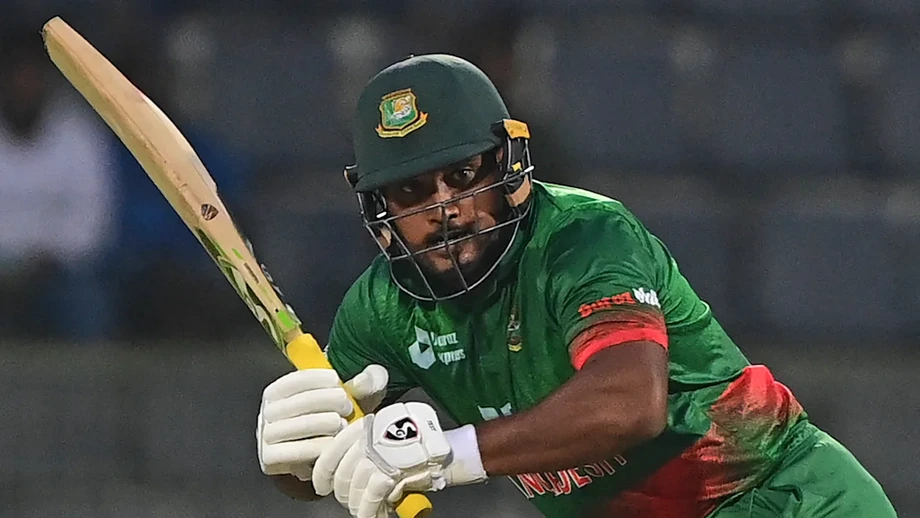
Bangladesh Puts World Cup Planning Ahead of Stability
The Bangladesh Cricket Board named a squad of 15 players on 23 November 2026 for three One Day Internationals in South Africa, bringing back captain Litton Das and making sweeping changes to a team that had just lost heavily to Zimbabwe and Afghanistan in the UAE tri-series. The One Day International, or ODI, is the 50 over format that will be used at the 2027 World Cup.
Contents
- Bangladesh Puts World Cup Planning Ahead of Stability
- Who Comes In and Who Leaves
- The Batting Crisis Behind the Changes
- Mohammad Naim and the Search for a Settled Opener
- Yasir Ali Returns to the Middle Order
- Jaker Ali, Mosaddek Hossain and the Number Seven Question
- Khaled Ahmed Leads the Bowling Changes
- Litton Das Returns as Captain and Keeper
- What the Selectors Say About the World Cup Plan
- Dates, Venues and What Comes Next
- Key Points
The squad includes six players who were not part of the tri-series group: Litton Das, Mohammad Naim, Yasir Ali, Jaker Ali, Khaled Ahmed and Parvez Hossain Emon. Six players from the previous group made way: Nurul Hasan, Saif Hassan, Mosaddek Hossain, Soumya Sarkar, Aliss Al Islam and Hasan Mahmud. Towhid Hridoy remains vice captain.
The series offers Bangladesh a first look at South African conditions before the 2027 World Cup, which South Africa will host with Zimbabwe and Namibia. The ICC's ODI schedule lists the first match at Kimberley on 1 December, the second at Benoni on 4 December and the third at Centurion on 7 December. The BCB's squad announcement put the venues at East London, Gqeberha and Cape Town and the middle match on 3 December. A T20I series of three matches follows the ODIs, with no dates yet given.
Bangladesh are already in South Africa for a Test series of two matches in the World Test Championship. South Africa lead 1-0 going into the second Test at Centurion, where the squad was announced. Litton has scored 120 in the Johannesburg Test since returning from a hip injury, a sign that his form has survived the layoff.
Who Comes In and Who Leaves
The group of 15 players is: Litton Das (captain and wicketkeeper), Tanzid Hasan, Parvez Hossain Emon, Mohammad Naim, Najmul Hossain Shanto, Towhid Hridoy (vice captain), Yasir Ali, Jaker Ali, Mehidy Hasan Miraz, Tanvir Islam, Rishad Hossain, Khaled Ahmed, Taskin Ahmed, Mustafizur Rahman and Shoriful Islam.
The ins and outs tell the story of a team searching for answers in two areas. The batting needed fresh options after Bangladesh failed to pass 250 in any of their last five innings. The bowling lost Hasan Mahmud to an elbow injury and Aliss Al Islam to a suspected illegal action, with Nahid Rana also unavailable through injury.
- In: Litton Das, Mohammad Naim, Yasir Ali, Jaker Ali, Khaled Ahmed, Parvez Hossain Emon.
- Out: Nurul Hasan, Saif Hassan, Mosaddek Hossain, Soumya Sarkar, Aliss Al Islam, Hasan Mahmud.
- Unavailable through injury: Hasan Mahmud (elbow), Nahid Rana, Tanzim Sakib.
Saif Hassan paid for an ODI run that produced two fifties and an average below 25. Soumya Sarkar made 9 and 0 in the UAE. Nurul Hasan made 5 in his only outing. Those figures left the selectors little reason to keep the same batting group.
The Batting Crisis Behind the Changes
Bangladesh's problem was not one position but the whole shape of the innings. The team failed to reach 250 in five straight innings, a total that is often the minimum for a competitive score in the 50 over format. The selectors responded by changing the top of the order, the middle order and the finisher's role at once.
Parvez Hossain Emon, a natural opener, had been used in the middle order for more than a year because the team thought he could handle spin. He batted at number four in T20 cricket and made 70 off 96 balls at number six against Afghanistan in October. Now he is being considered as an opener alongside Tanzid Hasan and Mohammad Naim, a move that could settle a position that has changed repeatedly.
Habibul Bashar, the chief selector, explained the aim of the opening experiment.
Our goal is for the opening to stand on a strong foundation and not have to change again and again. Let us see whether this plan works. If it does, then perhaps we will find a permanent solution at the top.
The opening slot has been a problem for years. Naim's record does not promise an easy fix, but the selectors are betting on his domestic form and his recent time with Bangladesh A in South Africa.
Mohammad Naim and the Search for a Settled Opener
Naim has played eight ODIs and scored 102 runs at an average of 12.75, without a fifty. Those numbers would normally keep a batter out of a national squad. His return rests on a different set of numbers: 471 runs in 11 innings in the latest Dhaka Premier League, runs in the National Cricket League, and a fifty for Bangladesh A in South Africa in September.
Bashar said the selectors believe Naim is changing his game.
He is trying to change himself. It does not seem right to me that we will not try for someone because others could not succeed.
The choice captures the selectors' dilemma. They want a stable opening pair, but nobody has claimed the job. Naim, Parvez and Tanzid will compete for two places, and Litton can also open if the team needs him to. The series will be a test of whether domestic runs can translate into international runs against a stronger bowling attack.
Yasir Ali Returns to the Middle Order
Yasir Ali last played an ODI in March 2023 against Ireland. He has one half-century in 15 ODI innings, a modest record that made his recall a surprise. His case rests on what he has done since: nine fifties and one century in List A cricket, the domestic 50 over format, and a strong run in the Dhaka Premier League.
Yasir scored 207 runs in seven innings at an average of 69 and a strike rate of 152.2 for Mohammedan Sporting Club. He then made 71 not out off 51 balls for Bangladesh A against Hong Kong China in the Rising Stars Asia Cup on 19 November. He also impressed on Bangladesh's last tour of South Africa in 2022.
Yasir's return gives the middle order a batter who can score quickly against spin and pace. He is expected to bat at number six, a position where Bangladesh have struggled to find a lasting answer. His challenge is to turn domestic dominance into ODI consistency, something he has not done in 15 innings.
Jaker Ali, Mosaddek Hossain and the Number Seven Question
Jaker Ali returns as a finisher, the batter used in the last overs to score quickly and lift the total. He made 268 runs in eight innings in the Dhaka Premier League, form that convinced the selectors he can handle the role. The team has not had a settled number seven for years, and Jaker is the latest attempt to fill it.
Mosaddek Hossain's omission is the most striking batting call. He returned to the ODI side against Australia in June after nearly four years away and scored 157 runs in three matches. He then made 21 runs in his next three innings and was dropped. Bashar said Mosaddek remains in the selectors' plans, along with Shamim Hossain.
We have to work on the number seven position, and the next six months will determine who fills it. Mosaddek and Shamim are still in the picture. Jaker Ali has also been brought in as a finisher, while we wanted to give Yasir a chance at six.
Bashar also admitted that form had collapsed across the team at once.
The biggest problem we had was that several players went through a dip in form at the same time.
Khaled Ahmed Leads the Bowling Changes
Khaled Ahmed, 33, has played only two ODIs, both against New Zealand before the 2023 World Cup. His recall is the biggest surprise in the squad. He took 9 wickets in 7 Dhaka Premier League matches for Abahani Limited and has 107 wickets in 79 List A matches. In the last three years he has taken 40 wickets at 28.37.
His county stint with Lancashire may have done most to revive his prospects. County cricket is a form of long format domestic cricket in England, and a good season there exposes a bowler to professional conditions and long spells. Khaled's red ball form at home and in England convinced the selectors he can add control and experience to a young pace group.
The bowling changes were partly forced. Hasan Mahmud has an elbow injury. Aliss Al Islam was reported for a suspected illegal action on his ODI debut and is working to correct his delivery. A bowler's action must be legal at the moment of release, and a report starts a process of review and remedial work. Tanzim Sakib is also out with injury. Taskin Ahmed, Mustafizur Rahman, Shoriful Islam, Tanvir Islam and Rishad Hossain provide the rest of the attack.
Litton Das Returns as Captain and Keeper
Litton missed the UAE tri-series with a hip injury. He returns as captain and wicketkeeper, taking the leadership back from Towhid Hridoy, who stays as vice captain. His 120 against South Africa in the Johannesburg Test showed that the injury has not dulled his batting.
His leadership will matter in a series that is as much about learning as results. South African pitches can be faster and bouncier than those at home, and the 2027 World Cup will be played in the same region. Bangladesh need to learn how to build totals, defend them and adapt to conditions that do not suit their spinners as much as home soil.
The squad has enough experience in the pace attack, with Taskin, Mustafizur and Shoriful. The question is whether the batting can give them a total to defend. Litton, Shanto and Hridoy form the core of the top order. The rest of the order is still being tested.
What the Selectors Say About the World Cup Plan
Bashar rejected the idea that the new players are placeholders. He said everyone in the squad is part of the plan for the 2027 World Cup and that the selectors will stop making comparisons six months before the tournament.
Everyone is part of our plan. We will stop deciding by looking at someone or comparing him with someone else six months before the World Cup.
He also explained the thinking behind recalling players who have already had a chance.
Since we have to try anew, it is better to do it with someone who has proved himself before.
The panel wants a settled side after February. The moves do not yet show a settled side. The opening pair is open, the number six and seven are open, and the pace attack is missing two injured bowlers. The next six months will decide which of these players make the World Cup pool.
Dates, Venues and What Comes Next
The series begins on 1 December and ends on 7 December. The ICC schedule puts the matches in Kimberley, Benoni and Centurion. The BCB announcement put them in East London, Gqeberha and Cape Town. The second date is 4 December in the ICC schedule and 3 December in the BCB announcement. All matches start at 5:30pm Bangladesh time.
- 23 November 2026: BCB names the squad of 15 players.
- 19 November 2026: Yasir Ali makes 71 not out for Bangladesh A against Hong Kong China.
- 1 December 2026: First ODI.
- 4 December 2026: Second ODI in the ICC schedule.
- 7 December 2026: Third ODI.
- After the ODIs: T20I series of three matches, dates not announced.
Bangladesh will also want to use the series to prepare for the 2027 World Cup, which will be held in South Africa, Zimbabwe and Namibia. The team has not qualified for the final of the UAE tri-series, and the loss to Zimbabwe and Afghanistan exposed the gap between domestic form and international performance.
Key Points
- Bangladesh named a squad of 15 players on 23 November for three ODIs in South Africa.
- Litton Das returns as captain and wicketkeeper after a hip injury.
- Six players come in: Litton, Mohammad Naim, Yasir Ali, Jaker Ali, Khaled Ahmed and Parvez Hossain Emon.
- Six make way: Nurul Hasan, Saif Hassan, Mosaddek Hossain, Soumya Sarkar, Aliss Al Islam and Hasan Mahmud.
- Hasan Mahmud has an elbow injury; Aliss is correcting a suspected illegal bowling action.
- Yasir Ali returns after last playing an ODI in March 2023 and brings nine List A fifties and a century.
- Khaled Ahmed has 107 wickets in 79 List A matches and took 9 wickets in 7 Dhaka Premier League games.
- The ICC schedule lists ODIs in Kimberley, Benoni and Centurion; the BCB announcement gave East London, Gqeberha and Cape Town.
- The series is preparation for the 2027 World Cup in South Africa, Zimbabwe and Namibia.