Why Nepal Cannot Yet Say How Many Children Live Outside Parental Care
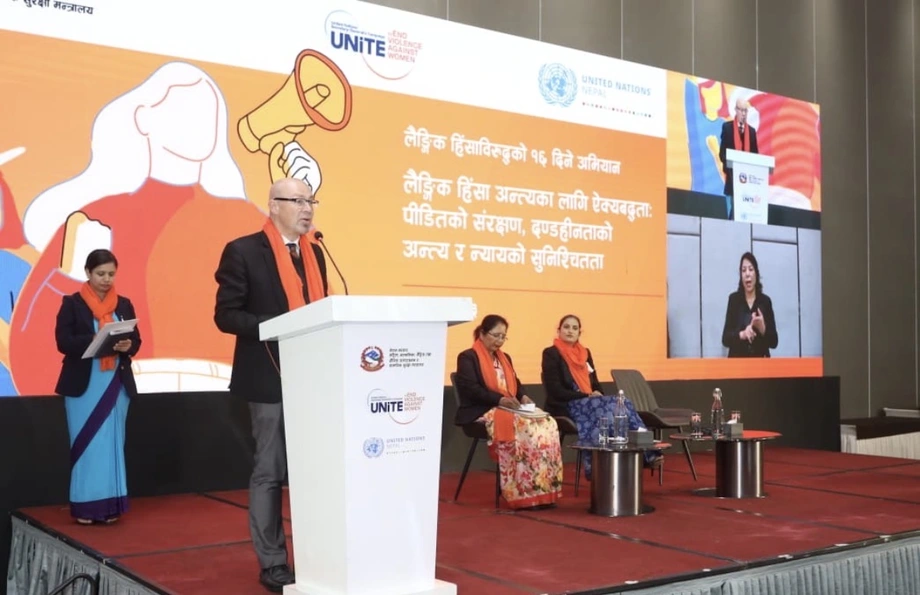
Around 350,000 children in Nepal are in alternative care, the National Census records. What the census does not record is who those children live with, why they are separated from their parents, or which of them receives any support at all. On Wednesday in Lalitpur, the National Statistics Office and UNICEF held a national interaction on the International Classification of Activities Related to Children and Alternative Care, a meeting meant to start closing that gap for children who sit outside parental care and largely outside state records.
Contents
- Why Nepal Cannot Yet Say How Many Children Live Outside Parental Care
- What the Census and the Household Survey Already Show
- The Relatives Who Take Children In
- What ICare Adds: One Language for Many Kinds of Care
- Nine Categories and a New Coding System
- Family Care First, Institutions as a Last Resort
- Data From Every Local Level
- Why These Children Were Missing From Official Figures
- Who Owns the Numbers
- Timeline: From a Proposal to a National Count
- Key Points
Care institutions report on the children inside them. Thousands of other children, living with grandparents, aunts, neighbours or unrelated households, appear in no official count of children in care. Prithvi Bijaya Sijapati, a director at the National Statistics Office, presented a paper on alternative care and international practice and told the gathering that the absence of data sorted into the internationally recognised categories has made the situation of children in alternative care difficult to assess in Nepal.
The office now intends to collect information across all nine of those categories, a change that would also let Nepal compare its figures with other countries. Dhundiraj Lamichhane, a deputy chief statistics officer at the office, described the work as a milestone for the national statistical system and said a revised coding system is being introduced to capture more detail about children in alternative care.
What the Census and the Household Survey Already Show
The most detailed recent picture comes from the Nepal Multiple Indicator Cluster Survey 2024-25, carried out by the statistics office with UNICEF as part of the global survey programme and using the National Population and Housing Census 2021 as its sample frame. Interviewers were trained in November and December 2024, and fieldwork ran from December 2024 to May 2025. For children aged 5 to 17, the survey interviewed 7,352 mothers and caregivers covering 7,401 eligible children, a response rate of 99.3 per cent, as set out in the 2024-25 survey findings report.
Among the 15,946 children aged 0 to 17 in surveyed households, 6.8 per cent were not living with a biological parent, or 1,078 children. A far larger group had a parent living somewhere else: 42.6 per cent had at least one parent living elsewhere, including 34.6 per cent with a father living away, 2.4 per cent with a mother and 5.6 per cent with both. That is roughly 6,800 children in the sample.
Migration runs through the figures. In 33.2 per cent of cases at least one parent was living abroad, which works out at about 5,300 children, with 29.0 per cent reporting a father abroad and 1.8 per cent a mother. Parental absence in Nepal is therefore mostly a story about fathers working away from home, and only sometimes about children with no parent in their daily life.
The Relatives Who Take Children In
A dedicated table in the survey report shows where the 1,078 children outside parental care actually live. Grandchildren of the head of the household made up 59.5 per cent of them. Another 22.5 per cent were classed as other relatives and 9.5 per cent as brothers or sisters of the head. Children recorded as adopted, foster or stepchildren accounted for 1.1 per cent.
A small group sat outside family arrangements. Children who were themselves head of the household made up 1.8 per cent, spouses or partners 0.5 per cent, live in servants 0.2 per cent and children unrelated to the head 1.5 per cent. For 3.3 per cent the relationship was inconsistent, unknown or missing. Across the whole group, 93.1 per cent lived in a household headed by a family member.
Kinship care, in other words, is already the main way Nepali families absorb children whose parents cannot raise them. What has been missing is a statistical category that names it as a form of care rather than leaving it buried in household records. A grandmother raising three grandchildren has been, in official terms, simply a household of four.
What ICare Adds: One Language for Many Kinds of Care
The framework the meeting discussed, known as ICare, was developed by UNICEF and endorsed by the United Nations Statistical Commission in March 2026 as an international statistical standard. It sets standard definitions for three main forms of care: family based care, residential care and independent living. Those three forms sit behind the nine categories Nepali officials plan to use, and each category comes with definitions, examples, inclusions and exclusions so that two countries count the same thing the same way.
The classification is organised in two levels, and it applies to administrative records, surveys and censuses alike. Its data variables are grouped into three tiers of data variables (mandatory, minimum and additional), which lets a country start with the essentials and widen collection as its capacity grows, according to the ICare document.
UNICEF describes the tool in narrow terms. ICare does not judge the quality of care in a country or prescribe which forms of care a government should use. Its purpose is to give policymakers a more dependable evidence base, which is why the standard is published through the ICare resource page with an open licence allowing reuse.
Nine Categories and a New Coding System
Nepal's difficulty has been one of classification as much as of counting. Sijapati explained that the office is preparing to gather data under all nine internationally used categories so that the country's alternative care figures become comparable across borders.
Lamichhane tied the change to the census finding. The national count indicated around 350,000 children in alternative care, he said, without making clear what their circumstances are, which is why the statistics are being classified and coded in a new way. The revised coding is meant to record not only that a child is in care but what kind of care it is, and who is providing it, whether a grandparent, a foster family, a small group home or a formal children's home.
Family Care First, Institutions as a Last Resort
Minister for Women, Children, Gender and Sexual Minorities and Social Security Sita Badi told the meeting that every child should have a child friendly environment wherever they live, and framed the issue as a matter of rights rather than charity.
Growing up in a safe, family environment is an inherent right of every child. Protecting this right is not merely a matter of human compassion; it is a fundamental requirement for building a just, equitable and prosperous society.
Badi went further on the design of the system, arguing that residential institutions should be a final option and that reuniting children with families, placing them with relatives and supporting protected family arrangements should come first.
Limiting institutional care to a last resort and promoting family based alternative care such as family reunification, kinship care and protected families is the sustainable and humane path to ensuring the best interests of children.
Her ministry, she said, is localising the child information management system and the social information management system and extending them to provincial and local governments, so that regular and accurate collection begins at the local level. She also argued that protection programmes should run on evidence and data rather than on estimates, and that without a real count of children in alternative care, their circumstances and the reasons they were separated from families, neither planning nor budgeting can be effective.
Data From Every Local Level
Dr Reshu Aryal Dhungana, a member of the National Planning Commission, said information on children outside parental care should be gathered in every local unit, not only in care institutions, and that Nepal's collection and classification should follow the international conventions on children's rights that the country has signed.
Along with collecting data on children, we must also focus on their protection. Gathering detailed information and classifying children in alternative care is important.
Her point about conventions matters for how the data will be used. Nepal is a party to treaties that oblige it to report on children's welfare, and comparable categories make those reports verifiable instead of anecdotal. The nine categories also allow local governments, which hold responsibility for many child services, to see how their area compares with the national picture.
Why These Children Were Missing From Official Figures
The gap Nepal is addressing has been documented internationally for years. In a 2023 UNICEF proposal for the classification, Claudia Cappa of UNICEF's data and analytics division wrote that the definitions in the 2009 Guidelines for the Alternative Care of Children do not work as statistical definitions, and that no internationally accepted standard classification for children in alternative care existed at the time. Most children without parental care, her paper notes, live in family based arrangements such as kinship care and foster care, yet children in alternative care are frequently absent from official statistics and from national and international indicator frameworks, a point made by the Conference of European Statisticians in its 2022 guidance on statistics on children, by the Eurochild and UNICEF DataCare initiative, and in a feasibility study for a European Child Guarantee.
The same proposal traces the problem to definitions. Most countries already collect figures on children in alternative care, mostly counts of how many children are in care at a given time and how many enter and leave, broken down by residential or family based type, sex and age. They use different definitions, and they disagree over what counts as residential care, whether small group homes belong with institutions, and how to split types of family based care. The remedy set out in the proposal was a task force led by UNICEF with national statistics offices, government bodies, academics, civil society and international organisations, followed by expert review, an online country consultation and testing in several countries before submission to the Expert Group on International Statistical Classifications. That work was expected to finish by early 2025 and reached the Statistical Commission's endorsement in March 2026.
Who Owns the Numbers
Laxmi Basnet, chief statistics officer and secretary at the office, closed the programme by explaining what comparable data delivers in practice. A statistical system for alternative care built on common definitions would show which groups of children need more support and protection, she said. She also sorted out the division of labour: the Ministry of Women, Children and Senior Citizens holds the main responsibility for child care services, while the National Statistics Office maintains and updates the data.
Ji Hyun Rah, UNICEF Nepal's deputy representative, thanked the office for leading the construction of a statistical system that includes every child and identifies their circumstances. She described the meeting as the start of a national process that will bring the international classification into national statistics and administrative information systems step by step. Ramprasad Gautam of UNICEF joined Basnet and Lamichhane in answering questions from participants.
No date has been given for the first results under the nine categories, and the office has not set out a timetable for rolling out the revised coding to local governments.
Timeline: From a Proposal to a National Count
- 2023: UNICEF publishes a proposal to build an international classification of alternative care for children, noting that no accepted statistical standard exists.
- November to December 2024: interviewers are trained for Nepal's Multiple Indicator Cluster Survey.
- December 2024 to May 2025: survey fieldwork is carried out across the country using the 2021 census as the sample frame.
- March 2026: the UN Statistical Commission endorses ICare as an international statistical standard.
- September 2026: UNICEF publishes the ICare classification for use with surveys, censuses and administrative records.
- 25 November 2026: the National Statistics Office and UNICEF hold the national interaction in Lalitpur on adopting the classification in Nepal.
Key Points
- Nepal's National Census counts around 350,000 children in alternative care, but does not record their circumstances.
- The National Statistics Office plans to collect data under nine internationally recognised categories of alternative care and to revise its coding system.
- The ICare standard was endorsed by the UN Statistical Commission in March 2026 and covers family based care, residential care and independent living.
- The 2024-25 Multiple Indicator Cluster Survey found 6.8 per cent of children aged 0 to 17, or 1,078 of 15,946, not living with a biological parent.
- Another 42.6 per cent had at least one parent living elsewhere, and 33.2 per cent had at least one parent living abroad.
- Of the children outside parental care, 59.5 per cent lived with a grandparent and 93.1 per cent in a household headed by a family member.
- Minister Sita Badi said institutional care should be a last resort and that family reunification and kinship care should be promoted.
- No date has been announced for the first results under the new categories.