Draft reforms face demands for stronger protection
Nepal recorded 3,178 sexual violence cases between July 2024 and July 2025, with children making up 64% of reported victims, according to the Nepal Police Annual Factsheet on Gender-Based Violence for fiscal year 2081/82. Against that backdrop, legal advocates are calling for five major changes to a government draft bill, including an end to deadlines for rape complaints and equal punishment for rape within marriage.
Contents
- Draft reforms face demands for stronger protection
- Police figures show who faces the greatest risk
- Which acts would the law recognise as rape?
- Consent would mean a freely given agreement
- Adolescent relationships: a lower sentence or no offence?
- Marriage would no longer bring a different penalty
- Why advocates want complaint deadlines removed
- How the debate reached this point
- Implementation matters as much as the wording
- Key Points
The Ministry of Law, Justice and Parliamentary Affairs has prepared legislation to amend the National Penal Code, 2017. The draft would expand recognition of rape involving sexual and gender minorities, introduce a reduced sentence for certain consensual adolescent relationships and set a minimum prison term for marital rape.
The Forum for Women, Law and Development (FWLD) and Equality Now argue that the changes still leave gaps in who receives protection, how consent is understood and whether survivors can seek justice after years of silence.
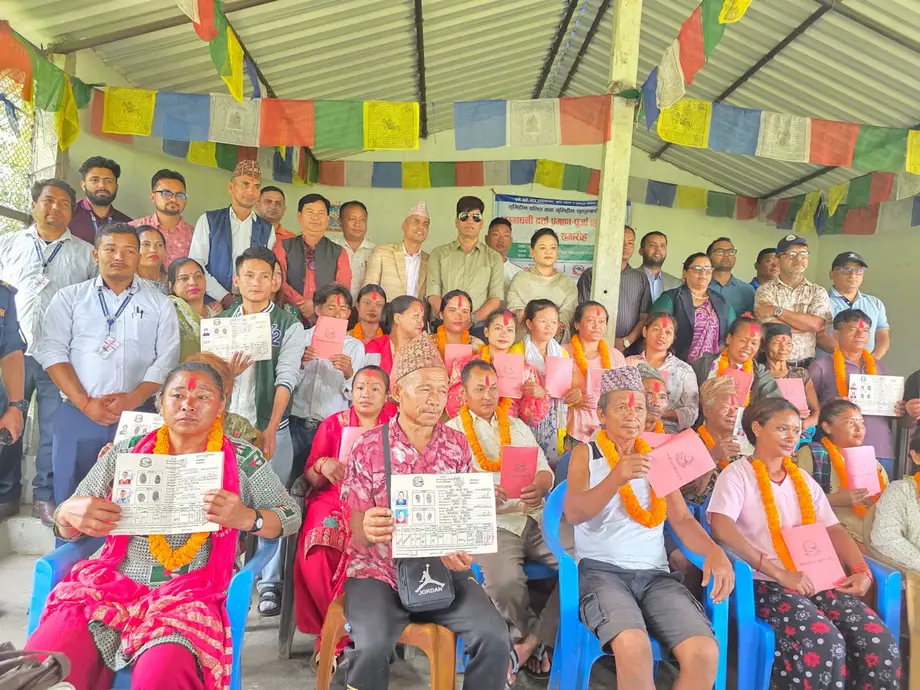
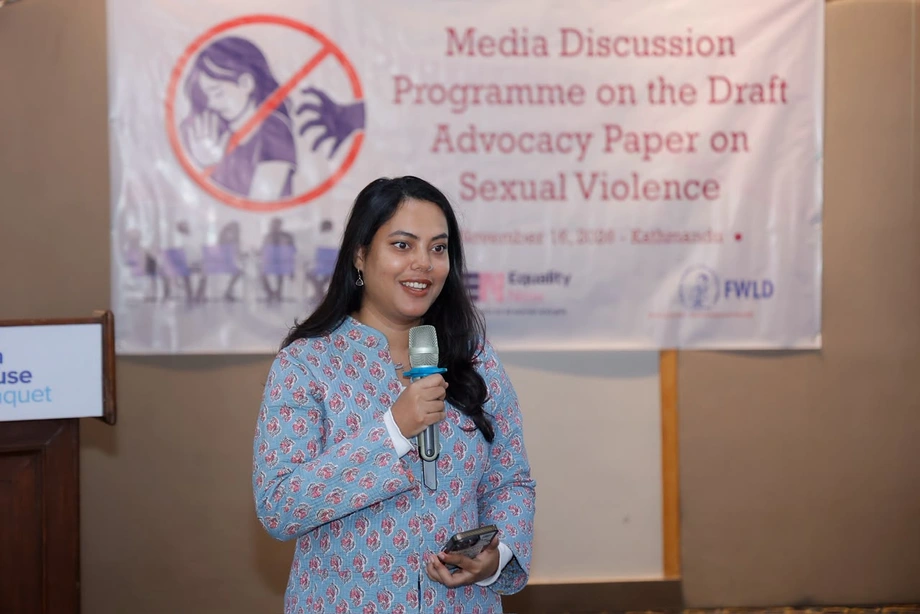
At an interaction with journalists in Kathmandu on November 16, 2026, FWLD advocate Didriksha Singh presented an advocacy paper covering five areas: the definition of rape, consent, relationships between adolescents close in age, marital rape and complaint deadlines.
The groups want lawmakers to address these issues together. Their proposals would broaden the acts recognised as rape, make voluntary agreement central to consent, remove criminal penalties for narrowly defined consensual adolescent relationships, equalise punishment regardless of marriage and allow rape complaints without a time limit. No date for a parliamentary vote or final adoption was given.
Police figures show who faces the greatest risk
Nepal Police registered about nine sexual violence cases a day during the period covered by its factsheet. Girls aged 11 to 14 were the most affected age group, placing the protection of children at the centre of the debate.
The factsheet says 91.99% of alleged perpetrators were known to victims, compared with 7.97% who were strangers. Men accounted for 88.06% of identified offenders. In practical terms, nearly 92 out of every 100 alleged perpetrators were people the victim knew.
Those figures give particular weight to the proposed rules on consent, relationships and reporting deadlines. A survivor seeking to report someone they know may also face family pressure, financial dependence or threats, concerns raised in the reform campaign.
FWLD executive director and lawyer Sabin Shrestha said many survivors never report their experiences. He argued that adopting all five changes could create a more supportive environment for people to make complaints and enter the justice process.
Which acts would the law recognise as rape?
Section 219(2)(c) of the National Penal Code recognises penetration by a penis, to any extent, of the vagina, anus or mouth, as well as insertion of an object other than a penis into the vagina. Advocates say this wording leaves out other forms of penetration without consent, including penetration of the mouth or anus with fingers, other body parts or objects.
The ministry's draft seeks to recognise sexual relations without consent involving or between people from sexual and gender minority communities as rape. FWLD and Equality Now welcome wider protection but want a definition that applies equally to everyone, regardless of sex or gender identity.
Their advocacy paper recommends following the United Nations Framework for Model Legislation on Rape. Under that approach, any sexual penetration of the vagina, anus or mouth without consent, however slight, using any body part or object, would constitute rape.
The proposed change concerns both the act and the person harmed. Instead of adding protection for particular groups while retaining gaps in the acts covered, the advocates want one inclusive definition. That would give investigators and courts a common legal starting point when assessing a complaint.
Consent would mean a freely given agreement
Section 219 already lists circumstances in which consent is invalid. They include coercion, undue influence, fear, intimidation, threats, misrepresentation, kidnapping and being held hostage. Another provision addresses consent obtained from a person described in the law as being of unsound mind.
FWLD and Equality Now want the law to state positively what valid consent means: a voluntary agreement given freely. Their paper also recommends making clear that a person can withdraw consent at any point during a sexual act.
The groups say consent should never be inferred from silence, failure to resist, previous sexual history, profession or a relationship with the accused. The focus, they argue, should be whether the person freely agreed to the act at that time.
The paper also calls for clearer wording on the ability to consent. It recommends expressly including unconsciousness, sleep and circumstances in which alcohol or drugs leave a person unable to agree. This would make the legal test more precise than a general reference to a person's state of mind.
For survivors, the practical concern is how a complaint is examined. The advocates want questions about voluntary agreement to guide the process, rather than judgments based on a person's occupation, previous relationships or response during an assault.
Adolescent relationships: a lower sentence or no offence?
Section 219(2) currently treats sexual intercourse with a girl younger than 18 as rape even when she has consented. The provision is framed around conduct by a man against a woman or girl.
The draft proposes up to one year in prison for consensual sexual activity between adolescents younger than 18 whose age difference is no more than two years. FWLD and Equality Now argue that reducing the punishment still leaves those relationships within criminal law.
Their alternative is a limited exception: both adolescents must be at least 14, their age difference must be no more than two years, and their agreement must be voluntary. Qualifying consensual activity would carry no criminal penalty.
The exception would exclude conduct involving fear, threats, inducement, deception, exploitation or abuse of power or authority. Those cases would remain punishable. The recommendation therefore combines an age threshold and an age gap with safeguards against pressure and abuse.
The difference between the two approaches is concrete. Under the draft, adolescents who meet its conditions could still face imprisonment. Under the advocacy proposal, consensual activity meeting all the specified conditions would fall outside criminal offences, while exploitation would remain subject to prosecution.
Marriage would no longer bring a different penalty
Section 219(4) currently provides a maximum prison sentence of five years for a husband who rapes his wife while the marriage continues. The draft would specify a prison term of three to five years.
That change would introduce a three year minimum while keeping the five year maximum. Advocates want a different reform: the same legal definition and punishment for rape, regardless of whether the survivor and perpetrator are married.
The advocacy paper argues that prescribing a lower punishment for marital rape than for other rape discriminates on the basis of marital status. It raises concerns under Article 18(2) of Nepal's Constitution, which guarantees equality and prohibits discrimination on various grounds.
The groups' position connects the sentencing issue to their proposed definition of consent. A spouse would retain the same right to decide whether to agree to sexual activity, and the relationship between the people involved would no longer be a basis for a separate, lower punishment.
Why advocates want complaint deadlines removed
Section 229(2) of the National Penal Code generally allows two years to file complaints of rape and several other sexual offences. A 2022 amendment extended that period from one year.
Survivors who were children have three years from the date they turn 18 to complain. People with profound disabilities, people with intellectual disabilities and senior citizens older than 70 have three years from the date of the offence.
A statute of limitations is the legal deadline for bringing a case. FWLD and Equality Now want the deadline for rape removed entirely, arguing that survivors should be able to seek justice when they are ready to report.
Stigma, fear, threats and psychological trauma can delay disclosure. Family pressure and financial dependence can also make reporting difficult. Some survivors need years to understand what happened or to find the support needed to approach authorities.
FWLD advocate Binu Lama called for abolishing the limitation period so survivors do not lose their opportunity to seek justice because the deadline has passed. The proposal would remove the time barrier at the point of making a complaint.
How the debate reached this point
The current campaign follows changes to reporting deadlines and an international recommendation for further reform. The main dates show how the debate has moved from extending the time available to demanding its complete removal.
- 2017: The National Penal Code set out the rape provisions now targeted for amendment.
- 2022: An amendment extended the general complaint deadline from one year to two years.
- February 2025: The UN Committee on the Elimination of Discrimination against Women recommended repealing the limitation period for reporting sexual violence in its concluding observations on Nepal's seventh periodic report.
- July 2024 to July 2025: Nepal Police recorded 3,178 sexual violence cases in the period covered by its annual factsheet.
- November 16, 2026: FWLD and Equality Now presented their five reform demands at the Kathmandu media interaction.
The UN committee also expressed concern that 72% of women who had experienced violence had never sought help. That figure concerns violence against women more broadly and adds urgency to the discussion about access to assistance and reporting.
Implementation matters as much as the wording
Aakansha Saxena, an Equality Now representative working on South Asia, welcomed Nepal's effort to strengthen its sexual violence laws while stressing the need to put them into practice.
"However, enacting legislation is only the first step; ensuring its effective implementation is equally important," she said.
Saxena also described why the organisations were engaging journalists in the reform campaign.
Laws change when people understand why they are needed. Most people may never read a legal provision, but they do read stories. When journalists highlight what survivors go through in their struggle for justice, the need for legal reform becomes meaningful to the wider public.
The five demands address different stages of a survivor's route to justice. The rape definition determines which acts qualify for prosecution; consent rules guide assessment of agreement; the adolescent exception separates specified consensual relationships from abuse; sentencing rules determine how marriage affects punishment; and complaint deadlines determine how long a survivor has to approach authorities.
Shrestha's call for a more supportive reporting environment links those legal changes to their practical purpose. The organisations want survivors to be able to report violence and participate in the justice process, while keeping protection against coercion and exploitation central to the law.
Key Points
- Nepal Police recorded 3,178 sexual violence cases between July 2024 and July 2025; children accounted for 64% of reported victims.
- FWLD and Equality Now seek broader, equal protection under the rape definition and a clear definition of freely given consent.
- Advocates propose an exception for consensual activity when both adolescents are at least 14 and no more than two years apart, excluding coercion and exploitation.
- The draft proposes three to five years in prison for marital rape; advocates seek the same punishment as for other rape.
- The groups want rape complaint deadlines abolished, following a February 2025 recommendation from the UN women's rights committee.