A Slide Measured in Thousands of Points
Taiwan's benchmark Taiex closed on Wednesday at 38,195.43, down 1,926.92 points or 4.80 percent, after plunging as much as 3,440.45 points in the morning to 36,681.90. That morning fall was the second-largest intraday point loss on record for the index, and the close was its sixth-largest single-session decline. Taiwan Stock Exchange figures put turnover at NT$1.188 trillion, about US$35.86 billion, against NT$419.405 billion a session earlier.
Contents
- A Slide Measured in Thousands of Points
- Why Jensen Huang's Comeback Lasted a Single Day
- From Seoul to Tokyo, the Chip Trade Unwound
- The Tariff Threat Sitting Underneath Everything
- In New York, Inflation and Rate Fears Took Over
- The Bond Market Moved First
- Where the Money Is Actually Going
- A Valuation Gauge With Only Two Precedents
- Taipei and Seoul Reach for the Brakes
- What Washington Decides Next
- The Contradiction Investors Cannot Escape
- What to Know
Foreign investors led the exit. Overseas funds sold a net NT$123.654 billion of Taiwanese shares, and the three main groups of institutional investors were net sellers of NT$82.955 billion. Taiwan Semiconductor Manufacturing Co ended 3.59 percent lower, chip designer MediaTek fell 10 percent, and Apple supplier Hon Hai Precision Industry lost 8.8 percent.
The futures market kept falling after the cash market shut. In the night session the Taiex futures contract was quoted at 37,057 at 9:26pm, down 1,066 points or 2.8 percent. Earlier in the evening the same contract had been down 1,344 points at 36,779, with an intraday low of 36,659. The index has now lost 15 percent in November, which would make this its worst month since the global financial crisis of 2008, and a gauge of its month-long price swings sits near the highest level since 1991.
For a market that had risen 8.99 percent the day before, the reversal was violent. Traders who chased Tuesday's rally found themselves caught between a session of limit-up prices and a session of limit-down ones within 24 hours, and retail investors on Taiwan's PTT stock forum filled the night with complaints about being unable to buy on Tuesday and unable to sell on Wednesday.
Why Jensen Huang's Comeback Lasted a Single Day
The rally that collapsed on Wednesday had been built around one man. Nvidia's board reinstated Jensen Huang as chief executive on Monday, 23 November, eleven days after he resigned over an extramarital affair with a businesswoman, Alice Huang, whom US officials suspect of links to Chinese intelligence. The decision followed direct lobbying by US President Donald Trump.
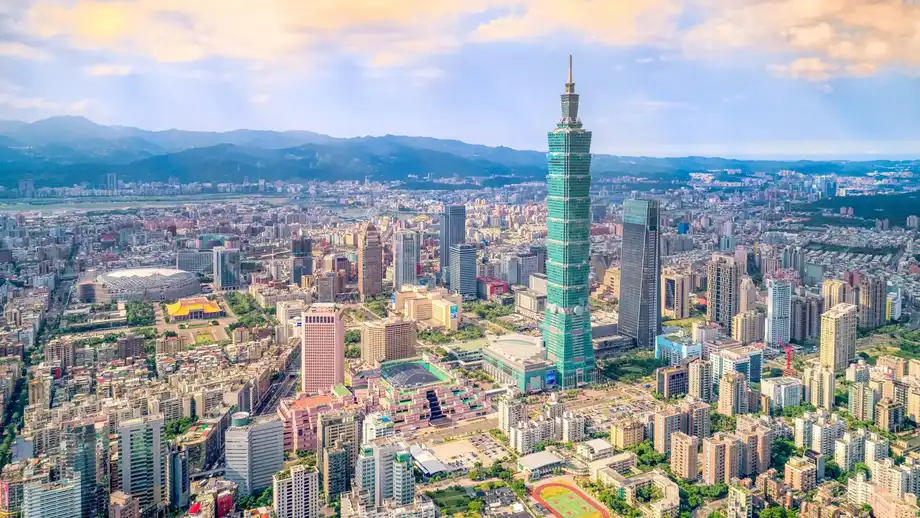
Nvidia's New York shares rose 31.5 percent on the news, the largest single-day gain in the history of the US stock market, and Taiwan's index climbed 8.99 percent on Tuesday. A petition urging his return gathered more than 200,000 signatures, among them that of Elon Musk, and Taipei 101 was lit with messages including 'Taiwan loves Jensen'.
- 12 November: Huang resigns as Nvidia chief executive after admitting the affair.
- By 20 November: Taiwanese shares have fallen almost 18 percent over the week, their worst since 1991, and Nvidia has lost about a third of its market value.
- 23 November: the board reinstates Huang; Nvidia shares jump 31.5 percent and the S&P 500 gains 4.7 percent.
- 24 November: the Taiex adds 8.99 percent and markets across Asia rally.
- 25 November: the rally reverses, the Taiex closes down 4.80 percent, and the futures night session keeps sliding.
Alex Huang, an analyst at Mega International Investment Services, said the previous day's gain had been about the man rather than the business.
Tuesday's rally reflected Jensen Huang's return as Nvidia CEO. Today, worries over AI development re-emerged ahead of Huang's appearance at a congressional hearing in early December as part of a national security investigation.
He added that 'investors were stunned by reports that the Trump administration is preparing to announce new tariffs under a Section 301 investigation'. A second shock came from Anthropic, the Claude maker whose listing last week was the largest initial public offering on record: its shares closed at US$82.79 on Wednesday, below the US$83 price at which they were sold, after swinging as much as 10 percent during the session.
From Seoul to Tokyo, the Chip Trade Unwound
South Korea's Kospi led the region lower, closing 6.19 percent down at 4,697.51 after falling as much as 6.4 percent during the session. Samsung Electronics dropped 9.87 percent and SK Hynix, the memory chipmaker that supplies the high-bandwidth memory used in AI servers, plunged 11.05 percent.
Japan's Nikkei 225 fell 2.78 percent to 57,011.62. SoftBank Group, the biggest investor in OpenAI, sank 14.83 percent, memory maker Kioxia lost 14.18 percent, and semiconductor equipment makers Tokyo Electron and Advantest fell 12.5 percent and 12.9 percent respectively. Hong Kong's Hang Seng slipped 1.14 percent to 21,966.01, and Shanghai's Composite index lost 2.03 percent to 3,476.47, its lowest level in more than a year.
Charu Chanana, chief investment strategist at Saxo Markets, described the move as two forces hitting at once.
Yesterday's rally may have offered an opportunity to exit positions rather than a signal for investors to rebuild exposure.
Her colleagues on Goldman Sachs' sales and trading desk told clients that 'opportunistic trading is the way to balance the FOMO while managing downside risk well now', and pointed to US inflation data, US technology earnings and Huang's Senate testimony as the events that will decide the next move.
The Tariff Threat Sitting Underneath Everything
Alongside the AI question, traders are pricing a trade war that has not yet been announced. The office of the US Trade Representative is preparing to publish the findings of investigations into alleged overcapacity in 16 major US trading partners, including China and the European Union, under Section 301 of the 1974 Trade Act. That provision lets the US impose duties on countries it finds have acted unfairly, and the findings could open the door to a new round of tariffs.
No date has been given for the announcement and the findings themselves have not been published. Dan Coatsworth, head of markets at AJ Bell, said the risk runs through prices rather than through trade volumes alone: 'The threat of another wave of tariffs by Donald Trump could cause unease, particularly if they are seen to cause new inflationary pressures.'
For Taiwan, the combination is awkward. Its exporters already face US duties on semiconductors and computing hardware, and its stock market depends on the same technology companies that would carry any new costs. On Wednesday, the tariff reports and the AI doubts hit the same shares at the same time, which is why the fall was broad rather than confined to one industry.
In New York, Inflation and Rate Fears Took Over
US markets had already turned. The Nasdaq 100 fell as much as 4 percent before closing 0.63 percent lower at 26,050.15, the S&P 500 ended down 0.25 percent at 7,183.08, and the Dow Jones Industrial Average added 0.34 percent to 50,189.08. Nvidia fell as much as 9 percent and closed at US$149.30, down 3.91 percent and more than 30 percent below its early October high.
Core personal consumption expenditures, the inflation measure the Federal Reserve watches most closely, rose 3.3 percent over the year to October. Futures pricing tracked by CME FedWatch put a 99.8 percent probability on a quarter-point rate rise in December, a shift that hurts shares whose value rests on profits expected far in the future.
JPMorgan's market intelligence team switched its view on stocks from tactically bullish to 'Tactically Cautious', writing that 'the uncertainty surrounding NVDA and peers and opacity over 2028 and beyond makes Tech longs highly uncertain in the very near-term'. David Morrison, senior market analyst at Trade Nation, aimed at the board rather than the economy: 'Perception is important, and the current perception of Nvidia's board is not the one that the world's leading chip designer should want.'
The Bond Market Moved First
Wednesday's share prices followed a warning that came from credit markets days earlier. L&G Asset Management's head of global bond strategy, Matthew Rees, said bond investors have been more pessimistic than equity investors about the largest technology companies and the cloud operators known as hyperscalers, both because of doubts about their finances and because the volume of debt they are issuing risks oversupplying the market. Bonds issued by Oracle and by SpaceX, both rated BBB, are trading closer to the levels of B-rated debt, he said.
The scale explains the caution. PIMCO, citing Goldman Sachs data, estimates that the largest AI companies may raise about US$250 billion through corporate bond sales this year, and that borrowing across the whole chain, including chipmakers, utilities and data centre developers, could reach US$300 billion to US$570 billion.
Man Group's analysis found that capital spending at Microsoft, Amazon, Meta and Alphabet is likely to exceed the cash those companies generate in both 2026 and 2027. Cole Smead, chief executive of Smead Capital Management, questioned the reward on offer: investors buying data centre debt can earn 200 to 300 basis points more than on 10-year US Treasuries, yet Microsoft itself can borrow at close to 5 percent while outside investors are paid closer to 8 percent. Credit spreads have widened and the cost of insuring against default on technology debt has risen.
Where the Money Is Actually Going
At the centre of the debate is how the boom is financed. Nvidia has provided about US$700 billion of financing support to its customers, buying computing capacity and other services from companies that then spend the money on its chips, an arrangement known as circular financing. Nvidia has bought stakes in the data centre operator CoreWeave and in the South Korean internet and cloud company Naver, among others. In its own filings the company has warned it may have no use for 'all the capacity we are committed to purchase'.
Kathleen Brooks, an analyst at XTB, said Huang's return points to more of the same. 'His return suggests more of the same when it comes to circular financing and the rapid AI infrastructure build out,' she wrote. 'The market loves it.'
The spending is global. Gartner forecasts AI investment worldwide will reach US$2.7 trillion this year and US$3.6 trillion in 2027. Ireland has committed close to 22 billion euros to new data centres, according to Dublin consultants Bit Power, which would double the country's computing capacity. Hyperscalers own two thirds of the capacity of the 109 centres already operating there and about 13 percent of the 59 in the pipeline, with the rest built by third parties who lease space to them. Technology stocks now make up almost 40 percent of the value of the US market.
A Valuation Gauge With Only Two Precedents
The cyclically adjusted price-to-earnings ratio developed by economist Robert Shiller, which compares S&P 500 prices with ten years of inflation-adjusted earnings, stands at about 40. Across data going back to the late 19th century, the ratio has mostly sat between 16 and 18. It has reached today's level only twice before: ahead of the 1929 crash that preceded the Great Depression, and in the late 1990s before the dot-com bubble burst, after which the Nasdaq fell nearly 80 percent.
Justin Wolfers, professor of economics and public policy at the University of Michigan, framed the risk as a fat tail: people expect change to stay within a limited range and underestimate how often extreme events occur and how much damage they do. John Cochrane, a senior fellow at Stanford's Hoover Institution, does not accept the bubble label because he associates the word with irrationality. He calls AI the most striking economic innovation in decades and expects a correction, with the size of it the open question: falling share prices would be manageable, while billions of dollars of debt turning bad would not.
Didier Sornette, who heads the Institute of Risk Analysis, Prediction and Management at Southern University of Science and Technology in Shenzhen, argues the US market is already in a bubble and has been through its first correction, with more instability building. He also doubts investors will end up like the turkey in Nassim Taleb's fable, which trusted the farmer who fed it for a thousand days right up to Thanksgiving, because so much American money is now committed to AI that governments, institutions and companies will work hard to prevent a collapse.
Taipei and Seoul Reach for the Brakes
Taiwan's authorities have responded with market plumbing rather than money. They have introduced curbs on short selling and cut margin requirements, the deposits investors must post to trade on borrowed money. Premier Cho Jung-tai met executives from technology and financial companies on 23 November to discuss stabilising the market, a day when shares had already fallen almost 18 percent in their worst week since 1991.
Alex Huang at Mega International Investment Services suspects state money entered the market on Wednesday, given how far TSMC and other heavyweights climbed from their lows and the expansion in turnover.
Fortunately, the TAIEX recouped some of its earlier losses, and based on the recovery of TSMC and other tech heavyweights from intraday lows and the expanded turnover, I suspect the National Stabilization Fund stepped in to ease market volatility.
South Korea has said its stock market stabilisation fund is ready for use but has not put money in yet. Taishin Futures described Wednesday's candle as a long black one with a lower shadow, noting the index gave back more than half of the previous day's gain, closed above its five-day moving average but below its 10-day line, with both averages bending down, and it expects any rebound to meet resistance until TSMC and other electronics heavyweights steady.
Hsieh Ming-che, a senior securities analyst, said the selling reflected US losses, the tariff threat and the exchange rate, and pointed to Thursday's US inflation release and the Thanksgiving closure as the next tests of whether foreign selling slows before the weekend. Huang Shih-tsung, a financial television host, advised holding more cash and cutting leverage, noting that institutional selling and margin balances have not yet been worked off, which leaves any short-term bounce exposed to investors stuck at higher prices.
What Washington Decides Next
Huang is due to appear before the US Senate Banking Committee on 3 December to answer questions about chip export controls, with a joint congressional hearing flagged in Taipei for 1 December. Senator Elizabeth Warren, the Massachusetts Democrat who will chair the banking committee next year, called his restoration 'reckless' and said the administration 'needs to explain to Congress what input was given and by which senior officials in the United States government to support his reinstatement'. Scrutiny also falls on Commerce Secretary Howard Lutnick, who oversees export controls and whose former firm, Cantor Fitzgerald, helps finance Nvidia's customers.
Nvidia's board said it had received input from senior levels of the US government and concluded that Huang's reinstatement poses no national security risk. The company has set up a National Security and Export Control Committee of independent directors and is hiring a chief compliance officer, and it has halted AI server shipments to four Asian countries as export rules tightened.
Taiwan's suppliers will feel the change. Chang Ruay-shiung, honorary chair professor at National Taipei University of Business, said finding a replacement for Huang at this stage of the AI race would be extremely difficult, and that Taiwanese companies face higher compliance costs, longer approval procedures and greater legal risk even as they gain from supply chains that exclude Chinese firms. Lien Hsien-ming, president of the Chung-Hua Institute of Economic Research, warned that smaller suppliers unable to absorb those costs may struggle: 'Now, you have to be very careful. If you are caught, the consequences will be grave.'
The Contradiction Investors Cannot Escape
Underneath the daily swings sits a conflict with no easy answer. Semiconductor suppliers need the largest technology companies to keep spending to sustain their growth, while shareholders in those same companies want capital spending reined in and free cash flow restored.
Man Group's deputy chief investment officer Dan Taylor has argued that the phase in which AI companies spent first and promised to prove their worth later is over, and that investors will now discriminate far more sharply between individual companies. The market has begun to do so: from their June highs to 21 November, Oracle, Alphabet and several chipmakers fell between 25 and 45 percent, while Apple, which sat out the spending race, gained nearly 20 percent.
Money has moved toward government debt. The 10-year Treasury yield dropped 5 basis points to 4.88 percent and the 2-year yield fell 4 basis points, while the dollar strengthened. Joe Maher, a market economist at Capital Economics, expects the technology-led decline to continue, prompting investors to lower their expectations for interest rates and buy more Treasuries over the coming year. Luke Lango, an independent technology analyst, summed up the disconnect after Dell reported strong quarterly results and its shares barely moved: 'the fundamentals are booming, but the market is pricing in a slowdown that hasn't shown up in the numbers yet.'
What to Know
- The Taiex closed at 38,195.43 on 25 November, down 1,926.92 points or 4.80 percent, after an intraday fall of as much as 3,440.45 points.
- The Taiex futures night session traded at 37,057 at 9:26pm, down 1,066 points or 2.8 percent, after touching 36,659 during the evening.
- Foreign investors sold a net NT$123.654 billion of Taiwanese shares, with institutional investors overall net sellers of NT$82.955 billion.
- South Korea's Kospi fell 6.19 percent, Japan's Nikkei 225 lost 2.78 percent and Shanghai's Composite hit a more than one-year low.
- Nvidia closed at US$149.30, more than 30 percent below its October high, and Anthropic closed at US$82.79, under its US$83 offer price.
- Core PCE inflation reached 3.3 percent, and futures markets price a 99.8 percent chance of a December rate rise.
- Treasury and corporate bond investors are demanding higher premiums as AI companies raise as much as US$250 billion in debt this year.
- Huang testifies before the Senate Banking Committee on 3 December, and the US Trade Representative is preparing findings on 16 trading partners under Section 301.