A conditional welcome, not a ban
Malaysia will not ban Pinduoduo or Temu, but Prime Minister Anwar Ibrahim wants access to Malaysian shoppers tied to the involvement of local companies or guarantees covering product quality, health and safety. Goods described as halal, meaning permissible under Islamic requirements, would also need a genuine halal guarantee.
Contents
- A conditional welcome, not a ban
- The decisions still waiting for legal detail
- Why certification is central to the plan
- Retailers describe a price squeeze
- Rising wages, rent and merchandise costs
- Expansion gives way to efficiency
- China, exports and the case against a ban
- Consumers, advertising and household debt
- Dates to watch
- Key Points
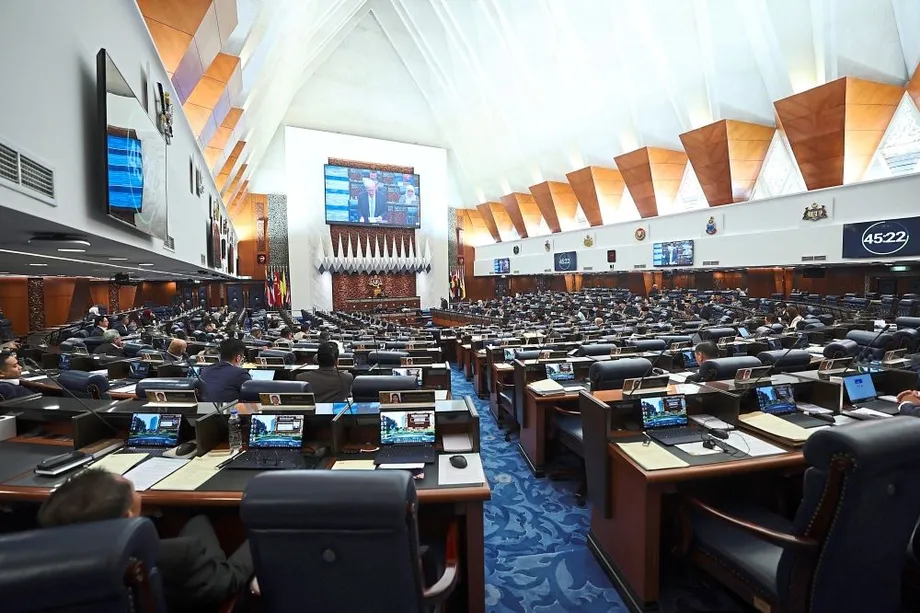
Anwar, who is also finance minister, set out his position on November 25, 2026, during a special Dialog Negara programme at Angkasapuri, Kota Media in Kuala Lumpur. The session was broadcast on TV1 and the RTM Klik app. He was answering Chunk & Dunk founder Adam Shamil, who asked how the government could protect Malaysian entrepreneurs and brands while allowing competition from inexpensive goods sold through international platforms.
The prime minister said the volume of foreign products was affecting the macro economy and weakening the competitiveness of local businesses. The macro economy refers to the performance of the economy as a whole, including production, trade and employment. For a small manufacturer or shop, the practical concern is more immediate: an imported item can arrive at a price that is difficult to match.
I agree, and I think we should introduce stricter regulations.
Anwar said some restrictions had already begun, although he did not identify each measure or give its commencement date. Entry would be allowed with a Malaysian company involved, or with guarantees covering quality and health. Any claim that a product was halal would have to be backed by a guarantee.
We do not intend to restrict, but what we want is investment and trade, not an influx of cheap goods ... and this is killing smaller companies.
The Cabinet had agreed to curb the flow rather than prohibit it, he said. A complete ban would conflict with Malaysia's trade policy, which permits imports to increase. His distinction was between commerce and investment that create useful activity in Malaysia and a surge of inexpensive merchandise that leaves smaller companies unable to compete.
The decisions still waiting for legal detail
The broad political decision is clear, but the legal design remains incomplete. Anwar did not publish a definition of sufficient local company involvement, a list of products covered by the proposed controls or a start date for a comprehensive enforcement system. It is also unclear which requirements would be imposed through new legislation and which could be introduced through existing regulations.
An earlier review focused on making digital commerce easier for Malaysian entrepreneurs. Speaking at the launch of the TikTok Shop Summit Malaysia 2026 in Kuala Lumpur on August 20, Anwar said e-commerce laws were being examined to make the digital ecosystem more accessible to small businesses and new enterprises. He offered a conditional timetable for approving changes suggested by industry.
If it is genuinely attractive, beneficial and provides opportunities for the people and young Malaysians to do business, I can approve it by early October.
Deputy Domestic Trade and Cost of Living Minister Fuziah Salleh had said earlier in August that the coming e-commerce Bill would tighten oversight of foreign platforms and trade across borders, holding overseas merchants to Malaysian standards. The proposed Bill is now expected to be tabled in the first quarter of 2027. Anwar did not announce on November 25 whether his conditional early October target had been met.
His August remarks also described a second objective: helping legitimate online businesses grow. He said the government should act as a facilitator rather than interfere excessively, while examining financing and other support for entrepreneurs without an established business record. Digital platforms, new technology and artificial intelligence could give young Malaysians access to opportunities that were previously beyond their reach. He paired that support with warnings about deceptive products, unethical conduct and abuse of digital platforms.
Why certification is central to the plan
Investment, Trade and Industry Minister Johari Abdul Ghani addressed the product standards issue on the same day as Anwar's television appearance. Speaking after the Sirim Industrial Event 2026 and the launch of AS9110 on November 25, Johari said imported goods sold online should meet the same quality and safety requirements as products manufactured in Malaysia.
Certification is very important because all kinds of products are entering our country from overseas, and we have limited control over how they come in.
Johari described merchandise arriving in parcels through rapidly growing e-commerce platforms. Some goods, including electrical products, lacked the necessary quality or Sirim certification. An uncertified electrical item can present more than a disappointment over durability: it may create a safety risk inside a customer's home.
His consumer example was deliberately simple. People pay for an item that appears to offer excellent value, only to find it damaged after two or three months. The low purchase price then provides little accountability and potentially a poor return on the money spent.
We want to encourage people to buy goods online through e-commerce platforms, but these products must undergo scrutiny to ensure they meet the required standards.
The certification issue also affects competition. Malaysian manufacturers pay to have their products tested and their operations recognised so that they meet regulatory requirements. Johari argued that foreign merchandise can appear considerably cheaper when those costs are absent. Applying the relevant requirements to imports would therefore protect consumers while removing part of that cost advantage.
Sirim provides standardisation, testing, inspection and certification services. Johari said those capabilities also help Malaysian companies reach international markets and participate in global supply chains. For domestic producers, certification is consequently both a compliance expense and a possible route to customers abroad.
Johari had discussed online product scrutiny with Domestic Trade and Cost of Living Minister Armizan Mohd Ali. Their ministries and the Malaysian Communications and Multimedia Commission, known as MCMC, are expected to examine stronger oversight. Johari said MCMC could be asked to consider action against platforms that disregard the standards. He did not announce a particular penalty, identify a platform for punishment or give a deadline for that decision.
Retailers describe a price squeeze
Malaysia Retail Chain Association president Liew Bin said cheap Chinese merchandise had become one of the largest challenges facing local retailers and small and medium enterprises. He linked its growing availability partly to excess production capacity and weaker demand within China, encouraging manufacturers and sellers to pursue customers overseas.
Retailers are caught between rising capital expenditure and operating costs on one hand and increasing competition from low-priced Chinese merchandise on the other.
Liew said businesses had little room to raise their own prices because they needed to remain competitive. The result was pressure on profit margins across retail. He urged the government to accelerate measures requiring foreign platforms to operate under conditions comparable to those faced by Malaysian companies.
The pressure extends beyond shopping centres and high streets. Malaysian online sellers must compete with cheaper merchandise and subsidised delivery while paying marketplace commissions that Liew said could reach 30 to 50 per cent. A seller charged at that level has much less room to reduce prices, pay for delivery and still retain a viable margin.
Value retailers are especially exposed because their business models depend on large sales volumes, low prices and relatively thin margins. Eco-Shop, Ninso, Eko Jimat, Daiso and Miniso compete for price-conscious shoppers. MR D.I.Y. sells household goods, hardware and electrical accessories, while 99 Speed Mart depends on affordable groceries and everyday essentials. When price becomes more important than brand loyalty or durability, customers can move between sellers with little difficulty.
Rising wages, rent and merchandise costs
Competition from imported goods is only one part of the financial pressure. Liew cited a major retail operator facing an additional RM12 million to RM15 million each year because of sales and service tax on rental costs. He said that amount was comparable to the company's profits, illustrating how a tax on a large store network can absorb much of what the business earns.
A senior executive at a home and living retailer, speaking without being named, said plastic product costs had risen by 10 to 30 per cent since January, while textile prices had increased by 10 to 20 per cent. The company generally absorbed cost increases below roughly five to eight per cent. Above that range, it had to consider raising prices.
The retailer previously achieved gross margins of about 30 per cent. Raising prices enough to preserve that margin would make its merchandise too expensive for many customers, so it was increasing prices only slightly and accepting lower margins. Gross margin is the share left from sales after paying for the goods sold, before expenses such as rent and wages are deducted.
A further cost change is scheduled for June 2027, when the minimum wage is due to rise from RM1,700 to RM2,000 a month under the 2027 Budget. The RM300 increase amounts to 17.6 per cent and is expected to benefit more than four million workers. Retailers with extensive store networks and large numbers of shop employees will need to review staffing and productivity. Pay for supervisors and experienced workers may also require adjustment to preserve differences between grades.
The effect will vary with each company's workforce and its ability to improve productivity. The Budget 2027 exemption covering micro, small and medium enterprises with annual sales below RM50 million also has to be considered when assessing smaller operators.
Samuel Tan, founder and chief executive officer of Olive Tree Property Consultants, said procurement costs presented another uncertainty. Movements in the ringgit against the United States dollar and Chinese yuan can change the price of imported merchandise. Freight rates, shipping capacity, tariffs and conditions in supply chains can further alter the cost of getting goods into Malaysian stores.
Retailers' ability to pass higher procurement costs on to consumers is limited, as doing so could undermine their value proposition.
Tan recommended diversifying suppliers, negotiating better purchasing terms, buying in bulk and improving inventory planning. Those measures can reduce exposure to a single supplier or currency, but they do not remove the underlying competition on price.
Expansion gives way to efficiency
The unnamed home and living retailer is reconsidering its expansion strategy for 2027. Its plans include reducing the store count, streamlining operations and improving the performance of individual outlets. It also intends to place more emphasis on e-commerce, which requires less capital than opening and maintaining physical shops.
The executive warned that persistent competition based mainly on price could discourage research and development. A company struggling to protect its margin has less incentive to spend money improving a product when shoppers continually choose a cheaper alternative.
Tan said retailers could no longer depend solely on opening additional outlets to increase revenue. Consumer spending is divided between physical stores and online channels, while a new shop can take sales from an existing outlet if the two are too close together. Rent and staffing commitments then weigh on both locations.
Retailers cannot focus solely on the number of outlets opened. They also need to ensure that each store generates sufficient returns to justify the investment.
His suggested measurements include sales per square foot, average transaction value and how frequently customers return. Retailers also need to examine sales growth at established outlets, separating genuine improvement from revenue created simply by opening more shops. For chains under pressure, that means fewer automatic expansion plans and closer attention to whether each location pays for itself.
China, exports and the case against a ban
Anwar's resistance to a complete prohibition rests partly on the access that digital platforms can provide in the other direction. Although Pinduoduo and Temu create intense competition for Malaysian merchants, such platforms can also help local products reach customers in overseas markets, including China.
The prime minister said he had raised the influx of inexpensive goods with Chinese leaders during several visits to China. According to Anwar, President Xi Jinping expressed readiness to create more space for Malaysian exports. Malaysia is still studying its regulatory measures, while seeking a trading relationship that provides greater opportunities in both directions.
Five days before the Dialog Negara programme, Anwar and Xi held a 20-minute meeting at Qilin Villa State Guest House in Shenzhen during the Asia-Pacific Economic Cooperation Economic Leaders' Week. At that November 20 meeting in Shenzhen, Anwar also raised the need to increase Malaysian exports to China. Trade and investment appeared alongside water supply, artificial intelligence, education and preparations for the East Coast Rail Link on the wider agenda.
Malaysia has separately used a more targeted trade instrument by imposing a temporary anti-dumping duty on flat-rolled steel imports from China, Taiwan and Vietnam. An anti-dumping duty is an additional border charge used when imports are found to have been dumped at unfairly low prices. That steel measure differs from the e-commerce proposal, which centres on product certification, platform oversight, consumer protection and possible local participation rather than a general prohibition on Chinese goods.
Consumers, advertising and household debt
Anwar paired his message to businesses with a warning to shoppers. He urged Malaysians not to be captivated by advertising for products whose quality had not been verified. Extensive promotion can encourage people to buy things they do not need, particularly when repeated discounts and offers make purchasing feel urgent.
He called for closer monitoring of advertisements, reliable product quality and stronger consumer education. The objective is for people to buy according to their needs and remain within their financial means. Excessive purchasing driven by promotion can add to household debt, with particular consequences for consumers earning low incomes.
The government is also pursuing affordability through its own sales programme. Anwar announced in August that the inaugural online Ihsan Rahmah 9.9 sale would take place on September 9 in conjunction with Malaysia Day. The Rahmah Sales programme offers essential goods at discounts of between 10 and 30 per cent, allowing people across the country to buy necessities online at lower prices.
These policies address different problems. The Rahmah initiative discounts essential items, while the proposed import controls concern safety, durability, certification and fair competition. Anwar's consumer message adds a third element: a low price does not require households to purchase merchandise they cannot afford or do not need.
Dates to watch
The announcements span several months and cover separate parts of digital commerce, trade and retail costs. Their sequence clarifies what has already happened and which decisions remain outstanding.
- August 20, 2026: Anwar launched the TikTok Shop Summit Malaysia 2026 and discussed making e-commerce rules more accessible to entrepreneurs.
- September 9, 2026: The inaugural online Ihsan Rahmah 9.9 sale was scheduled, with essential goods discounted by 10 to 30 per cent.
- Early October 2026: This was Anwar's conditional target for approving attractive and beneficial regulatory proposals, not a confirmed commencement date for the import controls.
- November 20, 2026: Anwar met Xi in Shenzhen and again raised Malaysian exports to China.
- November 25, 2026: Anwar disclosed Cabinet agreement on measured curbs, while Johari set out the case for equal quality and safety standards.
- First quarter of 2027: The proposed e-commerce Bill is expected to be tabled.
- June 2027: The minimum wage is scheduled to rise to RM2,000 a month.
The Bill's text should show how Parliament intends to regulate overseas merchants and platforms. Until then, the product coverage, enforcement process and definition of local participation remain open. No date has been given for an MCMC decision on action against platforms that fail to comply. For retailers, the immediate pressures remain commissions, rent, wages and merchandise costs; for shoppers, the government's present advice is to examine quality and certification rather than relying on price and advertising alone.
Key Points
- Anwar ruled out a complete ban on Pinduoduo and Temu but supports tighter controls on cheap imports, especially from China.
- His proposed conditions include local company involvement or guarantees on quality, health and safety, with halal claims requiring a halal guarantee.
- The Cabinet agreed to curb the influx rather than stop imports, preserving Malaysia's open trade policy.
- Johari wants imported online goods to meet the same quality and safety requirements as Malaysian products, with possible MCMC action against platforms that ignore standards.
- The proposed e-commerce Bill is expected in the first quarter of 2027; no final text, product list or comprehensive enforcement date has been announced.
- Retailers face online commissions of up to 30 to 50 per cent, higher rental and merchandise costs, and a minimum wage increase to RM2,000 in June 2027.
- Anwar says Xi is willing to provide more space for Malaysian exports, while consumers are being urged to avoid unnecessary purchases driven by advertising.