A $100 million first stage within a $2.5 billion plan
Eight priority projects worth a combined $2.5 billion are at the centre of a new cooperation memorandum between the Eurasian Development Bank and the directorate responsible for building New Tashkent. The bank may allocate that amount toward creating infrastructure for the planned city in Uzbekistan under the broader proposal, while the agreement is also intended to attract international investment.
Contents
The first stage is much narrower. The bank is considering projects worth $100 million, according to the initial description of its work with the Directorate for the Construction of New Tashkent. That amount is equivalent to 4 percent of the wider project list. Put another way, the eight priorities are valued at 25 times the amount under review at the first stage.
The figures describe different levels of the same infrastructure effort: a limited group for initial examination and a larger set of possible works. The $2.5 billion is the combined value assigned to all eight priorities, not a published schedule of cash payments. The announced instrument is a memorandum, rather than a final loan agreement.
For the city, the significance lies in the range of systems being considered together. Transport, health care, sport and basic utilities appear alongside broader urban development. That gives the directorate a framework for discussing several connected needs with the bank and potential investors, instead of presenting every road, pipe or public building as an unrelated request.
What the eight priority projects are meant to deliver
The eight projects have not been named individually, but their main categories show the scale of the city being planned. They cover both services used by large numbers of people and the hidden networks that make buildings safe and functional.
- Metro lines: construction of new urban rail routes is among the transport priorities.
- Sports complexes: new facilities for athletic activity and public events form part of the list.
- Medical complexes: health care buildings are included alongside the transport and utility proposals.
- Municipal infrastructure: this covers essential public systems, including the utility networks discussed by Uzbekistan's president.
- Multifunctional urban projects: these developments are intended to bring several urban uses together.
The announced categories do not show how the eight projects are divided among them. No metro routes, station counts or line lengths were released. The medical and sports proposals also lack locations, capacities and individual costs. Only the combined value of $2.5 billion is available for the full group.
In planning language, a multifunctional project can place several activities in one district or complex, such as housing, workplaces, shops and public services. The description of the memorandum does not specify which combination is planned for New Tashkent. Its inclusion nevertheless indicates that the discussions extend beyond standalone infrastructure and include the organisation of entire urban areas.
For future residents, the practical results would be measured through journey times, access to medical care, available sports facilities and the reliability of water, heat and electricity. Those outcomes depend on which proposals pass the bank's review and receive final financing.
Who signed the memorandum, and what it changes
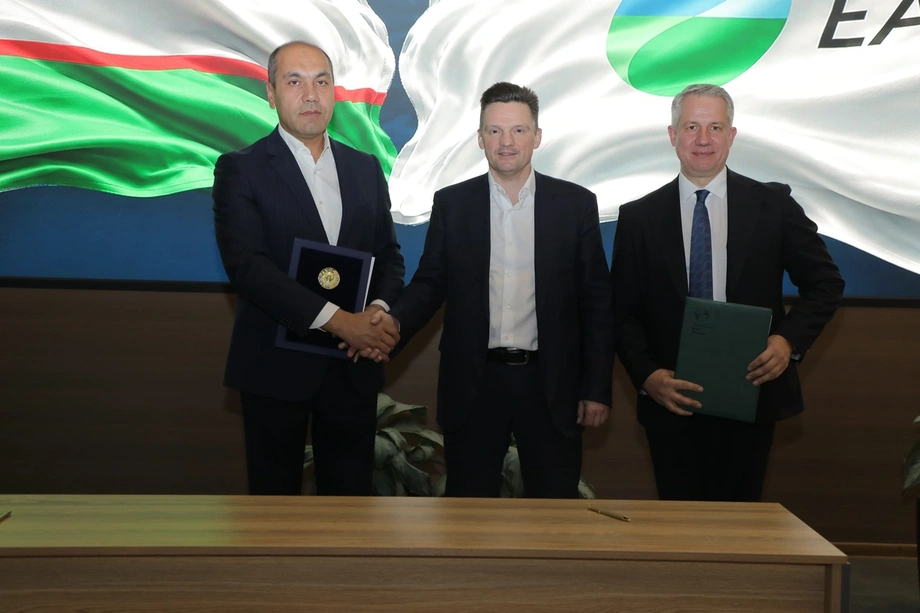
Davronjon Adilov signed for the city directorate. He holds two roles: director of the Directorate for the Construction of New Tashkent and deputy minister of construction and housing and communal services. His position connects management of the new city with the national ministry responsible for construction policy and public utilities.
The bank's signatory is described in two ways. The initial announcement names Alexey Skatin, deputy chairman of the bank's management board. The description setting out the eight projects worth $2.5 billion names Nikolay Podguzov, chairman of the management board, alongside Adilov. No further detail about the different bank signatories was provided.
A memorandum of cooperation records an intention to work together. In this case, its stated purposes are to develop infrastructure and attract international investment. It provides a basis for examining projects and discussing finance, while final lending decisions would require separate terms setting out the amount supplied, repayment conditions and the responsibilities of each participant.
For a development bank, project examination can include technical readiness, expected costs, financial viability and the ability to repay borrowing. No interest rates, repayment periods, disbursement dates or individual loan approvals were announced. The memorandum also names no international investors, so their possible contribution remains open.
Why President Mirziyoyev wants utilities ready before buildings open
President Shavkat Mirziyoyev addressed the city's construction at a meeting on November 18. He called for faster work on New Tashkent and instructed officials to organise construction through fundamentally new approaches and strict executive discipline. In practical terms, his message joined the speed of construction to tighter control over whether different agencies complete their work in the correct order.
The president specifically required electricity networks, water pipes, heating mains, sewerage and roads to be ready when buildings are handed over. A heating main is part of a network that carries heat, often through hot water, from a central system to buildings. Each of these connections is necessary before a finished structure can function as a home, clinic, school or workplace.
An apartment block can look complete while remaining difficult to occupy if its water supply or sewer connection is unfinished. A medical building faces the same problem if power and roads are delayed. Installing pipes and cables before final road surfaces are completed also reduces the need to excavate newly finished streets. The president's instruction therefore makes infrastructure timing part of the definition of a completed building.
Mirziyoyev also ordered the development of a program to provide infrastructure for plots assigned to regions. The announcement does not list those regions, count the plots or identify the program's budget. No deadline for preparing the program was given. Its purpose is clear from the instruction itself: land allocated for development must receive the necessary networks, rather than waiting for services after construction has begun.
The president's meeting and the bank's memorandum address connected parts of the task. The city directorate needs coordinated construction on the ground, while prospective financiers need projects that can be assessed and implemented. Synchronised utility work can make that task more manageable by establishing what must be finished before each building enters service.
The timeline and the decisions still to come
The public chronology contains two dates and one event without a precise date:
- November 18: Mirziyoyev chaired the meeting on accelerating construction and demanded that utilities and roads be ready alongside completed buildings.
- Memorandum signing: the bank and the city directorate announced their cooperation agreement without giving an exact signing date.
- November 26, 2026: the description identifying eight priority projects with a combined value of $2.5 billion was published.
Several practical details remain undisclosed. The individual names, sites and costs of the eight projects have not been released. There is also no public breakdown showing how much would come from the Eurasian Development Bank, how much from other investors and how much from Uzbekistan's own resources.
No dates were announced for financing decisions, tenders, construction starts or completion. The same applies to the infrastructure program for plots assigned to regions. Until those details appear, the firm commitments are the cooperation framework, the $100 million group under initial review and the president's instructions on construction discipline and utility readiness.
The next measurable steps will be the identification of specific projects, the publication of their costs and the approval of financing. Construction schedules will then show whether the transport, medical, sports and utility proposals can progress together as New Tashkent develops.
What to Know
- The Eurasian Development Bank and New Tashkent's construction directorate signed a cooperation memorandum.
- The bank is considering projects worth $100 million at the first stage.
- Eight priority projects carry a combined value of $2.5 billion, equal to 25 times the initial amount under review.
- The priorities include metro lines, sports and medical complexes, municipal infrastructure and multifunctional urban developments.
- On November 18, President Shavkat Mirziyoyev ordered utilities and roads to be ready when buildings are handed over.
- Individual project costs, loan terms, investor names and construction dates have not been announced.