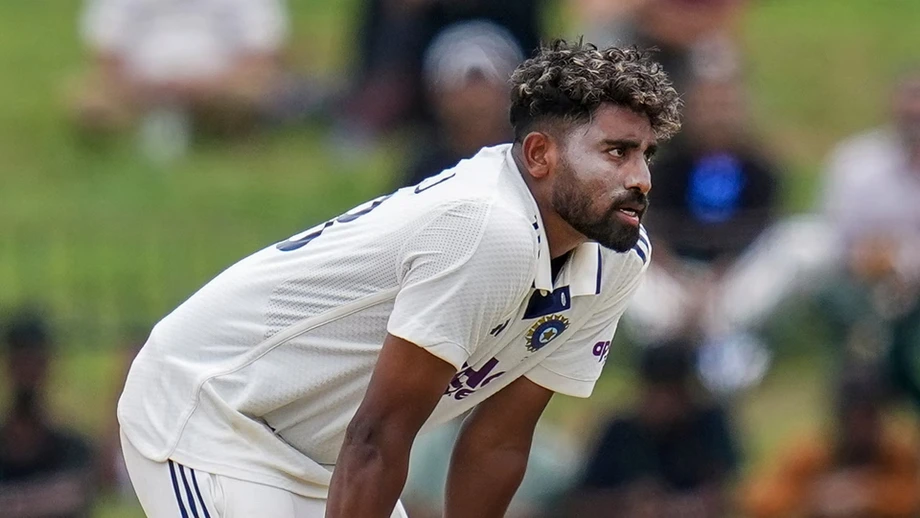
The call that set the debate alight
Shubman Gill defended India's decision to leave Mohammed Siraj out of the Wellington Test on Monday, November 23, after a match India controlled but could not finish. Gill said the team picked the bowlers in form, spoke to Siraj before the game and believed the result would not have changed if Siraj or Ravindra Jadeja had played. Siraj, India's leading wicket taker in the current World Test Championship cycle with 43 wickets in 11 Tests, was omitted with Jadeja as India chose Jasprit Bumrah, Akash Deep, Prasidh Krishna, Anshul Kamboj and spinner Washington Sundar.
Contents
- The call that set the debate alight
- What happened at Basin Reserve
- A short timeline of the week
- Why Gill says current form decided the XI
- Why many saw Siraj as indispensable
- Why Jadeja was also left out
- How the selection row turned political
- Gill's case for saliva and a better ball
- Did India let the win slip away?
- Captaincy questions before Christchurch
- What the draw means for the WTC race
- What to Know
The selection became the loudest argument of the tour because India held a 352 run first innings lead at the Basin Reserve and still could not take the last five wickets. New Zealand finished on 239 for 5 after 120 overs in the second innings, with Daryl Mitchell and Glenn Phillips blocking the chase late. Gill said he had explained the decision to Siraj, a close friend since before either played for India.
What happened at Basin Reserve
India's Wellington Test draw began with early promise with the ball. New Zealand were 70 for 5 in their first innings before Henry Nicholls and Glenn Phillips rebuilt, and the hosts eventually made 368. Jasprit Bumrah took four wickets. India then piled up a huge total. Match listings gave the first innings as 720 for 9 declared, India's highest Test total in New Zealand, while another listing gave 702 for 9; both put the lead at 352 runs.
New Zealand resumed the final day on 119 for 2 and needed only to bat out time. Washington Sundar removed Devon Conway for 65, Prasidh Krishna dismissed Rachin Ravindra for 37 and Anshul Kamboj had Tom Blundell caught behind for 15. Daryl Mitchell and Glenn Phillips, named as Mitchell and Tom Blundell in one match listing, then shut down the chase. Mitchell remained unbeaten on 49 from 186 balls and Phillips finished unbeaten on 26 from 126 balls, with the pair facing 259 balls together.
The draw changed the World Test Championship picture. India's points percentage fell from 51.52 to 50.00 and the team stayed fourth. New Zealand slipped from second to third at 66.27. South Africa led on 75 from eight matches, with Australia on 69.23 in second. The World Test Championship is a league table for Test teams across a two year cycle, with points deciding which sides reach the final.
A short timeline of the week
The Siraj debate followed a run of uneven results and limited match time. The ODI series ended with India winning 3 to 1, but Siraj played only the fifth match, taking two wickets. Gill then left him out of the first Test, even though the fast bowler had travelled with the squad and had an unofficial Test for India A against New Zealand A.
- November 13: New Zealand beat India by 244 runs at Bay Oval, with Matt Henry taking six wickets for 27.
- November 15: India won the fifth ODI by 22 runs at Bay Oval to take the series 3 to 1; Siraj played that match and took two wickets.
- November 19: The first Test began at the Basin Reserve. Gill chose Bumrah, Akash Deep, Prasidh Krishna and Kamboj as the pace attack, with Sundar as the spinner.
- November 23: The Test ended in a draw on the fifth day. Gill defended the selection and said Siraj had understood the reasoning.
- November 27: India play New Zealand in the second Test at Hagley Oval in Christchurch, with the final XI to be decided after the team checks the pitch.
Why Gill says current form decided the XI
Gill said the selection was about the bowlers who were bowling best, not about disrespect for Siraj. He described the conversation with Siraj as direct and admitted that he did not know whether his friend agreed with it.
We played the best bowling attack for this match. See, Siraj is a great player and a great bowler who has done very well for India. But before all of that, he is a great friend of mine. We made our debut together. Even before playing for India, he was a friend of mine. So leaving him behind was a very tough decision for me as well.
Gill said he told Siraj before the match that he would miss out. He also said every player has periods away from his best and that Siraj was determined to come back.
Sometimes you also have to see which bowlers are in form, which bowlers are bowling the best. I had this conversation with him before the match that he is going to be missing out. I don't know whether he agreed or not, but he understood what the logic was behind picking someone else ahead of him.
The numbers behind Gill's case were narrow and recent. Siraj took five wickets at an average of 28.60 in three Tests in 2026, in matches where he bowled 13, 18 and 26 overs. His pace dipped in the Sri Lanka series, and he linked that to a lack of game time. In the Duleep Trophy final that followed, he took one wicket and conceded 187 runs across two innings. He then played two Ranji Trophy matches for Hyderabad but had few chances in the ODI series against the West Indies.
Average in cricket divides runs conceded by wickets taken, so a lower figure usually means a bowler has been harder to score against. Gill's case rested on the idea that Siraj had not bowled enough long spells to build the rhythm that makes him most dangerous.
Why many saw Siraj as indispensable
Siraj's wider record made the omission controversial. He had 23 wickets in India's 2 to 2 Test series draw in England last year and was central to the win at The Oval, where India defended fewer than 50 runs. In the current World Test Championship cycle, he has 43 wickets in 11 Tests, more than any other India bowler. Those figures sit beside the lower recent returns, creating a selection argument about whether current form or proven overseas value should carry more weight.
AB de Villiers, the former South Africa batter and Siraj's longtime teammate at Royal Challengers Bengaluru in the IPL, said the team had overlooked the pacer's role. The IPL is India's Twenty20 league, and de Villiers played with Siraj there for years.
His recent numbers don't look incredible, and he's maybe out of form. But the role he plays in the Indian team is invaluable. So the selectors or the coach, whoever has made the decision, has forgotten about the role he plays. He allows Bumrah and the other seamers to have freedom, as he's a workhorse.
De Villiers compared Siraj with Morne Morkel, the South African fast bowler who often did hard work before others finished innings. He said Siraj had to return for the next match.
Morne often did the hard yards by breaking the big partnerships and getting the big wicket, similar to Siraj. He brings a different sort of value to the team, which they've ignored. He has to come back into the lineup for the next match.
Bowling coach Morne Morkel described Siraj as a performer of the highest class before the Test and said his feedback was that the attack could take 20 wickets, while the final call belonged to Gill.
Sunil Gavaskar said Siraj had given India no reason to doubt him. Harsha Bhogle called the omission a shock. Former India players Ravi Shastri, Ajinkya Rahane and Dinesh Karthik also questioned it, and Ravichandran Ashwin called the decision very harsh. Wasim Jaffer, another former India opener, said Siraj's recent bowling had not been poor enough to justify leaving him out.
His current form is not bad. That is what I would like to know. He bowled well when he played in the ODI series, and he did decently well when he played an ODI against West Indies.
Siraj has said he needs regular bowling to reach peak speed. After the Duleep Trophy final, he explained that long breaks affected his run up and match intensity.
I'm purely a rhythm bowler.
Why Jadeja was also left out
Washington Sundar took the spin role ahead of Ravindra Jadeja. New Zealand's top order included four left handers, and Sundar is an off spinner, a slow bowler whose ball turns sideways after landing. The idea was to use his angle against those batters.
Jadeja's omission still drew questions because he was the seniormost player in India's Test group and, since 2021, had the second best batting average among India batters in SENA countries, behind Rishabh Pant. SENA means South Africa, England, New Zealand and Australia, the countries used as a shorthand for difficult overseas Tests. Jadeja also offered left arm spin and experienced control.
Gill rejected the idea that the missing pair would have altered the result. When he was asked whether the accuracy of Siraj and Jadeja would have made a difference, the India captain gave a short answer.
I don't think so.
Critics answered that Sundar drifted the ball rather than turning it enough on the flat surface. The selection of Kamboj and Akash Deep over Siraj also drew questions about batting depth, because Gill had said before the Test that both could bat a little and that he wanted seven proper batters.
How the selection row turned political
The debate moved from cricket to politics after Congress MP Imran Masood alleged that Siraj was left out because of his name and religion. He said the pacer had performed well and that discrimination was visible in the decision.
It is being said that despite his good performance, he was not given a place in the team. His name is 'Siraj', and that is why he was not given a place. If you are not selecting him despite his good performance, the discrimination is clear.
BCCI vice president Rajeev Shukla rejected the claim. He said selection for the playing eleven belonged to the coach and captain, and he argued that Siraj remained part of the squad.
It's not as if the Test match ended in a draw simply because Siraj wasn't playing. I don't think Siraj should be dragged into such controversies. There shouldn't be this kind of commentary surrounding him. After all, he is part of the squad - and being selected for the team is the most significant achievement.
Shukla said political or other controversies should not be stirred up because a player missed the XI. Batting coach Sitanshu Kotak also defended the call, saying the team chose the combination it believed suited the match. Seven of the 12 questions put to Kotak after the game were about the omissions of Siraj and Jadeja.
Gill's case for saliva and a better ball
Gill argued that conditions made wicket taking close to impossible. India bowled 241 overs in the match, and the captain said the surface became slower from the third day onward. He said the pitch did not crack or show scallops, the uneven marks that can help seam bowlers get movement.
Using saliva to shine a ball was stopped during COVID-19 because of health concerns about spreading the virus. Gill wants that rule reversed. He said the first Kookaburra ball used in New Zealand became soft after 25 to 30 overs, and that New Zealand also complained about it. He saw a similar problem with the Dukes ball in England last year.
Teams should be allowed to use saliva. It was a rule that was made effective during COVID. I think we are long past that.
Gill explained that shine helps a ball move in the air and stay hard enough for edges to carry to fielders. Without that, bowlers had few ways to dismiss batters on a slow pitch. Edges are catches from the side of the bat, and carry means the ball reaches a fielder before hitting the ground.
If you're not shining the ball or if you're not able to maintain the ball well, especially on wickets like these, it makes the job of the bowler very difficult. And also, the condition of the balls has not been too great lately. We had the same problem in England as well.
Gill said those problems left bowlers with few options besides lbw or bowled dismissals. An lbw dismissal happens when the ball hits a batter's leg in front of the stumps and the umpire judges it would have hit the wickets.
He also said teams had become less used to draws. Gill said India's bowlers were frustrated but had tried their plans, and he described the pitch in plain terms after the final session.
I think it was not a great Test wicket, especially if you want results.
Did India let the win slip away?
India declared on the fourth day with a 352 run lead and gave the bowlers roughly 135 overs to dismiss New Zealand again. The declaration came with four sessions left, enough time to press for a result. The problem came later, when Mitchell and Phillips batted through the final session and India shook hands with about 15 overs remaining and an hour of play left.
Gill said the fast bowlers had already bowled nearly 50 overs each. The captain also pointed to the quick turnaround. There were only three days between the two Tests, with travel taking one of them, and India cancelled a team activity before the Christchurch match to let players recover.
But there wasn't enough in the wicket, and we thought extra 10 or 15 overs isn't going to do anything.
Gill said the team felt the frustration of a draw more than sides did years ago. Test cricket used to include more draws in five match series, but the World Test Championship makes every result matter because points decide which teams reach the final.
There is a little frustration that the match did not get the desired result. But this is also a part of the game.
India earned two points from the draw, while a win would have brought 12 in the World Test Championship table.
Captaincy questions before Christchurch
The draw placed Gill's leadership under fresh scrutiny. He became India's Test captain after Virat Kohli and also inherited Kohli's batting position at No. 4. In 2021 at Lord's, Kohli set a public challenge for his bowlers on the final day, and India chased a win instead of settling for a draw. Virat Kohli, India's captain in that Test, wanted pressure maintained for long periods.
For 60 overs, they should feel like hell out there.
Ravichandran Ashwin, the former India spinner, said urgency disappeared from the field. He said batters were allowed to settle, fielders did not come close and India did not look like a side chasing a win.
You need urgency on the field. There is one thing you can learn from Virat Kohli's captaincy. I will never say that another captain or another bowler would have won you the Test match from that situation. But, urgency helps.
I didn't see the belief in them to win the match.
Dinesh Karthik, another former India batter, questioned the use of boundary riders, fielders placed to stop fours and sixes. When a team needs wickets, such positions can reduce the chance of catching a batter who mistakes a shot.
I would like to ask you the logic behind having boundary riders in phases of play where you're looking to get wickets and you don't mind a boundary being scored.
Kris Srikkanth, a former India captain, called the omission of Siraj and Jadeja unbelievable and said Siraj was India's best Test bowler after Bumrah. Gill said most of the team would likely stay the same for Christchurch, while adding that the pitch would be checked first. No final XI for that match had been announced.
What the draw means for the WTC race
The Wellington draw left India with little room in the World Test Championship race. India has six Tests left: one in Christchurch and five against Australia in the Border-Gavaskar Trophy early next year. A win in Christchurch is needed to keep the push for the final alive.
Even a win in Christchurch would not be enough on its own. India would then need to win four of the five Tests against Australia, and other results would also need to go its way. The side has struggled to turn strong overseas positions into wins, with a loss at Leeds in 2025 and draws in Colombo and Wellington in 2026.
Gill's group arrived in New Zealand after winning the ODI series 3 to 1, but the Test draw shifted attention back to selection and approach. India's batters supplied nearly 700 runs, with centuries from KL Rahul and Rishabh Pant, while the bowlers did much of the work in the first innings. The missing wickets on the final day turned a strong all round performance into two World Test Championship points instead of 12.
What to Know
- Gill said Siraj was dropped on current form and that the team picked its best bowling attack for Wellington.
- Siraj and Jadeja were left out; Bumrah, Akash Deep, Prasidh Krishna, Kamboj and Sundar played.
- India declared with a 352 run lead but drew after New Zealand reached 239 for 5 in 120 overs.
- Siraj has 43 wickets in 11 World Test Championship Tests, but took five wickets at 28.60 in three Tests in 2026.
- Former players questioned the call; BCCI vice president Rajeev Shukla rejected the political controversy.
- Gill called for saliva use to return and said the ball and pitch made wickets hard to take.
- The second Test starts at Hagley Oval in Christchurch on November 27, with India's World Test Championship hopes under pressure.