A $200 Million Package for Sri Lanka's Smallest Businesses
The Asian Development Bank has approved a $200 million financing package for Sri Lanka's micro, small, and medium-sized enterprises, a sector that produces more than half the country's economic output. The money is meant to widen access to credit, close gaps in credit records, and help firms absorb economic and climate shocks. The bank said the approval came on Monday, 23 November 2026.
Contents
- A $200 Million Package for Sri Lanka's Smallest Businesses
- Why Small Firms Carry So Much Weight in Sri Lanka
- Two Loans, Two Very Different Jobs
- A New Watchdog for Microfinance
- Credit Records, Guarantees, and Consumer Protection
- Women, Green Finance, and Climate Resilience
- What the ADB Says the Program Will Deliver
- What Is Still to Be Decided
- Key Points
Two loans of $100 million each sit inside the package, and they do different work. A policy-based loan will finance reforms to the financial system that serves MSMEs. A financial intermediation loan will expand investment lending through participating financial institutions, which pass the funds to businesses as credit. Of that lending half, $40 million is set aside for green loans.
- $100 million policy-based loan to improve the financial ecosystem for MSMEs.
- $100 million financial intermediation loan to expand investment loans for MSMEs.
- $40 million of that lending earmarked for green loans.
- At least 20% of the MSMEs supported to be owned or led by women.
The full name of the program is the Building a Strong and Inclusive Financial Ecosystem for MSMEs Sector Development Program. Its design connects rule changes with money that businesses can draw on, so the institutions handling credit change alongside the loans themselves. The announcement carried a Colombo dateline of 20 November.
Why Small Firms Carry So Much Weight in Sri Lanka
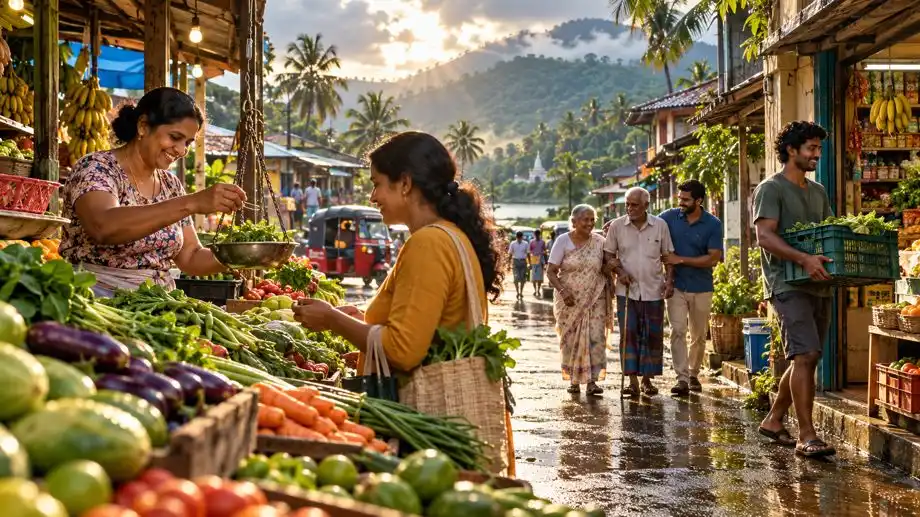
MSMEs contribute more than 52% of Sri Lanka's gross domestic product and 45% of overall employment, according to the ADB. The label covers a very broad group, from a single trader at a market stall to a workshop or factory with dozens of staff, which is why the financial health of these firms reaches far beyond their owners.
Getting affordable credit is the persistent obstacle. Many of these businesses cannot produce the paperwork, repayment history, or collateral that commercial banks require, so they turn to informal lenders or go without. Low levels of digitalization make the problem harder, because a business that keeps its records on paper and sells only in person is difficult for a lender to assess. Climate-related disasters and economic shocks then strip away working capital that took years to build.
The program's stated aim is to attack those three constraints at once: access to finance, digitalization, and resilience to shocks.
Two Loans, Two Very Different Jobs
A policy-based loan does not pay for a road or a treatment plant. It releases money as a government carries out agreed changes to laws, regulations, and institutions. Here the reforms concern the rules and systems through which MSMEs borrow, save, and build a financial record.
The second instrument works through the market. In a financial intermediation loan, the development bank provides funds to participating financial institutions, which then extend credit lines to businesses. The arrangement means the ADB does not choose individual borrowers. Banks and other lenders assess the firms and carry the relationship. The $40 million green slice is meant to flow to enterprises making environmentally sustainable investments and running activities that reduce environmental risk.
Money at the growth stage of a business is a separate problem. A firm that needs to buy equipment, hire staff, or enter a new market often needs more capital than a short-term loan can supply. The program will support new financing arrangements to help small and medium enterprises at that stage raise equity, which means selling a share of ownership in the company in return for investment, rather than borrowing money that must be repaid with interest.
A New Watchdog for Microfinance
Part of the reform package is a legal change to establish a Microfinance and Credit Regulatory Authority. The goal is stronger supervision of microlenders and less predatory lending, a term for loans whose real cost is buried in fees, penalties, or repayment schedules that borrowers cannot realistically meet.
Unregulated digital lending shows why supervision matters. Two days before the ADB announcement, on 21 November 2026, the Colombo think tank Centre for a Smart Future published [a study of digital microloans](/news/19994/), titled "Fast Cash, Hidden Risks: Digital Microloans in Sri Lanka," that documented short-term loans marketed through text messages and social media, advertising that hides interest rates and administrative fees, and collection agents who contacted borrowers' family members and employers. Loan applications sought access to call logs, contact lists, photo galleries, and text messages, and providers frequently failed to meet the requirements of Sri Lanka's Personal Data Protection Act, leaving their policies without adequate explanations of why those permissions were needed, what data was collected, how it would be used, or which third parties would receive it.
Based on qualitative interviews and a review of major digital microloan providers, the report said the services proliferated among vulnerable communities after the economic crisis and amid rising household budget pressures, operating in what CSF described as a "regulatory black hole" with opaque terms, hidden costs, and instances of borrower harassment. Even so, users excluded from traditional banks said the loans filled a need for short-term shortfalls and emergencies and could be valuable with greater transparency and fairer repayment terms. CSF noted that digital microloan providers fall outside the Central Bank's mandate because it only governs deposit-taking institutions, and while the newly enacted Microfinance and Credit Regulatory Act has the potential to regulate them, its enforcement authority has not yet been established and reported amendments to the Act could bring further delays. The think tank recommended stronger coordination among regulators, data protection authorities, cybercrime agencies, and law enforcement, alongside efforts to improve digital literacy and consumer protection enforcement.
Placing microlenders under a dedicated regulator would give borrowers a body to approach and give supervisors powers to set conduct rules. How far the new authority's reach extends to lenders that operate through mobile apps is not spelled out in the program's description.
Credit Records, Guarantees, and Consumer Protection
Lending decisions run on information. When a bank cannot see whether a small business has repaid earlier loans, it either refuses credit or prices it high to cover the risk. The program is meant to strengthen credit information systems so that lenders and borrowers share a more accurate picture, and to improve access to business information on fair terms.
Credit guarantees are the second lever. Under a guarantee, a public agency promises to repay part of a loan if the borrower defaults, which lowers the loss a bank faces and makes lending to riskier customers more acceptable. The program will expand these guarantees.
Digital financial infrastructure and consumer protection sit alongside them. Faster and cheaper digital payments and records can bring small firms that operate in cash into the formal system, while consumer rules set limits on how financial products are sold and how complaints are handled. Financial literacy measures are intended to help owners understand the terms they are signing, and the program also covers formalizing institutional processes so that support reaches businesses more predictably.
Women, Green Finance, and Climate Resilience
At least 20% of the MSMEs that benefit from the program are to be owned or led by women, a target the ADB ties to the wider difficulty women face in obtaining credit. Those businesses are to be helped to finance investments that reduce their exposure to climate disruption and speed their recovery after floods, droughts, or other damaging events.
Green lending follows a similar logic. MSMEs that invest in sustainable activities often need equipment or processes that cost more at the start, and the $40 million allocation is meant to make those investments bankable. Green loans make up one fifth of the $200 million package.
What the ADB Says the Program Will Deliver
Shannon Cowlin, the ADB's country director for Sri Lanka, described the package as support for both the government's financial system and the businesses inside it.
This program will help the Government of Sri Lanka build a stronger, more inclusive financial ecosystem that enables MSMEs to grow, innovate, and withstand economic shocks and disasters related to the changing climate.
She said the priority given to women entrepreneurs and green lending connects the program to the country's wider economic direction.
By improving access to finance ... and expanding green financing, ADB is supporting Sri Lanka's transition to a more inclusive, resilient, and sustainable financing ecosystem for MSMEs.
The ADB was founded in 1966 and is owned by 69 members, 50 of them from Asia and the Pacific. It describes itself as a multilateral development bank working with governments and partners on sustainable, inclusive, and resilient growth, using financial tools and strategic cooperation alongside infrastructure investment.
What Is Still to Be Decided
The announcement leaves the operating details open. It does not give the interest rate or repayment period on either loan, the schedule for releasing the money, or the number of businesses expected to receive credit. The participating financial institutions are not named, and the shape of the equity financing arrangements has yet to be worked out.
On the regulatory side, no date is given for establishing the Microfinance and Credit Regulatory Authority or for passing the legal changes it requires, and the limits of its powers over digital lenders are not set out. No next steps, hearings, or deadlines were announced with the approval.
Key Points
- The ADB approved a $200 million package for Sri Lanka's MSMEs, announced on 23 November 2026.
- It splits into a $100 million policy-based loan for financial sector reforms and a $100 million financial intermediation loan for investment credit, with $40 million of the lending half for green loans.
- MSMEs account for more than 52% of Sri Lanka's GDP and 45% of employment, according to the bank.
- Reforms include a new Microfinance and Credit Regulatory Authority, stronger credit information systems, wider credit guarantees, and better consumer protection.
- At least 20% of supported businesses are to be owned or led by women, and new mechanisms will help growth stage firms raise equity.
- Loan terms, disbursement schedules, and the timing of the new regulator have not been disclosed.