Emergency Freezes and Secondary Approvals for Indian Bank Accounts
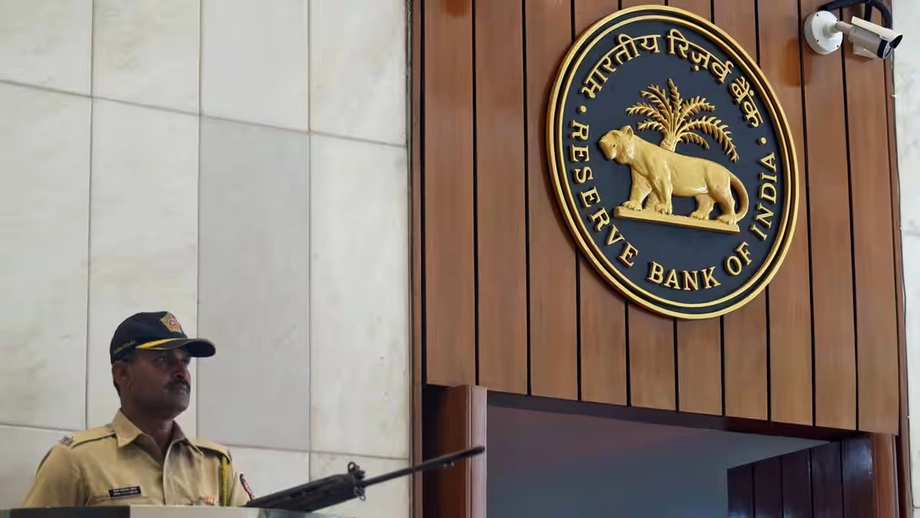
The Reserve Bank of India (RBI) released draft rules on November 23, 2026, proposing an account-wide Stop Switch and a Trusted Person Mechanism (TPM) to give customers direct control over electronic payment security. The measures are contained in the draft Reserve Bank of India (Commercial Banks, Responsible Business Conduct) Fifth Amendment Directions, 2026. The central bank is accepting public feedback on the proposals until December 14, 2026.
Contents
- Emergency Freezes and Secondary Approvals for Indian Bank Accounts
- Rising Financial Losses Driving the Regulatory Shift
- How the Account-Wide Stop Switch Freezes Outgoing Money
- Co-Signing Transfers Through the Trusted Person Mechanism
- Default Restrictions for New Accounts and Payment Cards
- Granular Daily Limits and What Was Dropped Since April
- Redefining Bank Negligence and Financial Liability
- At a Glance
Under the proposed timeline, stricter definitions holding banks financially accountable for security lapses and negligence will take effect on January 1, 2027. Financial institutions must roll out the customer-controlled safety tools, including the emergency debit freeze and third-party transaction approvals, by July 1, 2027, or at an earlier date chosen by the individual bank.
The draft directions specifically target commercial banks, which some summaries note leaves out small finance banks, payments banks, regional rural banks, and local area banks from that specific document. Broader regulatory releases show the proposed framework extending across commercial banks, small finance banks, payments banks, regional rural banks, local area banks, urban cooperative banks, and rural cooperative banks to maintain uniform banking practices across India.
The central bank outlined in the draft text why preventive user controls are being added to existing post-fraud compensation rules:
While the revised framework primarily addresses customer liability in the event of fraudulent EBTs, a need is felt to strengthen the same from a preventive perspective by providing customers with greater control over the manner and extent to which digital payment channels may be used.
Rising Financial Losses Driving the Regulatory Shift
India recorded nearly 28 lakh (2.8 million) digital payment fraud cases in 2025, draining 22,931 crore rupees from victims across the country. Across the banking sector as a whole, lenders reported 10,114 major fraud cases in the 2026 fiscal year amounting to 48,021 crore rupees, according to the RBI annual report for FY26. That figure represents a 46 percent increase compared to the previous year, with public sector banks accounting for the vast majority of the reported value.
Criminals have targeted the expanding digital payments network through bogus call centers, impersonation scams driven by deepfake technology, and networks of mule accounts. A mule account is a bank account opened in the name of an unsuspecting or complicit person that criminals use to receive and quickly move stolen money so authorities cannot trace it easily.
To combat these losses, the central bank has built a series of regulatory defenses over several months:
- April 9, 2026: The RBI released a discussion paper titled Exploring Safeguards in Digital Payments to Curb Frauds, seeking public views on payment delays, credit limits, and emergency account locks.
- June 2026: The regulator floated a proposal suggesting an extra authentication layer for digital transactions above 10,000 rupees made by citizens aged 70 and above.
- June 24, 2026: The RBI issued amendments strengthening the framework that limits a customer's financial liability when unauthorized electronic banking transactions occur, requiring banks to compensate eligible victims.
- June 26, 2026: Reports detailed a central bank circular establishing rules for financial institutions deploying artificial intelligence and machine learning models, requiring board policies, human oversight, and an operational kill switch to override active software models.
- November 23, 2026: The RBI published the draft Fifth Amendment Directions, turning the preventive concepts into formal rules for customer bank accounts.
- December 14, 2026: The window for public comments on the draft directions closes.
- January 1, 2027: Expanded provisions defining bank negligence take effect.
- July 1, 2027: Banks must complete the rollout of the Stop Switch, the Trusted Person Mechanism, and granular channel controls.
How the Account-Wide Stop Switch Freezes Outgoing Money
The centerpiece of the November draft is the Stop Switch, an emergency button that lets an account holder immediately halt all customer-initiated future debits across every linked digital payment channel at once. The concept draws from a model operating in Singapore, where banking customers can use a mobile app or phone hotline to instantly lock online access and stop fund transfers if they suspect a scam or lose their phone.
Once a customer activates the Stop Switch, the bank account overrides all other individual payment settings and blocks several specific actions:
- All customer-initiated outgoing debit transfers through internet banking, mobile apps, or cards.
- The creation of any new recurring payment mandates or standing instructions.
- The registration of the bank account on any new applications operating on the Unified Payments Interface (UPI) provided by third parties.
The freeze only applies to outgoing money triggered by the user. Incoming credits, such as salary deposits or refunds, will continue to enter the account without interruption. Existing recurring payment mandates, prior standing instructions, the marking of legal liens, and debits initiated directly by the bank to recover service charges or loan installments remain outside the scope of the Stop Switch so that customers do not accidentally default on loans or utility bills during a security lock.
Banks must make the Stop Switch available in multiple languages across all existing customer touchpoints, including physical bank branches, automated teller machines (ATMs), internet banking portals, mobile banking apps, and interactive voice response (IVR) telephone systems. To turn the Stop Switch off and resume normal banking, the customer must complete an authentication process at least as strict as the one used to turn it on, or verify their identity in person at a bank branch.
Co-Signing Transfers Through the Trusted Person Mechanism
Alongside the emergency freeze, the RBI proposed the Trusted Person Mechanism, a voluntary feature allowing an account holder to nominate an adult aged 18 years or older to act as a co-signer for large electronic fund transfers. The facility will be available for individual accounts and joint accounts operated under survivorship clauses, requiring explicit consent from both the account holder and the nominated helper.
When a customer initiates a physical or digital fund transfer that exceeds a monetary threshold set by that customer (for example, 50,000 rupees), the bank pauses the transfer and sends an alert to the trusted person. The notification includes the transaction amount, beneficiary details, and any transaction narration entered by the sender. The trusted person has exactly one hour from the moment of notification to review and approve the payment. If the trusted person rejects the request or fails to respond within the 60-minute window, the bank automatically declines the transaction.
To prevent fraudsters from hijacking both notifications on a single compromised device, banks must verify the trusted person's identity using an officially valid document, confirm their email address, and ensure their registered mobile phone number is different from the phone number linked to the customer's bank account.
The draft rules set strict legal boundaries around the nominated helper. Registering a trusted person does not make that individual a joint account holder, legal nominee, mandate holder, beneficiary, or authorized signatory. The helper cannot initiate transactions, operate the account, or view the customer's account balance, fixed deposits, investments, or insurance records. They carry no financial liability for the account.
To preserve speed for daily commerce, the Trusted Person Mechanism will not apply to UPI payments, merchant payments made through any channel or card, or recurring payments processed through standing instructions, electronic mandates, or the National Automated Clearing House (NACH). Activating the mechanism, changing the nominated person, altering the rupee threshold, or opting out entirely will trigger a mandatory cooling period of 24 hours. Banks must notify both the customer and the outgoing trusted person before any removal takes effect, and lenders may require a branch visit or telephone verification for customers assessed as highly vulnerable to cyber fraud.
Default Restrictions for New Accounts and Payment Cards
The draft rules overhaul how banks onboard new customers to stop criminals from opening fresh mule accounts and immediately draining funds online. Under the proposal, every digital payment channel, including internet banking and mobile banking, must remain disabled by default when a new bank account is opened. A bank can only turn these features on after the customer provides explicit consent and passes required identity authentication.
The RBI stated the requirement directly in the draft text:
A bank shall provide all its customers with the facility to disable one or more digital payment channels linked to their account, and to subsequently re-enable such channels through the physical or digital interfaces of the bank.
Even after a customer activates a digital payment channel, the bank must enforce a ceiling based on risk assessment that limits the total value of fund transfers allowed during the first 24 hours. Banks can gradually raise this transfer limit after the initial 24 hours based on internal policies, and customers can only modify their limits after that first day has passed.
Physical and virtual debit, credit, and prepaid cards will face similar restrictions at the time of issue or reissue. New cards will be restricted by default to domestic, contact-based transactions at physical ATMs and point-of-sale (PoS) terminals inside India, where a card must be physically dipped or swiped. Online e-commerce payments, contactless tap-to-pay functions, and international transactions will remain switched off until the customer manually turns them on. Foreign exchange prepaid cards are exempted from the domestic restriction and will be enabled for contact and contactless use outside India upon issue. Gift cards and mass transit prepaid cards are also excluded from these card control mandates. When a bank reissues an existing card, it must automatically carry over the security controls the customer had configured on the previous card.
Granular Daily Limits and What Was Dropped Since April
Beyond the emergency switch and default locks, banks must give account holders fine-tuned controls over their active payment channels. Customers will be able to set maximum rupee caps at four distinct levels: a limit per individual transaction, a daily limit for a specific beneficiary (such as capping transfers to a single payee at 20,000 rupees a day), a daily total limit for a specific payment channel, and an overall daily cap combined across all digital payment channels. Users will also be able to schedule specific time windows, such as late night hours, during which selected digital payment channels remain automatically disabled. For cards, users will be able to set separate transaction limits for ATMs, point-of-sale machines, online shopping, and contactless payments, across both domestic and international categories.
Several restrictive proposals that the RBI tested in its April 2026 discussion paper were modified or dropped entirely in the November draft following public feedback. In April, the central bank had considered delaying any payment over 10,000 rupees to a newly added beneficiary by up to one hour, alongside an annual credit ceiling where incoming deposits above a certain limit would be held in a frozen shadow mode. Both the one-hour payment delay and the annual credit ceiling were excluded from the November draft directions. The April paper had also suggested restricting the Trusted Person Mechanism to citizens aged 70 and above and persons with disabilities for transfers exceeding 50,000 rupees. In the November draft, the RBI expanded the Trusted Person Mechanism to all account holders on a voluntary basis and allowed customers to choose their own rupee threshold.
Redefining Bank Negligence and Financial Liability
To ensure financial institutions build and maintain these tools reliably, the RBI proposed an expanded definition of bank negligence that takes effect on January 1, 2027, six months ahead of the customer controls. Under Indian banking rules, if a fraudulent transaction occurs due to bank negligence, the customer bears zero financial loss and the bank must refund the stolen money.
The draft directions define the standard in stark terms:
Negligence by a bank means any act of omission or commission on part of the bank which results in or contributes to the occurrence of a fraudulent electronic banking transaction in a customer account.
Under the draft rules, a bank will be held negligent if a fraudulent transfer is linked to any of the following institutional failures:
- Failing to provide the Stop Switch, granular channel controls, or the Trusted Person Mechanism, or failing to enforce the limits and blocks set by a customer.
- Failing to enforce required authentication factors for transactions, or multi-factor authentication when adding or changing beneficiaries, altering account details, or raising transfer limits.
- Failing to lock a digital payment channel or alert the customer after the maximum number of failed login or authentication attempts is reached.
- Failing to send mandatory transaction alerts, or failing to send immediate alerts whenever safety controls are activated, modified, or turned off.
- Failing to maintain tamper-proof audit logs of customer control changes or conduct ongoing customer awareness programs.
- Failing to provide round-the-clock channels for reporting fraud or lost cards, or failing to act promptly once a customer submits a complaint.
- Experiencing a bank-side system malfunction or security breach, or suffering from collusion and connivance by bank employees or third-party vendors hired by the bank.
Legal and financial compliance specialists note that the draft rules shift how digital banking safety is managed in India. Amey Pathak, partner and head of banking, financial services, and insurance at the law firm Cyril Amarchand Mangaldas, explained how the new controls divide duties between lenders and account holders:
Fraud prevention will likely become a shared responsibility, with customers actively participating in the protection of their accounts rather than relying solely on bank-side controls.
Vikram Babbar, partner and leader of financial services, fraud, and integrity services at EY LLP India, noted that the draft directions align with modern security architecture, stating that the norms can be viewed as strong, providing greater control to the customer and consistent with the multi-layered approach for fraud prevention.
At a Glance
- The Reserve Bank of India proposed the draft Fifth Amendment Directions on November 23, 2026, with public comments open until December 14, 2026.
- An account-wide Stop Switch will let customers instantly freeze all outgoing customer-initiated debits, new payment mandates, and new third-party UPI app registrations while still allowing incoming deposits and existing loan payments.
- A voluntary Trusted Person Mechanism will let account holders nominate an adult with a separate phone number to approve or reject fund transfers above a user-set threshold within a one-hour window, excluding UPI and merchant payments.
- All digital payment channels on newly opened bank accounts will be disabled by default and subject to a 24-hour transfer limit once turned on, while new cards will default to domestic contact-based ATM and point-of-sale use only.
- Expanded rules holding banks liable for negligence, including employee collusion, system breaches, failed login lockouts, and failure to honor customer-set limits, take effect on January 1, 2027, followed by the customer safety tools on July 1, 2027.