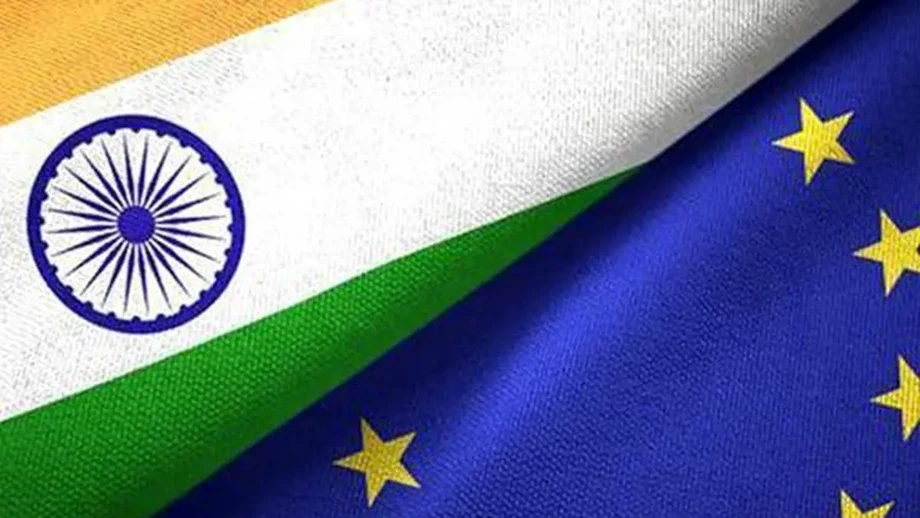
Diplomatic Visit Set for December 16 in Brussels
Prime Minister Narendra Modi will travel to Brussels on December 16, 2026, to formally sign a wide-ranging free trade agreement with the European Union. Jean-Eric Paquet, European Union Ambassador to India, confirmed the exact signing date during a diplomatic tour of northeast India. The scheduled meeting in Brussels, which hosts the main governing bodies of the twenty-seven-nation economic bloc, arrives nearly ten months after negotiating teams concluded talks on January 27, 2026. This gathering follows India and European Union Prepare for Landmark Free Trade Agreement Signing in December, marking a decisive shift in commercial relations between two of the world's largest democratic markets. The diplomatic schedule forms part of a four-nation tour for the Indian leader, combining bilateral and multilateral stops across Europe and the United States.
Contents
- Diplomatic Visit Set for December 16 in Brussels
- Understanding the Scope of the Combined Commercial Market
- Tariff Reductions and New Opportunities for Exporters
- Navigating Environmental Regulations and Compliance Hurdles
- Parliamentary Oversight and Institutional Approvals
- Broader Cooperation in Technology, Research, and Regional Growth
- Timeline of Key Developments
- At a Glance
Understanding the Scope of the Combined Commercial Market
Trade economists often describe international trade pacts through population metrics and economic output because these numbers dictate the sheer volume of potential customers. India represents the fourth-largest economy in the world by gross domestic product, while the European Union operates as the second-largest economic bloc globally. Together, these two territories encompass roughly two billion people, accounting for one-quarter of global economic output and one-third of international trade. Bilateral trade in goods reached 118 billion euros in 2025 according to the European Commission, while services trade added another 67 billion euros to the economic relationship. To expedite the path toward implementation, the European Commission bypassed the customary translation process into all twenty-four official languages of the bloc, choosing instead to advance the English text for immediate consideration by the Council of the European Union.
Tariff Reductions and New Opportunities for Exporters
A tariff is a tax collected by a government on goods arriving from foreign countries, which increases the final retail price for consumers and makes imported goods less competitive. Under the new trade framework, ninety-three percent of Indian shipments will enter the European market completely duty-free, eliminating levies on approximately $33 billion worth of labor-intensive merchandise. Sectors experiencing immediate relief include textiles, apparel, leather, footwear, marine products, gems, jewelry, and handicrafts. For instance, import duties ranging up to twelve percent on clothing and up to seventeen percent on leather goods will vanish entirely upon implementation. Smaller duties of 2.7 percent on wind-powered generating sets and lithium-ion batteries will also disappear, lowering production costs for renewable energy developers. On the opposing side, India is offering preferential access across 97.5 percent of European export values, which will lower import costs for European luxury automobiles and specialized wines entering the South Asian market.
Navigating Environmental Regulations and Compliance Hurdles
Free trade agreements remove tax barriers, but local regulatory standards still govern how goods enter a foreign territory. Exporters must satisfy strict European criteria regarding product safety, environmental protection, energy efficiency, recyclability, and traceability before goods can cross borders. A major compliance challenge arises from the Carbon Border Adjustment Mechanism, a European regulation that imposes carbon pricing on the emissions embedded in imported steel, aluminum, cement, fertilizers, electricity, and hydrogen. European importers must surrender certificates for these carbon-heavy imports starting January 1, 2026, with the first mandatory reporting and surrender due by September 30, 2027. Steel and aluminum account for roughly six percent of Indian merchandise exports to Europe, meaning that additional carbon costs could offset some of the savings gained through tariff elimination. Micro, small, and medium enterprises face particular difficulties funding the required testing and emissions monitoring systems, prompting calls for government agencies and export promotion bodies to provide affordable certification support.
Parliamentary Oversight and Institutional Approvals
Democratic governance requires that trade treaties undergo rigorous domestic review before changing national laws. The Parliamentary Standing Committee on External Affairs convened in Parliament House to examine the opportunities and challenges tied to European relations. Chaired by Member of Parliament Shashi Tharoor, the thirty-member committee gathered testimonies from representatives of the Ministry of External Affairs and the Ministry of Commerce and Industry. Following the signing ceremony in Brussels, the agreement requires formal consent from the European Parliament and a concluding vote by the Council of the European Union. India must also finalize its own domestic ratification procedures before the trade pact officially comes into force. Officials aim to operationalize the agreement during the first quarter of 2027, creating a predictable legal framework for businesses across both regions.
Broader Cooperation in Technology, Research, and Regional Growth
Economic integration extends beyond merchandise shipping to encompass educational exchanges, scientific research, and regional development projects. Ambassador Paquet highlighted ongoing European involvement in Assam, where a pilot initiative known as the Blue Valley project aims to boost local industries in fragrance, essential oils, and aroma-based manufacturing. During roundtable discussions in Guwahati, Assam Chief Secretary Dr. Ravi Kota pointed to the €100 billion Horizon Europe research program spanning from 2021 to 2027. With India expected to join the program as an associated member in January 2027, local universities, laboratories, and technology startups will gain equal access to European research funding and collaborative grants. Additional discussions explored partnerships in artificial intelligence hubs, electric vehicles, inland water transport, and the €10 million Global Gateway support facility designed to assist investment project preparation across northeast India.
Timeline of Key Developments
- January 27, 2026: India and the European Union officially conclude negotiations on the trade agreement following talks relaunched in 2022.
- September 2026: The European Commission submits formal legal texts and tariff schedules to the Council of the European Union for authorization.
- October 29, 2026: Shashi Tharoor is reappointed as Chairperson of the Parliamentary Standing Committee on External Affairs to review European ties.
- November 16, 2026: EU Ambassador Jean-Eric Paquet confirms the mid-December Brussels visit during official meetings in Assam.
- December 16, 2026: Prime Minister Narendra Modi is scheduled to visit Brussels to sign the trade agreement.
- First Quarter 2027: Target timeframe for the agreement to complete legislative approvals and become fully operational.
At a Glance
- Prime Minister Narendra Modi will travel to Brussels on December 16, 2026, to sign the trade agreement.
- The trade pact unites a market of two billion people representing a quarter of global economic output.
- Ninety-three percent of Indian exports by value will secure immediate duty-free entry into Europe.
- Bilateral goods trade reached 118 billion euros in 2025, supported by 67 billion euros in services.
- Compliance with European carbon border taxes remains a challenge for metal and manufacturing exporters.