Winter Roads and Hidden Changes
Cold winter months bring heavy snow to northern regions, requiring local road maintenance crews to spread large amounts of melting agents to keep transportation routes safe. These chemical substances, primarily consisting of sodium chloride or ordinary salt, prevent ice from forming on asphalt surfaces during freezing temperatures. Environmental scientists have long suspected that the runoff from these treatments might alter the natural chemistry of adjacent soils and water systems, yet the exact biological consequences remained largely unstudied until now. This research was published on September 1, 2026, in the journal Applied Soil Ecology under the title "Road salt application increases sodium levels in roadside plants and ants, reshaping tritrophic interactions" by Hiroki Terajima, Youhei Kawase, Akira Yamawo, Nobuyuki Azuma, Kaori Noda, and Hiroshi Ikeda.
Contents
Researchers based in Aomori Prefecture set out to investigate how road salt affects tiny creatures living right next to busy transit corridors. Their findings reveal a surprising shift in the feeding habits of local insects, showing that human intervention in winter road safety ripples through the natural food web in unexpected ways.
Investigating the Route 7 Corridor
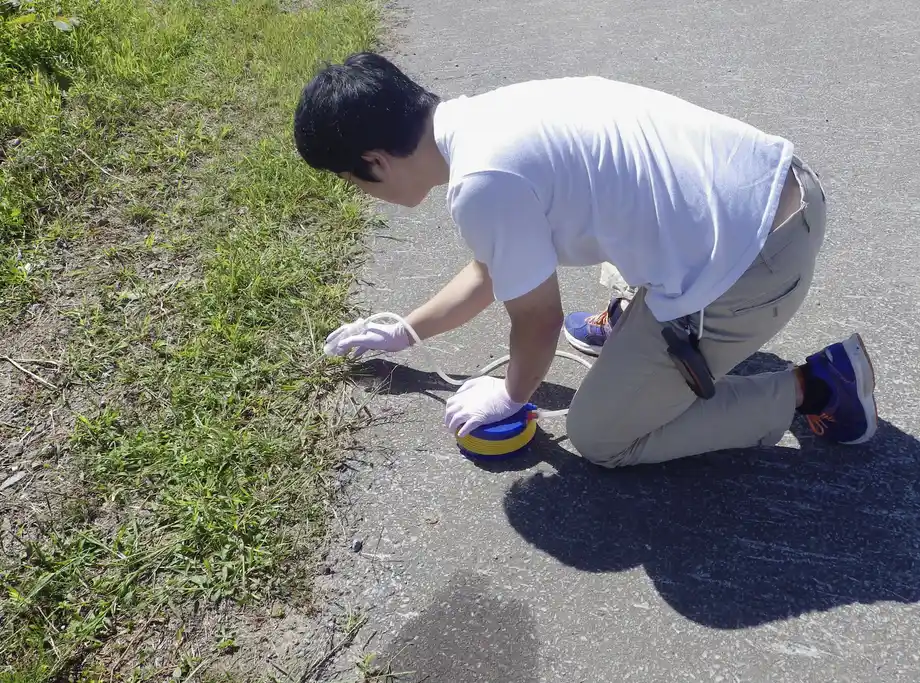
A research team from Hirosaki University collected soil samples, plant specimens, and live ants from ten different locations along National Route 7 in Aomori Prefecture during both the spring and autumn seasons. クロヤマアリ, a common species known scientifically as Formica japonica or the Japanese black ant, served as the primary subject for biological sampling. Laboratory analysis of these samples uncovered a clear pattern related to distance from the asphalt pavement.
Chemical testing showed that sodium concentrations in the soil and local plants peaked during the spring thaw, especially at monitoring stations located closest to the highway. Ants collected near the road during this same springtime period displayed elevated levels of sodium within their bodies, matching the chemical gradient measured in their immediate surroundings. Researchers realized that these insects were absorbing high amounts of salt directly from their environment as snow melted and carried the chemical runoff into nearby dirt and greenery.
From Meat Eaters to Plant Seekers
Ants typically act as predators or scavengers in forest and field ecosystems, hunting other small insects or feeding on protein-rich animal matter to support their colonies. Chemical analysis of the insects captured near Route 7 during spring revealed a profound behavioral shift away from this standard diet. Individuals carrying high internal sodium levels showed a distinct preference for plant-based foods rather than animal protein, effectively adopting a herbivorous lifestyle during the post-winter months.
Controlled laboratory experiments helped confirm the exact mechanics behind this dietary change. When scientists fed ants a diet with high sodium content, the insects accumulated salt in their bodies and subsequently developed a strong appetite for low-sodium food sources. This internal regulatory mechanism explains why spring thaws trigger such a sudden change in foraging preferences among colonies living close to salted roadways.
Broader Implications for Local Ecosystems
Winter road maintenance practices create chemical disturbances that extend far beyond simple road clearance. 池田紘士教授, a forest zoology expert who worked on the study at Hirosaki University and is now affiliated with the University of Tokyo, explained the significance of these findings regarding regional wildlife and plant communities.
昔からまかれている融雪剤が、日本のさまざまな地域で影響を与えている可能性がある。今後は他県にも調査を広げたい。
This statement translates to the understanding that melting agents applied for decades might be influencing natural behaviors across various parts of Japan, prompting researchers to expand their field surveys to other prefectures. The research team noted that similar physiological and behavioral shifts could occur in other insect species and plant populations exposed to high levels of road salt runoff.
Next Steps for Scientific Research
Scientific exploration into road salt ecology remains in its early stages, leaving several questions unanswered regarding long-term population health and soil chemistry changes. Researchers did not specify the exact thresholds where sodium toxicity begins to harm other types of regional wildlife, nor did they provide a definitive timeline for future field studies outside Aomori Prefecture. Future investigations will likely monitor multiple insect species across different snowy prefectures to determine whether herbivorous shifts weaken ant colonies or alter pollination patterns in nearby flora.
The Essentials
- Researchers from Hirosaki University announced the study findings by November 22, 2026.
- The original study was published on September 1, 2026, in Applied Soil Ecology.
- Field investigations took place at ten distinct locations along National Route 7 in Aomori Prefecture.
- Investigators collected soil, plants, and Japanese black ants during both spring and autumn seasons.
- Springtime samples showed that sodium concentrations in soil, plants, and ants increased closer to the roadway.
- Laboratory tests confirmed that high sodium intake causes ants to subsequently prefer low-sodium plant foods.