A Major Shift in Google AI Chip Strategy
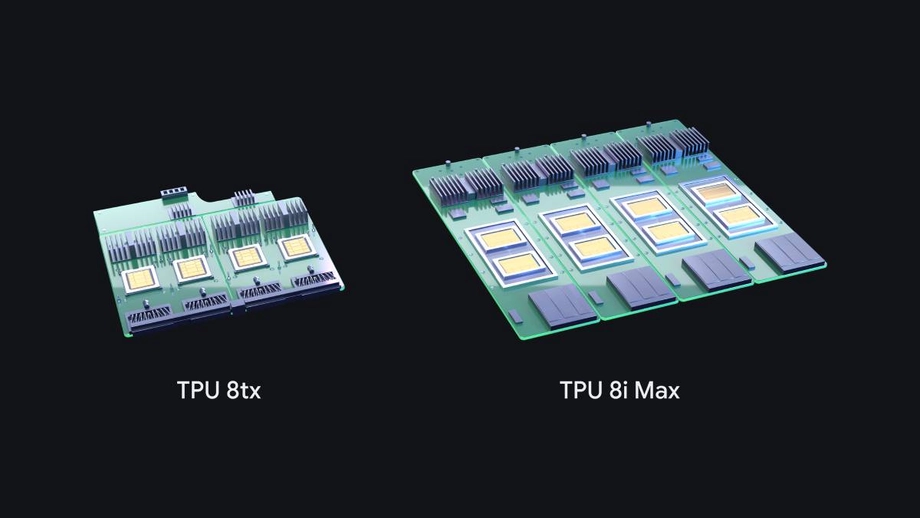
Alphabet subsidiary Google is changing how it buys custom artificial intelligence chips for its data centers. According to TF International Securities analyst Ming-Chi Kuo, Google has reduced its planned 2027 orders for the TPU 8i series designed by Broadcom by about one million units. Tensor processing units, commonly called TPUs, are custom microchips built by Google to run machine learning tasks and artificial intelligence models. The reduction represents a drop of roughly 20 percent from the previously expected shipment volume of five million chips for that series down to four million. Most of the cuts hit the higher-priced 8i Max chip, which carries the internal code name Whalefish. At the same time, Google plans to increase orders for the TPU 8t series designed by MediaTek. The adjustment highlights a strategy by Google to balance tight supply chains and limited electricity in modern data centers while keeping its focus on building advanced artificial intelligence models. As detailed in earlier coverage of Google Expands TPU Lineup, the technology giant has been rolling out multiple specialized processor configurations to handle heavy workloads. The recent procurement shift suggests that computing resources are being redirected toward the most demanding artificial intelligence tasks rather than spreading expensive hardware evenly across all deployments.
Contents
The Impact on Broadcom and Market Reactions
Financial markets reacted swiftly to the reported procurement changes as semiconductor stocks faced widespread selling pressure. Broadcom shares dropped significantly following the news, reflecting investor concerns over the durability of future custom chip revenue. Goldman Sachs analyst James Schneider lowered his price target on Broadcom to 460 dollars from 540 dollars while adjusting the valuation multiple applied to projected earnings from 30 times down to 25 times. Rothschild & Co Redburn also downgraded the chip designer with a target price of 398 dollars. Despite these market jitters, Broadcom reported strong performance earlier in the year, with artificial intelligence semiconductor revenue growing 221 percent year over year in the third quarter of fiscal 2026. Broadcom chief executive officer Hock Tan addressed customer relationships during a September earnings call, stating:
Our engagement with Google has never been stronger.
Tan also noted at the time that Broadcom was shipping the TPU version 8i ahead of competing designs from rivals. Beyond its chip design work, Broadcom maintains significant exposure to major artificial intelligence labs including Anthropic, where executives have noted that customer agreements and lease backstops tied to infrastructure total approximately 43 billion dollars. The company also operates an infrastructure software business through VMware, providing a secondary revenue stream outside of hardware sales. However, analysts point out that customer concentration remains a key variable for Broadcom as competition from alternative designers intensifies.
MediaTek Positioned to Capture New Orders
Taiwan-based MediaTek stands to benefit directly from Google's decision to reallocate portions of its custom silicon roadmap. Morgan Stanley analysts meeting at the Asia Pacific Summit in Singapore reaffirmed an overweight rating and a target price of 6,188 New Taiwan dollars for MediaTek, designating the firm as a top pick among regional semiconductor equities. MediaTek initiated an internal reorganization on November 1, 2026, placing its data center and compute business group under new leadership while actively recruiting engineering talent from competitors. The company shipped its first artificial intelligence accelerator application-specific integrated circuit in September, helping drive an upward revision of its fourth quarter cloud artificial intelligence revenue target to 2.5 billion dollars. For the full year 2027, Morgan Stanley projects that MediaTek could achieve 160 billion dollars in revenue from custom silicon projects, capturing a market share of approximately 20 percent. Market enthusiasm for these developments drove MediaTek shares up sharply in trading following the news. While the exact financial contribution depends on the final volume of additional TPU 8t orders, analysts view the order shift as a milestone for MediaTek in expanding its footprint among major cloud service providers outside of China.
Understanding the Technology and Supply Chain Pressures
Modern artificial intelligence systems rely heavily on custom processors because general-purpose central processing units cannot efficiently handle the massive parallel mathematical calculations required by neural networks. Training an artificial intelligence model involves feeding it vast amounts of data to teach it patterns, while inference involves using that trained model to answer questions or generate text and images. Google builds custom TPUs to optimize both phases of this work. However, constructing large data centers presents severe physical limitations, particularly regarding electrical power availability and advanced manufacturing capacity for semiconductor packaging. Advanced chips often utilize specialized packaging techniques such as silicon bridges and high-density substrates to connect processing dies together. For instance, future TPU designs rely on advanced packaging methods like Intel's embedded multi-die interconnect bridge technology to link processors and input-output components. When power supplies and factory output reach their limits, operators must make deliberate choices about which chips to manufacture and deploy. By prioritizing chips suited for frontier model development over certain high-priced inference configurations, Google is attempting to maximize the capability of its systems without overstepping infrastructure boundaries.
Broader Semiconductor Market Context
The adjustment in Google procurement plans arrives during a broader downturn across global semiconductor equities. Companies supporting artificial intelligence infrastructure, including Marvell Technology and Nvidia, have experienced notable share price pullbacks amid investor reassessments of capital expenditure sustainability. Marvell shares fell as the market digested slowing momentum, reflecting its own custom silicon partnerships where Google holds warrants to acquire shares based on revenue milestones. Meanwhile, Nvidia continues to supply merchant graphics processing units supported by its proprietary software ecosystem to a vast array of enterprises and cloud operators. Analysts from Goldman Sachs emphasized that the long-term outlook for Broadcom and its peers depends heavily on two primary factors: whether customer spending on artificial intelligence infrastructure remains robust through 2028, and how successfully established suppliers defend their market share against emerging competitors. While emerging cloud service providers account for significant planned deployments, questions persist regarding their ability to secure long-term external financing for data center construction. These economic realities mean that chip suppliers must navigate both technological transitions and shifting customer budgets.
Timeline of Key Developments
- April 2026: Google introduced TPU 8t and TPU 8i at the Google Cloud Next conference.
- September 2026: MediaTek shipped its first artificial intelligence accelerator application-specific integrated circuit.
- November 1, 2026: MediaTek launched an organizational restructure centered on its data center business group.
- November 9, 2026: Google expanded its processor portfolio by announcing TPU 8tx and TPU 8i Max.
- November 18-19, 2026: Morgan Stanley held its Asia Pacific Summit in Singapore, reiterating positive outlooks for MediaTek custom silicon projects.
- November 20, 2026: Analyst Ming-Chi Kuo reported that Google reduced planned 2027 orders for Broadcom-designed TPU 8i chips by one million units.
At a Glance
The recent changes in the artificial intelligence hardware supply chain illustrate how hyperscale technology companies continuously optimize their infrastructure investments. Key takeaways from the developments include:
- Google reduced its 2027 procurement plans for the Broadcom-designed TPU 8i series by approximately one million units, or 20 percent.
- The reductions concentrate on the higher-priced 8i Max model, creating potential revenue pressure for Broadcom.
- Google plans to increase orders for MediaTek-designed TPU 8t chips, though final contract sizes remain unsettled.
- Financial institutions such as Goldman Sachs adjusted Broadcom price targets to 460 dollars while evaluating the sustainability of 2028 artificial intelligence spending.
- MediaTek expanded its custom silicon capabilities, targeting 160 billion dollars in segment revenue by 2027.
- Infrastructure limits including data center electricity and packaging supply are driving operators to reallocate computing resources toward frontier model development.