Companies Refuse Calls From Autonomous AI Assistants
South Korean telecommunications companies and major digital platforms are currently refusing to handle phone inquiries made by artificial intelligence agents on behalf of users. An artificial intelligence agent is an advanced type of software that acts on instructions by independently choosing tools and methods to complete tasks without human guidance. Companies are facing significant confusion over whether they should fulfill requests made by these autonomous systems because the legal status of an artificial intelligence agent remains entirely unclear. A platform company official explained the widespread hesitation by noting the lack of regulatory guidance.
Contents
- Companies Refuse Calls From Autonomous AI Assistants
- Government Councils and Legal Forums Debate Responsibility
- The Growing Pains of Autonomous Task Execution
- Employment Shifts and Regulatory Confusion for Businesses
- Timeline of Key Developments
- Rapid Market Adoption Driven by Consumer Convenience
- Expert Recommendations for Policy and Systems
- The Essentials
Regarding whether the status of an artificial intelligence agent can be viewed as the personal representative of the subscriber, there are zero legal guidelines, so it is ambiguous whether it is appropriate to respond, and we are not taking action. I understand that phone calls from artificial intelligence agents are coming in across all industries, including hospitals, telecommunications companies, shopping malls, and insurance companies.
Businesses worry that fulfilling requests made by artificial intelligence agents, such as processing refunds or canceling subscriptions, could lead to severe consumer disputes later if the actual human user protests the action. An internet shopping mall official pointed out that agents have recently even placed phone calls that users never actually instructed them to make, making it difficult to trust them as reliable business partners. Customer service representatives are also facing extreme fatigue because artificial intelligence agents persistently and aggressively question human staff to prove they completed a task, often interrupting conversations and demanding immediate answers. As Naver and Kakao Launch AI Agents Amid Security Pushbacks highlights, major digital platforms are racing to integrate these tools into everyday services while grappling with security and operational challenges.
Government Councils and Legal Forums Debate Responsibility
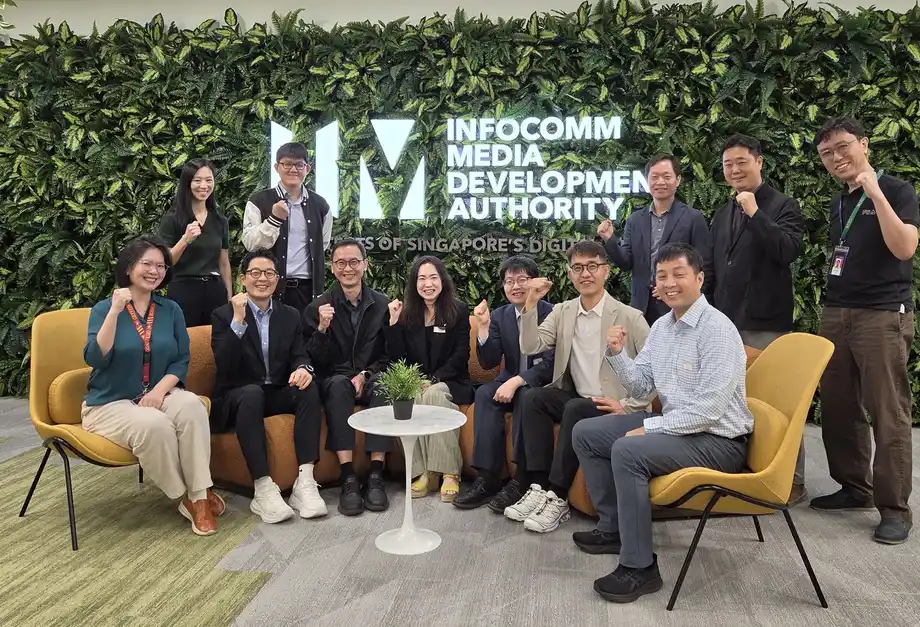
The Ministry of Economy and Finance held a meeting of its Strategic Economic Advisory Council subcommittee on artificial intelligence agent commerce on Monday, Nov. 16, 2026, at the offices of Saltlux, an artificial intelligence software company located in Songpa-gu, Seoul. Council Chairwoman Park Young-sun, who previously served as Minister of SMEs and Startups, emphasized the competitive urgency during the meeting.
Whoever secures leadership in the age of artificial intelligence agent commerce first will determine the competitiveness of the future digital economy.
The meeting included subcommittee Chair Kim Yong-jin, a professor at Sogang University School of Business, and Saltlux Chief Executive Officer Lee Kyung-il. Saltlux demonstrated two proprietary systems during the visit, showcasing Agent Studio, which connects multiple tools to automate repetitive tasks, and Document Studio, which converts knowledge from documents into data usable by artificial intelligence. Participants in the session called for the current legal framework to formally define automated systems, establish whether an artificial intelligence agent legally acts on behalf of a user, and determine who bears liability when things go wrong. A separate public seminar held the same day by lawmakers Choi Hyung-du and Lee Joo-hee, alongside various legal societies and institutions, further explored the mounting regulatory gaps surrounding agent systems and physical artificial intelligence.
The Growing Pains of Autonomous Task Execution
Jung Jun-ha, an investigator at the National Assembly Research Service, spoke at the Nov. 16, 2026, seminar to highlight the distinct nature of agent systems compared to older generative models that merely create text or images upon request. Jung Jun-ha pointed out that agent systems and physical robots act independently to achieve a given goal, repeating cycles of judgment, action, and feedback at speeds that make human supervision difficult. This high speed autonomy creates a legal vacuum regarding where liability falls when a system malfunctions or makes an erroneous purchase. Existing legislation divides businesses into developers and deployment users, but it fails to specify how liabilities should be shared among multiple business entities involved in updating or operating the software. Furthermore, tracing errors backward through rapid iterations of machine learning models remains exceedingly difficult, leaving victims without clear paths for compensation or damage relief.
Employment Shifts and Regulatory Confusion for Businesses
Labor market concerns associated with artificial intelligence agents and physical robotics extend beyond immediate layoffs into more subtle structural changes. Jung Jun-ha explained that the primary threat to employment is not necessarily firing existing workers, but rather companies reducing their intake of new hires, creating a quiet and less visible form of replacement. Meanwhile, enterprises operating under the current artificial intelligence framework report widespread confusion regarding internal use and high impact regulatory standards. Attorney Kang Ji-won of Lee and Ko spoke at the seminar to highlight ambiguities in the current legislation, noting that the law assumes artificial intelligence products or services are actively provided to external parties. This leaves companies uncertain whether developing internal tools for tasks like loan screening exempts them from regulatory oversight, while also complicating internal risk management across multiple corporate departments.
Timeline of Key Developments
- Nov. 5, 2026: Kakao Chief Executive Officer Shina Chung announces platform context advantages during an earnings call, and Naver renames its advertiser center to Naver Ads.
- Nov. 12, 2026: Naver Chief Executive Officer Choi Soo-yeon outlines official partnership goals during an earnings conference call.
- Nov. 16, 2026: The Ministry of Economy and Finance advisory subcommittee visits Saltlux, and the National Assembly Research Service holds its public seminar on artificial intelligence regulation.
- Nov. 19, 2026: Naver launches a closed beta test for its community artificial intelligence agent.
- November 2026: The startup Pickle surpasses 200,000 monthly active users in South Korea roughly one month after launching its phone task execution service.
Rapid Market Adoption Driven by Consumer Convenience
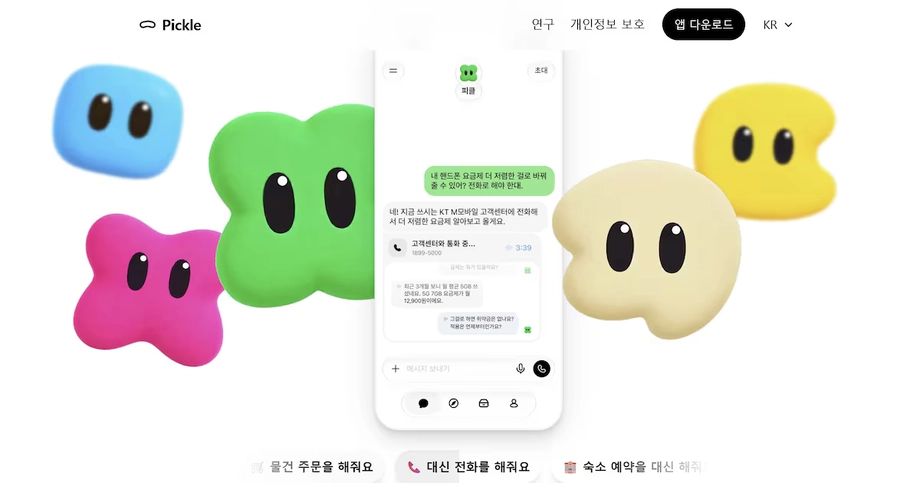
Despite mounting legal ambiguity and corporate hesitation, services powered by autonomous task agents are expanding rapidly due to their high convenience for everyday consumers. Pickle, a startup headquartered in Silicon Valley and founded by Korean entrepreneurs, surpassed 200,000 monthly active users in South Korea just one month after launching its telephone task service. An artificial intelligence industry insider noted that if business models like Pickle continue to prove their profitability, competing services will flood the market and increase the pressure on corporate customer centers. Security risks compound these operational headaches because foreign based agent services often record human customer service voices and transfer those audio logs to overseas cloud servers, raising immediate privacy concerns.
Expert Recommendations for Policy and Systems
Experts argue that policymakers must establish clear guidelines to prevent widespread chaos on the ground and protect both consumers and businesses. Choi Kyung-jin, president of the Korea Artificial Intelligence Law Association and a law professor at Gachon University, suggests that because the final responsibility for an agent action rests with the user, systems must be built to allow users to verify outcomes easily. If an agent mistakenly executes tasks outside its authorized scope, such as canceling reservations or processing unauthorized refunds, companies and developers should implement mechanisms to reverse the transaction within a designated time frame based on the transaction type.
The Essentials
- Telecoms and platforms are refusing phone calls from artificial intelligence agents because their legal status as user representatives is completely undefined.
- The Ministry of Economy and Finance held a subcommittee meeting on Nov. 16, 2026, at Saltlux to discuss automated system liability and e-commerce rules.
- Legal experts note that current legislation leaves business liability allocation and high impact artificial intelligence standards in a regulatory vacuum.
- The startup Pickle crossed 200,000 monthly active users in South Korea within a month of launching its phone task execution service.
- Experts recommend establishing verification procedures for users and rapid reversal systems for unauthorized transactions made by autonomous agents.