Climate Talks Collapse in Antalya
The 31st United Nations Climate Change Conference, known as COP31, concluded in Antalya, Turkey, without a final agreement after negotiations stalled over fossil fuel reductions and financial support for developing nations. The summit, hosted at the Antalya Expo Center, was originally scheduled to close on November 20, 2026, but extended discussions pushed past the deadline, breaking the record for the longest conference in the history of the UN climate process, a title previously held by the 2019 Madrid summit. Official representatives gathered for the closing plenary session where the outcome was finalized.
Contents
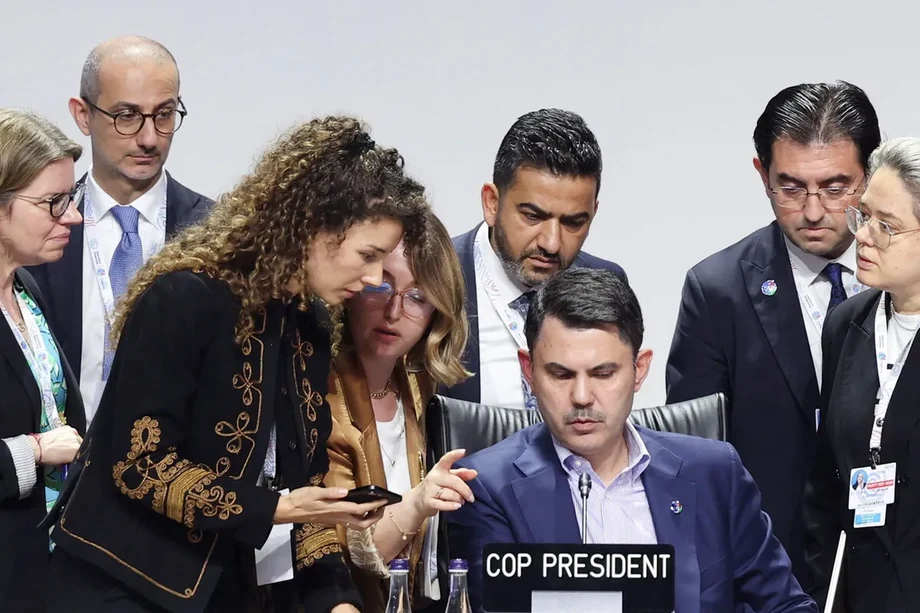
UNFCCC COP31 president and Turkey's Environment, Urbanisation and Climate Change Minister Murat Kurum announced the failure to secure the required consensus during the plenary. He stated that several participating parties opposed the final text.
It is clear that there are parties in this hall who oppose this text. We recognise that there is no consensus on this document. Therefore, these decisions have not been adopted.
The collapse marks the first time a COP has failed to adopt an official overarching decision since the 2009 Copenhagen summit. While existing international obligations under frameworks such as the Paris Agreement remain legally and technically intact, the lack of a unified consensus leaves future cooperative pathways uncertain.
Contentious Omissions on Fossil Fuels
The core dispute centered on the removal of direct references to phasing out coal, oil, and natural gas. Saudi Arabia and other major oil-producing nations strongly resisted the inclusion of explicit reduction targets, leading to their deletion from successive drafts. The final 10-page text, consisting of 94 articles, avoided mentioning fossil fuels directly. Instead, it reaffirmed the full scope of the United Arab Emirates consensus reached at COP28 in Dubai, which first introduced language regarding a transition away from fossil fuels.
European Union member states, Panama, Vanuatu, the Marshall Islands, and Norway formally rejected the draft. Ireland's climate minister Darragh O'Brien, speaking on behalf of the EU, criticized the text for ignoring scientific realities.
We will not endorse a decision that does not respond to the science and that actually risks deepening the chasm between global commitments and the action required… that does not even mention fossil fuels.
The refusal by the EU and allied nations blocked the unanimous consent required under UN climate negotiation rules, resulting in the formal rejection of the package.
Debate Over Financial Aid and Adaptation Targets
Developing nations pushed for specific financial commitments to address climate adaptation, but concrete figures were omitted from the final negotiation texts. Earlier drafts proposed scaling up adaptation finance to at least 120 billion dollars annually by 2035, but this target was subsequently removed. The final framework only acknowledged existing commitments to triple adaptation funding by 2035 without establishing a strict baseline or detailed disbursement roadmap.
Discussions regarding financial transparency led to the conceptualization of the Antalya-Addis Ababa financing roadmap, intended to streamline future funding mechanisms. Analyses presented during the summit indicated that developing countries require between 5.1 trillion and 6.8 trillion dollars by 2030 to fulfill their national climate plans, with annual adaptation requirements estimated at 305 billion dollars by 2035.
Electrification and Carbon Capture Controversies
The conference introduced targets for expanding electrical power distribution across global economies. The text called for raising the share of electricity in total final energy consumption to 35 percent by 2035, a target supported by China and other industrial economies. China's domestic electrification rate reached 28.8 percent in 2024, placing it ahead of many Organisation for Economic Co-operation and Development averages, though Chinese delegates noted that achieving complete reliance on low-carbon power sources remains challenging.
Provisions regarding carbon capture, utilisation, and storage technology also remained in the draft, aiming to reach gigaton-scale deployment globally by 2035. Final wording adjustments modified the directive from accelerating to expanding the deployment of these technologies. Environmental groups and vulnerable island nations criticized carbon capture as a mechanism that permits continued fossil fuel combustion.
Clashes Over Gender Equality Language
Negotiations faced parallel friction over the inclusion of gender-responsive policies in the overarching text. Article 81 of the third draft called for inclusive and gender-responsive implementation of climate action, emphasizing the leadership of women and girls and urging the implementation of the Belém Gender Action Plan. These provisions experienced multiple revisions, disappearing entirely from the second draft before returning in modified form.
Conservative states objected to specific terminology, requesting the substitution of gender-responsive language with gender-sensitive alternatives and replacing diverse women and girls with all women and girls to avoid broadening protections. UNFCCC Executive Secretary Simon Stiell addressed the high-level event on a just transition, highlighting the disproportionate burdens borne by women in agriculture, healthcare, and unpaid care work.
Women are heavily employed in climate-exposed sectors like agriculture and health, and they shoulder a disproportionate share of unpaid and paid care work.
Delegations from Russia, the Holy See, Argentina, and Paraguay opposed broader gender-transformative phrasing, reflecting deep ideological divisions within the negotiating blocs.
Timeline of Key Events
- November 9, 2026: COP31 opens in Antalya, Turkey, aiming to shift global commitments into tangible implementation.
- November 16, 2026: The presidency releases the first draft text, featuring explicit fossil fuel phase-out language and initial adaptation finance figures.
- November 18, 2026: High-level discussions occur regarding gender integration and energy transitions amid rising diplomatic friction.
- November 19, 2026: The second draft text removes direct references to fossil fuels and specific funding targets, drawing immediate backlash.
- November 20, 2026: The scheduled closing day passes without agreement, extending the conference past previous duration records.
- November 22, 2026: The third draft is published at dawn, followed by the formal rejection of the package and closure of the summit without consensus.
The Bottom Line
- The COP31 climate summit officially ended without a final agreement after the European Union and allied nations rejected the proposed text.
- References to fossil fuel reduction were omitted from the final drafts following opposition from major oil-producing countries.
- Specific funding amounts for developing nation climate adaptation were removed, leaving broad targets without clear baselines.
- Provisions encouraging global electrification and carbon capture technology retention remained in the unadopted document.
- Disputes over gender-responsive policy phrasing and terminology persisted throughout the conference before the final collapse.