The Deepening Slump Facing Maldivian Fishermen
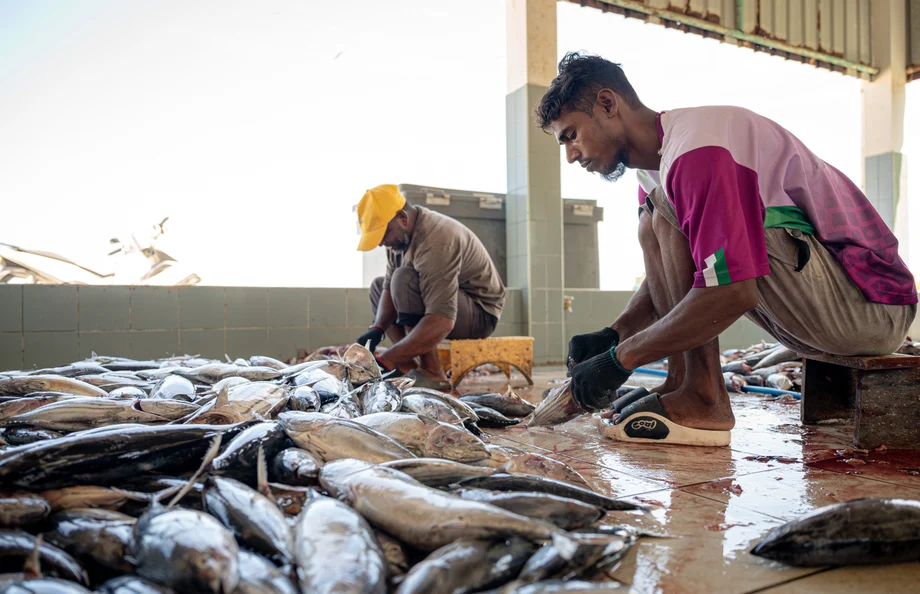
Abdul Haadhee has spent twenty-five years working as a boat captain, known locally as a keyolhu, aboard an Addu Atoll fishing vessel in the Maldives. In all those years on the water, he has never witnessed a slump quite like the current one affecting the nation's traditional pole-and-line fishing industry. After spending a week at sea, Haadhee recently brought his vessel to Lhaviyani Atoll's Naifaru island, a community renowned for its skilled master fishermen, to offload his remaining catch. Most of his bulk catch had already been weighed and sold at Felivaru, which serves as a state-owned fish-processing and canning hub located nearby. While schools of tuna are finally beginning to return to the waters both inside and outside the atolls, overall catch volumes remain stubbornly low due to a severe scarcity of small baitfish. Haadhee invited visitors aboard his boat for an interview, settling into a traditional woven chair atop the cabin to describe an industry under immense strain.
Contents
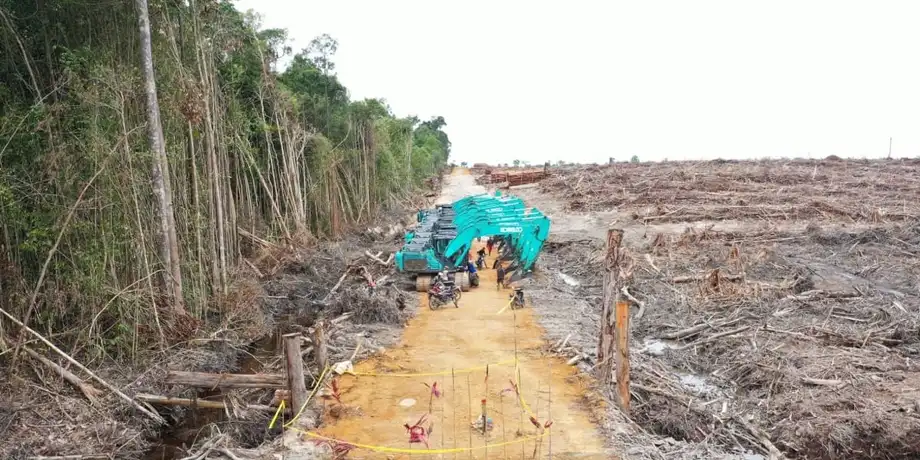
Take Male Atoll, for instance, which is home to the country capital and has historically teemed with abundant marine life. From olden times up until about five years ago, fishermen could always rely on finding plenty of baitfish in those waters. Over the past five years, however, baitfishing has experienced a steady decline across the entire archipelago. Haadhee explained that the crisis stems partly from the destruction of shallow coral reefs caused by severe coral bleaching and the rapid expansion of coastal construction. Land reclamation projects have proliferated across numerous islands to address acute land scarcity and accommodate infrastructure developments like airports. Half of the 4,000 hectares of land reclaimed nationwide between 2000 and 2024 is concentrated within Male Atoll alone, according to an environmental and socio-economic impact study. Because baitfish have vanished even from remote atolls untouched by land reclamation, fishermen point to global climate change as a major driving force behind the catastrophe.
Soaring Fuel Costs and Shrinking Margins
Fishermen now face punishing operational expenses because they are forced to travel vast distances across different atolls just to locate adequate supplies of live bait. Some vessels burn six to seven barrels of diesel daily solely on these exhaustive bait-hunting excursions. This financial burden arrives at a time when market fuel prices are climbing steeply. A single liter of diesel cost MVR 13.92 (USD 0.90) at the beginning of the year, but the price has since surged by 26 percent to reach MVR 17.54 (USD 1.14). The state fisheries company MIFCO operates a purchasing system for skipjack tuna, paying a rate of MVR 23 (USD 1.49) per kilogram. Operating under these financial conditions, a boat burning seven drums of fuel must land between 915 kilograms and 1,068 kilograms of skipjack tuna merely to cover its daily fuel expenditures.
The economic fallout directly threatens the households of the roughly twenty crew members who work alongside Haadhee on his vessel. Naifaru itself is home to a population of around 5,000 people, operates about ten active fishing vessels, and supports numerous families who earn a living by boiling and drying fish or producing traditional tuna paste known as rihaakuru. MIFCO initially reduced its purchasing rates earlier in the year following global price spikes, but introduced a floating price mechanism in June that has raised the purchase price six consecutive times. Back in early 2024, frozen tuna export volumes stood at 26,643 metric tonnes with revenues dropping to MVR 693 million, a sharp fall from the 62,352 metric tonnes and MVR 1.7 billion recorded in 2023. Fish exports in the first half of 2026 plummeted to 16,991 metric tonnes, marking the lowest figure recorded since 2010.
The Search for Bait in Distant Waters
Ali Niyaz, a Naifaru fisherman who dives specifically to catch bait, noted that baitfish were readily available near his home island before a local land reclamation project began earlier this year. Since that coastal work commenced, bait has completely disappeared from the immediate vicinity, compelling crews to undertake long journeys. According to Niyaz, the only locations in the country currently yielding decent quantities of bait are Vaavu Atoll and Raa Atoll. Fishermen from the southern reaches must travel all the way up to Vaavu Atoll to gather bait before heading back south to fish, while northern crews rely entirely on Raa Atoll. Official statistics from the Ministry of Fisheries and Maldives Customs reveal that the volume of fish purchased by processing companies during the first nine months of the year dropped by 48.9 percent compared to the same period in the previous year. Purchases of skipjack tuna plunged by 57.9 percent, dragging total export revenue down from $106.2 million to $58.2 million.
Maldivian fishermen have traditionally relied on reading wind directions and ocean currents to locate schools of fish with precision. Global climate change is now disrupting this centuries-old inherited expertise, rendering traditional navigational calendars inaccurate. Niyaz expressed frustration with the unpredictability, noting that even when modern indicators suggest baitfish should be gathering in specific areas, nothing appears. The underlying oceanographic mechanics involve a subsurface boundary layer known as the thermocline, which separates warmer surface water from cooler deep water. Plankton, which serves as the primary food source for small baitfish, naturally aggregates along this deep layer. When warming marine heatwaves push surface temperatures higher, the thermocline sinks deeper into the water column, causing plankton and the small pelagic fish that feed on it to retreat away from shallow reefs.
Warming Oceans and Complex Climate Drivers
Marine heatwaves and shifting weather patterns are closely tied to a powerful El Niño event developing in the Pacific Ocean. El Niño is a recurring climate phenomenon characterized by warming surface waters in the central and eastern tropical Pacific, which subsequently alters global weather patterns and ocean currents. Because a significant time lag exists before these Pacific temperature anomalies reach the Indian Ocean, meteorological disruptions in Maldivian waters are projected to persist well into the following year. Former Maldives Meteorological Service climatologist Ahmed Shabin explained that the current El Niño is unusually intense and is compounded by simultaneous shifts in the Indian Ocean Dipole, an atmosphere-ocean oscillation defined by differences in sea surface temperatures across western and eastern sectors of the Indian Ocean. A positive Indian Ocean Dipole warms the western Indian Ocean while cooling the eastern portion. When this positive dipole aligns with an El Niño event, both phenomena push ocean temperatures even higher around the islands, echoing the severe coral bleaching conditions recorded during the 1997 to 1998 event.
Climate model studies cited by researchers indicate that as global temperatures rise, the frequency of extreme El Niño events is projected to double, shifting from a once-in-twenty-years occurrence to roughly once every decade. Extreme positive Indian Ocean Dipole events could similarly increase in frequency from once every seventeen years to once every six years. Samrath Hassan, a captain from Gaaf Dhaalu Madaveli, pointed out that rising sea surface temperatures have left the top meter of the ocean exceptionally hot, discouraging fish from swimming near the surface. In an effort to secure bait in dwindling conditions, some fishermen have altered their harvesting techniques by adopting powerful underwater lighting systems. Starting with simple light tubes in the early 2000s, operators transitioned through mercury lights to modern, bright lights sunken deep underwater to attract baitfish, a practice that environmental advocates warn places additional stress on vulnerable reef ecosystems.
Environmental Reviews and the Debate Over Net Fishing
A comprehensive literature review published by the local environmental organization Maldives Resilient Reefs examined the compounding pressures facing the marine economy. The review concluded that while climate change poses an existential threat, direct human-induced damage such as land reclamation diminishes the natural capacity of reefs to recover from warming events. Furthermore, overfishing and evolving gear exert a heavy toll on fish stocks. Commercial net fishing methods such as purse seining and drift gillnetting remain strictly illegal in the nation. This total ban protects the sustainable pole-and-line and handline fishing brand that commands premium prices in international seafood markets. During a recent presentation to the parliamentary committee known as the People's Majlis Committee on Climate Change and Environment, representatives from Maldives Resilient Reefs warned that abandoning traditional pole-and-line methods in favor of industrial net fishing would harm ordinary fishermen and destroy the nation's reputation for sustainable seafood.
Fishermen hold diverse opinions regarding the strict ban on commercial nets. Some struggling boat owners view alternative methods as a temporary necessity, while others fear that introducing purse seining alongside depleted bait populations would cause a total collapse of tuna stocks. Fisheries Minister Ahmed Shiyam stated that the Maldives Marine Research Institute is conducting atoll-by-atoll assessments of coral reef health to guide future policymaking. These assessments aim to identify damaged areas and ensure strict adherence to environmental regulations during coastal development. Civil society groups have repeatedly filed complaints with the Environmental Regulatory Authority regarding reclamation work carried out without required silt screens or outside permitted dredging zones, actions that accelerate local reef degradation.
Global Comparisons and Future Outlook
Similar marine challenges are affecting fishing communities across the wider region. In the Philippines, rising ocean temperatures driven by the same global weather anomalies have altered fish migration patterns and disrupted coastal livelihoods. Andrea Silva, vice-president of the environmental group Rare, noted that changing fish behavior forces fishermen to spend more time at sea and consume greater amounts of fuel. Marine biologist Asuncion B. De Guzman explained that when water temperatures rise beyond tolerable limits, small pelagic fish and the plankton they consume vanish from coastal grounds, impacting both municipal and commercial sectors. Official production data from the Philippine Statistics Authority reflected these environmental pressures through an 8.5 percent year-on-year decline in the value of fisheries output.
Scientific bodies warn that inaction carries severe long-term consequences for island nations dependent on marine exports. The World Bank previously warned that under high-emissions scenarios, the Maldives could lose nearly all of its fish catch potential by the end of the century due to ocean warming and acidification. Acidification occurs when seawater absorbs excess carbon dioxide from the atmosphere, lowering ocean pH levels and weakening the calcium carbonate structures that form coral reefs. Environmental advocates emphasize that protecting at least 30 percent of the nation's marine territory is essential for building natural ecological resilience. Although 93 marine areas currently hold protected status in theory, they account for less than 0.1 percent of the total Exclusive Economic Zone. Fishermen like Haadhee and Niyaz continue to navigate these mounting environmental and economic pressures, hoping that improved management practices and stricter reef conservation will safeguard the future of their ancestral trade.
At a Glance
- Fish exports in the first half of 2026 fell to 16,991 metric tonnes, marking the lowest level recorded since 2010.
- State fisheries company MIFCO reported that frozen tuna export volumes dropped from 62,352 metric tonnes in 2023 to 26,643 metric tonnes in 2024.
- Diesel prices increased by 26 percent over the year, moving from MVR 13.92 (USD 0.90) to MVR 17.54 (USD 1.14) per liter.
- MIFCO increased its skipjack tuna purchase price to MVR 23 (USD 1.49) per kilogram under a floating pricing mechanism.
- Data from the Ministry of Fisheries and Maldives Customs show that fish purchase volumes dropped by 48.9 percent during the first nine months of the year.
- Revenues from fish exports fell from $106.2 million to $58.2 million over the comparable nine-month period.
- Commercial net fishing remains illegal in the Maldives to protect the sustainable pole-and-line fishing brand.