Water Management Policy in Tashkent
Uzbekistan considers domestic water conservation far more practical than investing massive funds in Siberian river diversion projects. Minister of Water Resources Shavkat Khamraev announced this position on November 19, 2026, during a press conference in Tashkent dedicated to efficient water resource utilization.
Contents
Shavkat Khamraev noted that the concept of moving northern water resources toward Central Asia dates back to the period before the formation of the Soviet Union. Financial limitations eventually halted those early initiatives.
Now Russia itself is experiencing economic difficulties. When the Soviet Union was economically strong, they intended to implement the project of transferring Siberian rivers. Projects were developed, methods of water delivery were studied. However, due to economic difficulties, the work stopped. In 1986, the USSR decided to stop this project.
The Modern Siberian Proposal
Russian scientists recently suggested that spending 100 billion dollars could deliver roughly 5 billion cubic meters of water annually. This initiative sparked discussions across neighboring countries, including questions from Kazakhstan regarding water allocation.
The modern engineering concept differs significantly from Soviet-era open canals by proposing a closed system of pipelines. One proposed layout involves seven pipeline lines stretching approximately 2100 kilometers each. Initial implementation aims to transport 5.5 billion cubic meters of water annually from the Ob River, with capacity scaling up later.
Evaluating Costs and Infrastructure
Dmitry Sozonov, project manager at the consulting firm IES Engineering and Consulting, calculated the financial requirements using international benchmarks. Initial investments start at 100 billion dollars, while operational expenses add between 700 million and 1.5 billion dollars annually for pumping stations, pipeline maintenance, and security. Construction of key infrastructure requires a minimum timeframe of ten years.
Officials at the Russian Ministry of Natural Resources confirmed that formal design and estimate documentation had not been submitted to the agency, indicating the discussions remained purely scientific and expert-driven.
Historical attempts to execute such mega-projects ended on August 14, 1986, when the Central Committee of the Communist Party of the Soviet Union and the USSR Council of Ministers issued a resolution halting all northern and Siberian river diversion work due to ecological and economic concerns.
Domestic Conservation Achievements
Uzbekistan achieved substantial water savings through local infrastructure improvements rather than relying on external water transfers. Ministry of Water Resources data for January through October 2026 confirms a total savings of 10.69 billion cubic meters of water, with annual projections reaching up to 11 billion cubic meters.
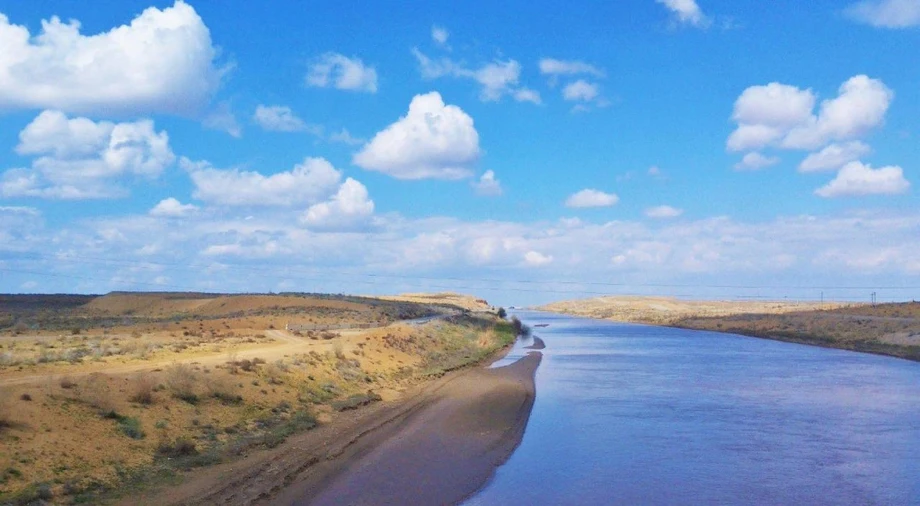
Advanced irrigation techniques and laser land leveling preserved approximately 4.9 billion cubic meters of water. Repair works, reconstruction, and concrete lining of irrigation canals saved an additional 3.14 billion cubic meters.
- January to October 2026: 10.69 billion cubic meters saved
- Water saving technologies and land leveling: ~4.9 billion cubic meters
- Canal repair and concrete lining: ~3.14 billion cubic meters
- End of 2026 target: 11 billion cubic meters
Future Investments and Infrastructure Targets
Shavkat Khamraev stated that investing another 5 billion to 10 billion dollars into modernizing irrigation networks and expanding water-saving technologies will further reduce consumption locally. President Shavkat Mirziyoyev approved a dedicated water management development program for the 2025 through 2028 timeframe in August 2025.
This national program mandates the reconstruction of 2551 kilometers of irrigation networks, the deployment of water-saving methods across 1.4 million hectares, and an increase in concrete-lined canals. Official targets project annual water savings to reach 14 billion cubic meters by 2028, increasing to 15 billion cubic meters by 2030.
Long-Term Climate Considerations
Climate change and shrinking glacier reserves could force Central Asian nations to seek external water supplies decades from now. Shavkat Khamraev acknowledged that by the 2050s, persistent reductions in precipitation and declining river basin inflows might require external resource procurement if natural conditions do not improve.
Theoretical Soviet designs envisioned transferring 27 billion cubic meters of water annually to benefit Uzbekistan, Russia, Kazakhstan, and parts of Turkmenistan. Future discussions and deeper scientific research could theoretically revive interest in collaborative regional water sharing.
Cross-Border Dynamics in the Amudarya Basin
Regional water discussions also involve upstream infrastructure developments such as the Qosh Tepa canal construction in Afghanistan. Uzbekistan maintains active diplomatic talks with Afghan authorities regarding future water distribution frameworks along the Amudarya river.
Shavkat Khamraev previously clarified that Afghanistan will not initiate full-scale water intake through the Qosh Tepa canal until 2030. Ongoing bilateral dialogues aim to secure stable water sharing arrangements for agricultural sectors in both nations.
At a Glance
- Uzbekistan saved 10.69 billion cubic meters of water between January and October 2026 through efficiency measures.
- Russian scientists proposed a 100 billion dollar Siberian pipeline project to deliver 5 billion cubic meters of water annually.
- Soviet authorities previously canceled northern river diversion plans on August 14, 1986, due to environmental and economic risks.
- Presidential programs target 14 billion cubic meters of annual water savings by 2028 and 15 billion by 2030.
- Uzbekistan plans to invest an additional 5 billion to 10 billion dollars into domestic irrigation upgrades.