Political Coalition Leaders Gather for High Stakes Talks
President Prabowo Subianto is moving swiftly to fill the vacant seat left behind by former Vice President Gibran Rakabuming Raka, who recently submitted a resignation letter to the People's Consultative Assembly, known locally as the MPR. Political party leaders from the governing coalition are preparing for a series of crucial meetings to narrow down potential contenders. The formal procedure dictates that the president holds the authority to propose two candidates directly to the assembly. This constitutional mechanism operates under Article 8, paragraph 2 of the 1945 Constitution, which outlines the exact protocol for handling a vacancy in the nation's second-highest office. The legislative body has established a tight schedule to ensure a smooth transition and maintain governmental stability.
Contents
Golkar Party Chairman Bahlil Lahadalia spoke to reporters on Sunday, November 22, 2026, outside the Gelora Bung Karno sports complex in Jakarta. He confirmed that coalition heads were orchestrating a face to face discussion before a strict administrative deadline. The discussions involve four primary supporting parties from the previous presidential campaign, alongside other political factions that later integrated into the governing alliance. According to Bahlil Lahadalia, the primary objective of these gatherings is to synthesize party aspirations and present a unified front to the executive branch.
Insyaallah hari ini ada rencana, tapi kepastiannya nanti akan kami sampaikan, apakah hari ini atau besok, tapi yang jelas sebelum tanggal 25 November itu pasti ada pertemuan antara partai koalisi dengan Bapak Presiden.
The administrative timeline leaves little room for delay. Chairman of the MPR Ahmad Muzani previously announced that the executive office must officially submit two names to the parliamentary body no later than Wednesday, November 25, 2026. Following this submission, the assembly has scheduled a plenary session to elect and inaugurate the new national leader. The date for this legislative vote is set for December 9, 2026, marking a shift from an earlier tentative plan on December 2. Public markets and political analysts are closely observing these developments, as the choice of a deputy leader directly influences economic policy, social welfare programs, and legislative priorities.
Internal Consolidation and Strategic Meetings at Hambalang
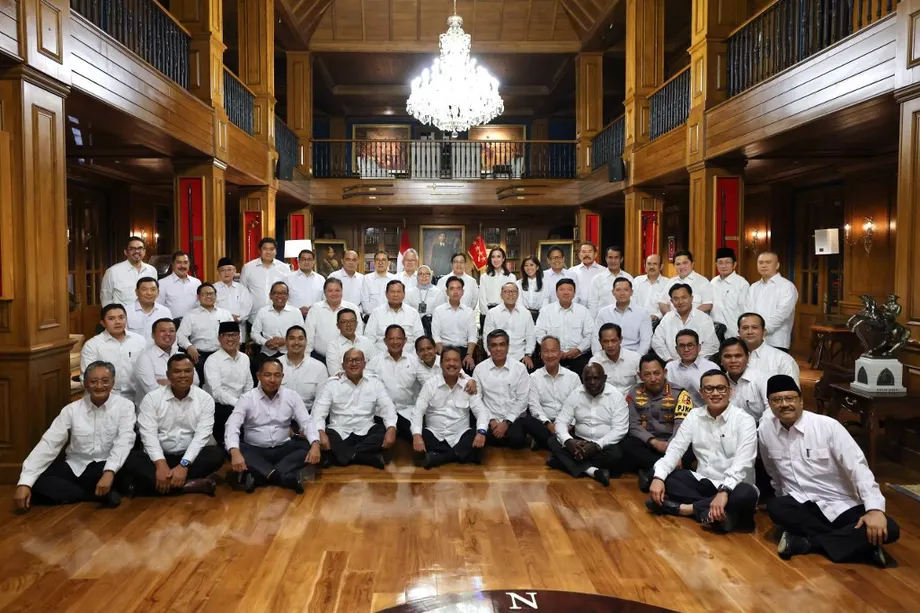
Before the broader coalition sessions took place, the internal leadership of the Great Indonesia Movement Party, known as Gerindra, convened at the private residence of President Prabowo Subianto. The gathering occurred at Padepokan Garudayaksa, located in Bojongkoneng village, Babakan Madang district, Bogor Regency. Several high ranking officials and cabinet ministers arrived at the compound on Sunday afternoon. Security personnel maintained a heavy presence around the area while intermittent heavy rain fell throughout the afternoon hours. Observers noted that this preliminary party meeting served as an essential foundational step before consulting external coalition partners.
Key figures participating in the Gerindra internal consultation included Sufmi Dasco Ahmad, who serves as Deputy Speaker of the House of Representatives and Daily Chairman of the party. Other notable attendees were Titiek Soeharto, Chairperson of House Commission IV and Deputy Chairman of the Board of Trustees, and Maruarar Sirait, Minister of Housing and Settlement Areas. Additional participants included West Java Governor Dedi Mulyadi, Deputy Minister of Hajj and Umrah Affairs Dahnil Anzar Simanjuntak, and senior party figure Hashim Djojohadikusumo. The delegation spent several hours inside the compound before departing around 6:00 PM local time.
Secretary General of the NasDem Party Hermawi Taslim confirmed that coalition secretaries general received direct instructions from Gerindra leadership to remain in Jakarta without traveling out of town from Sunday through Monday, November 23, 2026. This logistical coordination ensured that all key political actors remained accessible for immediate summons. Meanwhile, the Prosperous Justice Party, or PKS, acknowledged similar instructions. President of PKS Al Muzzammil Yusuf stated that his party leadership remained on standby in the capital while awaiting formal invitations from the presidential palace to join the deliberations.
Emerging Figures and Preference Dynamics Within the Coalition
Discussions surrounding potential candidates have brought several prominent names into public view. Bahlil Lahadalia noted that while various political factions hold distinct preferences, the final decision rests entirely with the executive office. One prominent figure frequently mentioned in political circles is Sufmi Dasco Ahmad. Supporters argue that his extensive political experience and strong communication channels across different legislative factions make him a viable candidate. Wahid Foundation Director Yenny Wahid publicly praised Dasco for his political acumen, noting his capacity to maintain stability and unity within the multi party government coalition.
Another name drawing public attention is Hatta Rajasa, a senior politician from the National Mandate Party, commonly known as PAN. Social media platforms recently featured discussions regarding his potential candidacy, bolstered by his previous experience as a vice presidential candidate in the 2014 election and his current role as a member of the Presidential Advisory Council. However, PAN leadership previously indicated a different institutional approach. PAN Chairman Zulkifli Hasan stated that his party chose not to put forward any internal candidates, opting instead to leave the final nomination completely to the discretion of the president.
Academic Perspectives and Alternative Candidate Clusters
Political analysts have offered varying recommendations regarding the selection process to balance political stability with public trust. Teguh Yuwono, a senior political analyst and dean at Diponegoro University in Semarang, suggested that choosing a candidate from within the governing coalition offers the most secure path to maintaining legislative harmony. However, he also emphasized that selecting a professional outside traditional party structures or a regional representative could significantly boost public confidence in the administration.
Regional representation has emerged as a distinct category in academic discussions. Yuwono pointed out that the leadership of the Regional Representative Council, known as the DPD, contains notable figures with deep local roots and extensive experience in managing center-region relations. Potential regional candidates mentioned in policy circles include DPD Chairman Sultan Baktiar Najamudin alongside Deputy Chairpersons GKR Hemas, Yorrys Raweyai, and Tamsil Linrung. These individuals possess direct insight into regional development priorities, though political observers acknowledge that party leaders continue to favor figures with established legislative coalitions.
The broader political landscape includes non coalition parties that have opted to remain outside the current government structure, such as the Indonesian Democratic Party of Struggle, known as PDI-P. Analysts note that while institutional rules permit a wide range of potential selections from different political clusters, practical political realities often constrain the final choice to ensure legislative cooperation. The president retains the constitutional prerogative to weigh these competing factors before finalizing the two official names.
Timeline of Key Developments
The progression of events leading to the upcoming submission involves several critical dates and official milestones:
- Friday, November 13, 2026: President Prabowo holds an initial consultative meeting with coalition party leaders at the Bogor Presidential Palace.
- Thursday, November 19, 2026: Ad Hoc MPR Team Head Bambang Wuryanto announces that the executive office intends to deliver two candidate names on November 25.
- Friday, November 20, 2026: President Prabowo returns to Indonesia following a series of international state visits.
- Sunday, November 22, 2026: Gerindra elites gather in Hambalang while coalition leaders prepare for urgent coordination meetings in Jakarta.
- Wednesday, November 25, 2026: Constitutional deadline for the president to formally submit two vice presidential candidates to the MPR.
- Wednesday, December 9, 2026: Scheduled MPR plenary session for the election and inauguration of the new vice president.
As the final hours approach, political parties continue their internal deliberations and informal consultations. The forthcoming days will determine how party aspirations translate into the final two names submitted to the national assembly. Public expectation centers on how the administration will balance political loyalty, coalition longevity, and broader public sentiment in selecting the next occupant of the vice presidential office.
At a Glance
- President Prabowo Subianto is scheduled to submit two vice presidential candidates to the MPR by November 25, 2026.
- The vice presidential position became vacant following the resignation of Gibran Rakabuming Raka.
- Coalition leaders held intensive consultations in Jakarta and at the presidential residence in Hambalang on Sunday, November 22, 2026.
- Prominent names circulating in political discussions include Sufmi Dasco Ahmad and Hatta Rajasa, alongside potential regional representatives from the DPD.
- The MPR has scheduled a plenary session to elect and inaugurate the new vice president on December 9, 2026.