Demonstrations Erupt Across Major Indian Cities
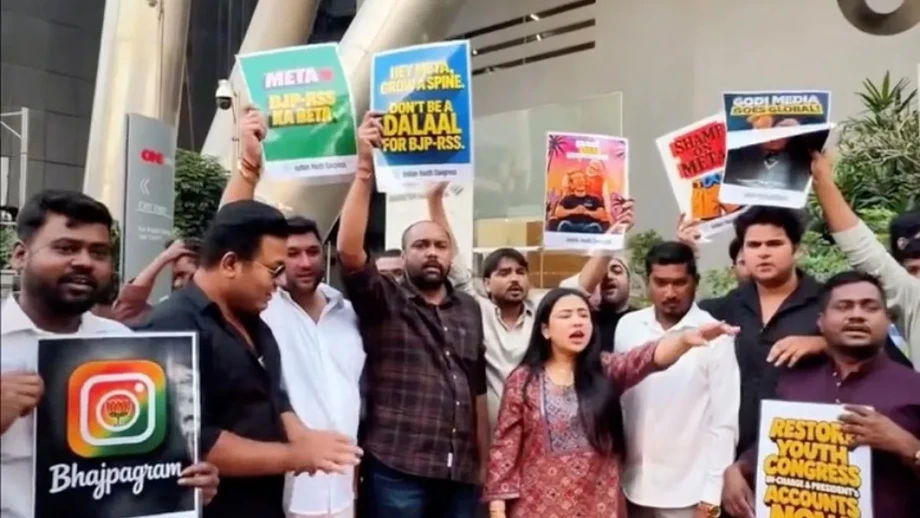
Demonstrations erupted across major technology and financial hubs in India as members of the Indian Youth Congress, the youth wing of the country's primary opposition party, staged direct protests against Meta. The demonstrations targeted the company's regional offices in Hyderabad, Mumbai, and Gurugram on November 20, 2026, following the alleged suspension, blocking, and algorithmic suppression of Instagram accounts and political content belonging to opposition leaders, independent journalists, and creators. In Hyderabad, roughly twenty party workers led by Telangana Youth Congress president Jakkidi Shiva Charan Reddy demonstrated outside the building housing Meta's offices in the Madhapur tech corridor. Video footage released by the organization showed protesters carrying placards, chanting slogans, and clashing with local law enforcement. Police placed around 20 to 21 protesters under preventive detention before releasing them approximately three hours later. Demonstrations also surfaced in Mumbai at the Bandra-Kurla Complex, as well as in Gurugram.
Contents
The protests were ignited after key functionaries within the youth wing, including national president Uday Bhanu Chib and national in-charge Manish Sharma, discovered their Instagram accounts had been restricted or suspended. Although Manu Jain, who manages social media for the group, confirmed to news agencies that two high-profile accounts were quickly restored following public pressure, the organization insists that systematic censorship continues unabated. Following the demonstrations, the Indian Youth Congress issued a formal seven-day ultimatum to Meta, demanding full transparency regarding platform governance in India. The group called on the Silicon Valley giant to reveal the precise number of Indian accounts withheld or blocked under government orders over the preceding six months and demanded an explanation for reported automated moderation flagging posts critical of the ruling Bharatiya Janata Party or Prime Minister Narendra Modi. Party leadership warned that failure to restore restricted independent voices within the seven-day window would result in nationwide demonstrations targeting Meta facilities.
Clashes and Office Incidents During Protests
In Hyderabad on November 20, protesters entering the Skyview building clashed with police and security personnel. Twenty-one workers were specifically detained by the Raidurgam police in Cyberabad during the demonstration. Video footage showed protesters moving through corridors and near a cafeteria area, with a flowerpot being broken outside the building. In Mumbai, the protest was led by Mumbai Youth Congress President Zeenat Sabreen, alongside National Youth Congress Secretary Pawan Majethia, Nikhil Ruparel, and Zafar, with fifteen to twenty unidentified women participating. A woman in a red floral dress allegedly wrote slogans on the exterior glass of the Meta building, while demonstrators burned a poster of Electronics and Information Technology Minister Ashwini Vaishnaw. Mumbai Police registered an FIR at the Bandra-Kurla Complex police station under Bharatiya Nyaya Sanhita Section 223, Maharashtra Police Act Sections 37(3) and 135, and Section 3 of the Maharashtra Prevention of Defacement of Property Act, 1995. In Gurugram near New Delhi, Haryana Youth Congress workers led by state president Nishit Kataria locked the Meta office at DLF Phase-2, while local leaders such as district president Abhishek Yadav, rural district president Amarjeet Gurjar, district vice president Mohit Tanwar, Gautam Yadav, Karun Tanwar, and Ojaswi participated in chanting slogans and holding banners reading restore youth Congress accounts before being temporarily detained by local police.
In New Delhi at the ITO area, Indian Youth Congress workers put up BJP ka beta Meta posters on a footover bridge to protest alleged political censorship. Protesters also posted a video of workers putting up a banner in central Delhi mocking Meta chief executive Mark Zuckerberg as Mark BJPberg. Prominent opposition figures quickly rallied around the dispute. Samajwadi Party chief Akhilesh Yadav publicly criticized the dynamic, advising foreign multinational corporations to focus strictly on unbiased business rather than political favoritism, while simultaneously cautioning government authorities against exerting undue pressure on global platforms. In contrast, ruling party officials condemned the demonstrations, characterizing the storming of commercial office buildings as disruptive vandalism.
Ruling Party Reaction and Counter-Accusations
Pradeep Bhandari, national spokesperson for Prime Minister Narendra Modi's ruling Bharatiya Janata Party, strongly criticized the actions of the opposition youth wing. He accused Congress members of targeting the company's office, stating that they not only vandalized and destroyed Meta's office in Hyderabad but were also flaunting it on social media. Writing on the social media platform X, Bhandari stated that this is the Congress model of vandalizing offices of private companies. He also recalled a previous protest by Youth Congress workers at the India AI Impact Summit in the national capital, alleging that they had insulted India by barging into the event and staging a shirtless protest. Taking a swipe at the opposition, Bhandari remarked that this was the reason India was a fragile five economy when Congress was in power, adding that every Indian who believes in growth should oppose Congress vandalism. Furthermore, police registered a complaint against four Youth Congress leaders in Mumbai, and ruling party officials maintained that opposition rhetoric undermines lawful regulatory frameworks designed to protect public safety and national security.
Regulatory Pressures and Rapid Takedowns
The standoff underscores mounting friction between international social media networks and regulatory pressures across rapidly growing digital markets. India represents Meta's largest single market by user base, making platform neutrality and compliance with statutory takedown notices an increasingly volatile battleground. While authorities maintain that takedown directives are issued strictly in accordance with local regulations regarding public safety and national security, civil society groups and opposition figures continue to raise alarms over the narrowing corridors for dissent, digital journalism, and creative expression online. Free speech activists point out that regulatory changes have significantly compressed the operational timeline for content moderation. In February, the government ordered social media companies to take down unlawful content within three hours of being notified about it, tightening an earlier thirty-six-hour timeline. This stringent window leaves social media platforms with very little time to review and decide on takedown requests. Additionally, the government issued nearly 195,000 blocking orders to Instagram, Facebook, and YouTube between March and July.
Meta Disclosures and Content Restrictions
Meta disclosures show that the company restricted more than 5.4 million posts or accounts in India under local laws in the first half of 2026, second only to Indonesia and up from about 70,000 in the preceding six months and all of 2025. Meta explained that the large majority of these items included instances where the company was obligated to proactively restrict content based on local law requirements. Independent groups have also noted the broader environment for digital reporting. Reporters Without Borders has stated that the removal of journalistic content from social media has been on the rise in India this year. This regulatory environment connects directly to broader debates over platform algorithms and data governance, echoing past legal scrutiny such as the competition challenges detailed in India's Supreme Court Seeks Meta Reply on Child Safety, Addictive Algorithms and Compensation Plea and WhatsApp Faces March 16 Consent Deadline as India's Supreme Court Challenges Meta Data Sharing, where data sharing and algorithmic design faced intense judicial review. Furthermore, platform adjustments regarding discovery, such as those discussed in Meta Reduces Violent and Sexually Suggestive Instagram Recommendations in India, highlight how recommendation systems continually adapt to local compliance demands and user feedback. Meanwhile, alternative communication channels continue to expand, exemplified by developments like Meta Tests Direct in Thailand and Turkey, Opening Instagram Chats to People Without Accounts, which explore new ways for users to connect outside traditional feeds.
Timeline of Key Events
- January 4, 2021: WhatsApp announced updated terms of service regarding data sharing.
- February 2026: The Indian government ordered social media platforms to remove unlawful content within three hours of notice.
- November 16, 2026: Meta strengthened Instagram recommendation systems in India to reduce sexually suggestive and violent content.
- November 19, 2026: The Indian Youth Congress alleged that Meta illegally withheld the Instagram accounts of its president and national in-charge.
- November 20, 2026: Demonstrations and clashes occurred outside Meta offices in Hyderabad, Mumbai, and Gurugram, leading to police detentions and FIR filings.
- November 21, 2026: The Indian Youth Congress issued a seven-day ultimatum to Meta and released protest footage on social media.
- December 7, 2026: Further consideration is listed in ongoing Supreme Court proceedings involving platform algorithms.
What Remains Unknown
Neither Meta nor the Indian Ministry of Electronics and Information Technology issued immediate statements responding to the protests or the seven-day ultimatum issued by the Indian Youth Congress. It remains unconfirmed precisely how many total accounts or specific journalistic pages remain blocked under government directives, and police did not disclose the exact criteria used for selecting individuals charged under the Mumbai FIR beyond the named leaders. Meta has not yet detailed how its internal algorithms determine automated flagging for posts mentioning specific opposition figures, and no official hearing date has been set regarding the opposition demands for complete transparency on historical blocking orders.
The Essentials
- The Indian Youth Congress staged protests outside Meta offices in Hyderabad, Mumbai, and Gurugram on November 20, 2026.
- Protesters demanded the restoration of restricted Instagram accounts belonging to party leaders, independent journalists, and creators.
- The opposition group issued a seven-day ultimatum to Meta, demanding transparency on accounts blocked under government orders.
- Ruling party spokesperson Pradeep Bhandari accused Congress members of vandalism and destroying property at the Hyderabad office.
- Meta disclosures indicated that the platform restricted over 5.4 million posts or accounts in India in the first half of 2026.